Let’s be honest, finding top-tier accounting talent in today’s market feels like a treasure hunt. Except the map is often misleading, and you’re digging in all the wrong places. Standard, generalised hiring tactics just don’t cut it anymore when you need specialised professionals to navigate the complexities of modern finance. This is precisely where specialised accounting recruitment services come in, acting as your expert guide to find, vet, and place the talent that truly makes a difference.
Why Specialised Accounting Recruitment Is No Longer Optional
Building a first-rate finance department is a bit like putting together a world-class orchestra. You wouldn’t ask a violinist to play the cello, would you? It’s the same logic for critical accounting roles. These positions demand specialists with the right certifications, deep industry knowledge, and a proven track record. Your generalist HR team, talented as they are, often lacks the focused network and technical know-how to tell a good accountant from a genuinely great one.

The intense demand for these professionals isn’t just a fleeting trend; it’s a fundamental market shift. Companies are quickly realising that a strong finance team isn’t just a back-office necessity—it’s a strategic engine for growth and stability. This surge in demand has created a major talent gap that generic hiring approaches simply can’t fill.
The Problem with Generalist Hiring
When you rely on a broad, one-size-fits-all hiring approach, you’ll likely hit a few familiar roadblocks. These methods are just not efficient for sourcing the precise skill sets modern finance departments need to thrive.
- Diluted Talent Pools: General job boards and agencies are often swamped with résumés, making it a nightmare to sift through and find candidates with specific credentials like a Chartered Accountant (CA) or Certified Public Accountant (CPA).
- Lack of Technical Vetting: Your internal HR team may not have the deep expertise to properly grill candidates on technical accounting skills, which can lead to some very expensive hiring mistakes down the line.
- Passive Candidate Invisibility: Here’s the secret: the very best finance professionals are usually not actively job hunting. Generalist recruiters rarely have the connections to tap into this high-value, passive talent pool.
This is exactly why a specialised approach is a game-changer. An expert in accounting recruitment services knows the crucial difference between a tax accountant and an audit manager, and more importantly, they know exactly where to find the best of both.
A partnership with a specialist recruiter transforms hiring from a reactive, transactional process into a proactive, strategic function. It’s about building a sustainable pipeline of talent that aligns with your company’s long-term financial goals.
Meeting Modern Demands with Expert Partners
The financial world is moving fast, pushed by digital transformation and the needs of global operations. The recent hiring surge in India is a perfect example of this pressure. By 2025, finance and accounting recruitment became a top growth area, jumping 25% YoY. This was driven by a massive demand for senior management and roles where IT and finance skills overlap.
This aligns with India’s ranking as second globally in hiring intent, showing just how fierce the competition is for skilled professionals with 7-10 years of experience. For a CHRO, this data highlights the immense value of a partner who can navigate a market where the labour force is at its peak. You can learn more about the hiring momentum driving Indian businesses.
Ultimately, specialised recruitment isn’t an expense; it’s an investment in your company’s financial integrity and future success. By bringing in an expert “conductor”—like a Recruitment Process Outsourcing (RPO) provider—you ensure every seat in your finance department is filled by a true virtuoso. This strategic move is key to understanding the specific accountant roles and responsibilities that push your business forward.
Decoding RPO for Finance and Accounting Roles

When you hear the term “Recruitment Process Outsourcing” (RPO), it’s easy to think of it as just another vendor relationship. But for specialised fields like finance and accounting, RPO is something much deeper and far more strategic. This isn’t about simply farming out the task of filling an open role; it’s about embedding an entire, high-performance talent acquisition function right into the heart of your organisation.
Let’s use an analogy. A traditional staffing agency is like hailing a cab for a one-off trip—they get you from A to B for a specific, immediate need. An RPO partner, however, is like having your own dedicated chauffeur service. They know your schedule, anticipate your needs, understand the best routes, and are always ready. They become a seamless extension of your team, not just a service you call on.
This embedded team takes charge of the entire hiring journey for your finance and accounting roles. From proactively mapping out top talent in the market to running detailed technical screenings, they handle it all. We’re talking about managing interview schedules, negotiating complex offers, and even helping new hires get settled in. It’s a complete, end-to-end approach built for long-term impact.
More Than Just Filling Vacancies
The real magic of RPO lies in the nature of the relationship. A staffing agency’s job is usually transactional. They find a candidate, you pay a fee, and the engagement ends. It works for quick fixes but often misses the bigger strategic picture.
An RPO partnership, on the other hand, is built for the long haul. Your RPO provider’s success is directly tied to yours. They become genuine brand ambassadors, adopting your company culture and goals as their own when they speak to candidates.
By outsourcing the entire recruitment process, you’re not just handing off tasks. You’re bringing on a strategic partner who is fully invested in building a sustainable talent pipeline to fuel your company’s growth.
This deep integration means they get the subtle nuances of your team dynamics and business goals. The result? They find candidates who are not only technically brilliant but also a fantastic cultural fit, which dramatically boosts retention and performance.
RPO vs Traditional Staffing for Accounting Roles
Choosing the right recruitment model comes down to understanding the fundamental differences in approach and outcomes. It’s about moving from a reactive, transactional mindset to a proactive, strategic one.
Here’s a quick breakdown to highlight the key distinctions:
| Feature | Recruitment Process Outsourcing (RPO) | Traditional Staffing Agency |
|---|---|---|
| Relationship Model | Strategic, long-term partnership fully integrated with your company. | Transactional, short-term relationship focused on individual placements. |
| Process Ownership | Takes full ownership of the end-to-end recruitment lifecycle. | Manages candidate sourcing and initial screening for specific roles. |
| Cost Structure | Typically a monthly management fee, often with performance incentives. | Contingency or retainer fees paid per successful hire. |
| Talent Focus | Proactively builds and nurtures a sustainable talent pipeline. | Reactively sources candidates for immediate, open positions. |
| Brand Representation | Acts as an extension of your brand, promoting your employer value proposition. | Represents their own agency brand to the candidate market. |
Ultimately, opting for an RPO provider is an investment in a system designed to consistently deliver top-tier finance and accounting talent. This model aligns your hiring activities directly with your business’s strategic growth plans, ensuring you always have the right people on board.
To get a deeper insight, you can explore everything you need to know about RPO and how it truly reshapes talent acquisition. This kind of partnership turns hiring from a reactive headache into a powerful, competitive advantage.
The Strategic Business Impact of an RPO Partnership

Bringing on a Recruitment Process Outsourcing (RPO) provider isn’t just another operational tweak; it’s a strategic play that hits the bottom line. For a Chief Human Resources Officer, any partnership has to prove its worth in tangible results that drive the company’s financial and growth goals. An RPO model does exactly that, flipping finance and accounting recruitment from a reactive cost centre into a proactive value-driver.
The effects are felt across the entire organisation, from day-to-day efficiency to long-term financial stability. Instead of wrestling with the chaotic costs and timelines of traditional hiring, you get a predictable, scalable talent engine. This partnership frees you up to focus on the big picture, knowing the critical job of building your finance team is in expert hands.
Slashing Time-to-Hire for Critical Roles
Let’s imagine a company, Apex Financials. Before they considered an RPO, their average time-to-hire for a senior financial analyst was a painful 95 days. That’s over three months with a critical seat empty. This dragged down productivity, overloaded the existing team, and delayed vital financial reports. Their team was working hard, but they lacked a specialised, always-on sourcing strategy.
Once they brought in an RPO partner, things changed dramatically. A dedicated team that lives and breathes the accounting world was deployed immediately.
- Proactive Talent Pooling: The RPO team started building a pipeline of pre-vetted finance professionals before roles even became available.
- Efficient Screening: Their expertise meant they could quickly spot top candidates, eliminating hours wasted on interviews with unqualified applicants.
- Streamlined Processes: The partner handled all the logistics, from scheduling interviews to sending follow-ups, which massively sped up the whole process.
The result? Apex Financials cut their time-to-hire by 40% in the first year alone. Key roles were filled faster, which meant projects stayed on track and the team wasn’t constantly on the verge of burnout. This is the kind of direct efficiency that specialised accounting recruitment services, delivered through an RPO, can bring.
Elevating Candidate Quality and Retention
Improving the quality of your hires isn’t just about feeling good; it’s a core business metric. A better hire means higher productivity, lower turnover, and a stronger team culture. At Apex Financials, their old hiring methods often sacrificed quality for speed, leading to a 20% turnover rate in the finance team within the first 18 months. That’s a lot of lost knowledge and wasted cost.
The RPO partnership flipped the script by taking a more holistic view. They weren’t just ticking boxes on a job description. They were assessing for cultural fit, long-term growth potential, and the soft skills crucial for a collaborative finance department.
An RPO partnership fundamentally shifts the hiring focus from simply filling a seat to making a lasting, strategic investment in human capital. This approach leads to new hires who not only perform well but also contribute to and grow with the company culture.
This focus on genuine quality made a clear difference. Apex Financials saw their first-year attrition for new finance hires plummet to just 5%. This didn’t just save them a fortune in re-hiring and training costs; it stabilised the department, paving the way for more ambitious, long-term projects.
Today’s market makes this need for quality even more critical. In 2025, hiring for finance and accounting roles in India shot up by 25% year-on-year, showing just how fierce the competition for talent is. As the market later pivoted towards productivity-led hiring, an RPO’s ability to find top-tier, efficient professionals became a massive competitive edge. To get a better sense of this trend, you can discover insights about India’s hiring landscape on foundit.in. The data is clear: securing the right people is key to navigating any economic climate.
How to Choose the Right Accounting RPO Partner
Picking a partner for your accounting recruitment isn’t just another vendor procurement. It’s a strategic decision that will directly shape the future of your finance department. You aren’t just buying a service; you’re forging an alliance. The right Recruitment Process Outsourcing (RPO) provider becomes an extension of your own team, one that genuinely understands your unique challenges and is invested in your long-term success.
This means you have to look beyond a simple cost comparison. The real goal is to find a partner who delivers lasting value by consistently finding the high-calibre accounting and finance professionals your business needs to thrive. A quick, surface-level choice often leads to a mismatched partnership, resulting in wasted time, money, and missed opportunities to land top talent.
Verify Deep Specialisation in Finance
First things first: your potential partner absolutely must be a specialist. A generalist recruiter, no matter how good they are, simply doesn’t have the deep-seated knowledge required to navigate the complexities of accounting roles. The world of finance has its own language, its own certifications, and its own career paths.
An expert in accounting recruitment services knows the difference between a forensic accountant and a management accountant without looking it up. They already have a network of finance professionals and, more importantly, they know how to find passive candidates—those highly skilled people who aren’t actively job hunting but are open to the right offer.
Put them to the test with pointed questions:
- What are the current hiring trends you’re seeing for senior finance roles in our industry?
- How do you technically vet candidates for specific skills like IFRS 16 compliance or internal audit procedures?
- Can you describe your network of CAs, CPAs, and other certified professionals?
Their answers will quickly show you if they’re true specialists or just generalists putting on a finance hat.
Scrutinise Their Sourcing Technology and Methods
The best RPO partners blend human expertise with smart technology. They should be able to clearly explain their multi-channel sourcing strategy, and it needs to go way beyond just posting on job boards. Ask them to walk you through their process and the tools they use to find, engage, and manage top candidates.
Modern recruitment runs on data and intelligent outreach. A top-tier provider will be using a mix of talent intelligence platforms, professional networks, and direct outreach to build a strong pipeline of candidates. They should be proactive, not reactive, constantly mapping the talent market so they can anticipate your needs before you even have a vacancy.
A partnership with an RPO provider should feel like you’ve instantly upgraded your internal talent acquisition capabilities. They bring the tools, processes, and expertise to find talent more efficiently and effectively than you could on your own.
Assess for Genuine Cultural Alignment
A great RPO relationship is built on more than just technical skill; it needs a solid cultural fit. Remember, this provider will be representing your brand to potential hires. Their recruiters are often the very first interaction candidates have with your company, so it’s critical that their communication style and values match yours.
As you evaluate them, pay close attention to how they interact with your own team.
- Are they transparent and communicative?
- Do they listen carefully to understand your company’s mission and work environment?
- Do their team members seem like people you’d actually want to work with every day?
If the cultural connection feels off or forced, that’s a major red flag. This alignment is what ensures they can accurately sell your employer value proposition and attract candidates who will not just do the job, but truly thrive in your organisation. Exploring the key advantages of having an RPO partner can offer more insight into how this cultural synergy drives success.
Demand Transparent Reporting and Analytics
Finally, a true partner is accountable. They need to provide clear, consistent, and meaningful data on their performance. Vague promises won’t cut it—you need to see the numbers that prove their value. Don’t be shy about asking for examples of their client dashboards and reports.
Here are the key metrics you should be asking for:
- Time-to-Fill: How quickly they fill roles, broken down by position level and complexity.
- Source of Hire: Data showing where your best candidates are coming from, proving their sourcing strategy works.
- Cost-per-Hire: A transparent breakdown of costs that demonstrates the ROI versus other hiring methods.
- Hiring Manager Satisfaction: Feedback and surveys that measure the quality of their service and the candidates they present.
- Candidate Quality at 90 Days: Performance metrics showing that the people they place are meeting and exceeding expectations.
This data-driven approach shifts the conversation from just cost to real, tangible value, allowing you to measure the business impact of your RPO partnership.
Getting Your RPO Program Off the Ground and Measuring Success
A great RPO partnership doesn’t just materialise out of thin air. It’s built, step by step, on a solid foundation of clear processes and, most importantly, measurable results. Shifting to an outsourced model isn’t a flip of a switch; it needs a proper roadmap to get started and a tough system for tracking what the C-suite really cares about: a tangible return on investment.
Think of it like installing a new high-performance engine in your company. You can’t just drop it in and hope for the best. You need a detailed plan to get it fitted, connect it to your existing systems, and a dashboard to see how it’s performing. This is the only way to make sure the engine runs smoothly and gives you the power you were promised.
The Implementation Roadmap
This is where the strategy becomes reality. A smooth rollout is critical for building momentum and getting your own teams, especially the hiring managers, on board. The journey usually follows a few key stages, each one designed to sync the RPO partner with your company’s unique way of doing things.
- Discovery and Process Mapping: First, your RPO partner will sit down with your team for some deep-dive sessions. The goal is to get under the skin of your current hiring challenges, workflows, and company culture. They’ll map out every single step of your hiring process to find the snags and the opportunities.
- Tech Integration: Next, the partner will connect their recruitment tech (like an Applicant Tracking System) with your existing HR platforms. This creates one single, reliable source for all candidate data and makes sure information flows without a hitch.
- Change Management and Training: Bringing in a new way of working needs clear, constant communication. The RPO provider will help guide this shift by training your hiring managers on the new processes and making sure everyone knows who’s responsible for what.
This structured approach gets everyone on the same page from day one. It’s what turns the idea of a partnership into something real and working.
Defining KPIs That Actually Matter
Once your RPO program is up and running, the focus shifts from setup to impact. To prove that your investment in accounting recruitment services is paying off, you have to look beyond the basic numbers. It’s time to measure what really signals strategic success.
A generic report full of vanity metrics won’t cut it with the board. What you need is a high-impact performance dashboard that tells a clear story of efficiency, quality, and financial benefit. That means tracking KPIs that link directly to your main business goals.
The best way to measure an RPO partnership is to move beyond simple activity tracking (like the number of interviews) and zero in on business outcomes. It has to answer the big question: “How is this partnership making our organisation stronger and more competitive?”
This change in perspective is what separates a cost centre from a real strategic asset.
Building Your High-Impact RPO Dashboard
Your dashboard should be a simple, visual tool that communicates wins quickly and clearly. It needs to focus on the big-picture metrics that show the long-term value you’re getting from the RPO partnership.
Essential Strategic KPIs:
- Cost-per-Hire Reduction: Track the total, all-in cost of hiring an accounting professional through the RPO model versus how you did it before. You’re looking for a clear downward trend that shows direct savings.
- Hiring Manager Satisfaction Score: Regularly send out surveys to your hiring managers. Ask them how happy they are with the process, the quality of candidates, and the RPO team’s responsiveness. A score above 85% is a strong sign that things are working well.
- Quality of Hire at One Year: This is the ultimate test. You need to track the performance ratings and retention of RPO-sourced hires after their first year. High performers who stick around are proof that the model is delivering real, long-term value.
- Candidate Pipeline Diversity: Measure the diversity of your talent pool at every stage of the hiring process. This shows your RPO partner is successfully sourcing talent from a wide range of backgrounds, which makes your team stronger.
This data-first approach is especially important in a tight market. The accountant shortage in India is only going to get more intense through 2026, thanks to the boom in Global Capability Centres and the huge demand for certified professionals. With projections showing a need for 1.28 crore jobs by 2026, having an RPO partner who can find new talent pools, like the emerging Gen Z workforce, gives you a massive competitive edge. If you want to dig deeper into this, you can explore why certified professionals are in massive demand in India’s job market.
By focusing on these strategic KPIs, you can build a powerful story that proves your RPO partnership isn’t just a line item—it’s a critical engine for business success.
Answering Your Questions About Accounting RPO
Even when the benefits seem clear, moving to a Recruitment Process Outsourcing (RPO) model for your finance team can feel like a big leap. Shifting from a familiar in-house approach to a strategic partnership is a major decision, and it’s natural to have questions. This section is here to tackle the most common concerns head-on, giving you clear, straightforward answers to help you move forward with confidence.
Let’s demystify the process by addressing the critical questions CHROs often ask when considering specialised accounting recruitment services through an RPO model.
How Is RPO Different From a Staffing Agency?
This is a common point of confusion, but the difference is fundamental. A staffing agency works transactionally. Think of them as a specialist you call for a one-off job: you have an empty seat, they find someone to fill it, you pay a fee, and the relationship ends. It’s a perfectly fine solution for an immediate, short-term gap.
An RPO partnership, on the other hand, is a strategic, long-term commitment. Your RPO provider becomes a genuine extension of your HR function, embedding themselves within your organisation. They don’t just fill roles; they own the entire recruitment lifecycle, from building talent pipelines and promoting your employer brand to managing the onboarding process.
The core difference comes down to ownership and alignment. A staffing agency fills a seat. An RPO partner builds your team, taking full accountability for the process and the long-term quality of every hire.
This deep integration means your RPO partner is just as invested in your success as you are. Their goals become your goals—driving down costs, improving the quality of hires, and building a sustainable talent engine for your finance department.
How Does an RPO Provider Integrate With My Existing HR Team?
This is a crucial question. A successful RPO partnership enhances your internal team, it doesn’t replace them. The goal is to free up your HR professionals from the day-to-day grind of recruitment so they can focus on bigger-picture strategy, employee engagement, and talent development.
The integration is a carefully managed, collaborative process:
- Defining Roles Clearly: The first step is mapping out who does what. The RPO team typically takes the lead on the full scope of talent acquisition—sourcing, screening, interviewing, and offer management. Your HR team keeps control over the final hiring decisions, compensation strategy, and overall HR policy.
- Working as One Team: Your RPO provider doesn’t operate in a silo. They join your team meetings, deliver regular performance reports, and use integrated technology to make sure everyone is working from the same playbook.
- Sharing the Same Goals: Both teams work towards the same KPIs. Whether it’s boosting hiring manager satisfaction or increasing candidate diversity, success is a shared objective. This alignment creates a smooth, productive relationship from day one.
What Are the Typical Cost Models for an Accounting RPO Service?
Unlike the unpredictable, and often steep, contingency fees of traditional agencies, RPO pricing is built for transparency and value. The models are designed to directly align the provider’s success with your business outcomes.
Here are the most common structures you’ll see:
- Management Fee Model: This is a consistent monthly fee based on the scope of work and the number of roles being managed. It makes budgeting predictable and is perfect for ongoing recruitment needs.
- Cost-per-Hire Model: With this model, you pay a set fee for each successful hire. It’s simple, direct, and ties payment directly to results.
- Hybrid Model: This is often the most popular choice. It combines a smaller monthly management fee with a performance-based fee for each hire. This approach shares both the risk and the rewards, giving the RPO partner a powerful incentive to deliver exceptional results time and again.
Each of these models offers a more predictable—and often more cost-effective—alternative to the 15-25% contingency fees that are common with staffing agencies.
Can RPO Handle Highly Confidential or Senior Finance Roles?
Absolutely. In fact, this is where a specialised RPO provider really proves its worth. Executive and confidential searches demand a level of discretion, market insight, and relationship-building that standard recruitment just can’t offer. An RPO partner who lives and breathes accounting and finance has the deep networks and know-how needed to manage these sensitive searches perfectly.
Because they are an integrated part of your team, they gain a profound understanding of your company culture and what you need in a leader. This lets them approach high-calibre, passive candidates with a compelling and authentic message—not as an external headhunter, but as a true representative of your brand. Their structured, confidential process ensures senior-level searches are handled with the utmost professionalism, protecting your company’s privacy while attracting top-tier financial leadership.
This infographic shows the simple yet powerful journey to RPO success.
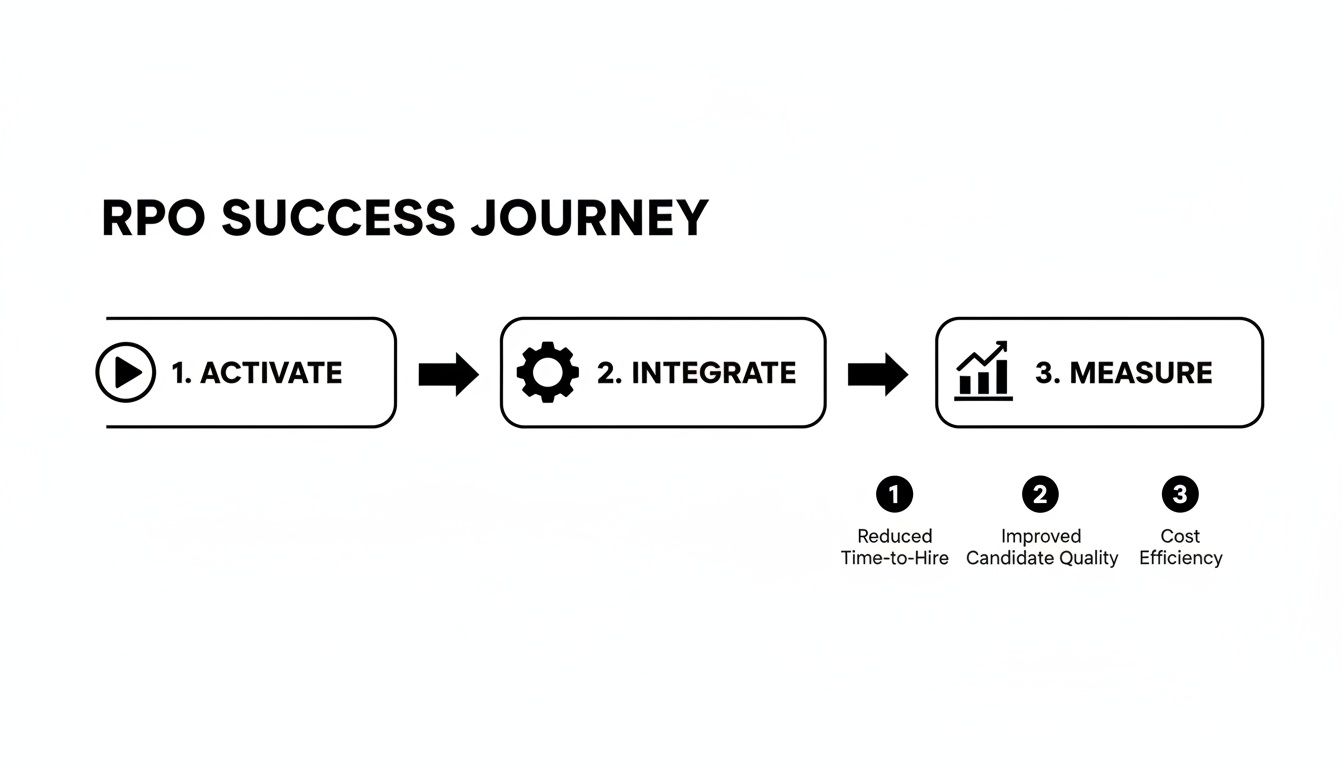
It highlights that activating the partnership, integrating processes, and measuring the right KPIs are the key steps to achieving transformative hiring outcomes.