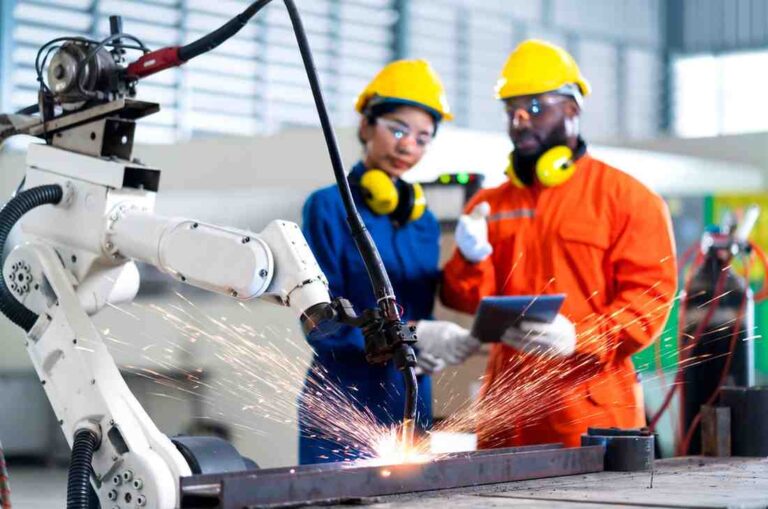
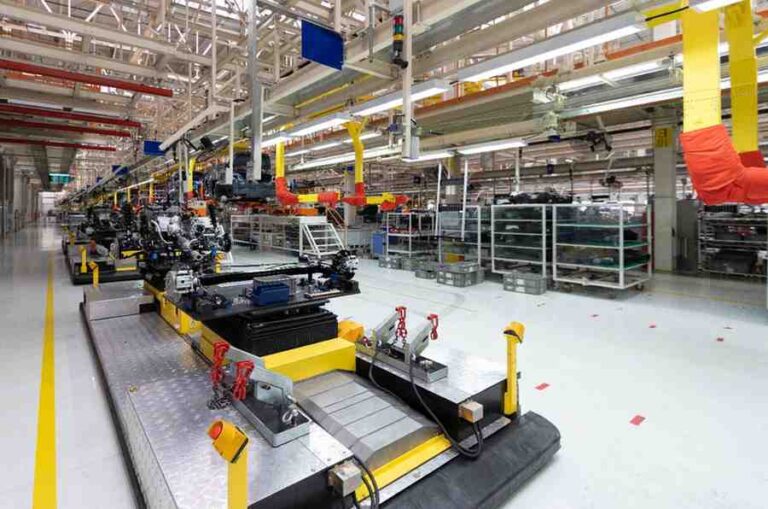
The manufacturing workforce India is relying on today is changing in ways most organisations are still catching up to. Production capacity continues to expand across sectors, but workforce readiness has emerged as the real constraint. What sits underneath this shift is not a hiring volume problem, but a deeper workforce planning and capability building challenge.
Manufacturing roles are being reshaped by automation, quality systems, EHS requirements, and digital manufacturing tools. Yet job architecture, role clarity, and skill frameworks have not evolved at the same pace. As a result, many organisations are filling roles without building talent density, weakening workforce resilience across shopfloor and operations leadership layers.
According to the insights from the India Decoding Jobs 2026, manufacturing hiring in India continues to grow, but demand is moving toward multi-skilled operators, reliability and maintenance specialists, quality and process excellence roles, and frontline leaders who can manage both output and people. At the same time, talent supply remains uneven across regions, and attrition risk is increasingly concentrated in supervisory and mid-level operational roles.
This shift has pushed manufacturing workforce decisions into the domain of enterprise risk. Talent acquisition alone can no longer absorb the pressure. Leadership development, succession planning, internal mobility, and retention strategy now directly influence productivity, safety, and scale. Weaknesses in any one of these areas surface quickly on the plant floor.
For CHROs, the questions have become more strategic. Where do the real capability gaps sit across plants and functions? Which roles are becoming business-critical over the next 12 to 18 months? How strong is the leadership pipeline below plant heads and functional leads? And what does external talent intelligence say about future availability, not just current hiring demand?
Organisations responding effectively are treating workforce design as an operating system, not an annual manpower exercise. Strategic talent partners like Taggd support this shift by combining AI-led talent fulfilment, market mapping, RPO, and leadership hiring to align workforce strategy with operational outcomes.
Recognising that the manufacturing workforce challenge is structural rather than cyclical is the first step. The harder question is where exactly the pressure is building. Which roles are most exposed? Where is talent availability thinning out? And how do these gaps show up at the plant level before they become operational failures?
That’s where the data becomes useful.
What does Taggd India Decoding Jobs Report Reveals About Manufacturing Talent?
At a headline level, manufacturing hiring in India continues to grow. Capacity additions, new facilities, and diversification across sectors are translating into steady demand for talent. But when this hiring growth is viewed alongside skill readiness, the imbalance becomes clear. Roles are being added faster than the workforce is being prepared to perform them at the level required.
As per the India Decoding Jobs Report, there’s a widening gap between hiring volume and capability depth. Many organisations are filling positions, yet struggling with inconsistent output, quality variation, and frontline leadership strain. This is not a volume problem. It is a workforce planning and capability building issue.
The data also shows that certain role categories are expanding faster than talent availability. Maintenance and reliability engineers, quality and process excellence professionals, EHS specialists, automation-linked roles, and frontline supervisors are seeing disproportionate demand. These roles sit at the intersection of execution and control. When they are understaffed or underprepared, plant performance becomes fragile.
Another clear signal is the regional concentration of manufacturing skills and leadership. Talent supply remains tightly clustered around industrial belts. Skill availability, leadership depth, compensation benchmarks, and attrition risk vary sharply by location. This makes one-size-fits-all hiring strategies ineffective, particularly for organisations operating multiple plants across regions.
Perhaps the most critical insight is around leadership supply. While shopfloor roles can often be backfilled or trained over time, supervisory and mid-level leadership pipelines are thinning. Succession planning gaps at this layer create single points of failure, increasing downtime risk and leadership burnout.
Taken together, these patterns point to rising plant-level risk when workforce decisions are driven only by short-term hiring targets. Organisations that anchor decisions in external talent intelligence, role criticality, and regional supply dynamics see these risks earlier and manage them more deliberately.
The data does not suggest a blanket talent shortage. It highlights where pressure is concentrating and which roles will define manufacturing resilience in the years ahead.
Once these pressure points become visible in the data, a bigger question follows. If manufacturing hiring is still active, why is building stable, high-performing teams becoming harder, not easier?
The answer sits in how manufacturing work itself has changed.
Why Are Manufacturing Teams Becoming Harder to Build?
Automation has reshaped manufacturing jobs far faster than most role definitions have kept up with. Tasks that were once manual are now monitored. Decisions that were once experience-led are now data-supported. Yet many roles on the shopfloor and in operations leadership are still designed around outdated assumptions. This mismatch between role design and actual work creates confusion, slows productivity, and places hidden strain on the workforce.
At the same time, manufacturing has seen a steady rise in experience inflation. Job requirements are stretching upward without a corresponding increase in structured capability building. Candidates are expected to bring automation exposure, quality discipline, safety ownership, and people management into roles that were earlier far narrower in scope. The result is a shallow talent pool where experience exists on paper, but capability depth is uneven in practice.
This pressure shows up most clearly in supervisory and critical roles. Shift supervisors, line managers, maintenance leads, and quality heads are carrying more responsibility than before, often without additional support or clear progression paths. Attrition in these roles is rising, not because of compensation alone, but because leadership density is thin and burnout sets in quickly. When these positions turn over, the impact ripples through safety, quality, and output far more than when entry-level roles change.
Many organisations respond to this strain by hiring faster. More requisitions. Shorter timelines. Broader sourcing. But this is where transactional hiring begins to fail. Filling roles without addressing role clarity, skill frameworks, and succession planning simply moves the problem forward in time. Teams get built, but they do not hold.
What this reveals is a deeper shift. Manufacturing teams are no longer difficult to build because talent has disappeared. They are difficult to build because workforce systems have not evolved at the same pace as manufacturing operations. Without aligned workforce planning, leadership development, and retention strategy, hiring alone cannot deliver stability.
This is the inflection point where organisations either continue to patch gaps or step back and redesign how manufacturing teams are built altogether.
Once it becomes clear that faster hiring and tighter processes aren’t fixing the problem, the focus naturally shifts. The question stops being why manufacturing teams are hard to build and becomes what actually defines teams that hold, scale, and perform under pressure.
The answer looks very different from how manufacturing teams were built even five years ago.
The New Anatomy of High-Performing Manufacturing Teams

High-performing manufacturing teams today are not defined by headcount strength or years of experience. They are defined by stability, leadership depth, and how skills are layered across roles. These teams behave differently on the shopfloor, especially when demand spikes, processes change, or disruptions hit.
Shopfloor Stability as a Competitive Advantage
Stability on the shopfloor has quietly become one of the strongest predictors of manufacturing performance. Plants with stable teams see more consistent output, fewer safety incidents, and tighter quality control. Knowledge stays embedded in processes. Informal coordination works because people know how work actually flows, not just how it is documented.
High-attrition plants struggle regardless of demand conditions. Even with strong order books, frequent churn breaks rhythm. New hires take time to learn machines, safety norms, and quality thresholds. Supervisors spend more time firefighting than improving processes. Over time, instability shows up as rework, downtime, and rising incident rates.
This is why workforce stability is no longer just an HR metric. It has become a core operating advantage.
Middle Leadership Is the Weakest Link
If shopfloor stability is the foundation, middle leadership is the load-bearing structure. Supervisors, shift leads, maintenance heads, and line managers translate plans into execution every single day. They manage people, machines, safety, and quality simultaneously.
The India Decoding Jobs data points to a clear signal here. Leadership supply at this level is thinning faster than demand. These roles are expanding in scope, but leadership pipelines are not keeping pace. Many organisations have strong plant heads and capable operators, but a fragile layer in between.
When this middle layer is stretched thin, problems compound quickly. Attrition rises. Decision-making slows. Accountability blurs. Succession planning becomes reactive rather than deliberate. Over time, the organisation becomes overly dependent on a few individuals, increasing plant-level risk.
Strong manufacturing teams invest disproportionately in this layer. Not through titles or compensation alone, but through clear role definitions, leadership development, and visible progression paths.
Skill Stacking Is Replacing Skill Replacement
Another defining shift in high-performing manufacturing teams is how skills are built. The old model of replacing one skill with another no longer works. Manufacturing roles today demand skill stacking.
Technical expertise is still essential, but it now sits alongside automation exposure, digital literacy, quality systems understanding, safety ownership, and people leadership. A maintenance engineer is expected to troubleshoot machines and interpret data. A supervisor is expected to manage output, coach teams, and engage with digital dashboards.
Generic upskilling programs struggle because they treat skills in isolation. Training one capability at a time does not reflect how work actually happens on the shopfloor. High-performing teams build integrated capability through role-based learning, on-the-job exposure, and internal mobility that reinforces both technical and behavioural depth.
What emerges is not just a more skilled workforce, but a more adaptable one.
Taken together, these elements define the new anatomy of manufacturing teams that perform consistently under pressure. Stability is engineered, not hoped for. Leadership depth is built deliberately. Skills are layered, not swapped.
This is where manufacturing workforce strategy begins to look less like hiring execution and more like system design.
When manufacturing teams perform well, it’s rarely accidental. Stability, leadership depth, and skill stacking are usually designed in. The reverse is also true. When teams struggle, the causes tend to repeat themselves across plants, sectors, and growth stages.
Over time, a few predictable fault lines show up.
Where Workforce Strategies Commonly Break Down
One of the most common breakdowns begins with how workforce decisions are framed. In many organisations, the workforce is still treated as an HR metric to be optimised rather than an operating system to be designed. Headcount, cost, and time-to-hire dominate discussions, while questions of capability depth, role criticality, and workforce resilience remain secondary. This disconnect becomes visible when hiring targets are met, but performance remains uneven.
Another pressure point is the over-reliance on lateral hiring. As roles become harder to fill, organisations look outward more aggressively. This often creates short-term relief but weakens long-term stability. Lateral hiring without parallel investment in internal mobility, capability building, and leadership development leads to fragile teams that depend heavily on external supply conditions. When the market tightens, so does execution.
Weak succession planning below plant leadership is another recurring issue. Many manufacturing organisations can clearly identify their plant heads and functional leaders, but have limited visibility into who is ready to step up next. Supervisors, shift leads, and functional second-lines are often left out of structured development conversations. When attrition or expansion hits, these gaps turn into operational risk almost overnight.
A more subtle but equally damaging breakdown is the lack of market-backed role clarity. Roles are often defined internally, based on legacy structures or immediate needs, without sufficient grounding in external talent realities. This leads to unrealistic expectations, misaligned compensation benchmarks, and prolonged vacancy cycles. Without external talent intelligence, organisations struggle to design roles that are both business-critical and hireable.
Across manufacturing engagements, these patterns tend to surface repeatedly. Strategic talent partners like Taggd encounter these breakdowns not as isolated hiring problems, but as systemic workforce design issues. Addressing them requires aligning workforce planning, role architecture, leadership pipelines, and hiring execution to how manufacturing actually operates today.
When workforce strategy breaks down, the symptoms show up late. When it is designed deliberately, the benefits compound quietly over time.
Once these breakdowns are visible, the solution rarely lies in fixing one more hiring process or tightening one more metric. What’s required is a shift in how the workforce itself is viewed.
This is the point where leading manufacturing organisations move beyond hiring roles and start designing workforce systems.
The first shift is moving away from static manpower plans toward capability architecture. Traditional workforce planning focuses on numbers: how many roles, at what cost, by when. Workforce system design starts with a different question. What capabilities must exist on the shopfloor and in leadership layers for the plant to run reliably at scale? This reframing changes how roles are prioritised, how hiring is sequenced, and where development investments are made.
Designing roles using real shopfloor workflows and data is central to this approach. High-performing organisations map how work actually happens across shifts, machines, and teams. They look at handoffs, decision points, safety risks, and quality controls. Roles are then designed around these workflows, not legacy org charts. This improves role clarity, reduces friction between functions, and aligns expectations with reality from day one.
Another critical element is building leadership depth two levels below critical roles. Workforce systems that scale well rarely rely on single-point leaders. They deliberately identify and develop supervisors, shift leads, and functional deputies who can step up when required. This strengthens succession planning, reduces burnout at the top, and creates continuity during expansion or attrition.
What enables this level of design is data-backed talent mapping. When workforce decisions are informed by external talent supply data, regional skill availability, compensation benchmarks, and leadership mobility patterns, decision quality improves significantly. Hiring timelines become more predictable. Role definitions become more realistic. Workforce risks become visible earlier.
This is where AI-led talent fulfilment and market mapping capabilities play a quiet but important role. By combining internal workforce data with external market intelligence, organisations can design workforce systems that are grounded in reality rather than assumption. Strategic talent partners like Taggd operate at this intersection, helping manufacturing leaders connect workforce planning, role design, leadership hiring, and RPO execution into a single, outcome-driven model.
The shift from hiring roles to designing workforce systems does not happen overnight. But once made, it changes how manufacturing organisations scale, stabilise, and compete.
When workforce strategies break down in the same ways across organisations, the problem is rarely execution. It is perspective. Hiring more aggressively or tightening processes does not fix a system that was never designed for how manufacturing operates today.
This is where the conversation changes,from filling roles to deliberately designing the workforce itself.
From Hiring Roles to Designing Workforce Systems
The shift that matters most in manufacturing workforce strategy is moving from manpower plans to capability architecture. Counting heads answers how many people are needed. Designing capabilities answers whether the plant can actually run, scale, and stay stable under pressure. High-performing organisations start with the capabilities required for output, safety, quality, and uptime, then work backwards to roles, skills, and leadership layers.
That’s why role design increasingly begins on the shopfloor, not in org charts. When roles are shaped around real workflows and data,how machines interact, where decisions are made, where safety risks sit, where quality breaks occur,expectations become realistic. Role clarity improves. Hand-offs reduce. Hiring and onboarding accelerate because the work is defined the way it’s actually done.
Another defining move is building leadership depth two levels below critical roles. Plants that scale well do not rely on a single plant head, maintenance lead, or quality head. They invest early in supervisors, shift leads, and functional deputies who can step up when needed. This strengthens succession planning, reduces leadership burnout, and creates continuity during expansion, attrition, or multi-plant operations.
What sharpens all of these decisions is data-backed talent mapping. When workforce planning is informed by external talent supply, regional skill clusters, compensation benchmarks, and leadership mobility patterns, decisions get better. Roles become hireable. Timelines become predictable. Workforce risk becomes visible before it hits operations.
This is where AI-led talent fulfilment and market mapping quietly change the game. By combining internal workforce data with live market intelligence, organisations can design workforce systems grounded in reality rather than assumption. Partners like Taggd operate in this space by connecting capability architecture, leadership hiring, and RPO execution into a single, outcome-driven workforce model.
Designing workforce systems takes more intent than filling roles. But once in place, it’s what allows manufacturing organisations to scale without losing control.
Once workforce systems are designed around real capabilities and leadership depth, another constraint becomes impossible to ignore. Even the best-designed roles and pipelines behave very differently depending on where the plant is located.
This is where geography stops being a backdrop and starts shaping workforce outcomes directly.
Location-Led Workforce Design Is Now Non-Negotiable

One of the clearest signals from the India Decoding Jobs report 2026 data is that manufacturing talent in India does not distribute evenly. It clusters. Skills, experience, and leadership capability concentrate around industrial belts shaped by decades of ecosystem development, supplier networks, and education pipelines. Ignoring this reality is one of the fastest ways workforce strategies lose predictability.
The data shows that manufacturing hiring outcomes are heavily influenced by location, not just job title. The same role can be abundant in one region and scarce in another. A maintenance engineer, quality lead, or shift supervisor behaves like a completely different talent segment depending on the local industrial context. Compensation expectations, mobility appetite, and attrition risk all change with geography.
This is why talent behaves regionally, not generically. Workforce planning that treats roles as interchangeable across locations often runs into ramp-up delays and retention challenges. Plants in established manufacturing clusters benefit from embedded skills and informal knowledge transfer. Greenfield or emerging locations require far more deliberate workforce design, early hiring, and leadership seeding.
The implications are tangible. Cost structures vary beyond base pay once hiring timelines, training investment, and replacement risk are factored in. Retention patterns are stronger in regions where manufacturing careers are culturally anchored and weaker where talent treats roles as transitional. Ramp-up speed depends as much on local talent maturity as on internal readiness.
This is where on-ground market intelligence becomes critical. Hiring predictability improves when organisations understand regional supply dynamics, local wage benchmarks, migration readiness, and leadership availability before roles are released. Strategic talent partners like Taggd bring this visibility by combining local presence with external talent data, enabling location-led workforce design rather than reactive hiring.
When geography is treated as a core input into workforce strategy, hiring becomes more stable, timelines compress, and plants scale with fewer surprises. In today’s manufacturing landscape, location-led design is no longer optional. It is foundational.
Once location, capability architecture, and leadership depth are treated as design inputs, one more shift becomes obvious. Traditional hiring support is no longer enough. The complexity of manufacturing workforce decisions now exceeds what transactional recruitment models were built to handle.
This is where CHROs are changing how they use talent partners.
How CHROs Are Using Strategic Talent Partners Differently?
For many CHROs, RPO is no longer viewed as a hiring vendor. It is increasingly used as a workforce engine. Instead of focusing only on requisition fulfilment, RPO is expected to support workforce planning, sequencing of hires, leadership pipeline visibility, and ramp-up predictability across plants.
This shift reflects a broader change in manufacturing hiring complexity. When organisations are scaling multiple plants, entering new locations, or upgrading capabilities simultaneously, hiring becomes less about execution speed and more about orchestration. Roles need to be prioritised correctly. Leadership hires must land before volume ramps up. Skill mix has to align with automation maturity. Miss the sequence, and operational risk rises even if hiring targets are met.
CHROs are also placing greater emphasis on outcome-led talent partnerships. The focus moves from time-to-fill metrics to plant-level outcomes,stability, productivity, leadership continuity, and retention in critical roles. When talent partners are accountable for these outcomes, workforce decisions become more deliberate and less reactive.
This is where strategic partners like Taggd are used differently in complex manufacturing environments. The value lies not just in hiring at scale, but in combining AI-led talent fulfilment, market mapping, and on-ground execution to support workforce system design. Hiring, leadership search, and RPO operate as connected levers rather than isolated services.
What this approach ultimately reduces is plant risk. With clearer role design, market-backed hiring plans, leadership depth built early, and location-specific execution, workforce volatility drops. CHROs gain greater predictability over how plants scale, how teams stabilise, and where intervention is needed before disruption occurs.
In a manufacturing landscape where workforce decisions directly shape operational outcomes, strategic talent partners are no longer peripheral. They have become embedded in how CHROs design, not just deliver, manufacturing teams.
When workforce strategy, location intelligence, and talent partnerships start working together, a pattern becomes clear. Some organisations are steadily reducing uncertainty in their manufacturing operations. Others are reacting to it.
That gap is where the next competitive advantage is forming.
Wrapping Up
The manufacturing workforce advantage is increasingly being defined by resilience, not scale alone. As production systems become more complex and skill requirements continue to evolve, the ability to maintain stability across shopfloor roles, frontline leadership, and critical capabilities is emerging as a decisive differentiator.
The India Decoding Jobs data already signals where pressure will build next. Certain role families are tightening faster than others. Leadership depth is thinning unevenly across regions. Skill expectations are changing more quickly than training pipelines can adapt. These signals are not abstract. They point directly to future plant-level risk.
Organisations that act early are able to shape their outcomes. By redesigning roles ahead of demand, investing in leadership pipelines below plant heads, and aligning workforce strategy with regional talent realities, they influence how talent markets form around them. Hiring becomes more predictable. Retention improves. Workforce planning shifts from reactive to deliberate.
Those that delay face a different reality. Attrition concentrates in critical roles. Leadership gaps emerge under pressure. Plants spend more time stabilising than scaling. What appears to be a talent shortage is often the cost of postponed workforce design decisions.
The manufacturing workforce India builds next will determine how reliably it grows. The advantage will belong to organisations that recognise workforce design as a core operating capability and move early, while the signals are already visible.
FAQs
What is changing in India’s manufacturing workforce?
Manufacturing is shifting from volume hiring to capability-driven workforce design, with roles expanding due to automation, quality, safety, and digital manufacturing requirements.
Why is middle leadership critical in manufacturing plants?
Supervisors and shift leaders directly influence output, safety, quality, and retention. Weak middle leadership quickly creates instability, burnout, and operational risk.
How does talent intelligence improve manufacturing hiring?
Talent intelligence brings market reality into hiring decisions by revealing regional talent supply, skill availability, compensation benchmarks, and future workforce risks.
When does RPO make sense for manufacturing organisations?
RPO is most effective during multi-plant scaling, greenfield setups, or complex hiring needs where workforce orchestration matters more than transactional hiring speed.
Most manufacturing workforce problems don’t arrive suddenly. They build quietly.
The organisations that stay ahead start the conversation early, using market intelligence and leadership insight to design teams that hold. Partners like Taggd support that shift by helping CHROs move from reactive hiring to deliberate workforce design.