Talent has moved far beyond being a support function in Indian companies. Across tech, BFSI, manufacturing, healthcare, logistics, and consumer brands, business outcomes now depend heavily on how teams are hired, guided, paid, and supported. When hiring numbers rise quickly, culture starts to differ across units, or managers struggle with people’s conversations, HR teams alone often find it hard to keep pace.
This is where a chief people officer plays a key role. The CPO brings structure to people’s decisions, links workforce planning with business direction, and helps leaders think beyond short-term hiring needs. In many growing organisations, the CPO works closely with the CEO because people’s choices shape product plans, customer trust, leadership depth, and long-term stability.
As companies expand across cities, add new business lines, and adjust to new rules, the need for a strong people leader has grown steadily. Below is a clear view of what the role covers, which skills matter most, and how leaders can hire wisely.
What a Chief People Officer Really Does
The chief people officer works way beyond traditional HR activities. A CPO oversees hiring plans, workforce planning, pay structures, performance systems, leadership development, culture building, employee well-being, and compliance. The role acts as a link between business goals and people’s needs.
On a typical day, a CPO may review attrition trends in a tech team, help shape a leadership program for mid-level managers, guide a manufacturing unit on seasonal hiring needs, discuss culture concerns with founders, and review how a performance cycle is working across teams. The role calls for calm judgment and the ability to balance business speed with employee expectations. Every decision must feel fair while still supporting growth plans.
Why Indian Companies Are Bringing in CPOs
Many Indian organisations operate in settings where hiring scales quickly, teams spread across states, and employees expect clear communication, learning paths, and fair policies. As these needs grow, traditional HR setups begin to feel stretched.
A tech company may face skill gaps, rising exits, and uneven onboarding across offices. A consumer brand may struggle to keep pay structures competitive. A manufacturing business may need stronger support for safety, compliance, and shift planning. Without one leader who sees all these needs together, decisions often remain scattered.
A chief people officer helps bring order by shaping one people’s plan that guides all HR work. Leaders gain clarity on hiring needs, policy design, culture expectations, long-term workforce plans and maximize the overall leadership hiring process. Employees experience clearer systems and more consistent support.
Skills That Strong Chief People Officers Bring
A strong chief people officer balances long-term people planning with daily leadership decisions. The role requires a clear view of how the workforce should evolve, along with the ability to guide managers through real, often sensitive situations.
Strong CPOs understand how hiring patterns shift across India, how pay and role structures influence motivation, and how people’s data can reveal early warning signs before issues grow larger. Above all, they build trust.
Leaders rely on the CPO for steady judgment, clear communication and decisions that respect both business needs and employee realities. Over time, this leadership shows up in stronger teams, better managers and a more resilient talent pipeline.
- Ability to balance long-term workforce planning with day-to-day people decisions
- Understanding of hiring patterns and talent availability across India
- Strong grasp of compensation structures, role design and career progression
- Comfort reading people data to identify risks and guide practical action
- Clear communication and trusted judgment during complex people situation
- Focus on building managers, leadership pipelines and long-term talent strength
Difference Between CPO and CHRO
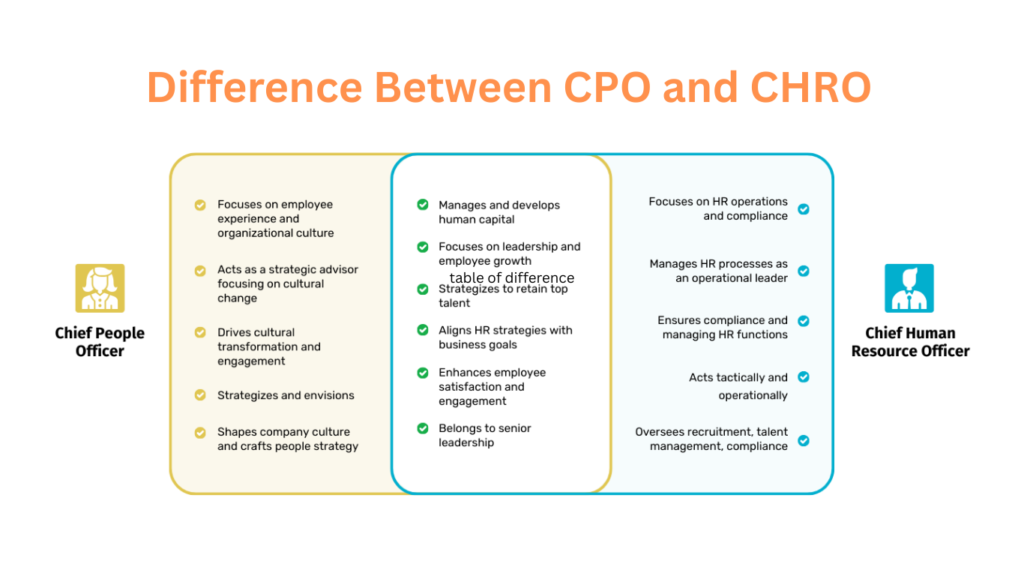
In many organisations, the titles chief people officer and chief human resources officer are used together. While the roles overlap, there are practical differences.
A CPO works closely with business planning. When the company enters a new market, scales headcount, or adds a product line, the CPO guides leaders on workforce needs, leadership gaps, and internal movement. A CHRO typically focuses more on HR operations, such as onboarding, pay cycles, compliance checks, and employee records.
Both roles matter, but the CPO usually carries a wider mandate tied to company direction and leadership alignment.
CPO Hiring Mistakes Indian Organisations Often Make
CPO hiring in India is still maturing, which means many organisations are learning what the role truly needs to deliver. Early missteps often come from job descriptions that lean heavily toward HR operations, rather than clearly outlining the leadership and advisory responsibilities the role carries. When expectations are clarified early, companies are better positioned to hire leaders who can guide people’s strategy, not just manage processes.
Successful CPOs tend to have exposure beyond compliance and administration. Experience working closely with business leaders on organisation design, leadership development and long-term talent planning helps the role add value faster. Organisations that focus on this depth are more likely to hire leaders who can influence decisions at the senior level.
Data readiness also plays an important role. When teams have access to clear information on hiring pace, attrition, compensation structures and performance cycles, the CPO can spend more time shaping people’s decisions instead of filling information gaps. With clear role definition and the right foundations in place, organisations are far more likely to hire leaders who strengthen teams and support long-term growth.
How Leaders Can Assess CPO Candidates More Effectively
Interviewing a chief people officer requires a different view. Past achievements matter, but thinking style, communication habits, and trust-building ability matter just as much.
Strong candidates can explain how they handled tough retention phases, built fair pay structures, or guided hiring during rapid growth. Comfort with basic workforce data should come through naturally, along with clear examples of how that data shaped leadership decisions. The way candidates speak about past teams also offers insight. Respectful, balanced language often reflects a steady leadership style.
Fit with the CEO’s pace and communication style is also key. The CPO role depends heavily on partnership at the top.
What a Strong CPO Job Description Should Cover
A strong chief people officer job description sets direction before the hire even begins. When expectations are precise, the role gains authority and focus from day one. A well-written JD makes it clear that the CPO is not limited to HR execution, but plays a central role in shaping people strategy, advising leadership and strengthening the organisation over time. This clarity helps companies attract leaders who can balance structure with judgment and guide teams through growth, change and complexity.
- Ownership of workforce and people planning linked to business priorities
- Leadership of HR teams, people operations and core employee processes
- Strategic advisory support to senior and functional leaders
- Design and oversight of compensation, performance and progression frameworks
- Responsibility for culture guidance and employee experience standards
- Oversight of compliance, policies and governance
- Building leadership development, succession and long-term talent pipelines
When a Company Should Bring In a CPO?

A chief people officer becomes necessary when HR teams can no longer support the pace of growth or when people issues start affecting results.
Warning signs include uneven handling of performance issues across teams, mixed messages about growth paths, or employee concerns piling up without clear ownership. Expansion into new regions often adds pressure through fresh hiring needs, local rules, and policy changes. In these moments, a CPO brings clarity that HR teams alone may struggle to provide.
Hiring Challenges for CPOs in India
Hiring a CPO often takes longer than expected because the role is still taking shape across many Indian organisations. Unlike established leadership positions, expectations from a CPO vary widely depending on company maturity, leadership style, and growth stage. This lack of clarity creates friction right from the start of the hiring process.
Key challenges include:
- Unclear role boundaries between the CPO and CHRO, which leads to confusion around ownership of strategy versus operations
- Uneven capability with people data, where candidates may speak strategically but lack experience using metrics to guide real workforce decisions
- Compensation misalignment, as market expectations for senior people leaders often exceed internal budget ranges
- Limited experience with large-scale culture and change initiatives, especially in organisations undergoing rapid growth or restructuring
- Assessment gaps in interviews, where communication style, leadership presence, and influence are hard to judge in short interactions
These challenges often extend hiring timelines and increase the risk of mismatches, making careful role definition and deeper evaluation essential when appointing a CPO.
How Taggd Helps Companies Hire CPOs
Taggd supports organisations by helping define the CPO role clearly through its executive search approach, assess candidates with the right tools, and understand talent availability across sectors. Support includes talent insights, pay benchmarking, leadership assessments, and access to a strong network of senior HR and people leaders across India. This helps companies hire CPOs who fit both business needs and organisational culture.
Outlook for the CPO Role in India
Over the next few years, chief people officers will take on wider responsibility as companies adopt new work models and expand across regions. Workforce data will shape more decisions, and leaders will expect stronger policies around well-being, internal movement, and leadership growth. The CPO will also play a larger role in business planning, as talent readiness affects nearly every growth decision.
Final Thoughts
A chief people officer brings structure, stability, and long-term thinking to people’s decisions. The role supports leaders during difficult phases, helps teams stay aligned during change, and builds systems that hold organisations together. As Indian companies continue to scale across regions and sectors, the CPO role moves from helpful to necessary for healthy growth.
FAQs
What does a Chief People Officer do?
A Chief People Officer shapes long-term people strategy and connects talent decisions with business goals. The role guides hiring, workforce planning, leadership development and culture, while supporting senior leaders in building teams that can scale without losing stability or direction.
How is a CPO different from a CHRO?
A CHRO typically focuses on HR operations, policies, compliance and execution. A CPO works closer to business planning, influencing leadership decisions, organisation design and future capability needs. The CPO role is more strategic and forward-looking in nature.
When should a company hire a CPO?
A CPO becomes valuable when hiring accelerates, teams grow across locations, culture feels inconsistent or leaders struggle with people decisions. At this stage, informal HR processes stop working and people choices begin to directly affect performance and growth.
Does the CPO handle culture?
Yes. Culture is a core responsibility of the CPO. The role helps define values, guide leadership behaviour and ensure everyday practices reflect the company’s intent, especially during growth, restructuring or leadership changes that can dilute cultural consistency.
Which skills matter most in a CPO?
Clear communication, calm leadership and comfort with people data are essential. Strong CPOs also bring experience in workforce planning, organisational design and coaching senior leaders, balancing empathy with structure while making decisions that hold up under pressure.
Which sectors hire CPOs most often?
CPO roles are common in tech, BFSI, manufacturing, healthcare, consumer brands and fast-growing startups. These sectors face rapid scaling, talent competition and regulatory or operational complexity, making strategic people leadership critical to long-term stability.
How can leaders assess CPO candidates?
Leaders should evaluate thinking style, decision-making approach and past examples of handling complexity. Comfort with data, ability to influence senior stakeholders and experience guiding organisations through growth or change matter more than functional HR credentials alone.
Who does the CPO report to?
Most Chief People Officers report directly to the CEO. This reporting line reflects the role’s influence on strategy, leadership effectiveness and organisational health, placing people decisions alongside financial and operational priorities at the highest level.
What hiring mistakes should be avoided when appointing a CPO?
Common mistakes include treating the role as operational HR, setting vague expectations or lacking reliable people data. Without clarity and authority, the CPO cannot influence leadership decisions or build systems that support sustainable growth.
How does Taggd support CPO hiring?
Taggd supports CPO hiring through talent insights, leadership assessments and access to senior HR networks. The approach focuses on identifying leaders who can think strategically, handle scale and guide organisations through complex people challenges with confidence.
Navigating the complexities of the leadership hiring process requires expertise and a deep network. Taggd specialises in Recruitment Process Outsourcing, partnering with CHROs to build world-class leadership teams.
Discover how we can help you find and secure the leaders who will drive your company’s future by visiting us at Taggd.