
Mastering Blue Collar Hiring in Indiana
For any CHRO in Indiana, winning the intense competition for skilled blue-collar talent is the name of the game. The challenge is simple on the surface but deeply complex in practice: it’s a high-demand, low-supply environment where the traditional blue-collar hiring playbooks just don’t work anymore. To get ahead, you need a sharp, data-driven understanding of the state’s unique labour market.
Getting to Grips with Indiana’s Blue-Collar Hiring Landscape
Before you can build a winning recruitment strategy, you need a clear map of the terrain. The blue-collar hiring scene in Indiana isn’t just competitive; it’s being shaped by powerful economic forces that control the supply of skilled workers and the fierce demand from industries like manufacturing, logistics, and construction.
It’s time to move beyond guesswork and dive into the real numbers. They’ll show you exactly why old methods are failing and what it takes to succeed today. Think of this as a strategic intelligence briefing, not just a pile of stats. By looking at the key metrics, we can pinpoint the exact pressure points in your hiring funnel. It’s like diagnosing the problem before writing a prescription.
Acknowledging these on-the-ground realities is the first step toward building a modern, targeted recruitment process—one that actually attracts and keeps the workers who power your business. The data tells a clear story: this is a tight market where speed, strategy, and a sophisticated understanding of your candidates are everything.
Key Labour Market Indicators
The most revealing statistics paint a picture of a workforce that’s already highly engaged. This leaves a much smaller pool of available candidates for a growing number of jobs.
Take a look at recent state-level data. As of May 2025, Indiana’s labour force was about 3.49 million people, with private employment sitting around 2.85 million. The state’s unemployment rate was a lean 3.7%, which is significantly lower than the national average of 4.2%.
On top of that, Indiana’s labour force participation rate was 63.7%, beating the national rate of 62.4%. For blue-collar sectors, this is critical. Manufacturing and construction alone added 1,400 jobs in a single month. For a deeper dive into these numbers, you can check out the full May 2025 report from Indiana’s Department of Workforce Development.
These figures confirm what many CHROs are already feeling:
- Fewer Active Job Seekers: A low unemployment rate means most qualified people are already working. Passive recruitment isn’t just an option; it’s a necessity.
- High Labour Participation: A highly engaged workforce means there isn’t a large, untapped group of people waiting to jump into the job market.
- Sector-Specific Growth: Core industrial sectors keep growing, which only ramps up the competition for a finite number of skilled workers.
To put these numbers into context for your hiring strategy, let’s break them down.
Indiana’s Blue-Collar Labour Market at a Glance
This table summarises the key metrics defining the current blue-collar hiring environment in Indiana.
| Metric | Indiana Figure (May 2025) | National Average | Implication for Hirers |
| Unemployment Rate | 3.7% | 4.2% | The talent pool is tight; most skilled workers are already employed. |
| Labour Force Participation | 63.7% | 62.4% | There’s no large reserve of untapped labour waiting to join the workforce. |
| Key Sector Job Growth (Monthly) | +1,400 (Manufacturing & Construction) | Varies | Demand is actively growing, intensifying the competition for talent. |
| Total Labour Force | ~3.49 Million | N/A | A large, but highly engaged, workforce to draw from. |
Simply put, the data confirms the market is hot. Hirers need to be more strategic and proactive than ever to secure the talent they need.
The Manufacturing and Engineering Core
Manufacturing is still the engine of Indiana’s economy, and its health has a direct ripple effect on blue-collar hiring across the state. This isn’t just about old-school industries; we’re talking about advanced manufacturing, automotive, and life sciences. All of these require a new generation of skilled technicians, machine operators, and maintenance professionals.
The demand for these roles consistently outstrips the supply of qualified people, creating vacancies that are tough to fill. To get a better handle on the specific trends and talent needs in this crucial area, you can find valuable insights in our comprehensive engineering and manufacturing sectoral report.
The core challenge is no longer just finding people. It’s about building a recruitment engine efficient enough to engage and hire skilled individuals before a competitor does. In this market, speed and precision are your most valuable assets.
Ultimately, understanding Indiana’s landscape means accepting a new reality. The pool of available talent is shallow, the competition is fierce, and the candidates themselves have more power than ever before. This environment demands a fundamental shift in strategy—away from reactive job postings and toward proactive, data-informed talent acquisition. The next sections will give you a blueprint for making that critical change.
Decoding the Modern Blue-Collar Candidate
If you want to win the talent war, you have to understand the soldiers. Effective blue-collar hiring starts by ditching the old stereotypes and getting a real, modern picture of today’s skilled worker. This isn’t about guesswork. It’s about digging into their motivations, their digital habits, and what they actually want from a career so you can build an offer they can’t turn down.
The modern blue-collar candidate is far more sophisticated and has more choices than ever before. They aren’t just chasing a pay cheque; they’re looking at the whole package. That means your approach needs to be just as thoughtful, focusing on the things that genuinely matter to them.
What Truly Motivates Skilled Workers
While pay is always important, it’s rarely the only thing on the table. Today’s blue-collar workforce is putting a huge premium on stability, respect, and a real chance to grow. If you can tap into these non-financial drivers, you’ll create a value proposition that truly connects.
Think of their decision as a careful calculation. A slightly higher hourly wage at a chaotic, disrespectful company is a tough sell against a fair wage at a place known for its good culture and predictable hours.
Here’s what really moves the needle:
- Predictable Schedules: The ability to plan life outside of work is massive. Consistent shifts and reliable hours often mean more than a small pay bump.
- A Respectful Workplace: A culture where front-line managers are supportive and communication is open is a deal-breaker for many. People will walk away from toxic environments in a heartbeat, no matter the pay.
- Skill Development: Candidates are looking for employers who will invest in them. Offering on-the-job training, certifications, or a clear path for promotion shows you see them as a long-term asset, not just a pair of hands.
- Robust Benefits: Solid health insurance, paid time off, and retirement plans are signals of stability and care. These benefits can often be the deciding factor that tips the scales in your favour.
This screenshot of salary data from ZipRecruiter gives a sense of the wide range of blue-collar wages just in Indiana.
Sure, the average is around $24 per hour, but the spread from under $8 to over $47 proves that pay alone isn’t the whole story. It’s the total value of the job that really counts.
How They Search for Jobs
Gone are the days of just sticking a sign on the factory gate or running an ad in the local paper. Today’s blue-collar candidates are online and use a mix of channels to find their next gig. Your sourcing strategy has to meet them where they are.
Most of their job hunting happens on their mobile phones. This means any application process that isn’t mobile-friendly is a dead end. They’re scrolling through major job boards like Indeed but are also plugged into local community networks and social media groups.
A complicated, desktop-only application is the digital equivalent of a locked door. You might have the best job in the world, but if candidates can’t easily apply in minutes from their phone, they will move on to a competitor who makes it simple.
This mobile-first reality demands a complete overhaul of the application experience. Long forms and mandatory resume uploads will kill your applicant numbers. Instead, think text-to-apply, simple web forms, and quick ways to get the conversation started. The goal is to remove friction and make it fast and easy. Successful blue-collar hiring today is all about being accessible.
Building a High-Speed Recruitment Funnel
In the race for skilled workers, speed isn’t just an advantage—it’s everything. A slow, clunky hiring process is your worst enemy. Why? Because the best candidates get multiple offers, and they simply won’t wait around for you to catch up. For successful blue collar hiring, redesigning your recruitment funnel for speed and efficiency isn’t just a nice-to-have; it’s a must-do.
Think of your hiring process like a modern assembly line. Each step needs to be fine-tuned to get rid of the bottlenecks that cause delays and make great candidates walk away. The mission is to slash your time-to-hire from weeks down to a matter of days, locking in top talent before your competitors even know what hit them.

This need for speed is especially true in Indiana’s booming economy. The state’s job market has bounced back strong since the pandemic, with employment numbers now higher than before. Key sectors like manufacturing and construction are adding hundreds of jobs every month, and with steady growth projected through 2025, the hunt for skilled workers is fierce. You can dive deeper into these trends in the Indiana economic outlook from the IBRC.
Simplify and Mobilise Your Application Process
Let’s talk about the biggest bottleneck of them all: the application. Most blue-collar candidates aren’t sitting at a desk with a polished CV ready to go. They’re on their feet, on a job site, and searching for their next role on their mobile phones.
If you’re forcing them to fill out long forms or upload a CV, you’re losing them before you even get started. The fix is to make applying ridiculously simple and completely mobile-friendly.
A complicated, desktop-only application is the digital equivalent of a locked door. You might have the best job in the world, but if candidates cannot easily apply in minutes from their phone, they will move on to a competitor who makes it simple.
Turn on one-click applications on job boards and seriously consider text-to-apply options. For many roles, all you really need to get the ball rolling is a name and a phone number. The easier you make it for someone to show interest, the more candidates you’ll get in your pipeline.
Expand Your Sourcing Beyond Traditional Channels
Just posting on the usual job boards isn’t going to cut it anymore. To build a high-speed funnel, you have to go out and find talent where they are, both online and in the real world. This means getting creative and tapping into local community networks.
Here are some sourcing channels that actually work:
- Community Partnerships: Connect with local workforce agencies, community centres, and veterans’ groups. These organisations have direct lines to skilled, motivated people looking for work.
- Vocational Schools and Trade Programmes: Start building relationships with technical colleges and high school trade programmes. This gives you a direct pipeline to fresh talent before they even hit the open market.
- Targeted Digital Advertising: Use geo-targeted ads on social media and local classifieds sites. Remember, over 80% of hourly workers live and work within a few miles of their home, so local outreach packs a powerful punch.
By mixing up your sourcing strategy, you won’t just find more candidates—you’ll find the ones your competitors are completely missing. To lay the right groundwork, check out our guide on the four crucial recruitment steps for a smooth hiring ramp-up.
Accelerate Screening and Interviewing
The moment a candidate applies, the clock starts ticking. A slow response is one of the fastest ways to lose their interest. The goal is to shrink the time between screening and interviewing without cutting corners on quality.
For high-volume roles, automation is your best friend. Use AI tools to handle the initial screening and get interviews scheduled automatically. This frees up your recruiters to do what they do best: talk to promising candidates.
Try these speed-focused tactics:
- Immediate Follow-Up: Acknowledge every single application within hours, not days. A simple automated text confirming you got their application and explaining what’s next can make a world of difference.
- Compressed Interview Cycles: Ditch the multi-stage interview process that drags on for weeks. Go for a quick phone screen within 24-48 hours, followed immediately by an on-site practical test or a tour of the facility.
- Same-Day Offers: For roles that are tough to fill, think about holding open hiring events or even making conditional offers on the spot, pending background checks. That kind of decisive action is a massive competitive advantage.
When you treat your recruitment funnel with this level of urgency, you send a clear message: you value candidates’ time and you’re serious about hiring them. This isn’t just a trend; it’s the new standard for winning the talent you need.
Crafting Your Total Rewards Package
In a tight market for skilled trades, your compensation package does a lot more than just put a number on a role. It’s a powerful statement about how much you value your team. To get blue collar hiring right, you need to think beyond the hourly wage and design a total rewards strategy that addresses the real-world needs of your workforce, from financial security to long-term career stability.
Think of it as an investment, not an expense. A competitive hourly rate is just the price of entry. The benefits and growth opportunities you wrap around that wage are what will truly set you apart and convince the best candidates to choose you over the competition.
Looking Beyond the Hourly Rate in Indiana
First, you have to know the local pay landscape inside and out. As of mid-2025, the average hourly wage for blue collar workers in Indiana was $24.09. But averages can be misleading; that figure hides a massive range, with most workers actually earning between $13.07 and $33.13 per hour.
Here’s the critical piece of insight: Indiana ranks last in the nation for average blue collar wages. While that might sound like a challenge, it’s actually a huge opportunity. It means a thoughtful, competitive offer can make a massive impact. You can get a clearer picture of the full wage landscape for blue collar workers in Indiana to inform your strategy.
This context is everything. You don’t just need to meet the market rate; you have a chance to leapfrog competitors by building an offer with benefits that provide tangible security and value.
The image below gives a sense of how different sourcing channels, from job boards to recruitment agencies, fit into the broader hiring process.
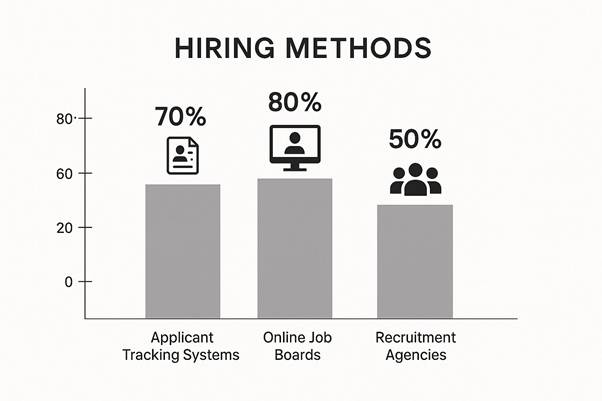
As you can see, while online job boards are a common starting point, a truly effective strategy uses multiple channels—including applicant tracking systems and specialised agencies—to reach the widest and most qualified talent pool.
High-Impact Benefits That Attract and Retain
A fair wage is the foundation, but certain benefits punch way above their weight class when it comes to influencing a modern blue collar worker’s decision. These are the elements that turn a simple job into a real career.
Focus on what provides stability and a clear path forward:
- Robust Health Insurance: For many skilled workers, this is non-negotiable. Good, affordable health coverage for them and their families is a top priority. Highlighting low deductibles or generous employer contributions can be a massive selling point.
- Predictable Schedules: In a world of gig work and fluctuating hours, a stable, predictable shift is golden. It gives people the security to plan their lives, reduce stress, and find a genuine work-life balance. It’s an incredibly valuable, yet often overlooked, benefit.
- Skills Training and Development: This shows you’re invested in their future, not just filling a slot. Offering paid certifications, apprenticeships, or laying out a clear career ladder demonstrates that you see them as a long-term asset.
Your total rewards package should tell a story. It should say, “We don’t just want you for this job; we want to help you build a career and a stable future with us.” That’s a message that resonates deeply.
By thoughtfully combining competitive pay with these high-impact benefits, you create a value proposition that’s incredibly tough for other companies to beat. This approach doesn’t just help you attract the best talent—it builds the kind of loyalty that cuts down on turnover and creates a dedicated, highly skilled workforce for the long haul.
Using Technology to Your Advantage
Technology can be a real game-changer in high-volume blue-collar hiring, but only if you’re using the right tools in the right way. The aim isn’t to build some complex, automated fortress that keeps people out. It’s about using smart, practical tools that make the entire process faster, simpler, and more human for everyone.
Think of your recruitment tech stack like a well-organised workshop. Each tool needs a clear purpose, should work smoothly with the others, and make the job easier—not add more steps. For blue-collar roles, this means putting accessibility and speed above everything else. A clunky system that frustrates candidates is honestly worse than no system at all.
The real focus should be on tech that handles the repetitive tasks, freeing up your team to do what they do best: building real relationships with qualified people.
Optimising Your Applicant Tracking System
Your Applicant Tracking System (ATS) should be the central hub of your hiring operation. The problem is, many are built for corporate roles, creating needless hurdles for skilled trade applicants. The key is to strip it back to the absolute essentials.
A complicated ATS is one of the biggest reasons candidates drop off. If your system is demanding a detailed profile, a full work history, and a formal CV upload, you’re losing a huge chunk of your talent pool before you even see their names. Many blue-collar candidates are applying on their phones and probably don’t have a CV ready to go.
To turn your ATS from a liability into an asset, here are a few adjustments to consider:
- Enable Quick Apply: Let candidates apply with one click by integrating with job boards that pull in their basic info directly.
- Simplify Required Fields: For that first application, just ask for the essentials: name, phone number, and maybe a quick note on key skills or certifications.
- Ensure Mobile Functionality: Test your application process on different mobile devices. If it isn’t quick and easy, candidates will simply give up.
Embracing Text-Based Recruiting
In a world where practically everyone has a mobile, text messaging is one of the most powerful and surprisingly underused tools in blue-collar recruitment. Response rates for texts blow emails out of the water, making it the perfect channel for fast, direct communication.
Just put yourself in the candidate’s shoes. A quick text is far less intrusive than a phone call in the middle of their workday, and it’s a lot more immediate than an email they might not check for days. This simple shift can dramatically speed up your hiring cycle.
Technology should remove barriers, not create them. For blue-collar hiring, the best tech is often the simplest. A text message can be more effective than a sophisticated software suite if it gets a faster response and moves the conversation forward.
When you start using text-based recruiting, you can send application updates, schedule interviews, and answer questions in real-time. This kind of responsiveness shows candidates you value their time and are serious about getting them through the process quickly—a massive competitive advantage.
Using AI for Screening, Not Exclusion
Artificial intelligence can bring incredible efficiency to high-volume screening, but you have to be careful with how you use it. The goal is to use AI to spot qualified candidates faster, not to build an algorithm that unfairly filters people out.
AI-powered tools can quickly scan applications for the basics, like a specific licence or a certain number of years of experience. This automates the most time-consuming part of the initial screening, letting your recruiters spend their time engaging directly with the most promising people.
But it’s crucial to make sure your AI isn’t accidentally creating new barriers. For example, if your system automatically rejects anyone without a formal CV, you’re missing out on skilled workers who just didn’t have one to upload. The best way forward is to use AI as an assistant—a tool that flags top candidates and helps with scheduling, but leaves the final decisions in human hands. That blend of tech efficiency and human oversight creates a process that is both fast and fair.
Building a Culture That Prevents Turnover
Getting a great employee in the door is just the beginning. The real magic—and the real return on your blue collar hiring efforts—happens when you convince them to stay. A strong workplace culture isn’t just a nice-to-have; it’s your single greatest defence against costly turnover. We’re not talking about motivational posters on the wall, but the tangible, day-to-day experience that makes a skilled worker feel like they belong.
A positive culture doesn’t happen by accident. It’s built deliberately, with a laser focus on what truly matters to your frontline teams. It all starts by creating an environment where every employee feels safe, respected, and genuinely heard.

Foundational Pillars of a Strong Culture
To build a culture that sticks, you need to prioritise both psychological and physical safety. This means ensuring equipment is sound and processes are safe, of course, but it also means fostering an atmosphere where people feel comfortable speaking up without fear of being shut down. Respectful and supportive front-line management is completely non-negotiable here; supervisors have the most direct impact on an employee’s daily reality.
On top of that, you have to establish open lines of communication. Things like regular team huddles, suggestion boxes, and managers who actually listen create a powerful sense of shared purpose. When employees feel their voice matters, their engagement and loyalty skyrocket. For a deeper dive, check out our overview of employee attrition and how to prevent it.
Implementing Recognition and Growth Pathways
Beyond the day-to-day environment, long-term retention hinges on showing people they have a future with your company. Vague promises won’t cut it. You need structured programmes that create clear, accessible career paths.
A job can fill a wallet, but a career fills a purpose. The difference lies in showing employees a clear path from where they are to where they could be, and then investing in them to help get there.
You can demonstrate this commitment with a few tangible initiatives:
- Meaningful Recognition: Move beyond the tired “employee of the month” award. Create peer-to-peer recognition systems and reward specific contributions that directly align with company goals.
- Skill Development Programmes: Offer paid certifications, apprenticeships, or cross-training opportunities. This is a direct investment in your people, and it shows you value their growth.
- Clear Career Ladders: Visibly map out how an entry-level worker can advance to a lead, a supervisor, or a specialised technician role. This is how you turn a simple job into a long-term career.
Make no mistake: a strong culture isn’t a soft perk. It’s a hard-nosed business strategy. It slashes hiring costs, boosts productivity, and builds a loyal, stable workforce that will become your greatest competitive advantage.
Frequently Asked Questions
When you’re trying to hire in Indiana’s unique market, a few key questions always come up. The state’s powerful manufacturing and logistics sectors are hungry for talent, but the labour pool is tight. This creates some specific challenges, and getting straight answers is the only way to build a winning blue-collar hiring plan.
Let’s cut through the noise and tackle the most common questions CHROs have when recruiting skilled workers in the Hoosier State.
What’s the Single Biggest Mistake Companies Make?
Without a doubt, it’s a slow, clunky hiring process. Your best candidates in Indiana are getting multiple offers, sometimes on the same day. They simply won’t wait around for a company that takes weeks to get back to them.
Another massive roadblock? A complicated, desktop-only application. It’s an instant deal-breaker for skilled workers who are almost always applying from their phones between shifts or on the go.
Where Should We Be Looking for Candidates?
Big job boards are just the starting line. The real magic happens when you get local. To find the talent your competitors are missing, you have to think beyond the usual online portals.
– Vocational Schools and Trade Programmes: Why wait for talent to hit the market? Go directly to the source. Building relationships with local technical colleges gives you a direct pipeline to qualified workers before anyone else.
– Community Partnerships: Get involved with local workforce agencies, veterans’ groups, and community centres. These groups are plugged into a network of motivated people who are actively looking for good, stable jobs.
– Employee Referral Programmes: Don’t overlook the talent network you already have. Your current team knows who’s good, who’s reliable, and who would be a great fit. A simple, well-promoted referral bonus can be your most powerful sourcing tool.
Here’s the bottom line: in a market where over 80% of hourly employees work just a few miles from home, a localised, community-first recruiting strategy will always beat a broad, generic one. Your next great hire is probably right around the corner.
Besides Pay, What Do Candidates Really Want?
Competitive pay is table stakes, but it’s not the only thing that matters. Today’s blue-collar workers are looking for stability and respect. They want to know their job is secure and that they’re valued.
Benefits that create a predictable work-life balance are often the deciding factor. Think solid health insurance, consistent shift schedules you can plan your life around, and real opportunities to learn new skills and move up. If you highlight these things in your job posts and interviews, you’ll stand out from the crowd.
At Taggd, we live and breathe the Indiana market. We build fast, effective recruitment funnels designed specifically for these demands. To see how our RPO solutions can connect you with the skilled talent you need.