
Mastering Employee Recruitment in India
Employee recruitment is much more than just sticking a plaster on a vacant role; it’s the strategic process of finding, attracting, interviewing, selecting, and hiring people who will help your company hit its long-term goals. Think of it like building a championship-winning cricket team. Every new player is chosen not just for their individual stats, but for how they fit into the team’s strategy and culture to win the whole tournament.
What Is Strategic Employee Recruitment?
Truly effective recruitment isn’t a frantic scramble that starts only when someone hands in their notice. It’s a proactive, continuous function that actively shapes your organisation’s future. It’s built on the understanding that the right hire can spark innovation and drive revenue, while a poor fit can drain resources and disrupt team morale.
This strategic approach treats every hiring decision as a critical business move. Just as a sports team scouts players who can execute specific plays and mesh with the team’s culture, strategic recruitment zeroes in on candidates who align with the company’s vision and can fill roles essential for future growth. A single exceptional software developer, for instance, could build a product that generates millions. On the flip side, a bad hire in a leadership role can cost a company up to 213% of their salary in lost productivity, recruitment costs, and team turnover.
The Foundation of Organisational Success
Recruitment is the very bedrock upon which a strong, resilient company is built. Without the right people on board, even the most brilliant business plans can fall flat. This means going far beyond simply matching a CV to a job description; it demands a deep understanding of what makes your organisation tick.
This process chart shows the fundamental flow of strategic recruitment, from pinpointing the need right through to celebrating the success of a new hire.
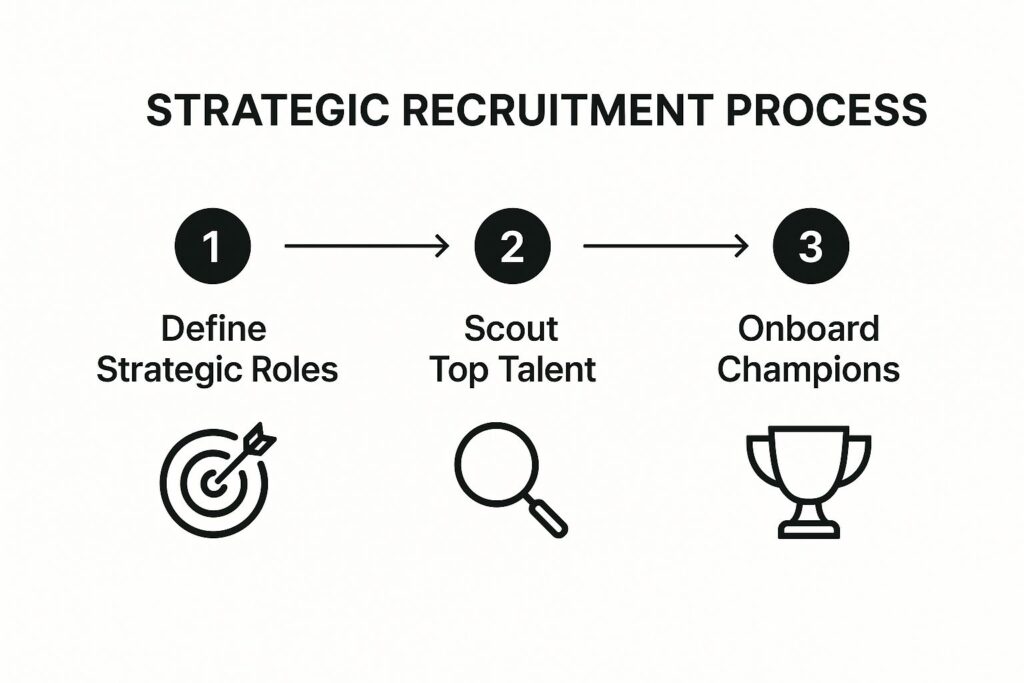
As you can see, the process is deliberate. It kicks off with identifying critical roles and moves methodically towards onboarding talent that will eventually become champions for your brand.
Beyond Filling Vacancies
Ultimately, strategic employee recruitment is a direct investment in your company’s intellectual capital. It’s the art and science of ensuring you have the talent you need not just for today’s tasks, but for the challenges and opportunities that lie ahead. For businesses operating in the dynamic Indian market, this kind of foresight isn’t just an advantage—it’s essential for survival and long-term success.
By treating recruitment as a core strategic function, organisations can build a competitive advantage that is difficult for others to replicate. Your people become your most valuable and defensible asset.
This shift in mindset is crucial. It changes the internal conversation from, “Who can we find quickly?” to, “Who do we need to build our future?” The answer to that question shapes everything that follows.
Navigating the Core Stages of Recruitment
Great recruitment doesn’t just happen. It’s not a single action but a carefully planned journey, with each step building on the one before it. Think of it like building a house – you wouldn’t put the windows in before you’ve laid a solid foundation.
Following a clear roadmap turns hiring from a frantic, reactive scramble into a strategic, repeatable process. It’s how you consistently find and bring the right people into your organisation, avoiding costly missteps along the way.

This journey typically unfolds across several core stages. When you understand and get each one right, recruitment stops being just a necessity and becomes a real engine for your business’s growth and stability.
Let’s walk through this essential roadmap, step by step.
Stage 1: Workforce Planning and Job Analysis
Before you even dream of writing a job ad, you have to figure out what you actually need. This first stage is all about looking at your business goals and spotting the skills gaps holding you back.
It means asking the tough questions: “What talent will we need in six months to hit our targets?” or “Which roles are absolutely critical for our next big project?” This kind of foresight is what prevents panic hiring down the line.
Once you’ve pinpointed a need, it’s time for a deep-dive job analysis. This isn’t just about listing daily tasks; it’s about creating a detailed blueprint for your ideal hire. This includes the must-have skills, the right level of experience, and, crucially, the kind of person who will thrive in your company culture.
Stage 2: Sourcing and Attracting Candidates
With your blueprint ready, the hunt begins. This is the sourcing stage, and in today’s market, you can’t just put up a “Help Wanted” sign and hope for the best. Relying on one channel is like fishing in a tiny pond—your options will be seriously limited.
A smart sourcing strategy casts a wide net, blending different channels to build a healthy talent pipeline:
- Job Boards: Platforms like Naukri, LinkedIn, and Indeed are your go-to for catching active job seekers.
- Social Media Outreach: Don’t wait for them to come to you. Proactively find passive candidates on platforms like LinkedIn, where you can spot top performers who aren’t looking but might be open to a great opportunity.
- Employee Referral Programmes: These are often your gold mine. Referrals come pre-vetted by your own trusted team members and can slash both your cost-per-hire and time-to-hire.
- Industry Events and Networking: Sometimes the best talent is discovered over a coffee, not a CV. Building genuine relationships in your industry can put you on the inside track.
Stage 3: Screening and Shortlisting
As the applications roll in, the next job is to separate the wheat from the chaff. This screening process is all about efficiency, making sure your hiring managers only spend their valuable time with truly qualified people.
Many companies use an Applicant Tracking System (ATS) to handle the first pass, automatically filtering CVs based on keywords and qualifications. It’s a huge time-saver.
After the machines do their work, the real recruiters step in. They’ll do a more detailed review and often conduct quick phone screens. These short calls are perfect for checking key details, getting a feel for communication skills, and seeing if a candidate is genuinely excited about the role before committing to a full interview.
Stage 4: Interviewing and Assessment
The interview stage is where you get to know the people behind the paperwork. It’s a two-way conversation; you’re evaluating them, and they’re definitely evaluating you. The best approach is to use a mix of interview styles to get a 360-degree view of each candidate.
The goal of the interview isn’t just to confirm skills listed on a CV; it’s to uncover how a candidate thinks, solves problems, and behaves in real-world professional situations.
For instance, using structured interviews—where everyone gets the same questions—helps level the playing field and reduce bias. Behavioural questions like, “Tell me about a time you faced a tight deadline,” are incredibly telling. Past performance is one of the best predictors of future success.
Stage 5: Selection and Offer
Once the interviews are done, the hiring team gets together to make the big decision. This shouldn’t be a gut feeling. The best choice is based on all the data you’ve gathered, from the first application to the final interview feedback. Using a scorecard can help keep this process objective and fair.
When you’ve picked your star candidate, it’s time to make a compelling offer—and fast. A great offer is more than just a salary. It should spell out the entire package: benefits, opportunities for growth, and the fantastic company culture they’ll be joining. A professional and speedy offer can make all the difference, especially when your top choice has other options.
Stage 6: Onboarding
The job isn’t done when the offer is accepted. In fact, a new and crucial phase is just beginning. A structured onboarding process is the final step that ensures your new hire doesn’t just survive but thrives.
Great onboarding helps new team members feel welcome, understand their role, and get up to speed quickly. It’s the difference between a new employee feeling lost for weeks and one who starts contributing from day one. It’s the final, vital piece of the recruitment puzzle.
Keeping Up with Recruitment Trends in India
The hiring landscape in India isn’t just changing; it’s moving at lightning speed. To find and attract the right people today, you have to look beyond traditional methods and embrace the shifts shaping the modern workforce. Sticking to old practices is like trying to navigate a bustling city with a worn-out map—you’re bound to get lost.

Staying competitive means getting inside the heads of today’s top candidates, understanding what they truly value, and redesigning your strategy to meet them where they are. Right now, three major trends are defining recruitment across the country: the pivot to skills-based hiring, the non-negotiable demand for flexibility, and the absolute necessity of a powerful employer brand.
Shifting Focus from Degrees to Skills
For decades, a university degree was the golden ticket, the first filter for whittling down a pile of resumes. That model is quickly becoming a relic of the past. Today, forward-thinking companies are far more interested in what a candidate can do, not just what a piece of paper says they’ve studied.
This is the essence of skills-based hiring, and it’s a much more practical way to build a team. It’s all about using tangible methods like skill assessments, work samples, and portfolio reviews to see a candidate’s abilities in action. For instance, instead of just seeking a computer science degree, a tech firm might give a developer a real coding challenge they’d encounter on the job. This approach uncovers brilliant talent that might otherwise be overlooked and leads to much better on-the-job performance.
Embracing Flexibility and Remote Work
The rigid 9-to-5, five-days-a-week office culture is losing its grip. The clamour for flexibility isn’t just a passing phase; it’s a fundamental shift in how people want to build their lives and careers. Offering remote or hybrid work is no longer just a perk—it’s a powerful magnet for attracting a broader, more diverse pool of talent.
India’s hiring scene is transforming before our eyes, and this is a big one. A significant 34% of jobs in India are expected to offer flexible arrangements, signalling a massive move away from rigid, office-first policies. This is especially true in high-growth sectors like renewable energy and AI.
When you offer flexibility, you’re doing more than just providing a benefit. You’re showing trust. That trust is incredibly attractive to high-performing, autonomous professionals who deliver outstanding results, no matter where they log in from.
To make this work, organisations need to invest in the right technology and build a culture rooted in clear communication and accountability. You can learn more about how to reinvent your recruiting strategy to align with these modern demands.
Building an Unforgettable Employer Brand
In a market this competitive, your company’s reputation is everything. Your employer brand is the story people tell about what it’s like to work for you. It’s the sum of every touchpoint a potential hire has with your company, from the first job ad they see to the final interview.
A strong employer brand creates a positive experience, even for the candidates you don’t hire. It’s built on:
- A Clear Value Proposition: What makes your company a brilliant place to work? Be loud and clear about your culture, your values, and the unique opportunities you provide.
- Transparent Communication: Keep candidates in the loop. A simple update email can make all the difference, preventing frustration and protecting your good name.
- Authentic Storytelling: Use employee testimonials and behind-the-scenes content on social media. Show people what your work environment is really like, don’t just tell them.
Ultimately, adapting to these trends is no longer optional for effective employee recruitment. It means shifting your focus to practical skills, trusting your people with flexibility, and intentionally building a brand that the best talent can’t resist.
Measuring Your Recruitment Success with KPIs
You can’t improve what you don’t measure. In recruitment, relying on gut feelings is a recipe for inefficiency and wasted resources. To shift your hiring from a guessing game to a data-driven strategy, you need to track Key Performance Indicators (KPIs).
Think of these metrics like the dashboard in your car. They give you the critical information you need to know if you’re on the right track, moving at the right speed, and using your fuel efficiently. Tracking KPIs helps you pinpoint bottlenecks in your process, justify your budget, and ultimately prove the immense value of strategic recruitment to your organisation.
Core Recruitment KPIs You Must Track
While there are dozens of metrics you could follow, a few stand out as absolutely essential for any modern recruitment team. Focusing on these core KPIs will give you a clear, actionable picture of your hiring health without drowning you in data.
Let’s break down the most important ones.
- Time to Hire: This measures the total number of days between a candidate first applying for a role and the day they accept your job offer. A long time to hire is a red flag – it often means you’re losing top candidates to faster-moving competitors.
- Cost per Hire: This is the total cost of your recruitment efforts divided by the number of hires you made in a specific period. It should include everything from ad spending and agency fees to recruiter salaries and tech subscriptions. This KPI is vital for budget planning and proving your ROI.
- Source of Hire: This metric simply tracks where your successful candidates are coming from, whether it’s LinkedIn, employee referrals, or a specific job board. Understanding your most effective channels allows you to double down on what works and cut spending on what doesn’t.
By consistently tracking these KPIs, you move from simply filling roles to strategically optimising your entire talent acquisition engine. Data replaces assumptions, leading to smarter decisions and far better outcomes.
Calculating Your Key Metrics
Getting started with these KPIs is more straightforward than you might think. We’re not talking about complex data science here; each one has a simple formula that turns raw numbers into a powerful insight.
Here’s a quick look at how you can track the most important recruitment metrics, what they measure, and the simple math behind them.
Key Recruitment KPIs and How to Calculate Them
| KPI | What It Measures | Simple Formula |
|---|---|---|
| Time to Hire | The speed and efficiency of your hiring process from application to acceptance. | (Day Offer Accepted) – (Day Candidate Applied) = Time to Hire in Days |
| Cost per Hire | The total financial investment required to bring a new employee on board. | (Total Internal + External Recruiting Costs) / (Total Number of Hires) = Cost per Hire |
| Quality of Hire | The long-term value a new employee brings to the company. | (Performance Score + Retention Rate + Culture Fit Score) / 3 = Quality of Hire Score |
These formulas provide a solid foundation for building a data-driven recruitment function that can clearly demonstrate its value to the business.
The Ultimate Metric: Quality of Hire
While speed and cost are important, the ultimate measure of recruitment success is the Quality of Hire. This is the KPI that tells you if your process is actually finding people who succeed, thrive, and stay with the company for the long term.
Calculating it is more nuanced, often combining several data points like first-year performance review scores, retention rates after one year, and hiring manager satisfaction surveys.
A high Quality of Hire score demonstrates that your recruitment strategy isn’t just about filling seats—it’s about building a stronger, more effective workforce. Companies that master their data can achieve remarkable results, as you can see from this case study on how OYO Rooms improved their hiring metrics. This data-driven approach is what turns recruitment into a clear competitive advantage for your business.
Why Employee Engagement Is Your Secret Weapon
Let’s be honest, the recruitment process doesn’t stop when a candidate signs their offer letter. That’s just the starting line. The real test happens in the months that follow. If that talented new hire you worked so hard to find walks out the door within a year, all that effort—the time, the money, the momentum—is lost.
This is where employee engagement becomes your most powerful tool for keeping your best people. Think of it as the glue that holds your team together, the difference between an employee who just shows up and one who truly shows up. Engagement is that emotional commitment someone has to your organisation and its goals. It’s what drives them to go the extra mile, not because they have to, but because they genuinely care about the company’s mission.

Without this connection, even the most promising hires can quickly tune out, leading to a revolving door of talent that hurts morale, stalls projects, and kills productivity.
The Roots of Disengagement
Disengagement rarely happens overnight. It’s usually a slow burn, sparked by a gap between the expectations set during the hiring process and the day-to-day reality of the job.
What fans the flames? Usually, it’s one of these common culprits:
- A Disconnect with Company Values: The new hire feels the culture they were sold during interviews doesn’t match the actual work environment. What looked like a collaborative paradise turns out to be a siloed bureaucracy.
- Lack of Growth Opportunities: Ambitious people need to see a path forward. If they feel stuck in a dead-end role with no clear way to develop their skills or advance their career, their motivation will quickly fizzle out.
- Poor Onboarding Experience: A chaotic or unwelcoming onboarding process can make a new team member feel isolated and unsupported from day one. First impressions matter immensely.
- Feeling Unrecognised: When people pour their energy into their work and it goes unnoticed, they start to feel like their contributions don’t matter. It’s a surefire way to make them stop trying.
This isn’t just a hypothetical problem; it’s a critical issue right here in the Indian workforce. Recent data is alarming, showing that employee engagement in India plummeted to just 19% in 2025—a sharp drop from the previous year. The problem is especially bad among younger employees, which should be a major red flag for companies trying to build a team for the future. You can read the full research from ADP to discover more about workforce engagement trends.
Weaving Engagement into Recruitment
To stop disengagement before it even has a chance to start, you have to bake the principles of engagement right into your recruitment strategy. It’s about shifting your mindset from just filling a vacant spot to finding a long-term, successful partner.
Don’t just recruit for skills; recruit for engagement. A candidate’s alignment with your company’s purpose and values is as important as their technical qualifications for long-term success.
Here are a few practical ways to make engagement a core part of your process from the very beginning:
- Be Transparent About Culture: Ditch the polished sales pitch. During interviews, give candidates an honest, authentic picture of your work environment—the good, the bad, and the challenging.
- Create Memorable Onboarding: Go beyond the paperwork and IT setup. Design a structured onboarding programme that immerses new hires in your company culture and helps them build real connections with key team members.
- Highlight Growth Paths: Don’t be vague about career progression. Clearly show candidates what opportunities for professional development and advancement look like for someone in their role.
- Build a Culture of Recognition: Talk about how you celebrate wins and acknowledge hard work. Show them, with real examples, that their efforts won’t just disappear into a void.
By focusing on engagement from the very first interaction, you do more than just hire an employee. You bring on board a committed partner who is excited and ready to grow with you.
Leveraging Recruitment Process Outsourcing (RPO)
Trying to manage the entire employee recruitment lifecycle in-house can feel a bit like being your own lawyer, accountant, and marketing agency all at once. Sure, it’s possible, but it pulls precious time and energy away from what your business actually does best. For many growing companies, this is where Recruitment Process Outsourcing (RPO) becomes a strategic game-changer.
Think of an RPO provider not as a temp agency you call in a pinch, but as a true extension of your own team. They take on full or partial ownership of your recruitment process, bringing specialised expertise, technology, and a dedicated focus to finding the best talent. This partnership frees up your internal HR team to concentrate on bigger picture initiatives, like building company culture and fostering employee development.
Understanding Different RPO Models
RPO isn’t a one-size-fits-all service; it’s designed to be flexible and meet very specific business needs. The right model for you depends entirely on your goals, your scale, and the hiring challenges you’re currently facing.
There are a few common ways it can work:
- End-to-End RPO: This is the whole package. The provider manages the entire recruitment cycle, from sourcing and screening candidates right through to making the offer and handling onboarding.
- Project-Based RPO: This is perfect for specific, time-bound needs, like staffing a brand-new department or handling a sudden hiring surge for a large-scale project.
- On-Demand RPO: This model gives you access to expert recruiters on an as-needed basis, perfect for supplementing your internal team during peak hiring seasons.
Choosing the right model is critical. A fast-growing tech start-up might go for an end-to-end solution to build its team from the ground up. In contrast, an established company might use project-based RPO to launch a new product line without disrupting its regular hiring flow. You can dig deeper into how RPO helps with high-impact, data-driven hiring in our detailed guide.
The Strategic Benefits of an RPO Partnership
Partnering with an RPO provider is about much more than just filling open roles. It’s a strategic decision that delivers real, measurable business value by making your hiring more efficient, improving the quality of your candidates, and optimising your costs. A huge advantage is getting access to advanced recruitment technology and analytics without the hefty upfront investment.
A true RPO partnership transforms recruitment from a reactive, administrative burden into a proactive, strategic function that directly fuels business growth and scalability.
This is especially critical in a booming job market. India continues to be a global leader in hiring intent, ranking second worldwide in employer hiring sentiment for late 2024 and early 2025. This growth, particularly in sectors like IT and financial services, makes a strategic approach to finding talent absolutely essential. You can learn more about India’s strong hiring trends and understand why an optimised recruitment process is so vital right now.
Got Questions About Recruitment? We’ve Got Answers
Even when you have a solid plan, the day-to-day reality of hiring can throw up some tricky questions. Let’s tackle some of the most common ones to clear up any confusion and help you navigate the real-world challenges of building a great team.
What’s the Real Difference Between Recruitment and Talent Acquisition?
It’s easy to use these terms interchangeably, but they represent two very different mindsets. Think of it this way: recruitment is about the here and now. It’s the tactical, often reactive, process of getting someone to fill an open position on your team. You have a vacancy, and your goal is to fill it.
Talent acquisition, on the other hand, plays the long game. It’s a continuous, strategic effort that involves planning for your company’s future needs. This means building relationships with potential candidates before you even have a job for them, strengthening your employer brand, and creating a pipeline of talent that you can tap into when the time is right.
Recruitment is about filling a seat on the bus. Talent acquisition is about designing a better bus and making sure the best drivers want to join your team for the journey ahead.
Shifting your focus from just recruiting to a broader talent acquisition strategy is how you build a workforce that can grow with you, rather than just patching holes as they appea
How Can a Small Business in India Improve Recruitment on a Tight Budget?
You don’t need a huge wallet to win at hiring; you just need to be clever and resourceful. For small businesses in India, the trick is to focus your energy on high-impact, low-cost strategies that give you the biggest bang for your buck (or rupee!).
Here are a few ideas that work wonders:
– Fire up an Employee Referral Programme: This is hands-down one of the most powerful and affordable tools you have. Your own team members are your best recruiters. They understand your culture and can bring in people they already know are a good fit, saving you time and screening headaches.
– Go All-In on Social Platforms: Use professional networks like LinkedIn for more than just posting jobs. Share stories about your team’s successes, post behind-the-scenes photos, and celebrate your work culture. Building an attractive employer brand online costs nothing but your time and creativity.
– Shout About Your Non-Monetary Perks: You might not be able to compete with corporate giants on salary, so don’t try to. Instead, highlight what makes your company special. Talk about the opportunities for professional growth, the flexible work environment, or the close-knit, supportive team. For many top candidates, these things matter far more than the number on their paycheque.
What Role Does Technology Play in Modern Indian Recruitment?
Technology isn’t just a nice-to-have in recruitment anymore—it’s a complete game-changer. It takes over the repetitive, time-consuming tasks, which frees up your team to focus on what really matters: connecting with people.
Think about an Applicant Tracking System (ATS). It can sift through thousands of applications in minutes, flagging the most qualified candidates automatically. AI-powered sourcing tools can find brilliant people who aren’t even actively looking for a new job. And video interview platforms? They save an incredible amount of time and money that used to be spent on travel and scheduling logistics.
Ultimately, technology allows you to move away from gut-feel hiring and towards making smarter, data-driven decisions. It transforms recruitment from an art into a science, making the entire process more efficient, fair, and effective.
Ready to transform your hiring process from a cost centre into a strategic advantage? Taggd provides expert RPO solutions that help you find, attract, and retain the top talent your business needs to thrive.