
Winning the War for Talent With Employer Brand Marketing
Here’s what you need to know about employer brand marketing and why it’s no longer just a ‘nice-to-have’ for your business.
Think of it as the strategic art of shaping how people see your company as a place to work. It’s about defining your unique culture, values, and the opportunities you offer—your employer brand—and then telling that story to attract, engage, and keep the best talent. Essentially, you’re marketing your company, but your target audience isn’t customers; it’s your future and current employees.
What Is Employer Brand Marketing and Why It Matters Now

Imagine your company is a product sitting on a shelf. Just like a shopper chooses a product based on its reputation and the story behind it, top professionals are now choosing their employers with the same level of scrutiny. Employer brand marketing is how you make sure your workplace is the product they want to pick.
This goes way beyond just posting job ads. It’s a non-stop effort to build a magnetic reputation that pulls the right people towards you, even when you aren’t actively hiring for a role. This kind of reputation is built on authentic stories, a clear promise to your people, and an employee experience that consistently delivers on that promise.
The Shift From Tactic to Business Strategy
It wasn’t long ago that managing a company’s reputation as an employer was considered a secondary HR task. Today, it’s a core business strategy with a direct impact on the bottom line. Why the change? The competition for skilled professionals is fiercer than ever, and a good salary is no longer enough to win the war for talent.
Candidates have become savvy consumers of career opportunities. They dig deep into your company culture, pore over employee reviews, and look for a genuine alignment with their own values before they even think about applying. If your employer brand is weak or non-existent, you’re simply invisible to a massive chunk of the talent pool.
The Tangible Impact of a Strong Brand
Putting real effort into your employer brand marketing delivers concrete, measurable results that your leadership team will notice. The benefits ripple out far beyond just having a healthy pipeline of candidates.
A strong employer brand has a direct influence on:
- Reduced Hiring Costs: A powerful brand reputation attracts candidates organically, meaning you can rely less on expensive job boards and recruitment agencies.
- Improved Talent Quality: When you’re crystal clear about who you are, you attract people who are a natural fit for your culture and mission. This leads to much higher-quality hires.
- Enhanced Employee Retention: When the brand promise you make to candidates matches their actual day-to-day experience, you build loyalty and slash costly turnover.
- Increased Application Volume: The numbers don’t lie. Data from Statista on India’s Best Employers 2025 showed that 74% of respondents see employer reputation as a crucial factor in their job choice. Even better, 89% of awarded companies saw their application volume jump by an average of 45% after strengthening their brand. You can see more about how reputation drives talent in the full Statista rankings.
A strong employer brand isn’t just about looking good on paper. It’s about building a genuine connection with talent by proving that your company is a place where they can thrive, contribute, and build a meaningful career.
Ultimately, effective employer brand marketing transforms your organisation into a talent magnet. It lays the groundwork for every successful recruitment campaign and is the absolute foundation for sustainable growth. To dive deeper into this topic, feel free to explore our other articles on employer branding and talent attraction.
Building Your Authentic Employer Value Proposition

If your employer brand is the story you tell the world, then your Employer Value Proposition (EVP) is the plot. It’s the promise you make to your people—the unique mix of benefits, culture, and career opportunities they get in return for their hard work.
A powerful EVP isn’t just a catchy tagline; it’s the genuine answer to a candidate’s biggest question: “Why should I work here?”
Crafting an EVP is less about invention and more about discovery. You have to look inwards and figure out what makes your company a great place to work, straight from the people who know it best: your employees. This ensures your employer brand marketing is built on truth, not just wishful thinking.
Think of an authentic EVP as a filter. It pulls in candidates who will genuinely thrive in your environment and, just as importantly, helps those who wouldn’t be a great fit to opt out on their own. This kind of alignment is gold for long-term retention and engagement.
Uncovering Your Organisational DNA
The first step is simple: listen. Your current employees are the ultimate source of truth about your company culture and day-to-day work life. Their experiences, motivations, and even their frustrations hold the keys to an EVP that connects because it’s real.
But you can’t just ask around casually. You need a structured approach to gather both broad data and deep, personal insights. This isn’t a one-off project but an ongoing conversation with your team.
Here are a few proven ways to dig for these truths:
- Anonymous Employee Surveys: These are fantastic for getting quantitative data at scale. You can ask about satisfaction with pay, work-life balance, career growth, and management.
- Focus Groups: Getting small groups together for facilitated chats lets you dig into the “why” behind survey numbers. You’ll hear the exact words your team uses to describe their jobs, which is incredibly valuable.
- Leadership Interviews: You absolutely need the view from the top. Talking to leadership ensures your EVP doesn’t just reflect today’s reality but also lines up with where the company is headed.
By blending these methods, you start to build a complete picture of your organisation’s strengths and the unique value it truly offers. This is the raw material you’ll use to build your EVP.
From Insights to Actionable Pillars
Once you’ve collected all this internal feedback, it’s time to find the patterns. Look for the ideas and themes that keep popping up. Do people constantly talk about the collaborative spirit? The tough, interesting projects? The amazing flexibility?
These recurring themes are the foundation of your EVP. You should aim to nail down three to five core pillars that truly capture the essence of what it’s like to work for you.
An effective EVP translates abstract values into concrete promises. For example, a value like ‘Innovation’ becomes an EVP pillar such as ‘Work on industry-first projects that challenge your skills and redefine what’s possible.’
Let’s imagine a tech company goes through this process. They might discover their people value three things above all else:
- Groundbreaking Projects: The opportunity to work with emerging technologies.
- Radical Flexibility: Real autonomy over how, when, and where they work.
- Rapid Career Growth: Clear, fast-tracked pathways for promotion.
These three pillars create a powerful and specific EVP. This isn’t just a list; it’s a framework you can weave into every job description, social media post, and candidate conversation.
For a real-world example of this in action, check out this in-depth case study on building an employer brand for Covance. It’s a great look at how deep internal insights directly shape powerful external messaging. A well-defined EVP makes sure every single touchpoint tells a consistent and authentic story about your company.
Creating a Content Strategy That Tells Your Story

Once you’ve nailed down a powerful Employer Value Proposition (EVP), the next move is bringing it to life. This is where your content strategy steps in. It’s the vehicle that takes your employer brand story from an internal idea to an external reality that actually connects with top talent.
Think of your EVP pillars as the core themes of your story. The content strategy is how you tell that story across different chapters, formats, and channels. If one of your pillars is a commitment to employee well-being, your content needs to show what that looks like in action—not just state it as a fact.
Authenticity is everything here. Your employer brand marketing content has to feel real because it is real. It should be a direct reflection of your team’s genuine experiences, turning them into your most believable and persuasive storytellers.
Translating EVP Pillars into Content Themes
The first step is to break down each EVP pillar into tangible content ideas. This simple process makes sure every piece of content you create has a purpose and directly supports the brand you’re trying to build. It stops you from just creating random content and focuses your efforts on what truly matters to your ideal candidates.
Let’s imagine your EVP is built on these three pillars:
- Career Development: Showcasing clear pathways for professional growth.
- Groundbreaking Projects: Highlighting the exciting and impactful work your teams do.
- Supportive Culture: Demonstrating a commitment to employee well-being and collaboration.
Each one of these is a goldmine for content. For “Career Development,” you could create blog posts profiling employees who started in junior roles and are now leading teams. For “Groundbreaking Projects,” a behind-the-scenes video series on your engineering team’s latest breakthrough would be far more compelling than a flat job description.
Authenticity isn’t a buzzword; it’s a strategy. The most powerful content in employer brand marketing is a window into your real work life, not a polished advertisement. Show, don’t just tell.
This approach also drives consistency. Whether a candidate finds you on LinkedIn, your careers page, or through an employee’s post, the story they encounter should be the same. This reinforces your core message at every touchpoint, building trust and making your employer brand memorable.
Mapping Content to the Candidate Journey
Not all content is created equal, and it shouldn’t be served to every candidate at the same time. Someone just discovering your company needs different information than a candidate prepping for a final interview. Mapping your content to the candidate journey is the key to delivering the right message at exactly the right moment.
To help you organise this, here is a table mapping EVP pillars to different channels and content ideas.
EVP Pillar to Content Channel Mapping
| EVP Pillar | Content Idea Example | Primary Channel | Secondary Channel |
|---|---|---|---|
| Career Development | Blog post: “5 Ways We Invest in Our Team’s Growth” | Careers Page / Blog | LinkedIn / Employee Advocacy |
| Groundbreaking Projects | Behind-the-scenes video of a major product launch | YouTube / Instagram | Company Newsletter / Job Postings |
| Supportive Culture | Instagram Stories showing a team-building event | Instagram / Facebook | Glassdoor / Internal Comms |
| Work-Life Balance | Employee testimonials on flexible work policies | LinkedIn / Careers Page | Industry Forums / Social Media Ads |
This structured approach ensures you have a balanced mix of content that nurtures candidates through the entire hiring funnel. You’re proactively answering their questions and reinforcing your value proposition every step of the way. It’s this kind of strategic thinking that sets top employer brands apart.
Recent research really brings this home, highlighting how specific EVP drivers influence talent attraction in India. For instance, the Randstad Employer Brand Research report identified Tata Group, Google India, and Infosys as the country’s most attractive employer brands. Tata’s appeal was driven by financial health and career progression, while Google and Infosys were recognised for work-life balance and benefits.
The same report found that 85% of Indian professionals now prioritise purpose-driven work—a huge jump from 2020. This shift underscores the growing need for authentic, value-led content. You can explore more about these employer branding trends in the full report.
Activating Your Brand on the Right Channels
Crafting an authentic EVP and a killer content strategy is a massive win, but it’s really only half the battle. Think about it: the most compelling employer brand story in the world is completely useless if the right people never see it. This is where activation comes in—it’s all about strategically getting your message out across the channels where your ideal candidates actually spend their time.
This isn’t a game of being everywhere at once. It’s about being in the right places with the right content. A smart multichannel approach means you meet talent where they are, building a sense of familiarity and trust long before they even think about looking for a new job. Your careers page should be the central hub, with every other channel acting as a signpost leading talented people straight to it.
Effective activation is what turns a passive employer brand into an active, talent-attracting machine.
Building Your Digital Headquarters
Your careers page is the undisputed home base for your employer brand. It’s almost always the first place a genuinely interested candidate will go to get the real story about your organisation. This is your turf, where you have 100% control of the narrative, free from the character limits and tricky algorithms of social media.
Your careers page has to be more than just a dry list of job openings. It needs to be an immersive experience that brings your EVP roaring to life. Use this space to showcase:
- Authentic Employee Stories: Real videos and articles that feature your team members and their unique journeys within the company.
- Culture Highlights: Behind-the-scenes photos and videos of team events, everyday work life, and what your office environment actually feels like.
- Clear Value Propositions: Dedicated sections for each of your EVP pillars, breaking down exactly what you offer in terms of growth, benefits, and making an impact.
Think of this page as your digital front door. A well-designed, content-rich careers page reassures candidates that the awesome brand they saw on LinkedIn is the same one they’ll find if they come on board.
Engaging Talent on Social and Professional Networks
While your careers page is the destination, social and professional networks are where you start the conversations. Each platform has a different job to do in your employer brand marketing strategy.
- LinkedIn: This is ground zero for professional credibility. Share thought leadership from your executives, celebrate employee promotions and work anniversaries, and post insightful articles about your industry. Targeted ad campaigns here can hit very specific talent segments with surgical precision.
- Instagram and Facebook: Use these channels to show your human side. Post candid photos from team outings, “day-in-the-life” stories, and let employees take over the account for a day. This kind of content is perfect for revealing the personality behind the logo.
- Glassdoor and Review Sites: Your reputation is also built on what other people are saying about you. You need to proactively manage your presence on sites like Glassdoor by responding to reviews (both good and bad) and encouraging current employees to share their honest thoughts. A staggering 86% of job seekers read company reviews before they even think about applying, making this a channel you can’t afford to ignore.
Your multichannel strategy shouldn’t feel like a bunch of separate, disconnected efforts. The goal is to create one consistent, recognisable brand voice that is simply adapted to fit the specific tone and format of each platform.
Turning Employees into Brand Ambassadors
Perhaps the most powerful—and most trusted—channel you have is your own team. Employee advocacy is all about empowering your people to share their genuine experiences on their personal networks. When a potential candidate sees a post from a current employee, it carries so much more weight than any corporate ad ever could.
Create a simple framework to get the ball rolling. Provide employees with pre-approved content they can easily share, run internal campaigns to highlight great employee posts, and give a shout-out to those who become strong brand ambassadors. This kind of organic reach is priceless for building a brand that feels credible and relatable.
Beyond social media, don’t forget about activating your brand through real-world and virtual interactions. University partnerships and campus drives connect you with the next generation of talent. You can also scale your employer branding with online recruitment events, creating interactive experiences that give candidates a direct line to your recruiters and hiring managers. This powerful mix of digital and direct engagement creates a robust activation strategy that drives real, measurable results.
Measuring What Matters for Your Brand
So, you’ve put in the work and crafted a compelling employer brand story. That’s a huge first step, but how do you actually know if it’s resonating? Just launching a campaign and crossing your fingers isn’t a strategy. To really prove the value of your employer brand marketing and justify future investment, you have to look beyond the flashy numbers and zero in on the Key Performance Indicators (KPIs) that really move the needle.
Measuring what matters is all about drawing a straight line from your branding efforts to real business results—better talent attraction, stronger employee engagement, and long-term retention. It’s how you change the conversation with leadership from “we got a lot of likes” to “we cut our hiring costs by 15%.” This data-first mindset is what elevates employer branding from a creative project to a core business function with a measurable return on investment (ROI).
From Vanity Metrics to Value Metrics
It’s tempting to get swept up in “vanity metrics” like social media likes, page views, or impressions. They feel good, but they don’t tell the whole story. While they can signal reach, they won’t tell you if you’re actually attracting the right people or beefing up your talent pipeline. Real value comes from tracking metrics that show improvements in efficiency, quality, and retention.
Think of it like this: a thousand likes on a social post is nice, but a 10% jump in qualified applicants from a critical demographic is a tangible business win. The goal is to build a measurement framework that tells a powerful story about your brand’s real-world impact.
The most effective way to measure employer branding isn’t just about tracking activity; it’s about demonstrating influence. You need to answer the big question: “Is our brand making it easier to hire and keep great people?”
To get a complete picture, you need to track metrics across three key areas of the talent journey. This holistic approach ensures you’re not just looking at one piece of the puzzle but understanding your brand’s influence from start to finish.
Key KPIs for Talent Attraction
This is where it all starts—the top of the funnel. Here, you’re measuring your brand’s ability to pull in top-tier candidates. Strong numbers at this stage mean your message is hitting the mark and your pipeline is healthier for it.
Key metrics to keep an eye on include:
- Cost-per-Hire: Are your organic branding efforts making you less reliant on expensive job boards and recruitment agencies? If so, your average cost to fill a role should be dropping.
- Time-to-Fill: A powerful brand naturally attracts a steady stream of qualified candidates, which should shorten the time it takes to find and hire the perfect fit.
- Offer Acceptance Rate: This is a fantastic litmus test for your brand’s strength. When top candidates consistently pick your offer over others, it’s a clear signal your EVP is compelling.
- Quality of Hire: This metric looks at the performance of new hires during their first year. An uptick here suggests your brand is attracting people who are a better long-term fit for your company culture and the roles themselves.
This diagram breaks down how different channels work together to bring your brand to life and attract talent.
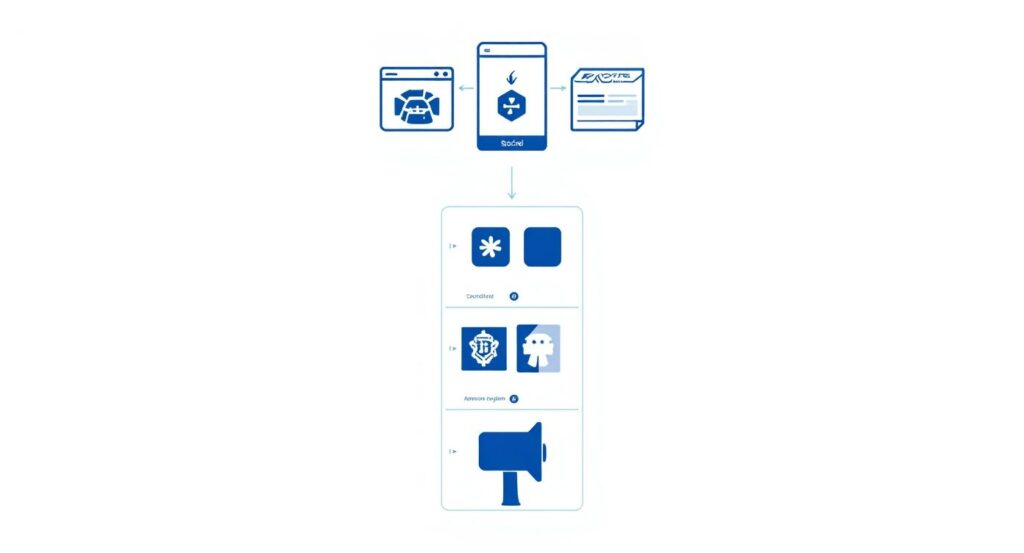
As the visual shows, having a great careers page is fundamental, but its success hinges on driving traffic from social media, glowing reviews on other platforms, and genuine advocacy from your own employees.
Measuring Engagement and Retention
Your employer brand doesn’t clock out once an offer is signed. In fact, its most critical job is making sure the day-to-day employee experience lives up to the promises you made, which has a direct line to engagement and retention.
For this, you need to look at internal metrics:
- Employee Engagement Scores: Regular pulse surveys are a great way to gauge how connected and motivated your team feels. An authentic, well-executed brand should lead to higher engagement.
- Turnover Rate: This is one of your most important ROI metrics. When a brand delivers on its promises, it builds a loyal workforce, leading to lower voluntary turnover and massive cost savings.
- Employee Net Promoter Score (eNPS): This simple metric answers one powerful question: “How likely are you to recommend our company as a great place to work?” A high eNPS is a clear sign of strong employee advocacy.
The impact here is huge. For example, a recent report on Global Capability Centres (GCCs) in India found that 92% now see employer branding as a top priority. Why? Because those with a strong brand are seeing 40% lower attrition rates and are 2.8 times more likely to attract the best talent. This has convinced 78% of GCCs to increase their branding budgets. You can dive deeper into the data and learn how employer branding boosts retention for GCCs.
To give you a structured way to approach this, here’s a table outlining the most important KPIs to track.
Key Performance Indicators for Employer Brand Marketing
This table outlines essential KPIs to track, categorised by their primary impact area, to effectively measure the success of your strategy.
| Impact Area | Key Performance Indicator (KPI) | What It Measures | Tools for Tracking |
|---|---|---|---|
| Talent Attraction | Cost-per-Hire | The efficiency of your recruitment spending as brand awareness grows. | Applicant Tracking System (ATS), HRIS, Recruitment Budgets |
| Time-to-Fill | The speed of your hiring process from job opening to offer acceptance. | ATS Reports | |
| Offer Acceptance Rate | The percentage of candidates who accept a job offer. | ATS, HR Team Data | |
| Quality of Hire | New hire performance, productivity, and cultural fit over 6-12 months. | Performance Management Systems, Manager Feedback | |
| Engagement | Employee Engagement Scores | Employee satisfaction, motivation, and connection to the company. | Survey Platforms (SurveyMonkey, Glint) |
| Employee Net Promoter Score (eNPS) | Employees’ willingness to recommend the company as a place to work. | Pulse Survey Tools, Internal Comms Platforms | |
| Internal Mobility Rate | The rate at which employees move into new roles within the company. | HRIS, Career Pathing Software | |
| Retention | Voluntary Turnover Rate | The percentage of employees who leave the company willingly. | HRIS Reports |
| First-Year Attrition | The rate at which new hires leave within their first 12 months. | HRIS, Onboarding Feedback | |
| Average Employee Tenure | The average length of time employees stay with the company. | HRIS Analytics |
By tracking this balanced scorecard of KPIs, you can move beyond guesswork and build a powerful business case. You’ll be able to show, with hard data, that strategic employer brand marketing isn’t just another expense—it’s a high-return investment in your company’s most important asset: its people.
Got Questions About Employer Branding? We’ve Got Answers.
Diving into employer brand marketing can throw up a lot of questions, especially if you’re just starting out or trying to get the higher-ups on board. Let’s tackle some of the most common hurdles organisations run into.
How Can a Small Company Start With a Limited Budget?
You don’t need a huge budget to build an employer brand that people notice. It’s all about focusing on smart, low-cost activities that are genuinely you.
Start with your own turf: your careers page. Make sure it’s up-to-date, works well on mobile, and actually shows what it’s like to work with you. Use real employee testimonials and photos, not stock images. Then, get your current team involved. Encourage them to share their honest experiences on professional networks and review sites. Sharing some behind-the-scenes moments on social media costs absolutely nothing but does a fantastic job of showing off your company’s personality.
Authenticity and consistency are your most valuable assets, not a large budget. A genuine story told well will always outperform a big-budget campaign that feels fake.
What’s the Difference Between Employer Branding and Recruitment Marketing?
Let’s break it down simply. Think of employer branding as your long-term reputation building, while recruitment marketing is the specific, short-term tactics you use to fill open jobs right now.
Employer Branding is about defining who you are as an employer. It’s the slow-and-steady work of shaping and sharing your company culture and Employee Value Proposition (EVP). The goal is to build a lasting, positive name for yourself in the talent market.
Recruitment Marketing is putting that brand to work to actively pull in candidates for roles you need to fill. This is where things like running targeted job ad campaigns, reaching out to potential candidates, and promoting hiring events come into play.
Basically, your employer brand is the foundational “why” someone should want to work for you. Recruitment marketing is the “how” you convince them to apply today.
How Do You Make Sure Your Employer Brand Message Is Authentic?
You can’t just invent authenticity; you have to find it within your own company. The story you tell the world has to match the real experience of your employees. If it doesn’t, you’ll just create distrust.
The first step, always, is to listen to your people. Run internal surveys, hold focus groups, and just have honest one-on-one chats to figure out what they truly value about their jobs. That feedback is the gold you’ll use to build your EVP. When you create content, put your real employees front and centre and let them tell their own stories. Ditch the generic stock photos and corporate buzzwords. An authentic brand is one your own team would look at and say, “Yep, that’s us.
Building a magnetic employer brand is a strategic investment in your company’s future. At Taggd, we specialise in helping organisations define their unique story and activate it to attract top-tier talent. Discover how our Recruitment Process Outsourcing solutions can transform your hiring strategy by visiting us at Taggd.