
A Guide to Telecommuting for Indian HR Leaders
Telecommuting isn’t just a trendy perk anymore; it’s become a core part of the playbook for modern Indian companies. It’s less about simply working from home and more about a complete redesign of how we approach work itself, shifting our focus from physical presence to tangible results.
The Strategic Shift to Telecommuting in India
The entire landscape of work in India has been redrawn. What started for many as a temporary, emergency response to the pandemic has now settled into a permanent feature of the nation’s workforce. This isn’t just a fleeting trend. It’s a strategic pivot to meet the growing demands for flexibility, build operational resilience, and tap into top talent, regardless of their post code.
For HR leaders, this means letting go of old ways of thinking and embracing a new reality. We have to build a framework where productivity and culture can flourish, no matter where an employee is logging in from. The real work lies in crafting smart policies, adopting the right technology, and cultivating a culture that balances autonomy with connection.
From Perk to Permanent Fixture
The adoption of telecommuting and hybrid work models has seen a massive surge across corporate India. This isn’t just an IT-sector phenomenon, either. Organisations across finance, education, and even manufacturing are now weaving flexible work options into their operational fabric.
A telling post-pandemic trend reveals that over 70% of Indian companies have now adopted some form of remote or hybrid work. This isn’t a small adjustment; it’s a clear signal of a deep-seated change in corporate strategy. You can discover more about how Indian companies are evolving their HR practices to keep pace.
The image below perfectly captures the idea of remote freedom, which is a huge driver behind this shift.
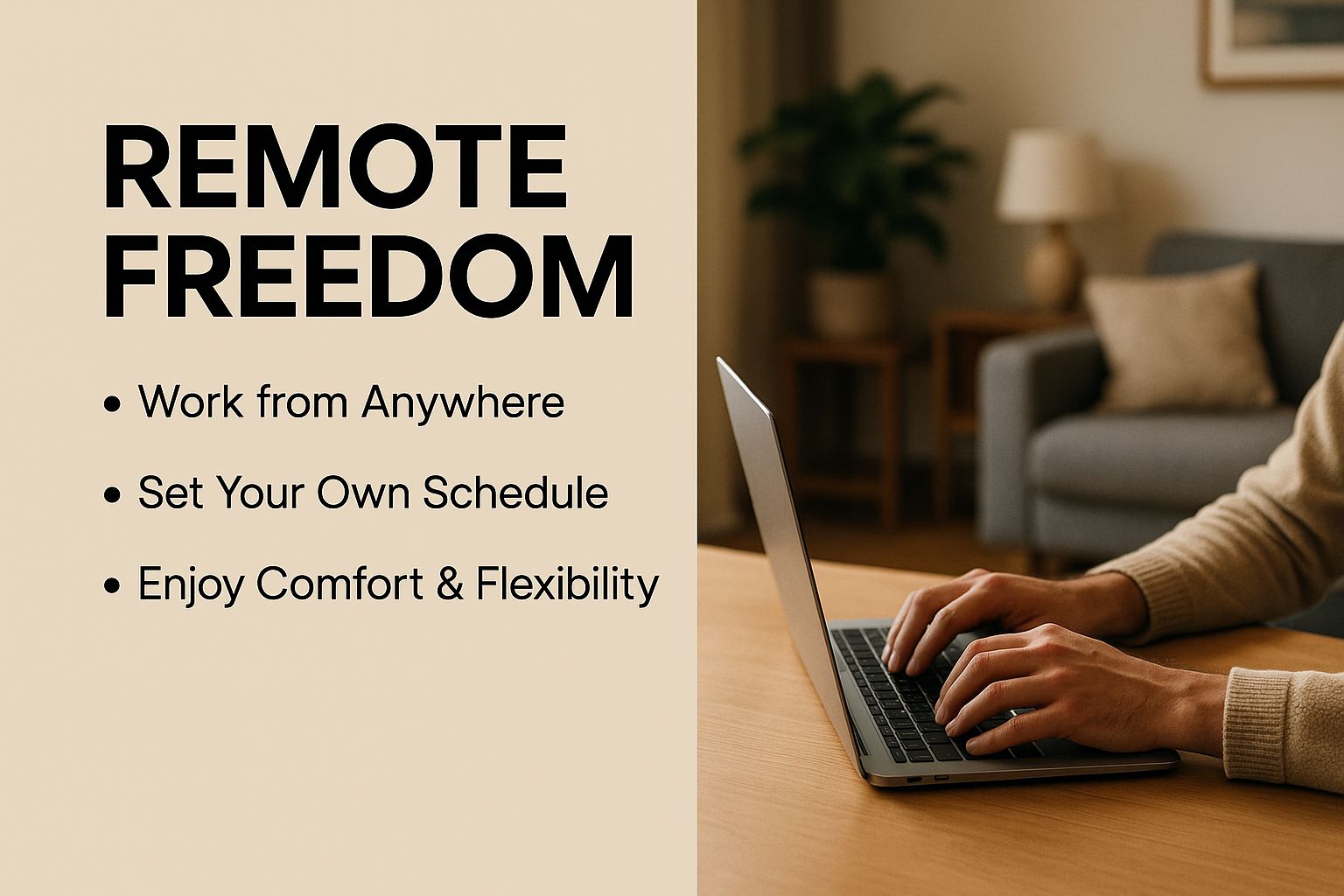
This picture of a comfortable and productive home office really hits on the changing expectations of employees. They want better work-life integration and more control over their day, and that desire is making telecommuting a powerful magnet for attracting and keeping top talent.
Telecommuting is far more than a logistical change—it’s a cultural transformation. It pushes organisations to operate on trust, focus on outcomes instead of hours clocked, and give employees a level of autonomy they’ve never had before.
A Snapshot of Telecommuting Models in India
As companies navigate this new terrain, several distinct models have emerged. Each offers a different blend of flexibility and structure, suited to different business needs.
| Model | Description | Best Suited For |
|---|---|---|
| Fully Remote | Employees work from a location of their choice, with no requirement to come into a central office. The company may be “office-less.” | Tech startups, digital-first companies, and roles that can be performed entirely online without location-specific needs. |
| Hybrid (Office-First) | Employees are expected to be in the office for a majority of the week (e.g., 3-4 days) but have the flexibility to work from home on other days. | Organisations that value in-person collaboration and have a strong existing office culture but want to offer some flexibility. |
| Hybrid (Remote-First) | Employees work remotely for the majority of the time but come into the office for specific purposes like team-building, project kick-offs, or key meetings. | Companies looking to reduce their physical office footprint and attract talent from a wider geographical area while still fostering team cohesion. |
These models provide a starting point, but the most successful organisations are those that listen to their people and adapt their approach to fit their unique culture and goals.
Redefining the Modern Workplace
Getting telecommuting right means fundamentally redesigning the workplace. This involves setting up crystal-clear guidelines and equipping your team with the right tools to make sure everything runs smoothly. The aim is to build an environment where collaboration is effortless, communication is transparent, and every employee feels plugged into the company’s bigger purpose.
HR leaders are steering this transformation, and the key tasks fall into three main areas:
- Developing Robust Policies: Crafting clear, fair, and legally sound telecommuting agreements that spell out expectations for everyone involved.
- Investing in Technology: Choosing and rolling out a tech stack that supports seamless communication, project management, and data security for a distributed workforce.
- Fostering a Remote-First Culture: Intentionally building a culture based on trust, accountability, and inclusivity that works just as well for someone at home as it does for someone in the office.
This guide will give you actionable insights and practical solutions designed for the unique opportunities and challenges here in India, helping you build a thriving organisation that’s ready for the future of work.
Why Telecommuting Is a Strategic Advantage
Let’s be clear: offering telecommuting isn’t just about handing out a popular employee perk anymore. For savvy HR leaders, it’s a core business strategy that delivers real, measurable results. It’s a fundamental shift that moves remote work from a nice-to-have to a genuine competitive edge, with benefits that cascade through your entire organisation.
The most powerful and immediate advantage? You suddenly have a vastly larger talent pool. When you’re no longer restricted by geography, you can hire the best person for the role, period—not just the best person who lives within a 50-kilometre radius. This throws open the doors to a national, or even global, market for niche skills that might be incredibly hard to find locally.
Unlocking Talent and Boosting Diversity
This freedom from location is a direct pipeline to a more diverse workforce. By removing the need to relocate, you can attract incredible talent from different socio-economic backgrounds, Tier-2 and Tier-3 cities, and a variety of cultural contexts. It’s a game-changer for creating a more inclusive team, especially for people who have traditionally faced hurdles with office-based work, like parents or individuals with disabilities. You can explore more on how to embrace diversity in your hiring process to build a richer, more innovative team.
This isn’t just a box-ticking exercise. An organisation that truly reflects a wide array of experiences and perspectives is naturally better at innovating and connecting with a broader customer base.
By decoupling work from a specific location, companies can access a deeper well of expertise. This isn’t just about finding more candidates; it’s about finding the right candidates, whose unique skills can drive the business forward, regardless of where they live.
Driving Operational Efficiency and Cost Savings
Beyond the talent advantage, the financial case for telecommuting is undeniable. Reducing your dependency on a central, physical office leads to some pretty significant savings. These aren’t small numbers; they come from several key areas:
- Reduced Real Estate Footprint: Less need for sprawling office space means lower rent, maintenance, and facility management costs.
- Lower Utility Bills: A smaller or less-populated office simply uses less electricity, water, and other resources.
- Decreased Office Supply Costs: With fewer people in the office every day, spending on consumables like stationery, printing, and pantry supplies naturally drops.
This isn’t just about saving money. It’s about reallocating those funds. That cash can now be invested in strategic growth areas like new technology, employee development programmes, or product innovation, turning an old operational cost into a new strategic investment.
Enhancing Employee Morale and Productivity
Perhaps the most profound impact is on your people. When you give employees the autonomy to manage their own time and workspace, you’re building a powerful culture of trust and empowerment. This translates directly into higher morale and a healthier work-life balance—two of the biggest factors in employee loyalty and retention.
When people feel trusted and valued, their engagement and productivity skyrocket. They can design a workspace free from the usual office chatter and distractions, and align their work with their own personal energy cycles. Plus, think about the daily commute. While specific Indian data is still emerging, global trends show that telecommuting can slash commute trips by as much as 30-40%. This has a massive positive impact on both urban congestion and employee well-being. For more on this, check out the insights on how remote work changes travel behaviour on rosap.ntl.bts.gov.
Ultimately, a well-planned telecommuting strategy creates a virtuous cycle. It helps you attract top talent, cuts down on costs, and fosters a workforce that’s more engaged, productive, and loyal. That’s a true strategic advantage for any forward-thinking organisation.
Addressing the Challenges of a Remote Workforce

While the benefits of telecommuting are massive, a lasting strategy demands an honest, proactive look at the challenges it brings. For HR leaders in India, getting ahead of these roadblocks is key to building a remote workforce that’s both resilient and productive. Turning a blind eye can quickly lead to disengagement, stalled innovation, and serious operational risks.
The point isn’t to be put off by these hurdles. Instead, it’s about having the foresight to build a strong, fair, and secure remote-first or hybrid culture. By anticipating these issues, you can put solutions in place that protect your people and the company.
Preventing Burnout and Isolation
One of the biggest worries in any remote setup is the well-being of your team. The lines between work and home get fuzzy fast, paving the way for digital burnout and a real sense of isolation. When people are physically apart from their colleagues, that feeling of belonging can fade, hitting both morale and productivity hard.
Data from the Indian workforce shows this is a critical issue. An ADP Research report revealed that India saw the sharpest drop in employee engagement worldwide—a worrying sign, as low engagement is often a precursor to losing talent. Interestingly, only 14% of employees in India work fully from home. The majority are either in a hybrid model (36%) or full-time at the office (50%). This tells us that even a little bit of telecommuting requires a major focus on engagement. You can read the full research about these workforce engagement findings to get the complete picture.
A distributed workforce thrives on intentional connection, not accidental proximity. Without the natural social interactions of an office, HR leaders must architect virtual spaces for community, recognition, and informal communication to combat isolation.
Mitigating Security and Collaboration Risks
Beyond employee well-being, two big operational risks jump out with telecommuting. The first is data security. When your team is scattered across countless home networks, keeping sensitive company information safe becomes a huge puzzle that needs solid policies and the right tech.
The second risk is losing out on spontaneous innovation. So many great ideas pop up during unplanned chats in the hallway or over a cup of chai. Trying to recreate that “creative friction” in a virtual setting takes deliberate, focused effort.
Here are a few proactive steps you can take:
- For Data Security: Make VPN usage mandatory, along with multi-factor authentication and regular cybersecurity training for everyone. Have clear rules about using personal devices for work.
- For Fostering Collaboration: Set up regular, unstructured “virtual water cooler” chats. Use digital whiteboarding tools to brainstorm. Encourage projects that bring different teams together and force collaboration.
Ensuring Fairness and Equal Opportunity
A final, crucial challenge is the danger of creating a two-tiered system where people in the office are favoured over their remote colleagues. This is known as proximity bias—our unconscious habit of giving more opportunities and positive feedback to the people we see every day.
This bias can quietly sabotage your diversity and inclusion goals, creating unfairness in promotions, project assignments, and mentorship. If you don’t tackle it head-on, you’ll end up with resentment and lose valuable remote team members who feel like their work is invisible.
To fight this, companies have to standardise their processes and train managers to lead hybrid teams well. Performance reviews must be based purely on outcomes and results, not on where someone sits. This ensures career growth is about merit, not location, creating a level playing field for everyone.
How to Build a Fair Telecommuting Policy
Once you’ve figured out why you need telecommuting, the real work begins. This is where you move from strategy to reality, and that starts with a solid policy. A well-crafted telecommuting policy isn’t just another HR document; it’s the constitution for your distributed workforce. It brings clarity, sets clear expectations, and protects both your organisation and your people.
Think of it like the blueprint for a building. Without one, you’re just guessing. You could end up with something unstable, unsafe, and completely unfit for purpose. A strong policy is your foundation for building a successful and sustainable remote or hybrid work model that works for everyone.
Defining Eligibility and Expectations
First things first: who gets to telecommute and what are the ground rules? Not every role is cut out for remote work, and being upfront about the criteria is crucial to avoid any feelings of unfairness. The key is to base eligibility on job function, not on seniority or who asks the loudest.
From there, your policy needs to spell out the core expectations for remote employees. This creates a framework of accountability that is absolutely essential for everything to run smoothly.
Here’s what you need to define:
- Role Suitability: Clearly specify which jobs or departments are eligible based on duties that don’t need a physical presence in the office.
- Core Working Hours: Set a window of time when everyone, regardless of location, is expected to be online and available for collaboration. This keeps teams in sync.
- Communication Protocols: Establish clear expectations for response times on emails, instant messages, and calls. No one should be left wondering if their message was received.
- Meeting Availability: Make it clear that telecommuting employees must be available for virtual meetings during business hours, just as they would be in the office.
This level of clarity helps manage everyone’s expectations and ensures productivity doesn’t take a hit when people aren’t sitting in the same room.
Structuring Technology and Security Provisions
Technology is the engine of any remote work setup. Your policy has to be crystal clear about who provides—and pays for—the essential gear. Most companies hand out a laptop and the necessary software, but what about home internet service or a work mobile?
A robust policy doesn’t just list equipment; it anticipates technology needs and security risks. It should clearly state what the organisation will provide, while also defining the employee’s responsibility to protect company data outside the office walls.
Just as important are the rules for using that technology. Protecting sensitive company information is paramount, especially when employees are connecting from all sorts of networks. Your policy should cover:
- Equipment Provision: Detail whether the company provides laptops, monitors, and other hardware, or if you offer a stipend for employees to buy their own kit.
- Software and Security: Mandate the use of specific security tools, like VPNs and multi-factor authentication, on any device used for work. This is non-negotiable.
- Data Handling: Create strict guidelines for managing and storing sensitive company and client data to stay compliant with Indian data protection laws.
Focusing on Outcomes and Legal Compliance
Finally, a truly modern telecommuting policy moves away from tracking hours worked and focuses on what really matters: results. This means setting clear, measurable goals—like KPIs or OKRs—for every remote role. Performance reviews should then be based on these tangible outcomes, which helps eliminate proximity bias and keeps evaluations fair for everyone.
Critically, your policy must comply with Indian labour laws, including regulations under the Shops and Establishments Act regarding work hours and overtime. Getting this right is essential. For many organisations, especially Global Capability Centres, building policies that attract top-tier talent is a major challenge. You can learn more about how GICs in India can attract and hire the best talent to gain a competitive edge. A well-defined telecommuting policy is a huge piece of that puzzle, acting as a living document that grows and adapts right alongside your organisation.
Choosing Your Remote Work Technology Stack

The right technology is the very backbone of any successful telecommuting framework. It’s what keeps your distributed team connected, collaborating effectively, and ultimately, productive. You should think of your tech stack not just as a list of software subscriptions, but as the central nervous system for your entire remote operation.
Picking these tools is about more than just grabbing the most popular names off the shelf. The real goal is to create a seamless digital ecosystem. You need a setup where different platforms talk to each other, security is rock-solid, and the experience is intuitive for every single employee. A clunky, disjointed set of tools will only create friction, frustrating your team and slowing them down.
Core Pillars of a Remote Tech Stack
To make sense of all the options, it helps to break your technology down into a few core categories. Each one serves a distinct purpose, but they all need to work together to form the foundation of your virtual workplace. A well-rounded stack will always have strong solutions for communication, project management, and secure document sharing.
- Communication Hubs: These are your digital hallways and meeting rooms. Tools like Slack or Microsoft Teams create a central space for real-time chats, team announcements, and the kind of informal check-ins that replace those spontaneous office conversations.
- Project Management Platforms: These tools bring much-needed transparency and accountability to your workflows. Platforms such as Asana, Trello, or Jira allow teams to track tasks, see progress on key projects, and understand exactly how their individual work contributes to the bigger picture.
- Document Collaboration Suites: This is where the work actually gets done. Suites like Google Workspace or Microsoft 365 enable team members to co-create, edit, and comment on documents, spreadsheets, and presentations together in real-time. This ensures everyone is always working from the most up-to-date version, eliminating confusion.
These three pillars are designed to be interconnected. For example, a notification from your project management tool can pop up directly in your team’s communication hub, keeping everyone aligned without them having to constantly jump between different apps.
The most effective technology stack is one that feels invisible. It should empower employees to do their best work without getting in the way, making collaboration feel natural and effortless, regardless of physical distance.
The Essential Technology Stack for Telecommuting
To build a truly productive remote environment, you need a combination of tools that cover all your bases—from daily chats to long-term project planning. Here’s a look at the essential categories and some popular examples that companies rely on.
| Tool Category | Core Purpose | Popular Examples |
|---|---|---|
| Communication Hubs | Centralised real-time chat, video calls, and company announcements. | Slack, Microsoft Teams, Zoom |
| Project Management | Tracking tasks, managing workflows, and monitoring project progress. | Asana, Trello, Jira, Monday.com |
| Document Collaboration | Creating, sharing, and co-editing documents, spreadsheets, and presentations. | Google Workspace, Microsoft 365 |
| Cloud Storage | Securely storing and accessing files from anywhere. | Dropbox, Google Drive, OneDrive |
| Security | Protecting company data with secure access and threat prevention. | NordVPN, Okta (for MFA), LastPass |
Choosing the right mix from these categories will give your team a solid foundation for success. The key is to find tools that not only excel in their own right but also integrate well with each other to create a unified experience.
Strategy Beyond the Software
Just buying the software isn’t the finish line. Your strategy needs to be laser-focused on integration and security. You have to ensure your chosen platforms work together harmoniously to prevent frustrating data silos. A smooth flow of information between your communication, project management, and document tools is absolutely critical for efficiency.
Even more importantly, with employees accessing company data from countless different home networks, security is non-negotiable. Your technology policy must enforce the use of VPNs, strong password habits, and multi-factor authentication (MFA). Providing clear guidelines on how to use these tools—and having responsive IT support ready to help—isn’t just a “nice-to-have.” It’s essential for protecting your company’s most valuable assets.
Common Questions About Telecommuting in India
As Indian organisations pivot towards telecommuting, HR leaders are naturally facing a flood of new questions and tricky situations. Moving away from a familiar, office-first model isn’t just about logistics; it demands a completely new mindset on everything from culture and productivity to basic fairness.
Let’s tackle some of the most common questions head-on with practical, real-world answers. Successfully navigating this shift means anticipating these challenges and building a telecommuting model that’s not just productive, but also sustainable and equitable for everyone on your team.
How Do We Maintain Our Company Culture Remotely?
This is the big one, and for good reason. It can often feel like your company culture is baked into the very walls of your office. To keep it alive remotely, you have to stop relying on physical presence and start creating deliberate, virtual points of connection. The secret ingredient? Intentionality.
You can no longer count on spontaneous chats in the hallway or by the coffee machine to build team spirit. Instead, you need to consciously design moments for connection. Think about scheduling regular, informal virtual ‘chai breaks’ or online team-building games that are purely for fun. These small, planned interactions are the digital equivalent of gathering around the water cooler and are absolutely vital for morale.
Leadership also has to step up in a big way. They must over-communicate the company’s mission and values through transparent all-hands meetings and regular updates. Celebrate wins—big and small—publicly on channels like Slack or Teams. It ensures everyone, no matter where they are, feels seen and valued.
A structured virtual onboarding process is another crucial piece. It should be designed to immerse new hires in your company’s values and unique way of communicating, not just hand them a list of job duties. And for hybrid setups, be crystal clear: use in-office days for high-value collaboration and social events, not for solo desk work that could have easily been done from home.
What Is the Best Way to Measure Remote Employee Productivity?
The most powerful thing you can do is shift your focus entirely. Stop measuring ‘inputs’ like hours logged at a desk and start measuring ‘outputs’—the actual results being delivered. This move towards an outcome-driven culture is the single biggest indicator of successful telecommuting.
It all starts with setting crystal-clear, measurable goals for every single role. Frameworks like Objectives and Key Results (OKRs) or Key Performance Indicators (KPIs) are perfect for this, as they spell out exactly what success looks like in tangible terms. Use project management tools to make progress visible to the whole team, which naturally builds a sense of shared purpose and accountability.
Trust is the currency of a remote workforce. Micromanaging activity erodes this trust, while focusing on outcomes empowers employees, giving them the autonomy to deliver their best work. The conversation should be about progress and roadblocks, not keystrokes and screen time.
For roles where output is harder to quantify, like in creative or strategic positions, focus on a balanced mix of metrics:
– Quality of work based on established standards.
– Adherence to deadlines and project timelines.
– Feedback from clients or internal stakeholders.
– Overall contribution to team and company goals.
This approach holds people accountable for their results, not just for being busy. It’s the foundation of a healthy, high-performing remote team.
Are There Specific Legal Risks for Telecommuting in India?
Yes, absolutely. While the legal landscape is still racing to keep up with the boom in remote work, there are several key areas that demand careful attention from HR leaders. A casual, undocumented approach to telecommuting is a massive risk.
Your telecommuting policy can’t just be a verbal agreement; it needs to be a formal, documented contract signed by the employee. This document must explicitly lay out working hours, data security protocols, and who is responsible for providing equipment. You also have to ensure you’re compliant with existing labour laws on work hours and overtime, as laid out in the relevant Shops and Establishments Act for your state.
Data privacy is another major flashpoint. Your policies and day-to-day practices must align with the Digital Personal Data Protection Act, with clear rules for how employees handle sensitive company information on their home networks. And while you can’t control an employee’s home office setup, providing ergonomic guidelines can help reduce potential health and safety risks and demonstrates due diligence. Honestly, consulting with a legal expert to review your policy isn’t just a good idea—it’s essential for making sure you’re fully compliant with both central and state-level rules.
How Do We Ensure Fairness Between Remote and In-office Staff?
This is all about actively fighting proximity bias—that natural, unconscious habit of favouring the people we see every day. If you let it slide, this bias can poison your culture, leaving your remote talent feeling invisible, undervalued, and overlooked.
The solution is to standardise your people processes across the board. Performance reviews, promotions, and plum project assignments must be strictly merit-based and backed by clear data. Make all important meetings ‘digital-first’. This means even if a few people are gathered in a conference room, everyone joins from their own device on the same video call. It gives remote employees an equal seat at the virtual table.
Managers need specific training on how to lead hybrid teams. This involves coaching them to give equal feedback, mentorship, and growth opportunities to every team member, regardless of their location. Professional development itself should be accessible to everyone through virtual training programmes. For a deeper look, some HR leaders have shared what they believe is critical for career growth in this new work model; you can read more about what leading HR heads say about landing your dream job in our media feature.
Ultimately, a transparent career ladder with unambiguous criteria for advancement is your best weapon against bias. It creates a system where an employee’s postcode has zero bearing on their success.
Ready to build a world-class team, no matter where they work? Taggd specialises in Recruitment Process Outsourcing, helping you find and hire the best talent for your organisation’s needs. Find out how we can help you.