In the high-velocity world of Fast-Moving Consumer Goods (FMCG), operational excellence is directly powered by the blue-collar workforce. As Chief Human Resources Officers (CHROs) contend with persistent challenges like high turnover, widening skill gaps, and evolving worker expectations, conventional management approaches fall short. The core issue transcends merely filling shifts; it involves cultivating a resilient, skilled, and highly engaged workforce capable of driving both productivity and innovation from the ground up. This article provides a definitive, actionable guide to the most impactful blue-collar workforce best practices in FMCG today.
This roundup is engineered to deliver measurable results and transform your operational core. We will move beyond theory to provide a practical blueprint for building a sustainable competitive advantage. You will discover eight prioritised strategies, including:
- Leveraging predictive analytics to pre-empt attrition.
- Implementing flexible, gig-based scheduling models.
- Developing structured career pathways for frontline workers.
- Integrating mobile-first microlearning for continuous skill development.
Each practice is designed to address a critical stage of the employee lifecycle, from recruitment to retention. This resource offers the strategic framework needed to modernise your workforce management, future-proof your operations, and lead your organisation’s most vital asset with confidence. We will examine specific implementation details and real-world applications to help you translate these concepts into tangible outcomes on your factory floor.
1. Structured Competency-Based Recruitment and Onboarding
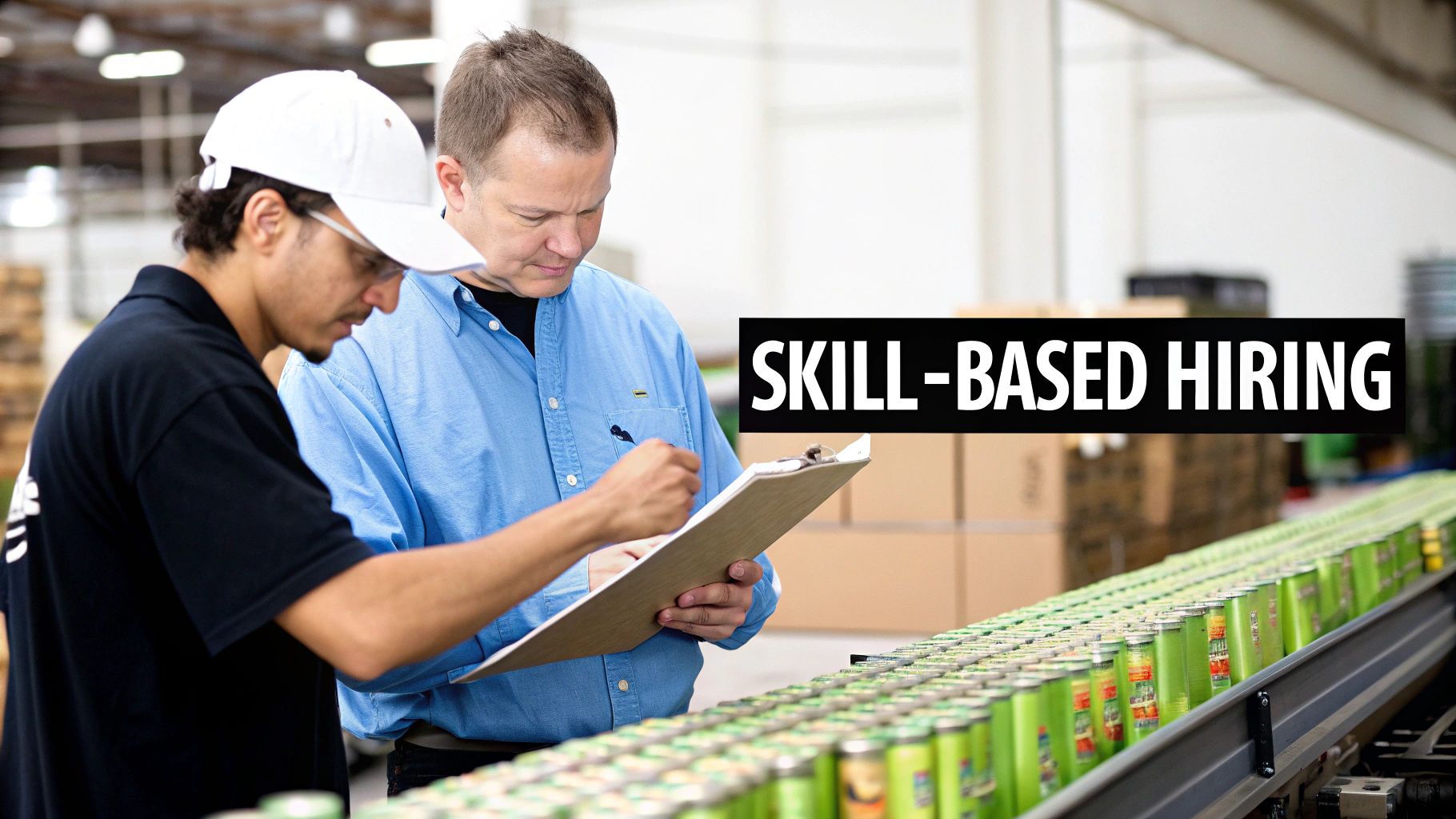
Moving beyond traditional experience-based hiring, a structured competency-based approach provides a systematic framework for identifying, assessing, and developing blue-collar talent. This methodology focuses on the specific skills, behaviours, and knowledge required for success in FMCG operations, standardising job profiles and onboarding protocols to reduce time-to-productivity and ensure consistent hire quality across all facilities. It shifts the focus from “what a candidate has done” to “what a candidate can do,” which is a cornerstone of modern blue-collar workforce best practices in FMCG.
This approach involves creating a detailed competency framework for each role, outlining the core technical and behavioural attributes necessary for high performance. For instance, a packaging machine operator might be assessed on competencies like attention to detail, mechanical aptitude, problem-solving, safety adherence, and teamwork. By defining these criteria upfront, organisations create an objective and consistent evaluation standard.
Why It Works
A competency-based model directly addresses the high-volume, high-turnover nature of the FMCG blue-collar workforce. It minimises hiring bias by using objective data, leading to better person-job fit and subsequently higher retention rates. This method also creates a clear pathway for skill development and career progression from day one, aligning new hires with organisational goals and performance standards immediately. For CHROs, it translates into a more predictable talent pipeline and enhanced operational efficiency.
Real-World Application
Leading FMCG giants have successfully implemented this model. For example, Nestlé has utilised a competency-based recruitment framework across its South Asian manufacturing facilities to standardise the quality of hires. Similarly, ITC Limited applies a structured framework for its warehouse and logistics operations, ensuring that new staff possess the critical competencies needed for a complex supply chain environment.
Actionable Implementation Steps
To effectively implement this practice, consider the following:
- Define Core Competencies: Collaborate with operations and plant managers to identify 5-7 critical, non-negotiable competencies for each key blue-collar role.
- Develop a Multi-Faceted Assessment: Use a blend of assessment tools. Combine basic written tests for numeracy and literacy with hands-on practical assessments (e.g., a timed assembly task) and structured behavioural interviews.
- Leverage Digital Tools: Implement digital competency assessment platforms to scale the process efficiently across multiple locations and ensure consistent scoring. This is particularly crucial when working with an RPO partner.
- Create Shared Visibility: Develop competency dashboards that are accessible to both your internal HR team and your RPO provider. This ensures everyone is aligned on candidate quality and progress.
- Integrate into Onboarding: Design the onboarding programme around the defined competencies, with specific modules and milestones aimed at bringing new hires up to the required proficiency level quickly and effectively.
2. Microlearning and Mobile-First Training Programmes
Traditional, classroom-based training programmes often disrupt the fast-paced, shift-based nature of FMCG operations. A mobile-first microlearning approach flips this model by delivering bite-sized, accessible training content directly to workers’ personal or company-provided devices. This method breaks down complex topics, such as machine operation or safety protocols, into short, focused modules that can be completed during brief downtimes, before a shift, or on the go. This is a critical best practice in FMCG for engaging a blue-collar workforce that is constantly on the move and may have limited access to desktops.
This strategy involves creating a library of short-form content, including videos, infographics, quizzes, and interactive simulations, that are optimised for mobile viewing. For instance, instead of a two-hour session on lockout/tagout procedures, a worker might receive a series of three-minute videos and a quick knowledge-check quiz each day for a week. This reinforces learning without pulling them away from the production line for extended periods, making skill development continuous rather than a one-time event.
Why It Works
Microlearning addresses the short attention spans and high-pressure environment typical of FMCG manufacturing. It increases knowledge retention through spaced repetition and makes learning highly accessible and convenient. For CHROs, this translates into reduced training costs, minimal operational disruption, and a more agile, consistently skilled workforce. It also allows for real-time tracking of training completion and competency levels, providing valuable data for compliance and performance management. This approach directly supports a culture of continuous improvement on the factory floor.
Real-World Application
Leading FMCG organisations in India have championed this model. Hindustan Unilever Limited (HUL) developed a mobile training application to upskill its vast network of warehouse staff, delivering modules in local languages to improve logistics efficiency. Similarly, Britannia Industries uses a mobile platform to deploy safety training to its shift workers, which has been credited with reducing workplace incidents. Coca-Cola Bottling Company has also seen success with a microlearning programme designed to update production line workers on new equipment and quality control standards swiftly.
Actionable Implementation Steps
To effectively implement this practice, consider the following:
- Keep Content Concise and Visual: Design all training videos to be under three minutes. Utilise clear visual instructions, animations, and diagrams to cater to a literacy-diverse audience.
- Localise for Impact: Translate all content into the local languages spoken at each plant. Use scenarios and examples that are culturally relevant to the workforce.
- Implement Spaced Repetition: Use the platform to automatically re-introduce critical safety and compliance content at set intervals to ensure long-term retention.
- Gamify and Incentivise: Bundle training modules with a points system, leaderboards, or eligibility for small prizes to drive engagement and completion rates.
- Prioritise Offline Access: Partner with app developers who specialise in offline-first architecture, allowing workers to download content on Wi-Fi and access it later in low-connectivity areas of the plant.
- Conduct Pilot Testing: Before a full rollout, test the platform and content with a small group of actual workers to gather feedback on user experience (UX) and content effectiveness.
3. Predictive Analytics for Attrition Prevention and Retention
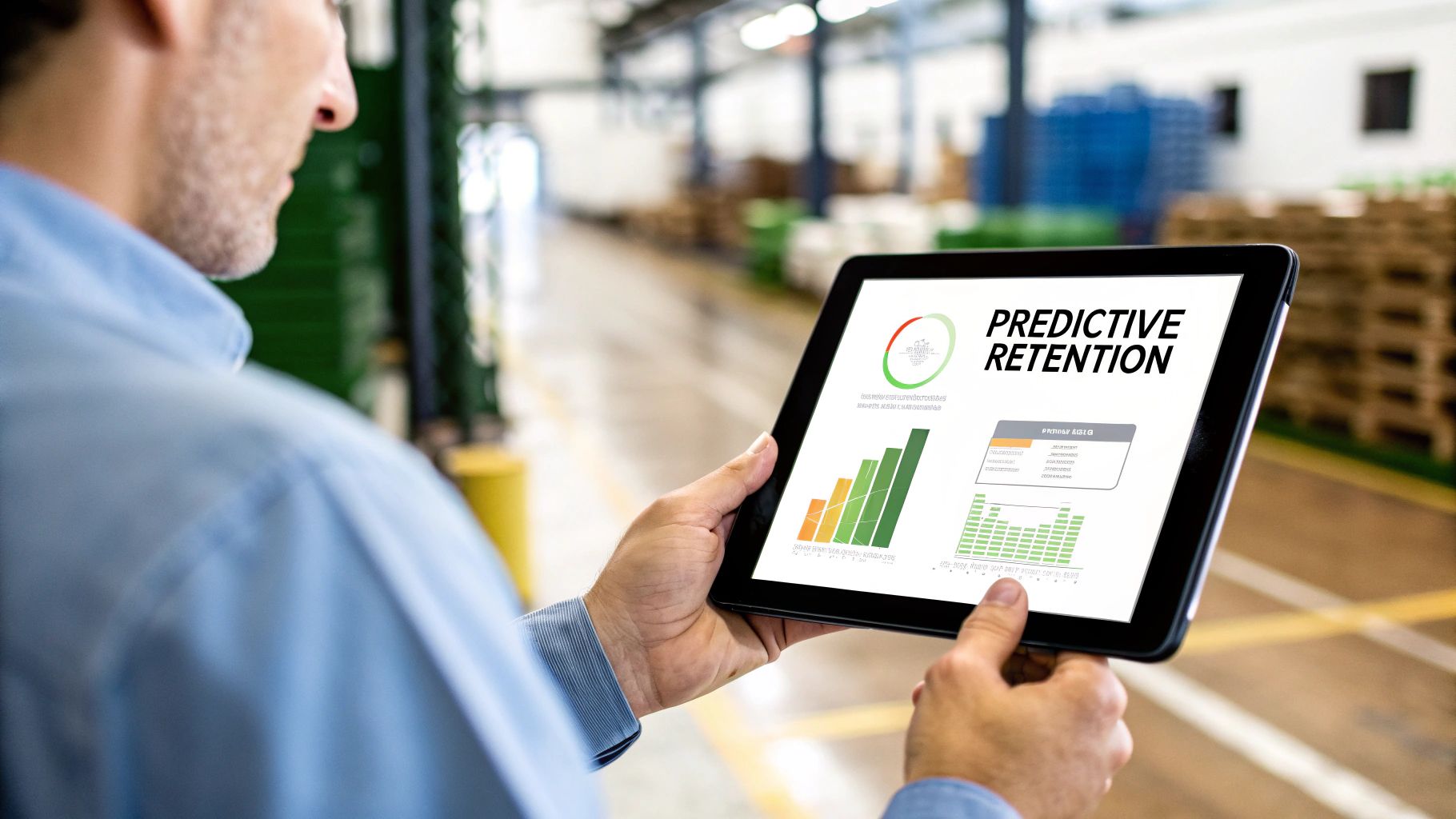
Beyond reactive retention strategies, predictive analytics offers a proactive, data-driven framework to anticipate and prevent blue-collar attrition before it happens. This approach uses historical data, machine learning algorithms, and statistical models to identify workers at high risk of leaving. By analysing variables such as attendance patterns, overtime hours, performance metrics, and even external factors like the local job market, organisations can forecast potential turnover weeks or months in advance, enabling targeted interventions.
This forward-looking strategy is a game-changer among blue-collar workforce best practices in FMCG, shifting the focus from analysing past departures to preventing future ones. It transforms raw operational data into actionable intelligence, allowing managers to address root causes of dissatisfaction, such as poor role fit or management issues, before they escalate into resignations.
Why It Works
Predictive analytics moves retention from guesswork to a calculated science. It provides CHROs with a quantifiable risk score for individual employees or entire teams, directing limited resources toward the most critical areas. This allows for personalised interventions, such as targeted training, manager coaching, or shift adjustments, which are far more effective than generic engagement initiatives. The result is a significant reduction in attrition rates, lower recruitment costs, and enhanced operational stability.
Real-World Application
Leading companies in India are already leveraging this technology. For instance, Flipkart Logistics developed a worker churn prediction model that successfully reduced warehouse attrition by over 20% by identifying at-risk associates. Similarly, ITC’s internal models correlate specific attendance patterns with retention risk, flagging potential issues for proactive management review. Multinational FMCG firms also utilise platforms like Oracle HCM Analytics to forecast attrition across their manufacturing and supply chain divisions.
Actionable Implementation Steps
To effectively implement this practice, consider the following:
- Combine Data Sources: Integrate internal HRIS data (attendance, tenure, performance) with operational data (productivity, error rates) and even external data (local job market trends, seasonal demand).
- Create Intervention Playbooks: Develop standardised, tiered intervention plans based on an employee’s attrition risk score. A low-risk flag might trigger a simple manager check-in, while a high-risk flag could initiate a formal stay interview.
- Focus on Modifiable Factors: Ensure models prioritise factors that can be influenced, such as management quality, workload, or skill development opportunities, rather than static demographic data.
- Track Intervention ROI: Measure the effectiveness of your interventions by tracking whether the attrition risk score of targeted employees decreases over time. Use this feedback to continuously refine your predictive models.
- Partner with Specialists: If in-house data science capabilities are limited, collaborate with HR analytics firms or RPO partners with proven expertise in building and deploying attrition models. For more insights, explore solutions for manufacturing companies battling employee attrition.
4. Integrated Safety Management Systems and Behavioral Safety Programs
In the high-speed, machinery-intensive environment of FMCG manufacturing and logistics, safety is not merely a compliance requirement; it is a critical operational pillar. An integrated safety management system moves beyond reactive measures, combining technology-enabled incident prevention, behavioural coaching, near-miss reporting, and rapid incident response into a single, cohesive framework. This approach shifts the focus from simply avoiding accidents to proactively cultivating a deeply ingrained culture of safety.
This holistic strategy addresses both the technical and human elements of workplace safety. It acknowledges that while processes and equipment must be safe by design, the vast majority of incidents are linked to human behaviour. Therefore, it pairs robust Health, Safety, and Environment (HSE) protocols with behavioural safety programmes that empower and educate the blue-collar workforce to make safer choices instinctively. This represents a mature and effective approach to one of the most significant challenges in blue-collar workforce best practices in FMCG.

Why It Works
An integrated and behaviour-focused safety system directly reduces Lost Time Injury Frequency Rate (LTIFR) and minimises costly production stoppages and regulatory violations. By creating a culture where workers feel psychologically safe to report hazards and near-misses without fear of reprisal, organisations gain invaluable leading indicator data to prevent future incidents. For a CHRO, this translates into reduced insurance premiums, enhanced employer branding, improved employee morale, and a more resilient, reliable operational workforce.
Real-World Application
Many leading FMCG companies have championed this model. Hindustan Unilever has adapted DuPont’s renowned safety culture assessment tools to elevate behavioural standards across its manufacturing plants. Similarly, The Coca-Cola Company enforces Global Safety Standards that include robust behavioural observation programmes to identify and correct at-risk behaviours. Colgate-Palmolive’s integrated Health, Safety, Security, and Environment (HSSE) programme across its Indian operations is another prime example of a system that embeds safety into every facet of the blue-collar role.
Actionable Implementation Steps
To build a world-class safety culture, consider these actions:
- Establish Strong Safety Governance: Create a clear safety leadership structure with visible commitment from plant managers and senior executives. Form cross-functional safety committees that include shop-floor workers.
- Implement a Proactive Reporting System: Deploy a simple, accessible system (e.g., a mobile app or QR code) for reporting near-misses and hazards. Crucially, ensure every report is acknowledged and leads to visible corrective action, not punishment.
- Integrate Safety into KPIs: Make safety metrics a component of performance indicators for all employees, from the plant manager to the executive team, to demonstrate organisational commitment.
- Conduct Regular Safety Walks: Organise monthly safety walks where managers and workers jointly tour the facility to identify potential hazards and discuss safety improvements.
- Reward Safe Behaviours: Develop incentive programmes that reward proactive safety behaviours, such as reporting hazards or mentoring new hires on safety protocols, rather than just recognising a lack of incidents.
5. Flexible Workforce Scheduling and Gig-Based Role Options
Adopting a flexible, technology-driven approach to scheduling modernises blue-collar workforce management in the FMCG sector. This involves moving away from rigid, fixed-roster systems towards dynamic models that offer workers more control over their schedules, often incorporating gig-based or on-demand roles. By leveraging digital platforms, companies can create a fluid talent pool to meet fluctuating production demands, improving operational agility while appealing to a new generation of workers who prioritise flexibility. This is a crucial evolution in blue-collar workforce best practices in FMCG, mirroring consumer-side gig economy innovations.
This model allows organisations to build a hybrid workforce, comprising a core of permanent, full-time employees and a flexible layer of temporary or gig workers who can be engaged as needed. Digital platforms enable workers to view and claim available shifts, manage their schedules via mobile apps, and receive instant notifications. This reduces the administrative load on plant managers and HR teams, automating what was once a manual, time-consuming process and providing real-time visibility into labour capacity.
Why It Works
A flexible scheduling model directly tackles the FMCG industry’s notorious demand volatility, allowing companies to scale their workforce up or down without the high costs associated with over-staffing or the production losses from under-staffing. It enhances employee satisfaction and retention by offering greater work-life balance, a key factor for the modern workforce. For CHROs, this translates into optimised labour costs, a more resilient supply chain, and an employer brand that is attractive to a wider talent pool.
Real-World Application
E-commerce and logistics giants have pioneered this model with great success. Flipkart, for instance, manages a vast network of over 50,000 warehouse workers through a sophisticated scheduling platform that allows for dynamic allocation based on real-time order volumes. Similarly, Amazon’s Flex programme provides a blueprint for on-demand logistics staffing that can be adapted for FMCG distribution centres, while Nestlé Nespresso has successfully piloted hybrid models combining permanent staff with gig workers to manage seasonal peaks.
Actionable Implementation Steps
To effectively implement this practice, consider the following:
- Pilot with Non-Critical Roles: Begin by introducing flexible scheduling for high-turnover, less-specialised roles like picking, packing, or general material handling to test the system and refine processes.
- Maintain a Core Team: Retain a stable, permanent workforce for critical machine operations, quality control, and supervisory roles to ensure knowledge retention and operational consistency.
- Use AI-Powered Platforms: Invest in a workforce management platform that uses AI to forecast labour demand based on production schedules and sales data, optimising shift allocation and minimising last-minute changes.
- Communicate Clearly: Establish and clearly communicate the differences in benefits, responsibilities, and performance expectations between permanent and flexible worker categories to manage expectations.
- Invest in a Mobile-First Experience: Ensure the scheduling platform is intuitive, mobile-friendly, and provides a seamless user experience for workers to view, claim, and manage shifts from their smartphones.
6. Career Pathways and Upskilling Programs for Blue-Collar Workers
Creating transparent career progression routes from entry-level roles to supervisory and specialised technical positions is a powerful retention strategy. When combined with structured upskilling programmes, this approach transforms blue-collar jobs into long-term careers, directly countering high turnover and building a robust internal talent pipeline. It institutionalises growth, showing every worker that their contribution is valued and that a future exists for them within the organisation.
This best practice involves mapping out clear, achievable career ladders and lattices. An entry-level packaging operator should be able to see the exact skills, performance metrics, and training required to become a senior operator, a line supervisor, or even a maintenance technician. This moves beyond annual raises to offer genuine professional advancement, a critical factor in retaining ambitious blue-collar talent in a competitive market.
Why It Works
A lack of growth opportunities is a primary driver of attrition in the blue-collar workforce. By providing clear pathways and the training to navigate them, FMCG companies can significantly boost loyalty and engagement. This practice creates a self-sustaining talent ecosystem, reducing reliance on external hiring for supervisory roles and ensuring that leaders have deep, ground-level operational knowledge. For a CHRO, this translates into lower recruitment costs, improved succession planning, and a more motivated, skilled workforce.
Real-World Application
Top FMCG companies in India have pioneered this model with great success. Hindustan Unilever’s internal mobility programme, for instance, promotes over 200 supervisors annually from its blue-collar ranks. Similarly, Nestlé’s ‘Accelerated Learning for Supervisors’ programme is designed specifically to develop high-performing operators into effective team leads. Britannia Industries also focuses on an apprenticeship-to-supervisor conversion track, formalising the journey from trainee to leader.
Actionable Implementation Steps
To build an effective career progression framework, consider these steps:
- Publish Transparent Pathways: Create and display clear visual charts of career paths in common areas. Ensure every worker knows what the next level is and what it takes to get there.
- Define Progression Competencies: For each step up, clearly define the technical skills, behavioural competencies, and performance levels required.
- Identify High-Potentials Early: Use performance data and manager assessments to spot ambitious individuals and guide them towards development programmes.
- Link Training to Promotion: Pair upskilling programmes with mentorship from current supervisors. Consider leveraging the power of combination skills to prepare workers for more complex roles.
- Celebrate Internal Promotions: Heavily publicise internal promotions to reinforce the message that growth is possible and to inspire others.
- Track Key Metrics: Monitor advancement rates, the percentage of supervisory roles filled internally, and the impact of these programmes on retention and engagement scores.
7. Real-Time Performance Management and Feedback Systems
The outdated annual performance review is ineffective for the dynamic, high-paced environment of FMCG manufacturing. Real-time performance management replaces this with continuous, technology-enabled feedback systems. This modern approach utilises mobile apps, sensor data from production lines, and manager dashboards to provide blue-collar workers with immediate, data-driven, and actionable insights into their performance, fostering a culture of continuous improvement rather than periodic assessment.
This methodology shifts performance discussions from a once-a-year formality to an ongoing, constructive dialogue. For instance, a production line operator can view their individual output, efficiency, and quality metrics directly on a tablet by their workstation, updated throughout their shift. This immediate feedback loop allows them to self-correct in real-time, understand their contribution to team targets, and take ownership of their performance, which is a key tenet of advanced blue-collar workforce best practices in FMCG.
Why It Works
Continuous feedback directly impacts operational efficiency and employee engagement. By providing clear, objective data, it removes ambiguity from performance expectations and empowers workers to improve proactively. This immediacy helps address minor issues before they become significant problems, reducing waste and improving quality. For CHROs, this system provides a wealth of data to identify skill gaps, recognise high-potential individuals, and pinpoint systemic operational bottlenecks, leading to a more agile and productive workforce.
Real-World Application
Leading FMCG organisations have pioneered this approach. Unilever uses real-time quality dashboards for its packaging line workers, enabling daily feedback loops that have significantly reduced defects. Similarly, Coca-Cola Bottling Company provides a production line performance app that allows operators to track their efficiency against targets shift-by-shift. Amazon’s use of individual productivity dashboards in its fulfilment centres, while controversial, demonstrates the power of real-time data in driving operational standards at a massive scale.
Actionable Implementation Steps
To effectively deploy real-time feedback, consider the following:
- Define Objective Metrics: Work with operations to identify clear, directly observable KPIs for each role (e.g., units per hour, defect rate, changeover time).
- Deploy User-Friendly Technology: Implement simple, intuitive interfaces like tablets or large-screen dashboards that display data visually. Avoid complex systems that require extensive training.
- Train Managers for Constructive Feedback: Equip supervisors with the skills to interpret performance data and deliver coaching constructively. The focus should be on development, not criticism.
- Integrate Recognition: Connect the system to a digital recognition platform where managers and peers can instantly acknowledge good performance, reinforcing desired behaviours.
- Provide Context and Transparency: Share team and facility-level benchmarks alongside individual metrics. This helps workers understand their impact and fosters healthy competition while being transparent about data usage and privacy.
8. Workplace Mental Health and Wellness Programmes for Blue-Collar Workers
Recognising that operational excellence is intrinsically linked to employee well-being, progressive FMCG organisations are implementing comprehensive mental health and wellness programmes. These initiatives are designed to address the unique stressors faced by the blue-collar workforce, such as repetitive tasks, demanding physical labour, long shift hours, and job insecurity. This represents a critical evolution in blue-collar workforce best practices in FMCG, moving beyond physical safety to embrace holistic well-being.
These programmes provide a support ecosystem that includes confidential counselling, stress management workshops, financial literacy guidance, and peer support networks. The goal is to create a psychologically safe environment where workers feel supported, valued, and empowered to seek help without stigma. By proactively managing mental wellness, companies can directly impact productivity, reduce absenteeism, and foster a more resilient and engaged workforce.
Why It Works
The high-pressure, fast-paced nature of FMCG manufacturing and logistics can take a significant toll on mental health. Proactive wellness programmes directly counter these pressures, leading to a marked reduction in stress-related absenteeism and presenteeism. For a CHRO, investing in mental health is not just a moral imperative but a strategic business decision that enhances operational stability, lowers healthcare costs, and improves employee retention by demonstrating a genuine commitment to worker welfare.
Real-World Application
Several FMCG leaders in India have pioneered impactful wellness initiatives. Hindustan Unilever’s employee wellness platform provides access to mental health resources for over 10,000 blue-collar workers. Similarly, Nestlé India has partnered with the suicide prevention NGO Aasra to offer confidential counselling services across its manufacturing facilities. Flipkart Logistics has also rolled out a dedicated wellness programme for its extensive network of warehouse and delivery personnel, acknowledging the unique challenges they face.
Actionable Implementation Steps
To effectively launch a wellness programme, consider these steps:
- Partner for Credibility: Collaborate with established mental health organisations to deliver credible, professional support and ensure confidentiality, which is crucial for building trust.
- Train Line Managers: Equip supervisors and plant managers to recognise early signs of mental health struggles and guide employees toward available resources appropriately and empathetically.
- Offer Multi-Channel Access: Provide support through various channels, including confidential phone helplines, in-person sessions, and digital apps, to accommodate different shifts and comfort levels. Learn more about strategies for companies to support their employees and see what fits your organisation.
- Integrate Financial Wellness: Address key stressors by offering financial planning workshops, access to emergency loans, and debt management advice.
- Promote Peer Support: Establish formal peer support groups or ‘buddy systems’ where workers can share experiences and offer mutual support in a safe and structured environment.
- Measure and Communicate: Regularly track the programme’s impact through metrics like absenteeism rates and employee engagement surveys, and consistently communicate the availability and benefits of the resources to all workers.
8-Point Comparison: Blue-Collar FMCG Best Practices
| Solution | Implementation Complexity | Resource Requirements | Expected Outcomes | Ideal Use Cases | Key Advantages |
|---|---|---|---|---|---|
| Structured Competency-Based Recruitment and Onboarding | High — framework design, validation, manager training | Significant upfront investment, assessment tools, training resources | Consistent hire quality; 20–25% improved first-year retention | Large, multi-site FMCG operations needing standardized hiring | Reduces bias; faster onboarding; measurable performance baselines |
| Microlearning and Mobile-First Training Programs | Medium — platform deployment and localized content creation | Platform, content creators, devices or BYOD support, localization | Higher completion (40–50%); faster skill updates; lower training costs | Shift-based workforces; frequent product/process updates | Flexible, high engagement; scalable post-hire training |
| Predictive Analytics for Attrition Prevention and Retention | High — data integration, model building, continuous tuning | Historical HR/time data, analytics expertise, dashboards, HR capacity | 15–25% turnover reduction; lower replacement hiring costs | High-turnover sites with reliable historical data | Early risk detection; targeted interventions; improved planning |
| Integrated Safety Management Systems and Behavioral Safety Programs | High — culture change, tech integration, sustained coaching | Safety tech, reporting apps, coaches, compliance resources | 20–35% reduced lost-time injuries; better compliance; lower premiums | Facilities with high safety risk or regulatory scrutiny | Reduces injuries; builds safety culture; operational improvements |
| Flexible Workforce Scheduling and Gig-Based Role Options | Medium–High — platform setup, legal and policy changes | Scheduling tech, payroll integration, compliance/legal support | Faster scaling; 50–60% reduced hiring/onboarding cycle time | Peak-season operations; variable demand; temporary staffing needs | Operational agility; worker choice; cost optimization |
| Career Pathways and Upskilling Programs for Blue-Collar Workers | Medium — program design, mentorship, competency alignment | Training modules, mentors, tracking systems, vocational partners | 25–40% retention improvement; lower external hire costs for skilled roles | Firms aiming to grow internal talent and reduce external hires | Builds internal talent; increases engagement; succession readiness |
| Real-Time Performance Management and Feedback Systems | High — data integrations, sensors/apps, manager coaching | Data infrastructure, mobile apps, dashboards, coaching resources | 10–15% performance gain; 20–25% engagement uplift; fewer surprises | Production lines with measurable KPIs and quality data | Immediate feedback; targeted coaching; transparent metrics |
| Workplace Mental Health and Wellness Programs for Blue-Collar Workers | Medium — program setup, stigma reduction, manager training | Counseling partners, wellness activities, communication campaigns | 15–25% lower absenteeism/turnover; improved productivity and morale | High-stress environments; large blue-collar populations | Reduces absenteeism; improves wellbeing; strengthens employer brand |
Integrating Best Practices for a High-Performance Workforce
The journey through these eight pillars reveals a clear, modern truth for the FMCG sector: managing your blue-collar workforce is no longer a matter of simple logistics but a complex, strategic function demanding innovation and empathy. The era of viewing frontline workers as interchangeable cogs in a machine is decisively over. Today, building a competitive edge on the factory floor and in the warehouse requires a deeply integrated, human-centric approach. The best practices we have explored are not isolated solutions; they are interconnected components of a single, powerful ecosystem designed to unlock human potential.
From the very first interaction, using structured competency-based recruitment ensures you bring in talent with the right aptitude and attitude, setting a foundation of quality. This is immediately reinforced by mobile-first microlearning, which empowers employees with accessible, relevant skills training directly in their workflow. This continuous development is crucial for building the agile workforce necessary to navigate the rapid changes in FMCG production and logistics.
Weaving Strategy into Daily Operations
The true transformation happens when these individual practices coalesce into a unified strategy. Consider how predictive analytics for attrition works hand-in-hand with flexible scheduling options. By understanding the root causes of turnover, you can proactively offer the work-life balance that modern workers demand, directly addressing a key driver of dissatisfaction. Similarly, a robust integrated safety management system is not just about compliance; it is about demonstrating a genuine commitment to employee wellbeing. When combined with dedicated mental health and wellness programs, it sends a powerful message: we value you as a person, not just as a worker.
This holistic view is the essence of effective blue-collar workforce best practices in FMCG. It is about creating a virtuous cycle:
- Empowered Workers: Through clear career pathways and upskilling, employees see a future with the organisation, boosting motivation.
- Transparent Performance: Real-time feedback systems eliminate ambiguity, helping workers understand their contribution and how to improve.
- Proactive Management: Data-driven insights allow you to solve problems like burnout or disengagement before they lead to attrition.
The ultimate goal is to build an operational culture where safety, engagement, and productivity are not competing priorities but are mutually reinforcing outcomes of a well-designed workforce strategy.
From Blueprint to Competitive Advantage
Adopting this comprehensive framework moves your blue-collar workforce from a cost centre to a strategic asset. A highly engaged, skilled, and stable frontline team translates directly into tangible business results: reduced downtime, higher product quality, faster order fulfilment, and increased innovation from those closest to the operational processes. For a Chief Human Resources Officer, championing this evolution is a defining opportunity to drive organisational resilience and growth.
The path forward requires a deliberate, phased implementation. It starts with a commitment to listen to your workforce and leverage technology not to replace human oversight, but to enhance it. The most successful organisations will be those that masterfully integrate these systems, creating a seamless employee experience from onboarding to career progression. This is the new standard for operational excellence, and it is built on the foundation of a valued and empowered blue-collar workforce. By embracing these best practices, you are not just optimising operations; you are building a more resilient, productive, and fundamentally human-centric organisation prepared for the future of the FMCG industry.
Ready to transform your frontline workforce management from a challenge into a competitive advantage? Partner with Talent Hired – The Job Store Private Limited, a leading RPO provider specialising in the FMCG sector. We provide the expertise and technology to implement these blue-collar workforce best practices in FMCG, helping you build the high-performance team you need to succeed. Learn more and start your journey with Talent Hired – The Job Store Private Limited today.