The hire to retire process isn’t just HR jargon; it’s the complete story of an employee’s time with your company. It covers everything from the moment they first hear about a job opening to the day they leave, whether for a new opportunity or a well-deserved retirement. Think of it as the strategic thread that weaves all distinct HR functions into a single, cohesive employee journey.
Unpacking the Hire to Retire Process
It’s easy to picture the hire to retire (H2R) process as a straight line, a simple checklist of HR tasks. But that’s not quite right. A better way to see it is as a living, breathing ecosystem. This journey kicks off the second a potential candidate lays eyes on your job post and flows through their first day, their ongoing development, promotions, and eventually, a graceful exit.
For any Chief Human Resources Officer (CHRO), getting this ecosystem right is the key to shifting HR from an administrative cost centre to a powerful strategic partner for the business.
When the H2R experience feels seamless and supportive, it has a direct, positive impact on the bottom line. It’s what drives employee engagement, boosts productivity, and creates the kind of loyalty that keeps your best people around for the long haul. In a market as dynamic as India, this isn’t just a nice-to-have; it’s a competitive necessity.
This flow chart maps out the fundamental stages of the hire to retire journey, from the initial recruitment push to the final offboarding.
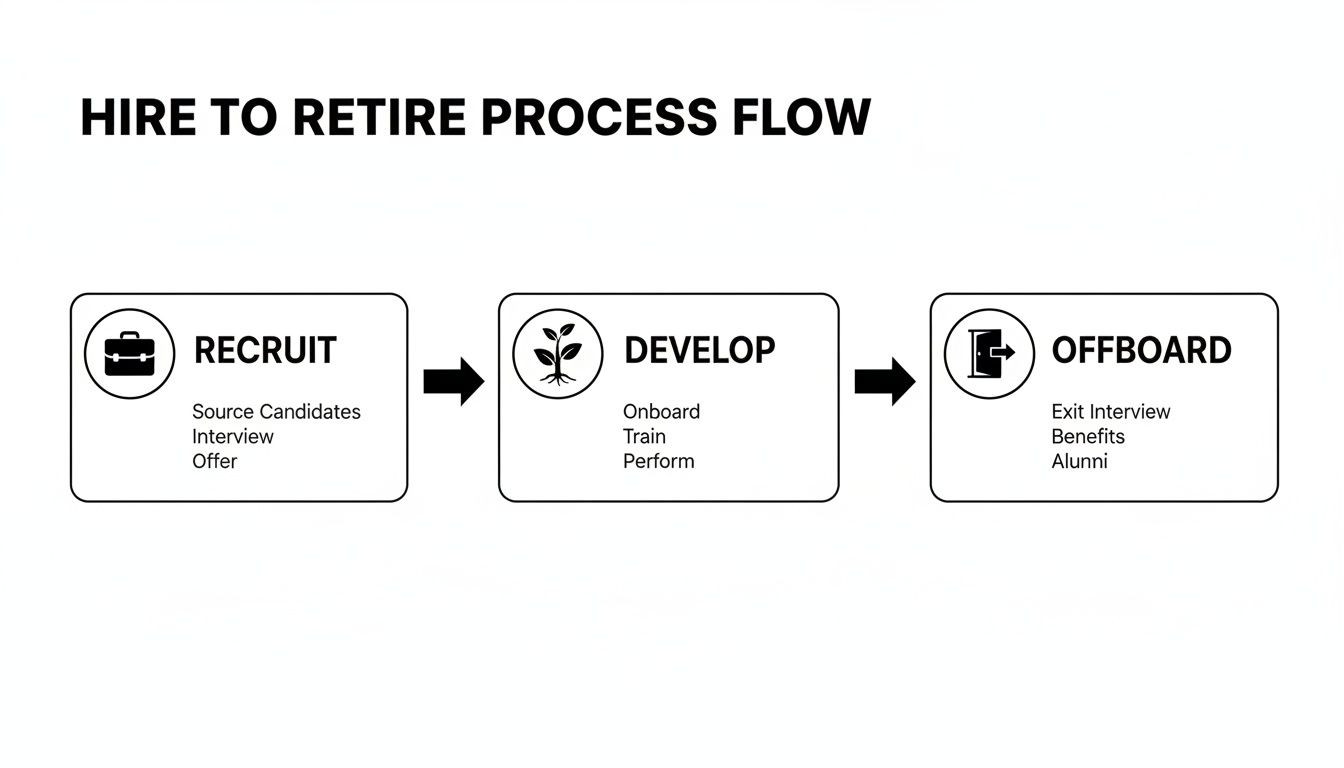
As you can see, each stage is interconnected. A great hire is only as good as their onboarding, and their development depends on a strong performance culture. It’s all linked.
To give you a clearer picture, let’s break down the core stages, their main goals, and how you can measure success at each step.
The Six Core Stages of the Hire to Retire Lifecycle
| Lifecycle Stage | Primary Objective | Key Success Metric |
|---|---|---|
| Attraction & Recruitment | To source and hire the best-fit talent efficiently. | Time-to-fill, quality of hire. |
| Onboarding | To integrate new hires into the company culture and their roles smoothly. | 90-day retention rate, new hire satisfaction score. |
| Development & Performance | To nurture skills, manage performance, and foster career growth. | Employee engagement score, promotion rate. |
| Mobility | To facilitate internal movement and career progression. | Internal mobility rate. |
| Compensation & Rewards | To recognise and reward employees fairly and competitively. | Compensation competitiveness ratio. |
| Offboarding & Retirement | To manage departures respectfully and gather valuable feedback. | Employee Net Promoter Score (eNPS) from exit surveys. |
Thinking about the lifecycle in these distinct-yet-connected stages helps leaders pinpoint exactly where their process is strong and where it needs attention.
A Strategic Business Imperative
A well-oiled H2R strategy doesn’t just manage people—it creates an environment where they genuinely want to build a career. Every touchpoint, from the interview to the exit conversation, is a chance to reinforce your company culture and earn trust. This is how you transform your workforce from a line item into a real competitive advantage.
The ultimate goal is to craft a journey so compelling that top talent not only joins but stays, grows, and becomes a brand advocate long after they’ve left. When you get it right, the “retire” phase actually feeds the “hire” phase through referrals and a stellar employer reputation.
Lately, we’re seeing a lot of energy at the beginning of this cycle. In India’s vibrant job market, hiring is picking up steam, especially as major companies ramp up recruitment to keep pace with demand. In fact, an analysis of HSBC and S&P Global Market Intelligence data showed the jobs component of the HSBC India PMI climbing to 53.8, a solid jump from 52.5 the previous year. This signals a real resurgence in private sector hiring. You can dive deeper into these recruitment trends and their impact on the Indian economy.
Key Benefits of a Cohesive H2R Framework
Organisations that invest in an integrated H2R model see ripple effects that go far beyond the HR department. The benefits are tangible and significant:
- Improved Employee Engagement: When people feel supported at every turn, from their first day jitters to their career milestones, their commitment deepens.
- Enhanced Data-Driven Decisions: A single, connected process means clean, reliable data. This allows for smarter workforce planning and predictive analytics.
- Greater Operational Efficiency: Integrating your systems, like your Applicant Tracking System (ATS) and Human Resources Information System (HRIS), cuts down on manual data entry and frees up your HR team to focus on what matters most—people.
- Stronger Employer Brand: A consistently positive experience, from the application all the way to the farewell, builds the kind of reputation that makes top talent seek you out.
Mastering Talent Acquisition And Onboarding
The first steps in the hire to retire process are arguably the most important. This is where you lay the groundwork for a successful, long-term employee relationship. Think of talent acquisition as more than just filling a vacancy; it’s the art of finding people who not only have the right skills but who also genuinely connect with your company’s purpose and culture. Get this right, and you’ve already set the stage for success.
Then comes onboarding. This is your first real chance to prove to your new hire that they made the right decision. A powerful first impression here can make all the difference, boosting their confidence and getting them up to speed much faster.

Elevating Recruitment Beyond Job Postings
In today’s competitive market, just posting a job and waiting for applicants to roll in won’t cut it. To attract top-tier talent, you need a modern, multi-channel strategy that builds a steady pipeline of great candidates. It’s about shifting from a reactive “we have a job to fill” mindset to a proactive one.
Consider weaving these sourcing strategies into your approach:
- Building Talent Pools: Don’t wait for an open role. Actively build relationships with promising people in your industry. This creates a warm bench of candidates you can tap into when the time is right.
- Leveraging Employer Branding: Use authentic employee stories, social media, and a transparent careers page to show people what it’s really like to work for you. Your brand is what pulls people in before they even see a job description.
- Utilising Employee Referrals: Your best people often know other great people. A strong, well-managed referral programme can bring in candidates who are already a fantastic cultural fit.
If you’re looking to dive deeper, our ultimate guide to talent acquisition offers a wealth of strategies for building a powerful hiring machine. This is also where Recruitment Process Outsourcing (RPO) partners shine. They can bring expertise and technology, like using AI within Applicant Tracking Systems (ATS), to pinpoint the best-fit candidates, ultimately driving down your time-to-hire and cost-per-hire.
It’s a fact: how you hire is just as important as who you hire. Glassdoor found that 70% of companies saw a marked improvement in the quality of new hires simply by focusing on creating a better candidate experience.
Designing A World-Class Onboarding Experience
The moment an offer is accepted, the clock starts ticking. Your focus needs to pivot immediately to creating an onboarding experience that feels welcoming and seamless. The goal is to go far beyond paperwork and checklists; you want to immerse your new team member in the company culture from day one. A clumsy or disorganised onboarding can lead to instant regret and raises the risk of them walking away.
A truly great onboarding programme isn’t a one-day event; it’s a strategic process designed to build confidence and shorten the time it takes for a new employee to become a fully productive contributor.
Here’s what a robust onboarding framework looks like:
- Pre-boarding Engagement: The journey should start before their first day. Send a welcome kit, get the paperwork done digitally, and share a first-week agenda. Little things like this build excitement and calm those first-day nerves.
- A Structured First Week: Don’t leave them guessing. Plan a schedule that includes introductions to key people, an overview of company goals, and hands-on training for the tools they’ll be using.
- Mentorship Programmes: Assigning a ‘buddy’ or a mentor gives them a go-to person for navigating the unwritten rules and building social connections. It’s an invaluable support system.
- Clear 30-60-90 Day Goals: Work together to set clear, achievable goals for their first three months. This provides a clear roadmap and a solid foundation for their first performance review.
The payoff is huge. Research from SHRM shows that 69% of employees who go through a great onboarding are more likely to stay with a company for at least three years. This isn’t just a feel-good metric; it proves that investing in a thoughtful onboarding process delivers a direct return by slashing costly first-year turnover and setting the stage for long-term loyalty.
Driving Performance and Fostering Internal Mobility
Once a new hire is fully settled in, the hire to retire process shifts gears from getting them up to speed to helping them accelerate. The focus now turns to nurturing their growth, unlocking their full potential, and giving them compelling reasons to build a long-term career with you. This is where modern performance management and a robust culture of internal mobility make all the difference, turning your company from just a workplace into a true career destination.
This stage is all about moving beyond outdated, once-a-year reviews. Instead, it’s about building a dynamic system of continuous feedback and making sure every individual’s efforts are pulling in the same direction as the company’s biggest goals. It’s a fundamental shift from looking backward at what’s been done to looking forward at future growth and development.

Cultivating Continuous Growth and Development
Modern performance management is less about ranking people and more about coaching them to succeed. Frameworks like Objectives and Key Results (OKRs) are incredibly powerful here because they create transparency and align everyone’s work. They connect an employee’s day-to-day tasks to the company’s highest-level ambitions, injecting a clear sense of purpose into their role.
To fuel this continuous growth, a good Learning Management System (LMS) is non-negotiable. A well-chosen LMS does more than just host generic training videos; it builds personalised learning paths for your people. This allows you to strategically upskill and reskill your workforce, tackling both current performance gaps and preparing for future business needs.
By investing in employee development, you send a clear message: we value your contribution and are committed to your future. This approach directly boosts engagement, as employees who see a path for advancement are far more likely to invest their discretionary effort.
This proactive approach to development is a powerful defence against high attrition, which remains a massive headache in India’s job market. Attrition is a critical bottleneck, with average rates sitting at 17% across industries and soaring to a staggering 25-28% in high-growth sectors like IT and e-commerce.
Strategic interventions, however, make a real impact. Companies that offer benefits 15-20% above statutory minimums see 23% lower attrition, while simply offering a hybrid work model can slash turnover by 18%.
Unlocking Potential Through Internal Mobility
The second, equally vital, piece of the puzzle is internal mobility. Frankly, it’s one of the most potent retention tools you have. When employees see their colleagues moving into new roles, taking on fresh challenges, and growing within the company, it proves that career progression is a real possibility—not just a vague promise made during interviews.
A strong internal mobility programme isn’t something that just happens. It requires actively creating and promoting clear career pathways. It also demands that managers shift their mindset and become talent champions, encouraging their team members to explore opportunities right across the organisation.
Building an internal mobility strategy that works involves a few key moves:
- Transparent Career Pathing: Clearly map out potential career journeys for different roles. This helps employees actually see their future at the company.
- Internal Job Boards: Make it incredibly easy for employees to find and apply for internal openings before they ever go public.
- Skill-Based Talent Marketplace: Use technology to intelligently match employees’ skills and career goals with project-based work or new full-time roles.
By championing this kind of internal movement, you create a workforce that is both dynamic and agile. For a deeper dive, you can explore our guide on building effective internal mobility programs that truly drive retention.
Ultimately, this phase of the hire to retire process is about creating a symbiotic relationship. The organisation invests in the employee’s growth, and in return, the employee contributes their enhanced skills, loyalty, and passion back into the business. This transforms your company into an ecosystem where careers are actively built, not just jobs that are done, helping you hold on to your most valuable talent for the long haul.
Optimising Compensation and the Offboarding Experience
The final chapters of the hire to retire process are every bit as crucial as the first. In these last stages—compensation and offboarding—an organisation’s true values are on display, cementing its reputation long after someone has moved on. Nailing these isn’t just about ticking boxes; it’s a strategic move that brings the entire employee lifecycle full circle.
Too often, compensation is seen as just another cost on the balance sheet. But a smarter approach treats it as a total rewards strategy, a powerful way to motivate, recognise, and keep your best people. It’s about crafting a package that speaks volumes about an employee’s value.
This means looking far beyond the base salary to build a competitive and fair offer that truly connects with today’s workforce.
Building a Compelling Total Rewards Strategy
A modern compensation package isn’t just a paycheque. It’s a thoughtful mix of benefits designed to support an employee’s financial, physical, and mental well-being. It’s the difference between simply paying for a job and genuinely investing in a person.
A solid total rewards strategy usually includes:
- Competitive Salary: Use reliable market benchmarking to make sure base pay is in line with industry standards and the regional cost of living.
- Performance-Based Incentives: Tie bonuses and other variable pay directly to individual and company performance. This creates a clear, motivating link between effort and reward.
- Equity and Long-Term Incentives: Offer things like stock grants to give employees a true sense of ownership and a stake in the company’s future success.
- Comprehensive Wellness Programmes: Go beyond basic health insurance. Think mental health support, fitness stipends, and flexible work arrangements that help people find a healthy work-life balance.
Embracing pay transparency is also a game-changer here. When pay structures are clear and people see them as fair, it builds incredible trust and gives morale a serious boost.
A well-structured rewards program is your most direct way of saying, “We see your contribution, and we value it.” It transforms compensation from a transaction into a continuous dialogue about mutual investment and growth.
Reframing Offboarding as a Strategic Opportunity
The final stage, offboarding, often gets rushed or completely overlooked. This is a huge missed opportunity. A thoughtful, respectful exit process is your chance to turn departing employees into lifelong brand ambassadors. It’s the last impression you make, and it sticks.
A positive exit experience not only protects your employer brand but also helps build a valuable alumni network. These former colleagues can become an amazing source of high-quality referrals or even return down the line as “boomerang hires,” bringing new skills and experiences with them.
To make this happen, the offboarding process has to be structured and, above all, human. It’s about clear communication, a smooth handover of responsibilities, and making sure the person feels valued right up to their last day.
The Evolving Face of Retirement in India
The “retire” part of the hire to retire process is itself going through a massive transformation. The old idea of a single, final retirement is fading. In India, changing demographics are reshaping this entire phase, with a projected 350 million people past retirement age by 2030. What’s more, by 2050, it’s expected that 20% of Indians will be senior citizens.
This trend is challenging the standard retirement age of 60, as many people are choosing to work longer for financial security. At the same time, a recent report shows that Gen Z (64%) and millennials (58%) are championing the idea of ‘multi-retirements,’ planning for long career breaks every 6-7 years. You can read more about these evolving retirement trends in India.
For CHROs, this data is a clear signal to build more flexible policies. This could mean creating phased exit paths, offering reskilling programmes for older workers, and starting retirement planning conversations much earlier in an employee’s career. This approach doesn’t just support an ageing workforce; it helps you hold on to invaluable institutional knowledge, ensuring the hire to retire process is truly complete from beginning to end.
The Technology Powering Your H2R Strategy
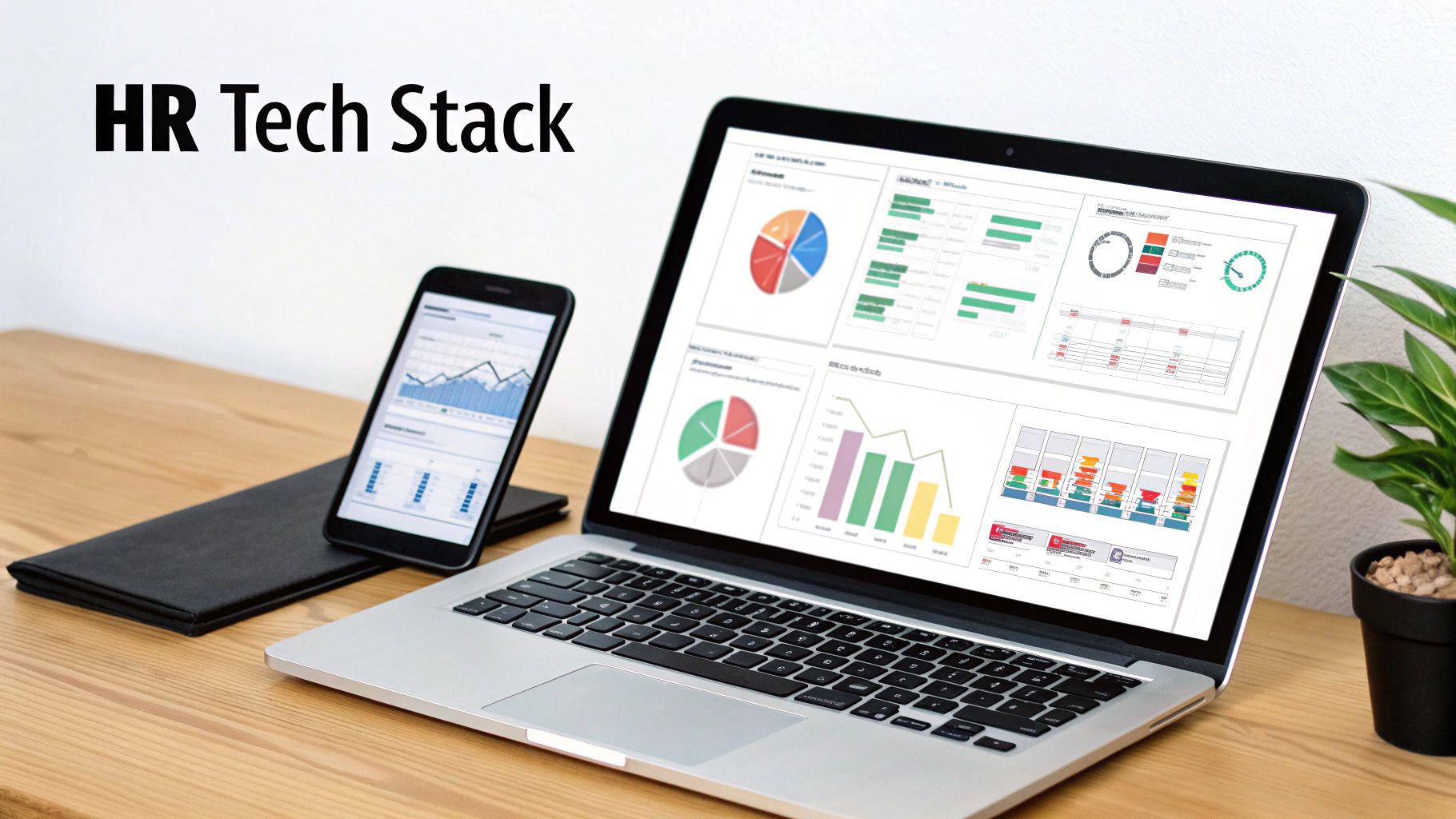
A modern hire to retire process runs on more than just good intentions; it needs a solid, interconnected technology stack. For any CHRO, this tech isn’t just about making things faster. It’s the central nervous system that feeds you the data and insights necessary to make sharp, strategic decisions across the entire employee journey.
Think of your H2R technology as a three-legged stool—each leg is a core system, and the stool is only stable if they’re all connected. Without that integration, you’re stuck with isolated data silos. This creates blind spots that make effective workforce management nearly impossible.
The Core Systems of Your H2R Tech Stack
To build a truly data-driven HR function, you need three foundational platforms. Each has a distinct job, but their real power is unlocked when they speak the same language.
- Applicant Tracking System (ATS): This is your command centre for the “hire” phase. A good ATS manages everything from job postings and candidate pipelines to interview scheduling, creating a smooth experience for applicants. The best systems today even use AI to screen CVs, helping you spot top-tier candidates and slash your time-to-fill.
- Human Resources Information System (HRIS): Consider the HRIS your single source of truth for all employee data. It’s the digital filing cabinet holding everything—payroll, benefits, performance reviews, and personal details. This system is the backbone of your entire hire to retire process.
- Learning Management System (LMS): This platform is what brings your development and mobility stages to life. An LMS is where you assign and track all employee training, whether it’s mandatory compliance courses or personalised upskilling that prepares people for their next big move within the company.
The real magic, though, is in the integration. When your ATS “talks” to your HRIS, new hire data flows over automatically the moment an offer is accepted. No more manual entry, no more errors—just a flawless transition into onboarding. You can see how these tools work together in a modern recruitment tech stack to build a more powerful hiring engine.
Measuring What Matters Most
Technology gives you the power to measure, but it’s vital to track the right Key Performance Indicators (KPIs) to truly understand the health of your H2R strategy. These metrics give you a clear dashboard view, helping you prove the ROI of your people initiatives.
“A well-integrated tech stack transforms HR data from a collection of records into a strategic asset. It allows leaders to connect the dots between recruitment efforts, employee performance, and long-term retention, providing a holistic view of the entire employee journey.”
Focusing on a few critical KPIs for each stage of the lifecycle helps you pinpoint what’s working well and where you need to improve.
To get a clear picture of performance, it’s essential to monitor KPIs that tell a story about each phase of the employee journey.
Key Performance Indicators Across the H2R Lifecycle
| H2R Stage | Primary KPI | Secondary KPI | Business Impact |
|---|---|---|---|
| Recruitment | Quality of Hire | Time-to-Fill | Measures the long-term value a new hire brings, directly linking recruitment to business performance. |
| Onboarding | 90-Day Retention Rate | New Hire Satisfaction | Indicates the effectiveness of your integration process and its impact on early-stage loyalty. |
| Development | Employee Net Promoter Score (eNPS) | Promotion Rate | Gauges overall engagement and satisfaction, serving as a leading indicator of retention. |
| Offboarding | Regrettable Attrition Rate | Exit Interview Insights | Tracks the loss of high-performing employees, highlighting critical retention issues to address. |
Keeping a close eye on these KPIs delivers actionable intelligence. A low Quality of Hire, for instance, might mean it’s time to rethink your sourcing strategy. A high Regrettable Attrition Rate could point to deep-seated issues with compensation or career pathing. By using your technology to track these numbers, you can fine-tune every part of the hire to retire process to deliver real business results and a far better employee experience.
Frequently Asked Questions About the Hire to Retire Process
Even for the most experienced HR leaders, navigating the full employee lifecycle can bring up a lot of questions. Getting the hire to retire process right means really understanding its individual parts, its overall purpose, and the technology that makes it all work. This section cuts straight to the chase, answering the most common queries CHROs have as they build out this crucial framework.
Our goal here is to give you clear, practical insights to manage the entire employee journey better, helping you turn HR operations into a real powerhouse for business growth.
What is the Difference Between the Employee Lifecycle and the Employee Journey?
It’s a common point of confusion, and people often use these terms as if they mean the same thing. They don’t. Grasping the difference is fundamental to creating a truly people-first organisation.
Think of the employee lifecycle as the official company roadmap. It’s the formal, structured sequence of stages an employee passes through from the organisation’s perspective: attraction, recruitment, onboarding, development, retention, and finally, offboarding. This is the framework HR builds processes around, deploys technology for, and uses to measure outcomes.
The employee journey, however, is the employee’s personal, real-world experience of that roadmap. It’s about how they feel about their onboarding, whether they believe performance reviews are fair, and the emotional connection they have with the company culture. While everyone goes through the same lifecycle stages, no two journeys are ever exactly the same.
A great hire to retire process is all about aligning the structured lifecycle with a positive employee journey. The framework provides the tracks, but it’s the journey that determines if the ride is engaging and smooth or bumpy and frustrating.
How Can Small Businesses Implement an H2R Process?
Don’t make the mistake of thinking a formal hire to retire process is only for the big players. For small businesses and start-ups, where every single employee’s impact is huge, a structured approach is arguably even more important, especially with limited resources.
The trick is to aim for simplicity and impact, not complexity. Start by just mapping out the most important touchpoints you already have.
Here’s a simple way for smaller companies to get started:
- Standardise Onboarding: Create a simple but solid checklist for every new person. This ensures everyone gets a warm welcome, the necessary training, and knows exactly what’s expected from day one.
- Prioritise Regular Feedback: You don’t need a fancy performance management system. Just start with regular, informal check-ins—maybe monthly or quarterly—to talk about goals, challenges, and where they see themselves going. It builds a powerful culture of open communication.
- Leverage Lightweight Tech: Use affordable tools to handle the basics. An applicant tracking feature within a larger HR platform, simple survey tools for feedback, and a shared drive for key documents can provide a strong foundation without a massive investment.
For a small business, managing the lifecycle well ensures you get the absolute most out of every hire, which helps cut down on costly turnover and builds a core team that’s loyal and engaged.
How Does Technology Support Each Stage of the Lifecycle?
Technology is the engine that keeps a modern hire to retire process running smoothly. It automates the tedious administrative work and, more importantly, gives you the data you need to make smart, strategic decisions. When the tech is integrated correctly, different platforms talk to each other to create a seamless experience for HR and employees alike.
Here’s a quick look at how tech fits into the core stages:
- Attraction & Recruitment: An Applicant Tracking System (ATS) is a game-changer. It automates job postings, helps screen résumés, and keeps the candidate pipeline organised, slashing the manual effort and time it takes to fill a role.
- Onboarding: Digital onboarding tools handle all the paperwork electronically before an employee even walks in the door. They can also deliver training modules and track introductory tasks, making for a smooth, organised start.
- Development & Performance: A Learning Management System (LMS) can deliver personalised training content, while performance management software makes it easy to handle continuous feedback, set goals, and conduct formal reviews.
- Compensation & Retention: The Human Resources Information System (HRIS) acts as the central hub for managing payroll, benefits, and compensation data. It ensures everything is accurate and provides one single source of truth for all employee information.
- Offboarding: When it’s time for an employee to leave, exit management tools streamline everything by managing final paperwork, sending out digital exit surveys, and making sure all system access is securely shut down.
The right tech stack frees up your HR team from being buried in paperwork so they can focus on people. It turns administrative chores into strategic opportunities to improve the employee experience.
How Do You Measure the Success of Your Hire to Retire Process?
To really know if your process is working, you have to look beyond isolated data points. Success is measured by metrics that tell the complete story of the employee journey. By tracking the right key performance indicators (KPIs) at each stage, you can see what’s working well and what needs fixing.
The best approach is a mix of hard data and human feedback.
- Quantitative Metrics: Track the numbers that matter, like Time-to-Fill, Quality of Hire, 90-Day Retention Rate, Employee Engagement Scores (like eNPS), and your Regrettable Attrition Rate. These give you a clear, objective look at how efficient your process is and the results it’s producing.
- Qualitative Feedback: You need the “why” behind the numbers. Gather these insights through new hire satisfaction surveys, 360-degree feedback, and exit interviews. This is where you’ll uncover how employees actually perceive the process and what the real pain points are.
At the end of the day, a successful hire to retire process doesn’t just run efficiently—it creates a positive environment where your best people want to stay and build their careers. The real proof of success is a workforce that’s engaged, productive, and loyal to your organisation.
Ready to transform your HR operations from a series of disconnected tasks into a seamless, strategic journey? Taggd specialises in Recruitment Process Outsourcing solutions that optimise every stage of your hire to retire process. We help CHROs build resilient, high-performing teams by integrating technology, data, and deep industry expertise. Discover how our tailored RPO services can drive efficiency and improve your talent outcomes at https://taggd.in.