The semiconductor industry is undergoing an unprecedented transformation, driven by the insatiable demands of artificial intelligence (AI), high-performance computing (HPC), and ubiquitous connectivity. As we look towards 2026, the complexity of chip design is set to escalate, intensifying the competition for talent with highly specialised skills. The ability to design, verify, and manufacture these intricate systems is no longer just an engineering challenge; it is a critical business imperative for technology leadership.
This guide provides a strategic roadmap for both aspiring and seasoned engineers, breaking down the top chip design & VLSI skills in demand in 2026. For each of the 10 critical competencies, we will explore precisely what the skill entails, why it has become indispensable, and how you can position yourself at the forefront of this technological revolution. We will delve into specific, actionable insights, from mastering advanced process nodes to implementing AI-assisted design flows and ensuring hardware security.
Whether your career goal is a role at a leading fabless company, a hyperscaler, or a cutting-edge foundry, understanding these trends is the first step towards building a resilient and rewarding career. This article is designed to be your definitive resource, offering clarity on the skills that will not just be valued but will be absolutely essential. For organisations, identifying and nurturing professionals with these skills is paramount, a challenge where strategic recruitment partners can provide a significant competitive advantage in securing top-tier talent. This curated list will equip you with the knowledge to navigate the next wave of semiconductor innovation successfully.
Advanced Process Node Design (3nm and Below)
As the semiconductor industry relentlessly pursues Moore’s Law, the ability to design integrated circuits on cutting-edge process nodes is arguably one of the most critical and sought-after VLSI skills for 2026. This expertise involves mastering the complexities of 3nm, 2nm, and even smaller fabrication technologies. Engineers working at this level must navigate a landscape of extreme ultraviolet (EUV) lithography, formidable quantum mechanical effects like tunnelling, and entirely new transistor architectures such as Gate-All-Around Field-Effect Transistors (GAAFETs).

The market drivers are clear: the demand for higher performance and lower power consumption in AI accelerators, high-performance computing (HPC), and premium mobile devices is insatiable. Companies like Apple (A18 chip), NVIDIA (H200 GPU), and AMD (Ryzen 9 processors) rely on these advanced nodes to deliver generational leaps in capability. This trend is a core pillar of current semiconductor hiring trends, with foundries like TSMC, Samsung, and Intel investing billions to stay ahead.
Actionable Insights for Talent Development
To cultivate this skill, engineers must move beyond standard digital design flows and embrace a multidisciplinary approach that blends physical design with process technology.
- Build Foundational Experience: Gaining hands-on experience with mature nodes like 7nm or 5nm is a prerequisite. This provides a solid understanding of FinFET technology and the fundamental challenges of smaller geometries before tackling GAAFETs.
- Master Specialised Tools: Proficiency in Technology CAD (TCAD) and lithography simulation tools is non-negotiable. These tools help predict how atomic-scale variations will impact device performance, a crucial step before tape-out.
- Engage with Foundries: Actively participate in training programs offered by foundries. Understanding a specific foundry’s Design Rule Manual (DRM) and Process Design Kit (PDK) is essential for successful implementation.
- Stay Academically Current: Follow proceedings from top-tier conferences like the IEEE International Electron Devices Meeting (IEDM) and the VLSI Symposium to stay informed about the latest breakthroughs in transistor technology and interconnects.
Physical Design & Place and Route (P&R) Automation
Physical design is the critical bridge between a logical circuit representation (RTL) and a manufacturable physical layout. Expertise in this domain involves translating abstract netlists into precise geometric patterns, a process heavily reliant on sophisticated Place and Route (P&R) automation tools. Engineers skilled in P&R must manage immense complexity, optimising for power, performance, and area (PPA) while navigating challenges like signal integrity, timing closure, congestion, and thermal hotspots in multi-billion transistor designs.
The market imperative for this skill is universal across the semiconductor industry. As chips for AI, automotive (like Tesla’s FSD chip), and cloud computing (such as AWS’s Graviton processor) become denser and more powerful, the physical implementation becomes a key differentiator. A poor layout can completely undermine a brilliant architectural design. Consequently, companies heavily rely on industry-standard toolchains from vendors like Cadence (Innovus) and Synopsys (IC Compiler II). This makes P&R proficiency one of the most consistently in-demand VLSI skills for 2026.
Actionable Insights for Talent Development
Developing world-class physical design talent requires a deep understanding of both the art and science of layout, coupled with mastery of complex EDA software.
- Master a Core Tool: Focus on gaining deep proficiency in one major commercial P&R tool, like Cadence Innovus or Synopsys IC Compiler II. Understand its nuances, command-line options, and scripting capabilities before learning alternatives.
- Develop Power-Aware Expertise: Learn advanced techniques for power-aware placement and clock tree synthesis. This includes implementing multi-voltage domains, power gating, and optimising power delivery networks (PDNs) to minimise dynamic and leakage power.
- Manage Constraints Effectively: Build expertise in advanced constraint specification using Synopsys Design Constraints (SDC). Mastering timing exceptions, path grouping, and physical constraints is crucial for achieving timing closure on high-frequency designs.
- Embrace Hierarchical Design: Gain experience with hierarchical or modular design methodologies. This “divide and conquer” approach is essential for managing the complexity of large SoCs, enabling parallel development and predictable block-level closure.
AI/ML Integration in Chip Design (AI-Assisted Design)
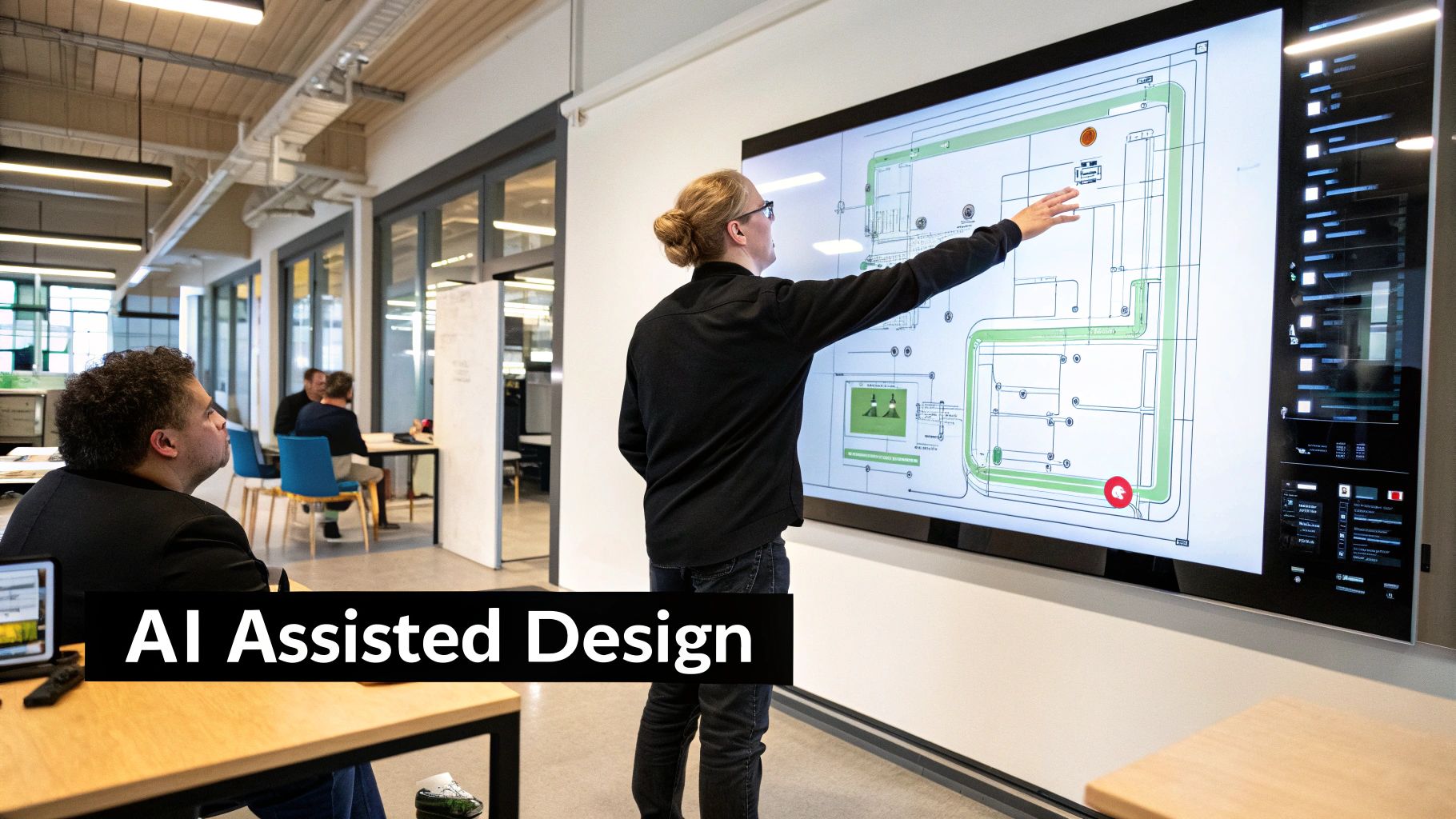
One of the most transformative trends shaping the future of semiconductor development is the integration of Artificial Intelligence and Machine Learning directly into the chip design process. AI-assisted design, or EDA 2.0, involves leveraging sophisticated algorithms to automate and optimise complex VLSI tasks like placement and routing, timing closure, power analysis, and verification. This skill set is a unique fusion of traditional EDA expertise and modern data science, enabling engineers to solve design problems that are computationally prohibitive for humans alone.

The market drivers are compelling: as chip complexity skyrockets, traditional design methodologies are hitting a wall of diminishing returns. AI offers a path to faster design cycles, improved Performance, Power, and Area (PPA), and reduced engineering effort. Tech giants are pioneering this space; Google’s use of reinforcement learning for floorplanning is a landmark example, while EDA leaders like Synopsys (DSO.ai™) and Cadence (Cerebrus™) have built entire tool suites around this paradigm. This makes expertise in AI-assisted design one of the top chip design & VLSI skills in demand in 2026, as companies seek to gain a competitive edge in a hyper-competitive market.
Actionable Insights for Talent Development
Developing this hybrid skill requires a deliberate effort to bridge the worlds of hardware design and machine learning. Engineers should focus on practical application to build a compelling profile.
- Combine VLSI and ML Knowledge: Solidify your understanding of physical design, static timing analysis (STA), and power integrity, then augment it with core ML concepts. Proficiency in Python and libraries like TensorFlow or PyTorch is now as crucial as understanding Verilog or SystemVerilog.
- Study Pioneering Research: Dive into published papers from research arms like Google Brain, Synopsys Research, and NVIDIA Research. Understanding the algorithms behind landmark tools provides a deep, foundational knowledge of the techniques being implemented across the industry.
- Gain Hands-On Tool Experience: Seek opportunities to work with AI-driven EDA tools. Learning how to effectively guide these tools, interpret their results, and integrate them into existing flows is a critical, practical skill that employers highly value. The demand for these capabilities reflects the broader trend of AI skills in demand across all technology sectors.
- Build Portfolio Projects: Experiment with open-source projects or create your own small-scale projects. For example, use a simple ML model to predict timing violations based on netlist characteristics or optimise clock tree synthesis for a small design block.
High-Speed Interconnect & SerDes (Serializer-Deserializer) Design
As data centres, AI clusters, and high-performance computing (HPC) systems scale, the ability to move vast amounts of data quickly and reliably between chips is paramount. This makes high-speed interconnect and SerDes (Serializer-Deserializer) design one of the most crucial VLSI skills for 2026. This specialisation involves creating the physical layer communication links that can handle staggering data rates of 112 Gbps, 224 Gbps, and beyond. Engineers must possess a deep, hybrid expertise in both analogue/mixed-signal and digital domains to manage signal integrity, jitter, equalisation, and clock data recovery (CDR).
The market impetus is undeniable. Hyperscalers like Meta and Google are developing custom interconnects like the Artemis optical I/O chip and TPU interconnect fabric to overcome data bottlenecks in their AI infrastructure. Furthermore, industry standards such as PCIe 6.0 (pushing 128 Gbps per lane), advanced Ethernet protocols, and InfiniBand are constantly evolving, demanding faster and more efficient SerDes solutions. Companies like Broadcom, Marvell Technology, and Intel are at the forefront, driving the need for talent who can design the communication backbone for next-generation technology.
Actionable Insights for Talent Development
Developing expertise in this area requires a systematic approach that bridges the gap between circuit-level physics and high-level protocol standards.
- Master Signal Integrity Fundamentals: Before tackling complex designs, build a strong foundation in signal integrity principles. This includes a thorough understanding of S-parameters, impedance matching, crosstalk, and channel modelling, which are critical for maintaining data fidelity at high frequencies.
- Develop Expertise in Equalisation and CDR: High-speed signals degrade as they travel through channels. Proficiency in designing equalisation algorithms (like FFE and DFE) to compensate for this loss and robust Clock and Data Recovery (CDR) circuits to extract timing information is essential.
- Study Industry Standards: Gain in-depth knowledge of key interconnect protocols. Familiarise yourself with the specifications for PCIe, Ethernet, USB, and InfiniBand, as compliance with these standards is a core requirement for most commercial designs.
- Progress from SPICE to System Simulation: Start by mastering circuit-level SPICE simulations to understand transistor-level behaviour. Then, advance to system-level simulation environments to analyse the entire channel, including the transmitter, receiver, and physical medium, to predict end-to-end performance.
Power Integrity & Power Management Design
As SoCs integrate billions of transistors operating at gigahertz speeds, efficiently managing and delivering clean power is no longer an afterthought but a central design challenge. Expertise in Power Integrity (PI) and Power Management Design ensures that every component on a chip receives a stable, noise-free voltage supply while optimising for minimal power consumption. This discipline involves designing sophisticated power delivery networks (PDNs), on-chip voltage regulators, and implementing techniques like Dynamic Voltage and Frequency Scaling (DVFS) to balance performance with thermal constraints.
The market drivers are universal across all semiconductor segments. In mobile devices, every milliwatt saved translates to longer battery life, a key differentiator for companies like Qualcomm and Apple. In data centres and AI hardware, power efficiency directly impacts the total cost of ownership (TCO), with companies like Google and Tesla engineering custom SoCs where power management is paramount for performance and reliability. Effective power design is a core reason why this is one of the top chip design & VLSI skills in demand in 2026.
Actionable Insights for Talent Development
Developing this skill requires a deep understanding of both digital/analogue circuits and the physical realities of chip layout and packaging. Engineers must master the art of delivering power without compromising signal integrity.
- Master PDN Analysis Tools: Gaining proficiency in industry-standard tools from Ansys (RedHawk), Cadence (Voltus), or Synopsys (PrimeSim) for PI/EM analysis is fundamental. These tools are used to characterise PDN impedance and simulate voltage drop (IR drop) across the entire chip.
- Embrace Package Co-design: Power doesn’t start at the die; it starts at the system level. Understand how package design, including bumps, balls, and substrate layers, impacts the overall power delivery network. This holistic view is crucial for avoiding late-stage issues.
- Learn Advanced Power Management Techniques: Move beyond simple clock gating. Study and implement complex strategies like multiple power domains, adaptive voltage scaling (AVS), and body biasing to achieve aggressive power targets in different operating modes.
- Integrate Thermal and Power Planning: Power consumption directly generates heat. Expertise in co-designing thermal solutions with the power plan is highly valued. This involves understanding thermal modelling and ensuring the chip can operate reliably without throttling performance.
Design for Manufacturing (DFM) & Yield Optimization
Beyond pure design performance, the ability to create a chip that can be economically produced in high volumes is paramount. This is the domain of Design for Manufacturing (DFM) and Yield Optimisation, a critical skill that bridges the gap between digital design and the physical realities of silicon fabrication. This expertise involves anticipating and mitigating manufacturing process variations, defects, and other yield-limiting factors to ensure designs are robust, reliable, and cost-effective to produce at scale.
Engineers skilled in DFM work closely with foundry partners to co-optimise layouts, addressing challenges like lithography hotspots, chemical-mechanical polishing (CMP) variations, and interconnect reliability. As nodes shrink, these issues become exponentially more complex, making DFM a non-negotiable step for any high-volume product. Market drivers include every major semiconductor player striving for better margins and faster time-to-market. Success stories like TSMC’s consistent high yields on Apple’s iPhone chips or Samsung’s yield improvements for its Exynos processors are direct results of world-class DFM strategies. This practical discipline is a cornerstone of the most sought-after Top Chip Design & VLSI Skills in Demand in 2026.
Actionable Insights for Talent Development
Developing DFM expertise requires a deep appreciation for the physical and statistical nature of semiconductor manufacturing. It is a field where collaboration and data-driven analysis are key.
- Master Lithography-Aware Design: Learn to use lithography simulation and verification tools, such as Synopsys Sentaurus Lithography or Mentor Graphics Calibre LFD. Understanding how a design pattern will actually print on silicon is the foundation of modern DFM.
- Study Process Variability: Gain proficiency in statistical timing analysis (STA) and statistical process control methodologies. This allows you to model and design for the inherent variations in transistor performance and interconnect resistance across a wafer.
- Analyse Failure and Yield Data: Actively seek out and study failure analysis reports and yield learning curves from test chips and production runs. Understanding common failure mechanisms provides direct feedback for improving future designs.
- Build Foundry Relationships: Proactively engage with the DFM and process integration teams at your foundry partner. Their insights into specific process challenges and design rule recommendations are invaluable for avoiding costly respins.
Hardware Security & Secure Design
As the world becomes increasingly digitised and connected, securing the hardware foundation of our computing infrastructure is no longer optional, it is an absolute necessity. Hardware security and secure design is the discipline of creating silicon that is resilient to physical and remote attacks, protecting data confidentiality and integrity from the ground up. This involves embedding security features directly into the chip, such as cryptographic accelerators, secure boot mechanisms, and countermeasures against side-channel attacks like power analysis and timing attacks.
The market drivers for this skill are monumental, spanning everything from IoT device protection and automotive safety to securing cloud data centres and national infrastructure. High-profile vulnerabilities like Spectre and Meltdown have underscored the critical need for security-first design methodologies. Consequently, tech giants are investing heavily in creating trusted execution environments. Prime examples include Apple’s Secure Enclave, Intel’s Software Guard Extensions (SGX), ARM’s TrustZone architecture, and Google’s Titan security chips, all of which create isolated, protected areas within the processor to handle sensitive data.
Actionable Insights for Talent Development
Developing expertise in hardware security requires a mindset that constantly anticipates potential threats and attack vectors at the physical level. Engineers must blend traditional VLSI design skills with a deep understanding of cryptography and system security.
- Master Cryptographic Fundamentals: A strong foundation in cryptographic algorithms (AES, RSA, ECC) and security protocols is essential. Understanding how these are implemented in hardware is the first step towards building secure systems.
- Learn Side-Channel Analysis: Gain hands-on experience with tools and techniques for side-channel analysis, such as Differential Power Analysis (DPA) and timing attacks. This allows you to think like an attacker and design robust countermeasures.
- Explore Trusted Execution Environments (TEEs): Study the architecture and implementation details of leading TEEs like ARM TrustZone and Intel SGX. This knowledge is crucial for designing secure enclaves and protecting critical code and data.
- Engage with the Security Community: Follow research from leading security conferences like CHES (Workshop on Cryptographic Hardware and Embedded Systems) and Black Hat to stay ahead of emerging threats and defensive techniques.
Analog & Mixed-Signal (AMS) Design
In an increasingly digital world, the ability to interface with the real, analogue world remains a cornerstone of semiconductor innovation, making Analog and Mixed-Signal (AMS) Design one of the most enduring and essential VLSI skills for 2026. This discipline focuses on creating circuits that process continuous real-world signals like sound, light, and radio waves, and convert them for digital processing. It involves mastering noise analysis, linearity, power efficiency, and the intricate art of layout-aware implementation where physical placement directly impacts performance.
The market drivers are ubiquitous, spanning every major technology sector. The explosion of IoT devices, 5G/6G communication systems, and advanced driver-assistance systems (ADAS) in automobiles relies on high-performance AMS circuits. Companies like Texas Instruments and Analog Devices build their empires on these components, while giants like Qualcomm and Broadcom depend on sophisticated RF transceivers and power management ICs (PMICs) for their flagship products. As devices become more integrated, the demand for skilled AMS engineers who can bridge the analogue-digital divide on a single System-on-Chip (SoC) continues to intensify.
Actionable Insights for Talent Development
Developing expertise in AMS design requires a deep understanding of device physics and a meticulous, hands-on approach that blends theory with practical implementation.
- Master Simulation and Device Physics: Deep proficiency in SPICE simulation is fundamental. Engineers must understand transistor models and device physics to accurately predict circuit behaviour, especially for noise, linearity, and power consumption.
- Develop Strong Layout Skills: Unlike digital design, analogue layout is not just about connecting components; it’s an integral part of the design itself. Mastering techniques for matching, shielding, and minimising parasitic effects is critical for circuit performance and is often a key differentiator for top talent.
- Study Foundry Design Kits Thoroughly: Every process node has unique characteristics. A deep dive into the foundry’s Process Design Kit (PDK) is non-negotiable to understand device models, design rules, and process variations that directly impact the final silicon.
- Gain Practical Multi-Node Experience: Build a portfolio of designs across different process technologies, from older, larger nodes to modern FinFET processes. This demonstrates adaptability and an understanding of how to manage process-specific challenges for circuits like phase-locked loops (PLLs) and data converters.
SystemVerilog & Formal Verification
As System-on-Chip (SoC) designs grow exponentially in complexity, the ability to rigorously verify their functional correctness before tape-out has become a paramount skill. This is where expertise in SystemVerilog, the industry-standard hardware description and verification language, combined with advanced formal verification methods, is indispensable. Engineers proficient in this area create sophisticated, reusable testbenches using methodologies like the Universal Verification Methodology (UVM) to catch bugs that could cost millions in silicon respins.
The market drivers are rooted in risk mitigation and time-to-market pressures. A single functional bug escaping to silicon can delay product launches and damage brand reputation. This is why leading companies like NVIDIA (for their GPU verification), AMD (for their processor infrastructure), and Intel (for security verification in their CPUs) invest heavily in pre-silicon verification. The mastery of SystemVerilog and formal techniques is a cornerstone skill for ensuring the quality of complex IP blocks and is a critical component of the top chip design & VLSI skills in demand in 2026.
Actionable Insights for Talent Development
Developing world-class verification skills requires a methodical approach that goes beyond basic simulation, embracing both dynamic and static techniques to achieve comprehensive coverage.
- Master the UVM Framework: Gain deep, practical experience in the Universal Verification Methodology. This involves understanding its class library, transaction-level modelling, and building robust, reusable test environments for complex DUTs (Designs Under Test).
- Embrace Constraint-Random Verification: Move beyond simple directed testing. Learn to write sophisticated constraints in SystemVerilog to guide randomised stimulus generation, enabling the exploration of corner-case scenarios that manual tests would likely miss.
- Learn Formal Property Specification: Become proficient in assertion-based verification using languages like SystemVerilog Assertions (SVA) or Property Specification Language (PSL). This allows you to formally prove or disprove specific design properties, providing exhaustive verification for critical logic blocks.
- Focus on Coverage Closure: Develop expertise in analysing and closing coverage gaps. This includes understanding code coverage, functional coverage, and assertion coverage, and using the data to intelligently guide the verification effort towards completion.
Chip Architecture & Microarchitecture Design
At the very top of the silicon food chain sits the skill of chip architecture and microarchitecture design. This discipline involves defining the fundamental blueprint of a semiconductor device, from its Instruction Set Architecture (ISA) and memory hierarchy to the specific organisation of its computational units. Architects translate high-level software requirements and performance targets into a concrete hardware specification, making critical trade-offs between performance, power, area (PPA), and cost.
The market drivers for this skill are foundational to the entire industry’s progress. Groundbreaking products like Apple’s M-series chips, NVIDIA’s Ampere GPUs, and AMD’s EPYC processors are all born from visionary architectural decisions that deliver generational performance gains. As workloads for AI, data centres, and autonomous systems become more specialised, the demand for architects who can design custom silicon optimised for these tasks is exploding. This trend aligns with broader technology employment forecasts, which you can explore further in the India Decoding Jobs 2026 report.
Actionable Insights for Talent Development
Developing architectural expertise is a long-term endeavour that requires a holistic understanding of the hardware-software stack. It’s one of the most vital Top Chip Design & VLSI Skills in Demand in 2026.
- Understand Application Workloads: Deeply analyse the software and algorithms that will run on the chip. Understanding memory access patterns, instruction mix, and data flow is crucial for making informed architectural choices.
- Master System-Level Simulation: Gain proficiency with tools like gem5, SystemC, or commercial equivalents. These platforms allow for early-stage performance modelling and validation of architectural ideas before committing to costly RTL implementation.
- Study Academic Research: Stay at the forefront of innovation by reading and understanding papers from premier architecture conferences like ISCA, MICRO, and HPCA. These forums are where the next generation of architectural concepts is born.
- Develop Performance Benchmarking Skills: Learn to create and use robust benchmarking frameworks to quantify the impact of microarchitectural changes. This data-driven approach is essential for validating design decisions and proving performance improvements.
Top 10 VLSI & Chip Design Skills — 2026 Demand Comparison
| Title | Implementation Complexity | Resource Requirements | Expected Outcomes | Ideal Use Cases | Key Advantages / Tips |
|---|---|---|---|---|---|
| Advanced Process Node Design (3nm and Below) | Very high — atomic-scale rules, EUV, GAA FETs; years of experience required | Extreme — access to EUV fabs, TCAD/lithography simulators, cutting‑edge tooling | World-class performance & density; premium compensation and strategic product advantage | Leading-edge GPUs, mobile SoCs, flagship AI processors | Start from 5nm/7nm experience; invest in TCAD and foundry DRM training |
| Physical Design & Place and Route (P&R) Automation | High — complex iterations, timing/congestion closure workflows | High — commercial EDA licenses, compute clusters, extensive runtimes | Manufacturable layouts, timing-closed designs; broad industry applicability | Fabless SoCs, mass-market ASICs, custom accelerators | Master one commercial tool deeply; focus on power-aware placement |
| AI/ML Integration in Chip Design (AI-Assisted Design) | Medium–High — combines ML research with EDA workflows; validation challenges | Moderate — ML infrastructure, datasets, ML/EDA tool integration | Faster closure and better predictions (20–40% cycle reduction potential) | Placement optimization, congestion/power prediction, DSE automation | Combine VLSI fundamentals with Python/TensorFlow; build demonstrable projects |
| High-Speed Interconnect & SerDes Design | High — mixed-signal SI, jitter and CDR design complexity | High — high‑fidelity SPICE/EM sims, measurement labs, expensive test gear | Very high bandwidth, low-jitter links critical to system throughput | Data-center interconnects, networking ASICs, AI fabric transceivers | Master SPICE and SI fundamentals; learn PCIe/Ethernet/InfiniBand specs |
| Power Integrity & Power Management Design | High — multi-domain PDN, thermal and DVFS interactions | High — PDN simulation tools, package/thermal modeling, measurement setups | Stable power delivery, improved efficiency and thermal reliability | Mobile SoCs, data-center processors, battery-powered systems | Build PDN impedance expertise; co-design power and thermal solutions |
| Design for Manufacturing (DFM) & Yield Optimization | Medium–High — design‑process co-optimization; statistical methods | Moderate — lithography/yield simulators, foundry process data (restricted) | Higher wafer yield and lower cost-per-chip; essential for volume products | High-volume consumer SoCs, memory, commodity ICs | Cultivate foundry relationships; study failure analysis and litho sims |
| Hardware Security & Secure Design | Medium–High — threat modeling, side-channel and supply-chain considerations | Moderate — crypto/IP blocks, security labs, certification processes | Strong device protection and regulatory compliance; mitigates catastrophic risk | Secure enclaves, payment/auth devices, trusted cloud hardware | Study cryptography and side-channel analysis; pursue security certifications |
| Analog & Mixed-Signal (AMS) Design | High — device physics, layout sensitivity, long mastery curve | High — SPICE/placement tools, measurement/characterization labs | Accurate analog performance (sensors, PMICs, RF); scarcity of experts | Power management ICs, ADC/DACs, RF front-ends, sensor interfaces | Master SPICE and layout-aware design; gain multi-node fabrication experience |
| SystemVerilog & Formal Verification | Medium — rigorous methodology, coverage and formal scalability issues | Moderate — simulation farms, formal engines, verification environments | High confidence in functional correctness and reduced silicon re-spins | CPU/GPU/IP verification, security and safety-critical designs | Learn both simulation and formal techniques; master SVA/PSL and UVM |
| Chip Architecture & Microarchitecture Design | Very high — system-level tradeoffs, workload-driven complexity | High — system simulators, cross-disciplinary teams, long development cycles | High-performance, high-impact designs that define product value and strategy | CPUs, GPUs, SoC architecture for performance-sensitive markets | Study workloads and use system-level sims (gem5/SystemC); publish/learn from ISCA/MICRO papers |
Building Your Expertise for the 2026 Semiconductor Landscape
The journey through the intricate world of semiconductor design is one of continuous evolution, and as we look towards 2026, the landscape is more dynamic than ever. The top chip design and VLSI skills in demand in 2026 are not just isolated specialisations; they are interconnected disciplines that collectively push the boundaries of what is technologically possible. From mastering the sub-atomic complexities of Advanced Process Node Design to architecting secure and power-efficient systems, the skills detailed in this guide represent the very bedrock of future innovation.
The semiconductor industry’s relentless pursuit of Moore’s Law, now augmented by the transformative power of AI and the demands of hyperscale data centres, has created a clear roadmap for career development. The convergence of hardware and software is no longer a distant concept but a present-day reality, making a holistic understanding of the entire design flow a critical differentiator. Your expertise in areas like AI/ML Integration in Chip Design or Hardware Security is not merely a technical asset; it is a strategic advantage that will define the next generation of smart devices, autonomous vehicles, and intelligent infrastructure.
Key Takeaways for Career Trajectory
To translate this knowledge into career momentum, it’s essential to move from understanding to application. The most successful engineers and leaders in 2026 will be those who not only possess deep expertise but also understand how their specialisation impacts the entire tape-out cycle.
- Synthesise, Don’t Silo: While deep diving into a niche like High-Speed Interconnect & SerDes Design is crucial, understanding its relationship with Power Integrity and Physical Design creates a more versatile and valuable professional. The future belongs to T-shaped experts who combine deep knowledge with broad contextual awareness.
- Embrace Automation and AI: The skills of tomorrow are not about replacing human ingenuity but augmenting it. Proficiency in Physical Design automation and leveraging AI-assisted tools for verification and layout is non-negotiable. This frees up engineering talent to focus on solving higher-level architectural challenges.
- Verification is Paramount: A recurring theme across all in-demand skills is the critical importance of robust verification. Whether through the rigour of SystemVerilog & Formal Verification or ensuring manufacturability with DFM, the principle of “get it right the first time” has never been more vital, given the astronomical costs of advanced node tape-outs.
Your Actionable Roadmap to 2026
Building a future-proof skill set requires a proactive and strategic approach. The insights provided are not just a list but a call to action for both individual engineers and the Chief Human Resources Officers (CHROs) tasked with building world-class teams. For engineers, this means pursuing targeted certifications, seeking out projects that push you into new domains, and engaging with the community through conferences and open-source contributions.
For organisational leaders, the challenge lies in cultivating an environment of continuous learning and identifying individuals who possess this potent blend of skills. Recognising the interplay between Chip Architecture and Analog & Mixed-Signal Design, for instance, is key to assembling teams capable of delivering truly groundbreaking products. The future of silicon is not just being imagined; it is being meticulously designed and verified today. By strategically investing in these top chip design & VLSI skills in demand in 2026, you are not just preparing for the future, you are actively building it.
Navigating the competitive landscape for elite semiconductor talent requires a specialised partner. To build a team with the precise skills needed to lead in 2026, connect with Taggd, experts in identifying and securing the niche VLSI professionals who will drive your next innovation. Find your next-generation talent today at Taggd.