The world of talent acquisition is undergoing a seismic shift, driven by rapid technological advancements and evolving workforce dynamics. For Chief Human Resources Officers (CHROs) and Recruitment Process Outsourcing (RPO) leaders, navigating this new terrain is about staying decisively ahead. The skills that defined recruitment excellence yesterday are merely the baseline for tomorrow.
As we look towards 2026, the competitive edge will belong to organisations that master a new suite of technologies designed to attract, assess, and retain top-tier talent with unprecedented precision and efficiency. This article serves as a strategic roadmap, moving beyond high-level trends to provide concrete, actionable intelligence for talent leaders.
We will provide a comprehensive breakdown of the Top Tech Skills in Demand for 2026, offering a clear framework for building a future-proof recruitment function. For each of the twelve critical skills, you will find:
- Strategic Importance: Why this skill is indispensable for future success.
- Key Roles & Responsibilities: The specific positions that will leverage this expertise.
- Hiring & Assessment: Practical tips for identifying and vetting candidates with these skills.
- Reskilling Pathways: Actionable recommendations for upskilling your current teams.
- Market & Salary Data: Relevant benchmarks to inform compensation and budget strategies.
This guide is designed to equip you with the insights needed to make informed talent technology investments, cultivate the right internal capabilities, and ensure your organisation is prepared to win the war for talent in the years to come.
AI-Powered Talent Acquisition & Matching
By 2026, proficiency in leveraging AI for talent acquisition will be non-negotiable for HR teams aiming to maintain a competitive edge. This skill involves using AI-driven systems to automate and enhance resume screening, candidate profiling, and job-to-candidate matching. These platforms employ sophisticated machine learning algorithms to analyse thousands of data points across resumes and digital footprints, identifying top-tier candidates and predicting their potential for success far more efficiently than manual processes.

The primary benefit is a dramatic reduction in time-to-hire and an improvement in the quality of hire. For instance, Unilever famously leveraged AI screening to cut its hiring cycle from four months to just four weeks, while also increasing the diversity of its candidate pool. As organisations grapple with vast talent pools, the ability to quickly and accurately pinpoint the right individuals becomes a critical business function, making this one of the top tech skills in demand for 2026.
Strategic Implementation for CHROs
- Pilot Programme: Start by implementing AI screening for high-volume, entry-level positions to measure ROI and refine your process before a wider rollout.
- Ethical Audits: Regularly audit your AI algorithms for bias to ensure fair and equitable hiring practices. Engage third-party auditors to maintain objectivity.
- Seamless Integration: Ensure any new AI tool integrates smoothly with your existing Human Resource Information System (HRIS) to create a unified data workflow.
- Recruiter Training: Equip your recruitment teams to work alongside AI, using its recommendations as a powerful decision-support tool rather than a replacement for human judgement. Understanding the role of AI in HR tech is key to adoption.
Advanced Recruitment Analytics & Predictive Analytics
By 2026, the ability to harness advanced recruitment and predictive analytics will shift from a niche capability to a core HR competency. This skill involves using sophisticated data platforms to move beyond historical reporting and into forward-looking talent strategy. By analysing vast datasets-including past hiring trends, employee performance, and external market signals-these tools forecast future hiring needs, predict potential employee turnover, and optimise recruitment funnels in real-time. This transforms HR from a reactive function into a proactive, strategic business partner.
The key advantage is data-driven decision-making that directly impacts the bottom line. For example, a company like Visier helps its clients use people analytics to identify flight-risk indicators, allowing them to intervene proactively and reduce turnover costs by millions. As organisations face increasing market volatility, the capacity to anticipate workforce gaps and strategically plan talent pipelines becomes indispensable, securing its place among the top tech skills in demand for 2026.
Strategic Implementation for CHROs
- Define Clear KPIs: Before adopting any tool, define key performance indicators (KPIs) like quality-of-hire, cost-per-hire, and time-to-fill that align directly with overarching business goals.
- Establish Data Governance: Ensure the integrity and quality of your data. Implement strong governance policies to maintain accurate and reliable datasets for your analytics models.
- Phased Rollout: Begin with foundational metrics and dashboards. Once your team is comfortable interpreting this data, gradually introduce more complex predictive modelling for things like succession planning.
- Invest in Training: Equip HR leaders and their teams with the skills to interpret analytical insights and translate them into actionable strategies. A deep understanding of the fundamentals of talent analytics is crucial for successful adoption.
Applicant Tracking System (ATS) Optimisation & Administration
As the central nervous system of modern recruitment, expertise in Applicant Tracking System (ATS) optimisation and administration will be a foundational requirement by 2026. This skill goes beyond basic data entry; it involves architecting, configuring, and maintaining the ATS to create seamless, efficient recruitment workflows. Professionals with this skill can customise pipelines, manage complex integrations with other HR tools, ensure data integrity, and derive actionable analytics to improve recruitment performance across multiple client organisations.
An optimised ATS acts as a force multiplier for recruitment teams. For instance, a well-configured system like iCIMS or Lever can automate candidate communications, schedule interviews, and generate compliance reports, freeing up recruiters to focus on strategic sourcing and candidate engagement. For Recruitment Process Outsourcing (RPO) providers, the ability to standardise best-practice workflows and then tailor them to individual client needs is a significant competitive differentiator. This level of system mastery ensures operational excellence and makes ATS optimisation one of the top tech skills in demand for 2026.
Strategic Implementation for CHROs
- Standardise Core Workflows: Establish a baseline of standardised recruitment stages and processes across all clients to ensure consistency and simplify reporting, while allowing for client-specific customisations.
- Prioritise Data Hygiene: Implement mandatory fields and conduct regular data audits to maintain a clean and reliable candidate database, which is crucial for sourcing and compliance.
- Automate Routine Tasks: Leverage ATS automation features to handle high-volume, low-value tasks like sending acknowledgement emails or updating candidate statuses, reducing administrative burden.
- Recruiter Training & Adoption: Develop a continuous training programme to ensure all recruiters, including new hires, are proficient in using the ATS to its full potential, focusing on both features and best practices.
Employer Branding & Talent Marketing Technology
By 2026, the ability to skilfully wield employer branding and talent marketing technology will be a cornerstone of successful talent acquisition. This skill involves mastering a suite of digital tools to build, manage, and promote an organisation’s reputation as a premier place to work. It encompasses everything from optimising career websites and managing social recruiting campaigns to monitoring employer review platforms. The goal is to create a compelling and authentic narrative that attracts and engages high-calibre candidates long before they even apply.
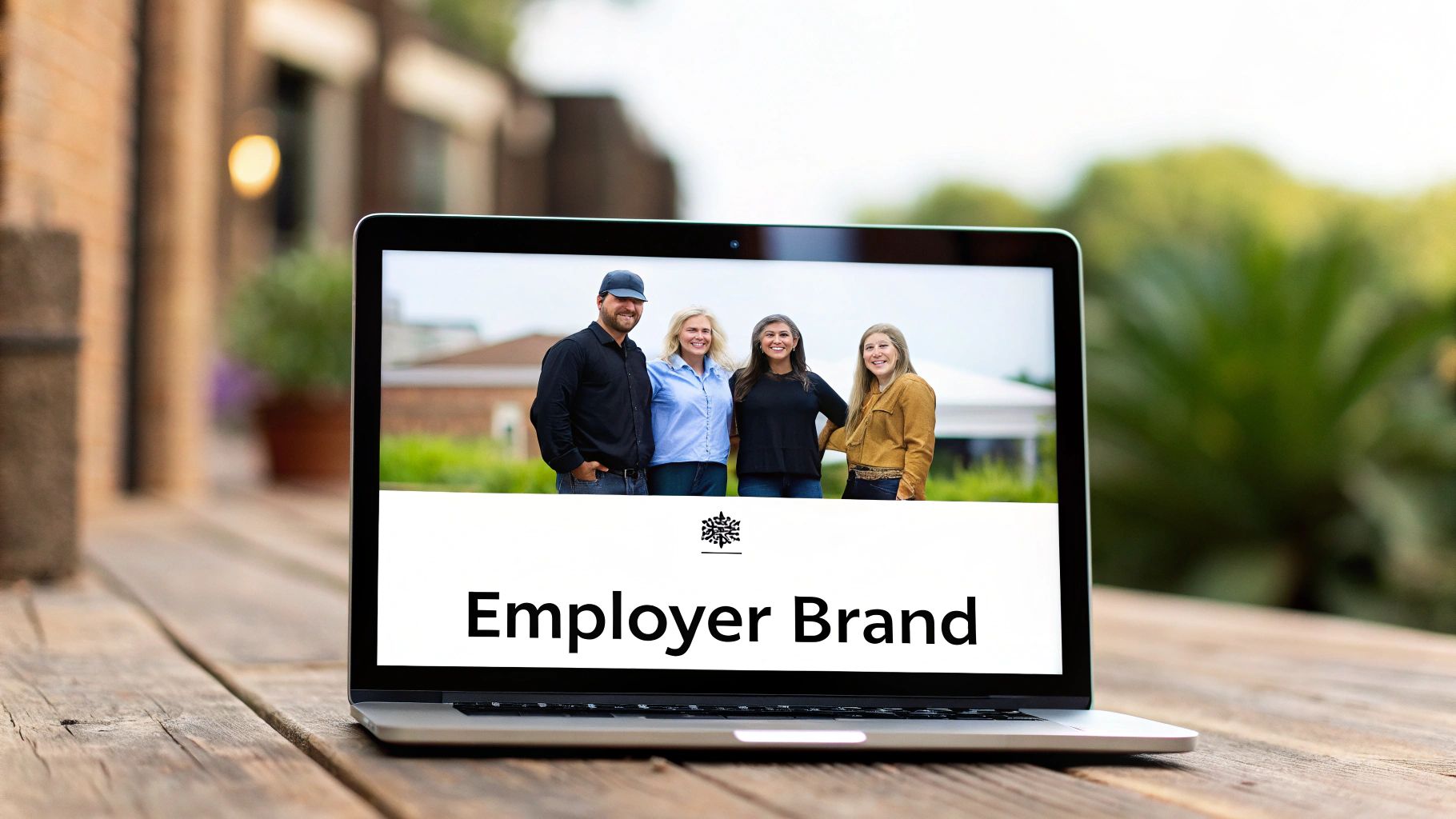
The primary benefit is a significant competitive advantage in a candidate-driven market, leading to a stronger talent pipeline and reduced hiring costs. For instance, companies like Salesforce actively use platforms like Glassdoor and LinkedIn not just to post jobs, but to showcase their culture through employee testimonials and content, effectively turning their brand into a talent magnet. As candidates increasingly research potential employers like they would a product, a proactive and tech-driven branding strategy becomes indispensable, making this one of the top tech skills in demand for 2026.
Strategic Implementation for CHROs
- Technology Stack Audit: Evaluate your current tech stack, including your career site platform, content management system (CMS), and social media tools, to identify gaps in your talent marketing capabilities.
- Content Personas: Develop detailed candidate personas to create targeted content that speaks directly to the motivations and career aspirations of different talent segments.
- Employee Advocacy Programme: Implement tools like Yello or Smashfly to empower employees to become brand ambassadors, making it easy for them to share company content and job openings on their social networks.
- Reputation Management: Actively monitor and engage with reviews on platforms like Glassdoor and AmbitionBox. Acknowledge feedback, address concerns, and use insights to improve the employee experience. A well-defined employer branding strategy is essential for consistent messaging.
Diversity, Equity & Inclusion (DEI) Technology & Compliance
By 2026, the ability to operationalise DEI strategies through specialised technology will be a cornerstone of modern HR. This skill involves mastering platforms designed to measure, monitor, and improve diversity metrics across the entire employee lifecycle. These tools use data analytics and AI to identify and mitigate bias in job descriptions, candidate screening, and internal mobility, helping organisations move from well-intentioned statements to measurable, compliant, and impactful DEI outcomes.
The primary benefit is building a genuinely inclusive workplace that attracts and retains top talent while ensuring regulatory compliance. For example, tools like Textio help teams write more inclusive job descriptions, proven to attract a more diverse candidate pool. Similarly, Pymetrics offers bias-free skills assessments that focus on potential rather than pedigree. As stakeholders and regulators increase scrutiny, proficiency in DEI technology becomes essential for risk management and building a resilient, representative workforce, firmly placing it among the top tech skills in demand for 2026.
Strategic Implementation for CHROs
- Audit Recruitment Funnels: Use DEI analytics tools to audit your current recruitment process from sourcing to hire, identifying specific stages where diverse candidates are dropping off.
- Implement Inclusive Language Tech: Integrate platforms like Textio into your ATS to analyse and improve the language in job descriptions, ensuring they appeal to the widest possible audience.
- Set Measurable Goals: Establish clear, data-driven DEI goals for hiring and promotion, and use technology to track progress transparently across departments.
- Train Hiring Teams: Equip hiring managers and recruiters with tools and training to recognise and mitigate unconscious bias. Understanding how to use DEI technology platforms is crucial for creating a fair and equitable hiring process.
Video Interviewing & Virtual Assessment Technology
By 2026, mastering video interviewing and virtual assessment platforms will be a fundamental competency for talent acquisition teams. This skill involves leveraging technology for synchronous and asynchronous video interviews, technical assessments, and immersive virtual hiring events. Tools like HireVue and Spark Hire use AI-powered analysis and structured questioning to evaluate candidates efficiently, overcoming geographical barriers and significantly reducing scheduling conflicts.

The key advantage is a compressed hiring timeline combined with a broader talent reach. For example, global professional services firm PwC utilised virtual assessments to evaluate over 190,000 applicants, expanding their reach to candidates who couldn’t attend in-person events and improving their ability to assess job-relevant skills consistently. As remote and hybrid work models become standard, the ability to engage and assess talent virtually is no longer a luxury but a core operational necessity, making it one of the top tech skills in demand for 2026.
Strategic Implementation for CHROs
- Tiered Rollout: Implement asynchronous video interviews for initial screening in high-volume roles, reserving live virtual interviews and complex assessments for later stages.
- Accessibility & Support: Ensure your chosen platform is accessible to candidates with disabilities and provide clear instructions with dedicated technical support to create an equitable experience.
- Interviewer Training: Train hiring managers to evaluate video submissions effectively, focusing on structured criteria to mitigate unconscious bias and ensure consistency.
- Data Privacy & Transparency: Be transparent with candidates about how their video data is used, stored, and analysed, particularly if AI is involved, to maintain trust and comply with data protection regulations.
Background Check & Verification Technology
By 2026, the ability to manage automated background and verification technology will be an indispensable skill for HR and talent acquisition leaders. This involves operating sophisticated platforms that streamline employment history checks, education verification, and criminal record screening. These systems integrate directly with Applicant Tracking Systems (ATS) to create a seamless, efficient due diligence process, ensuring regulatory compliance across multiple jurisdictions while accelerating hiring workflows.
The core benefit is a significant reduction in risk and manual effort, coupled with improved candidate experience. As organisations expand globally and face increasingly complex legal landscapes, technology like Checkr or Sterling provides the necessary speed and accuracy. Automating these checks minimises human error, enforces consistency, and shortens the time from offer acceptance to onboarding, solidifying its place among the top tech skills in demand for 2026.
Strategic Implementation for CHROs
- Jurisdictional Compliance: Ensure your chosen platform is continuously updated to reflect evolving regional and national laws regarding background checks and data privacy.
- Candidate Transparency: Implement a clear and upfront consent process. Inform candidates about what is being checked and why, providing them with a copy of their report as required by law.
- Tiered Screening Policies: Develop different levels of background checks based on the role’s seniority and access to sensitive information, ensuring the screening is always relevant and defensible.
- Adverse Action Process Training: Train hiring managers and HR personnel on the legally compliant, multi-step process for taking adverse action based on a background check result to mitigate legal risk.
Talent Marketplace & Skills-Based Hiring Platforms
By 2026, mastering talent marketplace and skills-based hiring platforms will be essential for organisations striving for agility and resilience. This skill involves utilising platforms like Upwork, Gloat, or Catalant that connect companies with internal and external talent based on verified skills rather than traditional job titles. These digital marketplaces enable dynamic resource allocation, allowing businesses to tap into vast, pre-vetted talent pools for project-based work, fill critical skill gaps rapidly, and foster internal mobility by matching employees to new opportunities based on their skill sets.
The primary advantage is unprecedented workforce flexibility and access to specialised expertise on demand. This approach dramatically reduces reliance on lengthy, traditional recruitment cycles for short-term needs and empowers a more fluid, project-centric organisational structure. For example, global consultancies now regularly leverage such platforms to assemble bespoke expert teams for client projects within days, a process that once took months. As project-based work becomes more prevalent, the ability to manage a blended workforce of full-time and contingent talent through these platforms is a key strategic capability, solidifying it as one of the top tech skills in demand for 2026.
Strategic Implementation for CHROs
- Targeted Pilot: Begin by using a talent marketplace to fill specific, high-priority skill gaps in a single department to measure its impact on project delivery speed and quality.
- Develop a Skills Taxonomy: Create and implement a standardised skills taxonomy across the organisation. This ensures that both internal mobility and external hiring are based on the same clear, consistent language.
- Invest in Verification: Partner with platforms that offer robust skills verification and credentialing processes to ensure the quality and reliability of contingent talent.
- Manager Training: Equip line managers with the skills to lead and integrate blended teams. Focus training on managing flexible engagement models, setting clear project deliverables, and providing effective feedback to contingent workers.
Candidate Relationship Management (CRM) & Talent Pipeline Management
By 2026, mastering Candidate Relationship Management (CRM) and talent pipelining will be a core competency for recruitment teams. This skill involves using specialised recruitment CRM platforms to proactively build and nurture relationships with potential candidates, even before a specific role opens up. These systems track every interaction, automate personalised communication, and keep high-potential individuals engaged, transforming reactive hiring into a strategic, long-term talent acquisition function.
The core benefit is the ability to tap into a warm, pre-vetted talent pool on demand, drastically reducing time-to-fill for critical roles. Companies can nurture relationships with “silver medallist” candidates and passive talent, ensuring they remain top-of-mind for future opportunities. This proactive approach is essential for securing in-demand tech talent in a competitive market, solidifying its place as one of the top tech skills in demand for 2026. Platforms like Phenom and Jobvite are leading this charge, helping organisations build robust talent communities.
Strategic Implementation for CHROs
- Define Pipeline Stages: Clearly map out your talent pipeline stages from initial contact to potential hire, establishing specific criteria for moving a candidate forward.
- Segment Your Talent Pool: Group candidates by critical criteria such as skill set, location, career aspirations, and level of engagement to enable highly personalised outreach.
- Automate Thoughtfully: Use automation for routine communications like event invitations or company updates, but reserve personalised messages for high-value interactions.
- Compliance and Data Hygiene: Ensure strict adherence to data privacy regulations like GDPR. Regularly clean and update your candidate database to maintain data accuracy and relevance.
- Recruiter Upskilling: Train your recruitment team on best practices for nurturing long-term relationships, shifting their focus from transactional hiring to strategic talent advisory.
Automation & Robotic Process Automation (RPA) in Recruitment
By 2026, expertise in Robotic Process Automation (RPA) will be a cornerstone of efficient recruitment operations. This skill involves using software ‘bots’ to automate high-volume, rule-based tasks that traditionally consume significant recruiter time. These tasks include interview scheduling, sending standardised communications, updating applicant tracking systems (ATS), and generating offer letters. By automating these processes, RPA frees up recruitment teams to concentrate on strategic, value-added activities like candidate engagement and relationship building.
The key benefit is a substantial increase in operational efficiency and a reduction in manual errors. For example, life sciences company IQVIA implemented RPA and successfully reduced its recruiting time by 40%, demonstrating the technology’s power to accelerate hiring cycles. As talent acquisition functions are pressed to do more with less, mastering RPA to streamline workflows will be one of the most practical and impactful top tech skills in demand for 2026.
Strategic Implementation for CHROs
- Process Mapping: Before implementation, meticulously map your existing recruitment workflows to identify the most suitable high-volume, repetitive tasks for automation.
- Phased Rollout: Begin with a pilot project targeting a single, straightforward process, like initial candidate screening or interview scheduling, to prove value and build internal support.
- Human-in-the-Loop: Design workflows that maintain a human touch for critical, candidate-facing interactions. Use automation for back-end processes, not to replace personal engagement.
- Team Upskilling: Train your recruitment team to manage and work alongside RPA bots, focusing on handling exceptions and leveraging the newly available time for strategic initiatives. Understanding how to manage these digital assistants is crucial.
Learning Management Systems (LMS) & Skills Development Integration
By 2026, the ability to seamlessly integrate Learning Management Systems (LMS) with broader talent strategies will be a critical competency. This skill moves beyond basic LMS administration; it involves architecting an ecosystem where skills gaps are identified automatically, personalised learning pathways are recommended, and employee development is continuously tracked. When integrated with recruitment and performance management systems, this creates a powerful feedback loop, enabling data-driven learning strategies that directly support business objectives and accelerate employee upskilling from day one.
The primary advantage is the creation of a dynamic and agile workforce prepared for future challenges. Companies like SAP use their own SuccessFactors Learning platform to link learning activities directly to career development goals, demonstrating a clear ROI on training investments through improved performance and retention. This integrated approach bridges the gap between hiring and long-term value creation, ensuring that talent acquisition efforts translate into sustained organisational capability. As continuous learning becomes a cornerstone of corporate strategy, mastering this integration will be one of the top tech skills in demand for 2026.
Strategic Implementation for CHROs
- Integrate Skills Assessment: Embed skills assessments directly into the recruitment and onboarding process to generate baseline data for creating personalised learning paths for new hires.
- Align Learning with Strategy: Ensure all learning content, whether from platforms like Coursera for Business or internal modules, is explicitly mapped to your organisation’s strategic goals and required future competencies.
- Measure Learning ROI: Move beyond completion rates. Track the impact of learning on key performance metrics, competency mastery, and internal mobility to demonstrate the tangible business value of your L&D programmes.
- Foster a Learning Culture: Utilise the LMS to encourage social and peer-to-peer learning, mentorship programmes, and knowledge sharing, making development an ongoing, collaborative effort rather than a top-down mandate. A deep understanding of how LMS technology powers upskilling is essential for success.
Data Privacy, Security & Compliance Technology (GDPR, CCPA, FCRA)
By 2026, expertise in data privacy and compliance technology will be an indispensable tech skill, shifting from a niche legal concern to a core operational requirement for HR and recruitment. This skill involves mastering specialised tools that ensure all talent acquisition activities comply with a complex web of global data protection regulations like GDPR, CCPA, and FCRA. It covers the entire data lifecycle, from consent management and secure data handling to automated audit trails and proactive compliance monitoring.
The primary benefit is mitigating immense financial and reputational risk. A single data breach or compliance failure can result in multi-million-dollar fines and erode candidate trust. For instance, global RPO providers leverage platforms like OneTrust and BigID to manage candidate data across different legal jurisdictions, ensuring that consent protocols and data retention policies are automatically enforced. As data becomes the lifeblood of recruitment, the ability to protect it becomes a critical function, making this one of the top tech skills in demand for 2026.
Strategic Implementation for CHROs
- Appoint a Data Protection Lead: Designate a point person or team within HR responsible for overseeing data privacy protocols and staying updated on regulatory changes.
- Implement Role-Based Access: Utilise role-based access controls (RBAC) in your HRIS and ATS to ensure employees can only access the candidate data necessary for their specific roles.
- Automate Compliance Workflows: Deploy tools that automate consent management and data retention schedules. For example, automatically purge candidate data after a pre-defined period unless explicit consent for retention is renewed.
- Vendor Vetting: Establish a rigorous process for vetting all third-party HR tech vendors for their compliance certifications and data security measures before integration. Ensure contracts include clear data processing agreements.
Top 12 Recruitment Tech Skills — 2026 Comparison
| Title | Implementation Complexity | Resource Requirements | Expected Outcomes | Ideal Use Cases | Key Advantages |
|---|---|---|---|---|---|
| AI-Powered Talent Acquisition & Matching | High — ML models, bias audits, ATS integration | High — historical data, ML engineers, compute | Faster hires (‑60–70%), improved quality of hire | High-volume recruitment, predictive shortlists | Automates screening, predictive ranking, scalable |
| Advanced Recruitment & Predictive Analytics | High — data pipelines, modeling, BI setup | High — data infrastructure, analysts, dashboards | Better forecasting, reduced cost‑per‑hire, insight-driven decisions | Workforce planning, turnover prediction, exec reporting | Forecasting, KPI visibility, identifies process bottlenecks |
| ATS Optimization & Administration | Medium‑High — workflow customization, integrations | Moderate — admins, integrators, training | Centralized recruitment ops, improved collaboration, compliance | Multi-client RPO, end‑to‑end process standardization | Workflow automation, audit trails, scalable platform management |
| Employer Branding & Talent Marketing Tech | Medium — platform + content strategy coordination | Moderate — marketing resources, content creators, tools | Higher candidate quality, improved passive engagement over time | Talent attraction, employer differentiation, campus hiring | Stronger employer perception, referral uplift, cost‑effective sourcing |
| DEI Technology & Compliance | Medium — tooling + change management, audits | Moderate — DEI analysts, training, monitoring tools | Improved diversity metrics, reduced compliance risk | Diversity initiatives, compliance-focused hiring, inclusive design | Bias detection, inclusive job optimization, DEI reporting |
| Video Interviewing & Virtual Assessment Tech | Low‑Medium — platform setup, policy work | Moderate — licenses, bandwidth, assessors | Faster screening, wider geographic reach, flexible candidates | Remote hiring, asynchronous pre‑screening, virtual events | Scheduling efficiency, objective assessments, reduced travel costs |
| Background Check & Verification Tech | Medium — legal integration, multi‑jurisdiction rules | Moderate — vendor integrations, legal/compliance staff | Lower hiring risk, compliant verifications, faster offers | Safety‑sensitive roles, regulated industries, global hires | Audit trails, legal compliance, streamlined due diligence |
| Talent Marketplace & Skills‑Based Platforms | Medium — skills taxonomy, VMS integration | Moderate — verification services, vendor management | Faster skills matches, flexible scaling, internal mobility | Gig/contingent staffing, specialized/short‑term projects | Skills‑focused matches, broader talent pools, flexible engagements |
| CRM & Talent Pipeline Management | Medium — integration & ongoing nurture workflows | Moderate — CRM admins, content, outreach resources | Shorter time‑to‑fill for future roles, stronger pipelines | Evergreen hiring, passive candidate engagement, high‑volume roles | Nurture automation, relationship continuity, cost‑effective sourcing |
| Automation & RPA in Recruitment | Medium — process mapping, bot development | Moderate — RPA developers, governance, maintenance | Reduced cycle time (~30–40%), fewer manual errors | Interview scheduling, offer routing, repetitive admin tasks | 24/7 automation, error reduction, frees recruiters for strategy |
| LMS & Skills Development Integration | Medium‑High — content, assessments, HRIS integration | High — content creators, LMS admins, learning designers | Faster onboarding, improved retention, internal mobility | Onboarding, upskilling, competency development programs | Upskilling, measurable learning outcomes, supports internal mobility |
| Data Privacy, Security & Compliance Tech | High — legal, technical controls across jurisdictions | High — compliance specialists, security tools, audits | Reduced regulatory risk, candidate trust, documented compliance | Cross‑border recruitment, regulated sectors, enterprise RPO | Consent management, encryption, audit logging and incident response |
From Insight to Impact: Activating Your 2026 Tech Strategy
The journey from understanding the Top Tech Skills in Demand for 2026 to building a truly future-ready talent function is a strategic imperative, not a distant aspiration. The landscape we have explored, spanning twelve critical skill sets, paints a clear picture: the future of recruitment is intelligent, integrated, and intensely data-driven. It is a fusion of human insight and technological precision.
For Chief Human Resources Officers (CHROs) and Recruitment Process Outsourcing (RPO) leaders, the insights from this article are not just a forecast; they are a call to action. We have moved beyond the “what” and delved into the “how” for each capability, from leveraging AI for talent matching to ensuring robust data privacy compliance. The common thread weaving through these disparate technologies is the fundamental shift from reactive recruitment to proactive, strategic talent architecture.
Synthesising the 2026 Skillset: Key Takeaways
Reflecting on the comprehensive list of skills, several core themes emerge as non-negotiable priorities for your organisation’s talent strategy.
- Intelligence is the New Baseline: The era of guesswork is over. Advanced Recruitment Analytics and AI-Powered Talent Acquisition are no longer differentiators; they are foundational. Your ability to forecast hiring needs, identify best-fit candidates through data, and measure the ROI of your recruitment efforts will directly correlate with your competitive advantage.
- Experience is Everything: Technology must serve the human element. Skills in Employer Branding Tech, Video Interviewing Platforms, and Candidate Relationship Management (CRM) all converge on a single goal: creating a seamless, engaging, and personalised experience for every candidate, whether they are hired or not.
- Efficiency Through Automation: Manual, repetitive tasks are the biggest drain on your team’s strategic capacity. Mastering Automation & RPA and optimising your Applicant Tracking System (ATS) are crucial for freeing up your recruiters to focus on what they do best: building relationships and making critical hiring decisions.
- Compliance and Ethics are Paramount: In an increasingly regulated and socially conscious world, a reactive approach to compliance is a significant risk. Proactive mastery of DEI Technology, Data Privacy Frameworks (like GDPR), and Background Check Technologies is essential for building trust, mitigating legal exposure, and fostering an equitable workplace.
Your Action Plan: Moving from Strategy to Execution
Knowledge without implementation is merely potential. To translate these insights into tangible impact, your immediate focus should be on a structured, phased approach.
- Conduct a Skills Gap Analysis: Begin by auditing your current team’s capabilities against the twelve skills outlined in this article. Where are your most significant gaps? Which skills will have the most immediate impact on your strategic goals? Use this analysis to create a tailored development roadmap.
- Prioritise Technology Investment: You cannot build a modern house with outdated tools. Champion the business case for investing in the right technology stack. Focus on platforms that offer integration, robust analytics, and a user-friendly interface for both recruiters and candidates.
- Foster a Culture of Continuous Learning: The technology landscape of 2026 will not remain static. Encourage a mindset of curiosity and adaptation within your team. Utilise your Learning Management Systems (LMS) to provide targeted training, certifications, and hands-on projects related to these critical tech skills.
“The most significant barrier to future-proofing your talent function isn’t budget; it’s inertia. The organisations that will win the war for talent in 2026 are those that start building their capabilities, testing new technologies, and reskilling their teams today.”
Ultimately, mastering the Top Tech Skills in Demand for 2026 is about building a resilient, agile, and forward-thinking talent acquisition engine. It is about empowering your team with the tools and knowledge to not just fill roles, but to strategically build the workforce that will drive your organisation’s success for the next decade and beyond. The time for incremental change has passed. The moment for bold, strategic action is now.
Ready to accelerate your journey and embed these high-demand skills directly into your recruitment process? Partner with Taggd, where our RPO solutions are built on a foundation of cutting-edge technology and deep market expertise. We help you bridge the skills gap, implement the right tools, and deliver a world-class talent function that is ready for 2026 and beyond.