
Understanding the Attrition Rate in Business
Think of your company as a ship sailing towards its goals. The attrition rate is simply a way of measuring how many crew members naturally leave over a set period, without being replaced. This isn’t just another number for a spreadsheet—it’s a vital sign, a crucial indicator of your organisation’s overall health and stability.
What Attrition Rate Reveals About Your Company

Let’s try a different analogy. Imagine you’re filling a bucket with a few small holes in it. No matter how much water you pour in (that’s your hiring effort), some of it will always leak out (that’s attrition). A low attrition rate means you’ve only got tiny, manageable holes. A high rate? That suggests you’ve got significant cracks that need patching up before the bucket runs dry.
This metric is so much more than a simple HR statistic; it’s a direct reflection of what’s really going on inside your company. It gives you a clear lens to assess how effective your leadership is, how strong your culture feels to employees, and whether the value you promise them is actually being delivered.
The Story Behind the Numbers
A consistently high attrition rate often points to deep-rooted problems that just hiring more people can’t fix. It’s a powerful diagnostic tool. A sudden spike in one department might hint at a management problem, while a slow, steady drain of talent across the entire company could signal issues like non-competitive salaries or a toxic work environment.
Getting a handle on your attrition rate helps you:
- Gauge Employee Satisfaction: It’s a pretty reliable, if indirect, measure of how content and engaged your people are. Happy, fulfilled employees are far less likely to look elsewhere.
- Identify Systemic Problems: It can bring hidden issues to the surface, like poor work-life balance, a lack of career growth, or ineffective management.
- Forecast Future Workforce Needs: When you can predict your attrition rate with some accuracy, you can plan your workforce strategy much more effectively and ensure the business keeps running smoothly.
In essence, attrition starts as a quiet whisper from your departing employees. If you ignore it, that whisper can quickly grow into a loud, blaring alarm. Ignoring it means you’re overlooking priceless feedback from the very people who know your company from the inside out—those who ultimately choose to leave.
Why This Metric Matters for Indian Businesses
In India’s dynamic and fiercely competitive business environment, finding and keeping top talent is a constant battle. High attrition doesn’t just disrupt your daily operations; it hits your bottom line hard through spiralling recruitment costs, lost productivity, and the kind of sinking team morale that’s hard to recover from.
This guide is designed to go beyond the dry, textbook definitions. We’ll get into the nuts and bolts of how to calculate this crucial metric, understand its real cost to your business, and, most importantly, explore actionable strategies to keep your best people right where you want them. By dissecting what your attrition rate is truly telling you, you can turn a reactive headache into a proactive strategy for building a more resilient and thriving organisation.
How to Accurately Calculate Your Attrition Rate

Calculating your attrition rate might sound like a job for the data scientists, but the core formula is surprisingly straightforward. Think of it as a simple health check for your organisation. It’s how you quantify employee departures over a set period, turning a vague feeling that “a lot of people are leaving” into a solid, measurable metric you can actually work with.
The basic formula is your starting point. It gives you a clear snapshot of the percentage of employees who left and were not immediately replaced.
Attrition Rate Formula: (Number of Employees Who Left / Average Number of Employees) x 100
This simple calculation is your first step. With it, you can begin transforming raw headcount data into a powerful diagnostic tool for your business. Let’s break down each part so you can measure this KPI with confidence.
A Step-by-Step Calculation Guide
To really see how this works, let’s walk through a practical example. Imagine a growing tech startup based in Bengaluru. Here’s how they would calculate their annual attrition rate.
1. Define Your Time Period First things first, decide on the period you want to measure. You can do this monthly, quarterly, or annually. For our startup example, we’ll look at the full calendar year, from 1st January to 31st December.
2. Count Your Starting and Ending Headcount Next, you need to know exactly how many employees were on your payroll at the beginning and end of your chosen period.
- Employees on 1st January: 200
- Employees on 31st December: 240
3. Calculate the Average Number of Employees Using an average number of employees is crucial for accuracy. It smooths out the fluctuations from new hires and departures that happen all year long. Just add your starting and ending headcounts, then divide by two.
- (200 + 240) / 2 = 220 average employees
4. Determine the Number of Separations Now, tally up the total number of employees who left the company during this period for any reason—be it resignation, retirement, or something else.
- Number of employees who left: 25
5. Calculate the Attrition Rate Finally, it’s time to plug these numbers into our formula:
- (25 Employees Who Left / 220 Average Employees) x 100 = 11.36%
Just like that, our startup has its number: an annual attrition rate of 11.36%. This single figure gives them a clear baseline they can use to track performance over time and compare against industry benchmarks.
Attrition vs. Turnover: Understanding the Difference
While people often use these terms interchangeably, there’s a key distinction you should know. Attrition usually refers to employees leaving for natural reasons, like retirement or resignation, where the company might choose not to fill the vacant position.
Turnover, on the other hand, is a broader term. It includes all separations—even involuntary ones like terminations—with the general expectation that the role will be refilled.
Knowing the difference is vital for your retention strategy. A high turnover rate might point to problems with your hiring process or performance management. High attrition, however, could signal deeper issues with your company culture, career paths, or employee satisfaction.
In recent years, economic shifts have had a noticeable impact on these metrics across India. The overall attrition rate dropped from 21.4% to 18.7%, and then fell again to 16.9%. This trend is largely because fewer employees are choosing to leave their jobs voluntarily, becoming more cautious in an uncertain market. You can read more about the latest attrition trends in India on hrkatha.com.
Why You Should Calculate Monthly and Quarterly Rates
Calculating your attrition rate annually is a great start, but it only tells part of the story. If you really want a dynamic view of your workforce, you need to look at it more frequently.
Running the numbers monthly and quarterly gives you a much more immediate pulse on what’s happening. For instance, a sudden spike in a single month’s attrition could alert you to a problem much faster than waiting for the year-end report. This allows you to step in quickly, address issues before they snowball, and prevent a small problem from impacting the entire organisation.
Benchmarking Attrition Rates in Indian Industries
Calculating your attrition rate is a great start, but the number on its own doesn’t tell you much. Is 15% attrition a reason to celebrate or a red flag? Honestly, it all depends on your industry. Without context, your attrition metric is just a number. With context, it becomes a powerful strategic tool.
Benchmarking is what gives you that context. It lets you measure your company’s performance against the wider Indian market, helping you figure out if the employee exits you’re seeing are just business-as-usual for your sector or a sign of deeper problems you need to fix—fast. This comparison is the key to turning a simple percentage into real, actionable insight.
Comparing Attrition Across Different Sectors
The Indian business landscape is incredibly diverse, and so are its attrition rates. High-growth, fast-paced sectors often have higher churn simply because top talent is always in demand. On the other hand, more traditional, stable industries tend to hang onto their people for longer.
Recent data shows this divide clearly. New-age sectors like IT, e-commerce, and hi-tech consistently post some of the highest attrition figures. The IT sector, for example, has seen a jaw-dropping attrition rate of 25%, with e-commerce even higher at 28.7% and hi-tech at 21.5%.
Now, compare that to more established industries. Sectors like engineering, chemicals, and automotive manufacturing report much lower rates, typically hovering between 8.6% and 14%. This is why a one-size-fits-all approach to retention just doesn’t work. The pressures and talent dynamics in a tech startup are worlds away from those in a large manufacturing firm.
To give you a clearer picture, here’s a look at how attrition rates stack up across some key Indian sectors.
Attrition Rate Benchmarks Across Key Indian Sectors
| Industry Sector | Average Attrition Rate (%) |
|---|---|
| E-commerce | 28.7 |
| IT | 25 |
| Hi-Tech | 21.5 |
| Automotive | 14 |
| Engineering | 8.6 |
This table shows just how much “normal” can vary. Understanding where your industry sits is the first step in setting realistic retention goals and identifying if you have a real problem on your hands.
Moving Beyond the Overall Number
While industry benchmarks give you a valuable starting point, the real story is hidden inside your own organisation. Your overall attrition rate can easily mask critical trends. A company-wide rate of 12% might look perfectly healthy, but what if it’s hiding a 35% attrition rate in your crucial R&D department? That’s a five-alarm fire.
To find these hidden stories, you have to slice and dice your data. This means breaking down your overall attrition number into smaller, more meaningful groups.
- By Department: Are you losing more people from sales than from finance? This could point to issues with a specific manager, workload, or maybe an uncompetitive commission structure.
- By Seniority: Is it junior employees or senior leaders heading for the door? High churn among new hires might signal a flawed onboarding process, while losing senior staff could mean there’s no clear path for growth.
- By Tenure: Are people leaving within their first year, or after five? Early exits often mean the job didn’t match the expectations set during hiring. The recent India Skills Report 2023 offers deeper insights into the skills landscape, which can directly influence how long employees stick around.
Segmenting your attrition data is like switching from a wide-angle photo of a crowd to a close-up portrait. Suddenly, you see the individual details and patterns that were invisible before, allowing you to pinpoint exactly where your retention efforts are needed most.
This kind of detailed analysis is what turns attrition from a backward-looking metric into a forward-looking diagnostic tool.
Using Benchmarks to Inform Strategy
Once you know how you compare to the industry and where your internal hotspots are, you can finally build targeted retention strategies that actually work. For instance, if you discover your attrition is sky-high among mid-level managers compared to your competitors, you might introduce a leadership development programme or take a hard look at their compensation.
This chart shows just how directly different retention strategies can impact attrition.
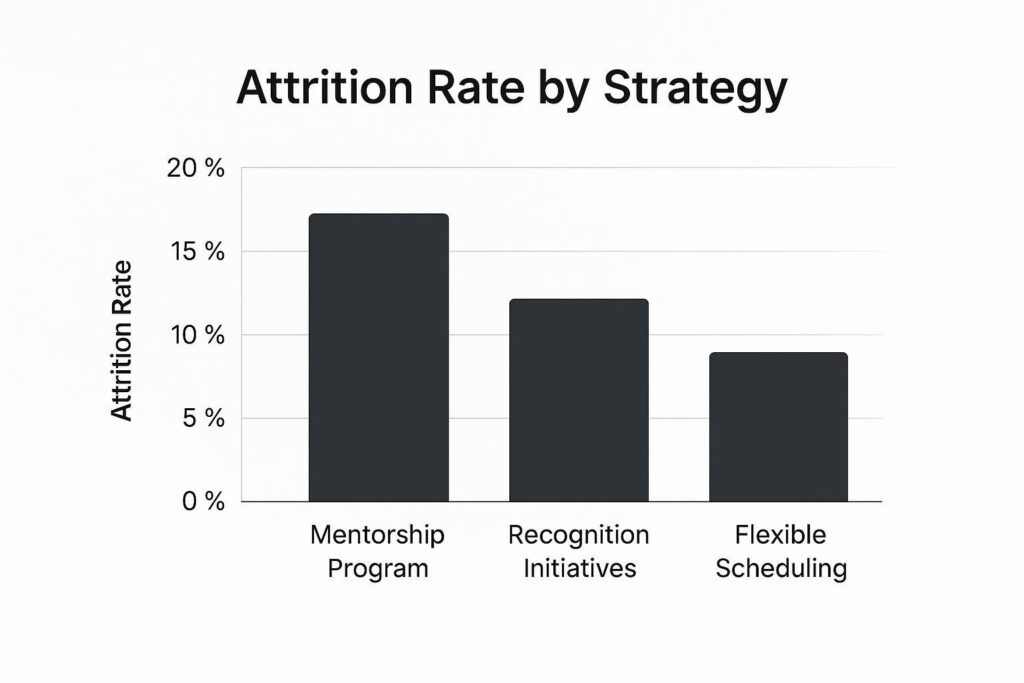
The data here is crystal clear: flexible scheduling options led to the lowest attrition rate. This suggests that for this company, work-life balance is a massive retention driver. By benchmarking both your attrition numbers and the effectiveness of your retention initiatives, you can put your resources where they’ll make the biggest impact and build a workplace where your best people choose to stay and grow.
The Hidden Costs of a High Attrition Rate

A high attrition rate does a lot more than just leave empty desks around the office. It quietly and consistently bleeds your company’s most valuable resources, often in ways that aren’t immediately obvious on a balance sheet.
Many leaders get caught up in the surface-level expenses, but the real financial damage runs much, much deeper. Understanding these hidden costs is the key to building a powerful business case for proactively investing in your people.
The Direct Financial Drain
Let’s start with the obvious stuff. When an employee leaves, the first hit to your wallet comes from the direct costs of replacing them. These are the straightforward, easy-to-track numbers that show up on your budget reports.
- Recruitment Fees: Think about the money spent on job board postings, advertising campaigns, or the hefty fees paid to recruitment agencies, especially for specialised roles.
- Interviewing Costs: Time is money. Consider the billable hours your managers, HR team, and other employees spend sifting through CVs, conducting interviews, and making final hiring decisions.
- Onboarding and Training: This covers everything from the administrative setup and orientation materials to the valuable time your trainers and managers spend getting a new hire up to speed.
Just these direct costs can easily add up to a significant chunk of the departing employee’s annual salary. Every resignation is an expensive event.
Uncovering the Indirect Costs
But here’s the thing: those direct costs are just the tip of the iceberg. The real damage from a revolving door of employees happens beneath the surface, through indirect costs that are harder to measure but far more destructive in the long run.
Perhaps the biggest one is lost productivity. A new hire, no matter how talented, doesn’t hit the ground running at 100% capacity. It can take months for them to match the efficiency of the seasoned employee they replaced, creating a prolonged productivity gap that affects the entire team.
Then there’s the critical loss of institutional knowledge. When a long-term employee walks out, they take years of experience, customer relationships, and deep process knowledge with them. This intellectual capital is priceless and incredibly difficult to replace, often leading to project delays and costly mistakes. This guide offers a great overview of employee attrition and how to prevent it, highlighting just how crucial it is to hold onto this kind of knowledge.
The departure of just one key team member can have a ripple effect, causing a noticeable dip in team morale. The remaining employees often have to pick up the slack, leading to overwork, burnout, and potentially a domino effect of more resignations.
A Practical Example
Let’s put this into perspective. Imagine a mid-sized company loses a senior software developer. The direct costs are easy to calculate: maybe ₹2,00,000 in recruitment agency fees and another ₹1,00,000 for onboarding and training.
But the indirect costs tell a much scarier story. The team’s productivity drops by 20% for three months while they cover the extra workload and help train the new hire. A critical project gets delayed by a month, and the rest of the team starts reporting higher stress levels and lower engagement.
These hidden factors quickly dwarf the direct costs, showing exactly how a high attrition rate can quietly erode your company’s foundation and profitability.
Proven Strategies to Slash Your Attrition Rate
Okay, so you’ve got a handle on your attrition numbers. That was the diagnosis. Now it’s time for the treatment.
Turning that data into meaningful action takes a smart, multi-pronged strategy. Just throwing more money at the problem is a short-term fix at best, and it’s rarely sustainable. The real win comes from building a place where talented people feel valued, see a clear future, and are genuinely excited about their work.
Let’s be clear: there’s no single magic bullet for reducing attrition. It’s about methodically reinforcing the core pillars of your employee experience. Let’s dive into a practical playbook of proven retention strategies that work for today’s workforce.
Foster a Positive and Engaging Work Culture
Think of your company’s culture as its operating system. If it’s slow, buggy, or frustrating to use, your top performers will eventually find a better system. A positive culture is the bedrock of retention and often the number one reason people stay, even when a competitor dangles a bigger paycheck.
You can actively build this environment by focusing on a few key things:
- Implement Robust Recognition Programmes: People who feel their hard work is noticed and appreciated are miles more engaged. This doesn’t have to break the bank; simple, consistent, and specific praise from managers and peers can be incredibly powerful.
- Prioritise Work-Life Balance: Burnout is a primary driver of resignations. By offering flexible work arrangements, actively encouraging people to use their leave, and respecting working hours, you show that you care about them as people, not just employees.
- Strengthen Communication Channels: Build an atmosphere of transparency. Regular town halls, genuine open-door policies, and anonymous feedback surveys give everyone a voice and make them feel like they’re part of the company’s journey, not just along for the ride.
When you nurture a culture of respect and open communication, you create a workplace people are genuinely proud to be a part of.
Provide Meaningful Career Development Opportunities
Ambitious people don’t want a job; they want a career. If they can’t see a path for growth inside your organisation, they’ll inevitably start looking for one elsewhere. Investing in their professional development is one of the most direct ways to bring down your attrition rate.
A huge reason for voluntary attrition is a perceived lack of growth. When employees feel they’re standing still, they start looking for new challenges. Providing clear, tangible pathways for advancement turns your company from a stepping stone into a long-term destination.
Consider taking these practical steps:
- Create Transparent Career Paths: Work with your department heads to map out clear progression routes for different roles. When someone knows exactly what skills and milestones they need to hit to get to the next level, their career path feels less like a guessing game and more like a manageable plan.
- Establish a Mentorship Programme: Pairing junior employees with seasoned leaders is a fantastic tool. It supercharges learning, builds a strong sense of belonging, and helps pass down valuable institutional knowledge.
- Invest in Upskilling and Reskilling: Give your team access to relevant training courses, certifications, and workshops. This not only makes them more valuable to the company but also shows you’re genuinely invested in their personal and professional success.
Ensure Competitive Compensation and Benefits
While culture and career growth are crucial, let’s not pretend money doesn’t matter. If your pay and benefits aren’t competitive, you’re fighting an uphill battle from the start. It’s essential to make sure your people feel they are compensated fairly for the value they deliver.
This is about more than just the base salary. A holistic compensation strategy has several moving parts that, together, create a compelling financial reason to stick around.
Key Components of a Competitive Package
| Component | Description | Why It Matters for Retention |
|---|---|---|
| Base Salary | The fixed amount paid to an employee. | Has to be benchmarked against industry standards to even get in the game. Falling below the market average is a huge red flag for employees. |
| Performance Bonuses | Variable pay linked to individual, team, or company results. | Directly connects an employee’s contributions to financial rewards, which boosts motivation and feels fair. |
| Health and Wellness | Benefits like health insurance, mental health support, and gym memberships. | Shows the company cares about the holistic well-being of its people, building loyalty and reducing stress-related turnover. |
| Retirement Plans | Provident Fund contributions and other long-term savings options. | Provides a sense of long-term security, encouraging employees to view their role as a stable, long-haul career. |
Regularly checking your total rewards package against your industry and location isn’t just good housekeeping; it’s a strategic necessity. For example, successful Indian companies like Infosys and TCS are known for their strong focus on employee training and clear career ladders, which has helped them manage attrition in the fiercely competitive IT market. By combining a strong culture, clear growth paths, and fair compensation, you create a powerful, multi-layered retention strategy that addresses the core needs of your workforce.
Tackling Attrition in the Indian IT Sector
If you want a masterclass in managing a fast-moving workforce, look no further than the Indian IT sector. It’s a perfect storm for high attrition, where intense competition for skilled talent meets a constant demand for professionals to keep up with new technologies. For companies in this space, keeping people isn’t just an HR problem—it’s a critical business challenge.
The market is so dynamic that skilled employees are always in demand and often juggling multiple offers. This creates a highly fluid talent pool where loyalty is constantly tested by better roles, bigger pay cheques, and more exciting projects. To stay ahead, IT giants have had to ditch the old retention playbooks and get a lot more creative.
Strategies for a High-Churn Environment
Big names like HCLTech, Wipro, and TCS aren’t just sitting back and accepting high turnover. They are actively fighting it with serious investment and smart initiatives. Their approach offers some valuable lessons for any leader trying to build a more stable and engaged team, no matter the industry.
Here are a few of the key strategies they’re using:
- Massive Upskilling Programmes: These companies are pouring money into training their people in next-gen skills like AI, cloud computing, and cybersecurity. It’s a powerful signal that they’re invested in an employee’s long-term career, making them less likely to jump ship for a simple salary bump.
- Pioneering Engagement Initiatives: From truly flexible work policies to top-tier mental wellness support and gamified learning platforms, these firms are changing the game on employee engagement. They’re building an environment where people feel valued for more than just the code they write.
Attrition in the IT sector is a constant battle, but it’s also a catalyst for innovation in people management. The companies that succeed are those that view their employees not as resources to be managed, but as talent to be continuously developed and nurtured.
The numbers really tell the story of this ongoing challenge. Recent reports show attrition rates fluctuating but remaining consistently high across the industry. For example, HCLTech reported an attrition rate of 13.2%, while Wipro was a bit higher at 15.3%. Similarly, Tata Consultancy Services (TCS) and Infosys have also seen rates climb, hitting 13% and starting from 12.7% respectively. You can see more on how these trends signal a pick-up in demand in the Indian IT market on timesofindia.indiatimes.com.
Looking at these real-world examples, it’s obvious that tackling high attrition requires a proactive, multi-layered approach. To get a better grasp of these workforce dynamics, you can dive into our comprehensive IT sectoral report from 2022. The lessons coming out of this high-pressure environment can serve as a valuable blueprint for any organisation that’s serious about keeping its best people.
Frequently Asked Questions About Attrition Rate
Digging into workforce analytics always throws up a few common questions. Getting straight answers to these queries is the key to moving from just knowing the numbers to actually using them to make smarter decisions about your team.
Here’s a no-nonsense breakdown of the questions we hear most often from business leaders.
What Is Considered a Good Attrition Rate?
This is the million-rupee question, isn’t it? But the honest answer is: there’s no single ‘good’ number. A healthy attrition rate is completely relative. It changes based on your industry, company size, and even where in India you’re located.
For instance, a 10% attrition rate might be fantastic for a fast-moving IT services firm in Bengaluru. But for a stable manufacturing company, that same number could be a red flag. The best approach is to stop chasing a magic number and instead, focus on two things:
Benchmark against your industry: See how you stack up against the average for your sector. The goal is to be at or below that benchmark.
Track your own trends: Your own rate over time is the most crucial metric. Is it trending down? That’s the real sign of a winning retention strategy.
How Is Attrition Different from Employee Turnover?
People often use these terms interchangeably, but they actually describe different situations. Think of attrition as the more “natural” or expected employee exits. This includes things like retirement, a role being eliminated after a restructure, or when someone resigns and the company decides not to fill their position.
Turnover is a much broader term. It covers all employee separations—both voluntary resignations and involuntary terminations (firings). The real difference is the plan to re-hire; turnover almost always means the role will be filled again.
Getting this distinction right helps sharpen your strategy. High attrition in one department might suggest a need to automate or redesign work. High turnover, on the other hand, points more directly to problems in hiring, management, or company culture.
Should I Include Contract Workers in My Calculation?
In short, no. For a clear picture, your standard attrition rate calculation should only include your permanent, full-time employees.
Mixing in temporary or contract workers can seriously distort your data, masking the real trends affecting your core team. Their jobs are short-term by design, so their departure is just part of the plan, not a symptom of a deeper issue. It’s far more insightful to track the separation rates of your contingent workforce separately. This way, you get a clean view of the stability of both your permanent staff and your temporary talent pool.
Ready to build a more resilient workforce? Taggd specialises in Recruitment Process Outsourcing to help you attract and retain the top talent that drives business success. Visit us at https://taggd.in to learn how we can help you reduce attrition and strengthen your team.