
Your Strategic Recruitment Roadmap for India
Let’s be honest, a recruitment roadmap is much more than a simple hiring plan. It’s the strategic blueprint that connects your talent acquisition efforts directly to the company’s long-term vision. It’s what shifts hiring from a reactive, fire-fighting function to a proactive driver of real business growth.
Aligning Your Recruitment Roadmap with Business Goals
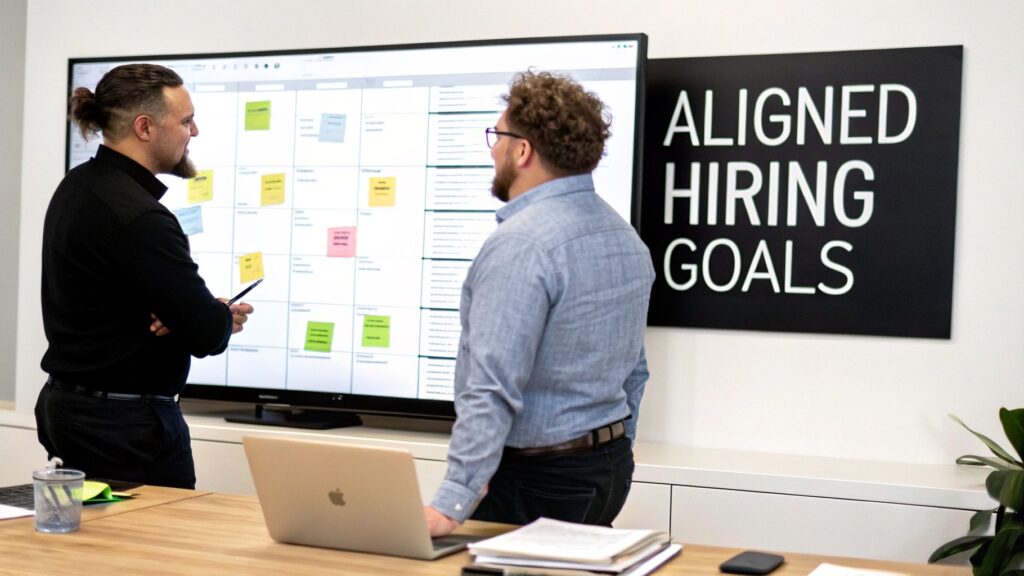
Before a single job description gets drafted, your recruitment roadmap must be welded to the company’s core strategic goals. Without this crucial link, talent acquisition is just filling seats in a vacuum, completely disconnected from the ‘why’ behind each hire.
This foundational step is what ensures every recruitment effort, big or small, directly fuels measurable business outcomes. The aim here is to graduate from vanity metrics like ‘time-to-fill’ and start zeroing in on what actually moves the needle: quality of hire, long-term retention, and the real-world impact new team members have on revenue, innovation, or market share.
A roadmap that’s genuinely aligned with business strategy transforms the CHRO from a support function leader into an indispensable strategic partner at the executive table.
To build this solid foundation, you need to focus on several key pillars. The table below summarises the core components that will anchor your recruitment roadmap to your business’s strategic direction.
Core Components of a Strategic Recruitment Foundation
| Pillar | Key Objective | Actionable Steps for CHROs |
|---|---|---|
| Business Strategy Integration | Ensure talent acquisition is a direct enabler of business objectives, not just a support function. | Conduct quarterly planning sessions with the C-suite to translate business goals (e.g., market expansion, new product launch) into specific talent needs. |
| Talent Landscape Analysis | Gain a deep, data-backed understanding of current internal skills and external market trends. | Perform a comprehensive skills gap analysis. Map internal talent against future needs and identify critical external hiring priorities. |
| Success Metrics Redefined | Move beyond operational metrics to measure the true business impact of hiring. | Develop KPIs like ‘New Hire Performance Score at 12 Months’ and ‘Revenue Impact per Hire’ for key roles. Tie recruiter incentives to these metrics. |
| Future Needs Forecasting | Proactively identify and build pipelines for skills the business will need in 12-24 months. | Collaborate with department heads to map their long-term project roadmaps and technology adoption plans to future skill requirements. |
By weaving these components into the fabric of your roadmap, you ensure that your talent strategy isn’t just reacting to today’s needs but is actively building the workforce required for tomorrow’s success.
Analysing the Current Talent Landscape
The first practical step is to take a hard, honest look at your existing talent pool. This isn’t about a simple headcount. It’s a deep dive into the skills, competencies, and untapped potential already inside your organisation. Where are you strong? And, more importantly, where are the critical gaps that could derail your growth plans?
Here’s a real-world example: your company’s five-year plan is to dominate the AI-driven analytics space, but your current tech team are masters of legacy systems. That’s a strategic talent gap. Your recruitment roadmap must make bridging this divide a top priority, preventing a last-minute scramble for mission-critical skills.
The dynamism of the Indian market adds another layer of complexity. With the labour force participation rate on the rise, organisations have a wider talent pool to draw from. Navigating this landscape effectively requires a structured roadmap to pinpoint and attract the right people.
Defining Success Beyond Traditional Metrics
A truly strategic recruitment roadmap completely reframes what success looks like. Instead of patting ourselves on the back for a low time-to-fill, the conversation shifts to far more impactful key performance indicators (KPIs).
Think about adopting new benchmarks for success:
- Quality of Hire: Measure this through new hire performance scores at six and twelve months, their time to full productivity, and their direct contribution to team goals.
- New Hire Retention Rate: Tracking how many new employees stay past the one-year mark is a powerful signal of a good match between the candidate, the role, and your culture.
- Source of Hire Effectiveness: Which channels—referrals, direct sourcing, specific job boards—consistently deliver your top performers? This data is gold for allocating your budget effectively.
By focusing on these deeper metrics, you ensure that your recruitment efforts are not just filling vacancies but are actively building a more capable, engaged, and resilient workforce that drives the business forward.
Pinpointing Future Needs and Skill Gaps
Getting ahead of your talent needs is the name of the game. This means sitting down with department heads and digging into their roadmaps and pain points. You need to ask sharp questions: What are your big projects for the next 18 months? What new tech are you adopting? What skills will your team need to win that they don’t have today?
This collaborative process uncovers hidden requirements and gives you the lead time to build talent pipelines long before a role ever goes live. For a detailed look at the skills landscape across the country, the India Skills Report 2023 offers some fantastic insights.
A crystal-clear understanding of your current capabilities and future needs forms the bedrock of your recruitment roadmap. This foresight is what allows you to build a plan that not only meets today’s demands but also positions your organisation for sustained growth.
Mastering Workforce Planning and Stakeholder Buy-In

Let’s be honest. A recruitment roadmap without solid workforce planning is just a glorified to-do list. It’s reactive. It might keep you busy, but it won’t move the business forward.
True workforce planning is what gives your roadmap its strategic power. It’s the engine that predicts what talent you’ll need not just today, but six, twelve, or even twenty-four months from now. It’s about looking at the company’s vision and making sure you’re building the teams to make it a reality.
When you get this right, recruitment shifts from being a reactive service to a strategic partner that actively drives growth. You’re no longer just filling seats; you’re building the future of the company.
Forecasting Future Talent Needs
Effective forecasting is part art, part science. It’s a mix of digging into your own company’s plans and keeping a sharp eye on what’s happening in the market.
First, you have to look inward. What are the company’s big bets? Think product launches, tech rollouts, and market expansion plans. These are your best clues for future skill demands.
For instance, if the business is launching a new fintech product in the next 18 months, your workforce plan should already be mapping out the need for blockchain developers, cybersecurity experts, and digital payment specialists. This gives you a massive head start to build talent pipelines, long before the hiring manager sends a panicked email.
At the same time, you have to look outward. The Indian talent market is dynamic, with certain sectors absolutely booming. Hiring intent in the energy and utilities sector, for example, is up by 18%, while communication services saw a 33% year-on-year jump. The IT sector alone is projecting 15-20% growth. Keeping tabs on these trends is crucial. You can get a deeper dive by exploring India’s recruitment industry outlook for 2025.
The Art of Securing Stakeholder Alignment
You can create the most brilliant, data-backed workforce plan in the world, but if it stays locked in an HR folder, it’s useless. The hardest—and most critical—part of this process is getting real buy-in from your stakeholders across the business.
This isn’t about getting a few nods in a meeting. It’s about building a shared vision for talent where everyone, from finance to marketing, is on the same page about priorities, timelines, and the resources needed.
Securing stakeholder buy-in transforms the recruitment roadmap from an “HR document” into a “business plan.” It ensures that every department head, from finance to marketing, sees the talent acquisition strategy as a direct enabler of their own success.
To make this happen, you need to speak their language. Frame your talent needs in terms of the business outcomes they care about most.
- For the CFO: Don’t just ask for budget. Present a clear financial case. Show the projected ROI for critical hires and how strategic hiring will cut long-term costs tied to high turnover or skill gaps.
- For Department Heads: Show them the “what’s in it for me.” Explain how proactively building a pipeline for niche roles will slash their time-to-hire and give their team a competitive edge on key projects.
- For the CEO: Tie everything back to the big picture. Connect every piece of the recruitment roadmap to the company’s overarching goals, whether that’s market expansion, innovation, or profitability.
Translating Needs into a Cohesive Plan
Once you’ve gathered all that input and secured alignment, it’s time to pull it all together into one unified plan. This document becomes the backbone of your recruitment roadmap. It clearly lays out who you need to hire, but more importantly, why you need them and when.
Imagine the sales team wants five new account executives, engineering is desperate for three data scientists, and marketing needs a new content lead. A weak plan just lists these roles.
A strong, cohesive plan prioritises them. It looks at their direct impact on quarterly revenue targets and major strategic projects. Those data scientist roles? They might get fast-tracked to support an upcoming product launch. The sales hires might be phased over two quarters to align with the market expansion timeline.
This structured approach brings incredible clarity. It ensures your recruitment team is focused on the roles that matter most to the business, making the entire talent acquisition function more efficient and impactful. This is where your roadmap truly comes to life.
Crafting Your Sourcing Strategy and Employer Brand
Knowing which roles you need to fill is just the starting point. The real work—and where a smart recruitment roadmap truly shines—is finding and attracting the best people in a fiercely competitive market. The old “post and pray” approach just doesn’t cut it anymore if you want to build a sustainable talent pipeline.
This means you need a multi-channel sourcing strategy that hunts down the talent you need, whether they’re actively looking or not. At the same time, you have to tell a compelling story about why your company is a great place to work, one that clicks with the ambitions of India’s top professionals and puts you at the top of their list.
Building a Proactive Sourcing Engine
Modern sourcing is all about showing up where your ideal candidates hang out. It’s a continuous, proactive effort, not something you only do when a role opens up. This approach keeps a steady stream of qualified people coming your way, which dramatically cuts down the time it takes to hire for critical positions.
Your sourcing mix needs to be diverse and backed by data. Think about these core channels:
- Employee Referral Programmes: These are consistently your best source for high-quality hires. A great programme is more than just a cash bonus. It’s about clear communication, a simple way to submit referrals, and quick feedback that makes your employees feel like true partners in the hiring process.
- Professional Networking: Platforms like LinkedIn are goldmines for direct sourcing. Get your recruiters to build real relationships within specific talent communities. They should be engaging with potential candidates long before a job ever becomes available.
- AI-Powered Sourcing Tools: The right tools can sift through millions of profiles across the web to find people who match your exact skill requirements. This takes the grunt work out of the initial search and lets your team focus on what matters: building connections with candidates.
The end goal here is to create a vibrant talent pipeline. This is a living, breathing database of potential candidates who are already vetted and engaged with your brand. When a new position gets the green light, your first move should be to check this pipeline, not to post a new job ad.
A well-played multi-channel sourcing strategy does more than just fill today’s open roles; it builds a massive strategic advantage. By creating a warm pipeline of engaged, high-potential candidates, you shorten hiring cycles and get a serious leg up in the war for talent.
Defining Your Employer Value Proposition
Your Employer Value Proposition (EVP) is the soul of your employer brand. It’s the unique promise you make to employees in exchange for their talent and effort. In the Indian market, a powerful EVP has to be about more than just the paycheque.
Today’s top talent is looking for:
- Meaningful Work: They want to see a clear line between their job and the company’s bigger mission.
- Career Growth: People want defined pathways for advancement and real opportunities to learn new skills.
- A Positive Culture: An inclusive, supportive, and collaborative workplace is non-negotiable.
- Flexibility: Options for remote or hybrid work that genuinely respect work-life balance are a must.
So, how do you define your EVP? Start by talking to your current top performers. Ask them what they value most about working for you. What makes them stick around? Their answers are the raw ingredients for an authentic EVP that will attract more people just like them.
Communicating Your Brand Consistently
Once you’ve nailed down your EVP, you need to shout it from the rooftops—consistently. Every single interaction a potential candidate has with your company should reinforce the same message. Consistency builds trust. Your recruitment roadmap must detail how this story gets told.
Key channels to focus on:
- Your Careers Page: This is your brand’s home base. It needs to be alive with employee testimonials, videos that show off your culture, and clear descriptions of your values and growth opportunities.
- Social Media: Use social platforms to share genuine stories of employee success, team events, and a peek behind the curtain of your work culture.
- Job Descriptions: Stop writing boring lists of duties. Inject your company’s personality and voice into them. Sell the opportunity and the experience of being part of your team.
- Online and In-Person Events: These are fantastic for building your brand. To get some ideas, check out our guide on how to scale your employer branding with online recruitment events.
Every touchpoint—from the first message a recruiter sends to the final offer conversation—is a chance to strengthen your employer brand. This unified approach ensures you attract candidates who not only have the right skills but are also a perfect long-term fit for your company culture.
Building Your Recruitment Tech Stack
In modern recruiting, technology isn’t just a sidekick anymore; it’s a core strategic partner. Crafting the right tech stack is about more than just efficiency. It’s about arming your team with tools that fundamentally improve the candidate experience and deliver the hard data you need to make smarter hiring decisions.
This isn’t a shopping spree for the latest shiny object. The goal is to be deliberate, selecting integrated technologies that solve your unique problems—whether that’s cutting down screening time, building rich talent pools, or finally getting a clear picture of what’s actually working. A thoughtful tech stack transforms your recruitment function from a reactive service into a data-driven, strategic powerhouse.
The Core Components of a Modern Tech Stack
At the heart of any solid recruitment operation, you’ll find a couple of non-negotiable systems. These are the foundational platforms that bring a sense of order to the natural chaos of hiring.
- Applicant Tracking System (ATS): This is your command centre, your system of record. A robust ATS automates the entire process from posting jobs to scheduling interviews, creating a single source of truth for every candidate interaction. It’s essential for compliance and provides the baseline data for tracking performance.
- Candidate Relationship Management (CRM): While an ATS is built to manage active applicants, a CRM is all about nurturing long-term relationships. It’s where you build and maintain talent pipelines of passive candidates—those brilliant people who aren’t job hunting right now but could be your next perfect hire. This is the key to proactive, strategic sourcing.
Think of these two systems as the bedrock of your tech stack. The ATS manages the process, while the CRM manages the people. When they are seamlessly integrated, you ensure a smooth flow of information and prevent top-tier candidates from ever falling through the cracks.
A classic mistake I see is organisations treating their tech stack like a random collection of disconnected tools. The real magic happens with integration. When your ATS, CRM, and assessment platforms are all speaking the same language, you create a seamless workflow and gain a unified view of the entire talent journey.
Expanding Your Stack with Specialised Tools
Once you have a solid foundation, you can start layering in specialised tools to tackle specific bottlenecks and give yourself a real competitive advantage.
- AI-Powered Sourcing and Screening: Imagine scanning millions of profiles to find candidates that perfectly match your niche criteria. That’s what these tools do, saving your recruiters hundreds of hours. AI can also handle the initial application screening, freeing up your team to focus their energy on the most promising individuals.
- Assessment Platforms: From hands-on technical coding challenges to nuanced psychometric tests, these platforms provide objective data on a candidate’s skills and potential cultural alignment. This is a game-changer for reducing unconscious bias and measurably improving the quality of your hires.
- Interviewing Technology: Video interviewing platforms became a necessity during the pandemic, but their value has certainly lasted. They offer incredible flexibility for both candidates and hiring managers, dramatically speeding up the entire process. If you’re looking to dive deeper, you can explore excellent resources on how to implement digital hiring using recruitment technology.
Deciding what to invest in first can be tough. The key is to match the technology to your organisation’s current recruitment maturity.
Essential vs. Advanced Recruitment Technology
| Technology Type | Essential for Foundational Recruitment | Advanced for Strategic Talent Acquisition |
|---|---|---|
| ATS/CRM | A robust, integrated system is non-negotiable for process management and basic talent pooling. | Advanced systems with deep analytics, talent intelligence, and predictive capabilities. |
| Sourcing Tools | LinkedIn Recruiter, job board aggregators, and basic browser extensions. | AI-powered sourcing platforms that find and engage passive talent across the entire web. |
| Assessments | Simple skills tests or personality questionnaires for high-volume roles. | Role-specific simulations, adaptive psychometrics, and coding challenges integrated into the ATS. |
| Interviewing | One-way and live video interviewing platforms for flexibility and speed. | Tools with AI-driven interview analysis, transcription, and collaborative feedback features. |
| Analytics | Standard reports from your ATS on time-to-fill and source of hire. | A dedicated talent analytics platform that measures quality of hire and predicts hiring outcomes. |
This table should help you prioritise your investments, ensuring you nail the basics before moving on to more sophisticated tools that drive strategic advantage.
Measuring What Matters Most
Great technology is ultimately useless if you can’t measure its impact. Your recruitment roadmap must clearly define the key performance indicators (KPIs) that truly reflect the health and effectiveness of your hiring engine. It’s time to move beyond the basics and focus on metrics that directly connect to business value.
Here are a few strategic KPIs to build into your dashboards:
- Quality of Hire: This is the ultimate metric. You can track it through 360-degree feedback at the six-month mark, analysing new hire performance ratings, and measuring their time to reach full productivity. This KPI draws a straight line from your team’s efforts to tangible business outcomes.
- Sourcing Channel Effectiveness: Don’t just track where your applicants come from; track where your best hires come from. If employee referrals consistently deliver top performers who stay with the company longer, you know exactly where to double down on your investment and effort.
- Candidate Satisfaction (CSAT): Make it a habit to survey candidates about their experience—even the ones you don’t end up hiring. A high CSAT score is a powerful leading indicator of a strong employer brand and a respectful, efficient process.
Remember, building your tech stack isn’t a one-and-done project. It’s an ongoing, iterative part of your recruitment roadmap that requires continuous evaluation to ensure your tools are helping you attract, engage, and hire the talent your business needs to win.
Putting Your Roadmap into Action
A meticulously designed recruitment roadmap is a powerful strategic document, but let’s be honest—its true value is only realised when it moves from paper to practice. The transition from strategy to execution is where many well-intentioned plans falter. This is the moment to translate your ambitious vision into a series of clear, manageable actions that your team can really get behind.
Success here isn’t about a big-bang launch. It’s about creating a structured, phased implementation that builds momentum over time. The key is to break down your overarching annual goals into smaller, more digestible quarterly objectives, each with its own set of distinct milestones and clear ownership.
Creating a Phased Implementation Timeline
Think of your roadmap’s first year as four distinct sprints. This quarterly approach makes the entire plan feel less intimidating and, crucially, allows for regular course correction.
Let’s say a Q1 goal is to reduce time-to-hire for critical tech roles by 15%. That’s a great goal, but it’s too big to tackle all at once. The milestones to achieve this could look something like this:
- Finalise a shortlist of two new AI sourcing tools by the end of January.
- Train the tech recruitment team on the selected platform by mid-February.
- Build an initial talent pipeline of 50 qualified software engineers in the CRM by the end of March.
Suddenly, a lofty objective becomes a concrete, week-by-week action plan. This provides clarity and a sense of progress that keeps the team engaged and focused on what’s next.
A common pitfall I see is teams trying to boil the ocean by executing the entire roadmap at once. A phased rollout allows your team to master one or two key initiatives per quarter, ensuring high-quality execution and preventing burnout. This iterative approach builds confidence and delivers measurable wins early on.
Defining Roles and Establishing a Review Cadence
For any of this to work, clear ownership is non-negotiable. Every single milestone in your quarterly plan must have one designated owner. This doesn’t mean they do all the work, but they are the one person ultimately responsible for driving progress and reporting back. No ambiguity.
Alongside clear roles, you need a consistent rhythm for reviewing progress. This creates accountability and ensures issues are surfaced quickly before they become major problems.
- Weekly Team Check-ins: These should be quick, operational meetings. The talent acquisition team gets together to discuss progress against the week’s milestones and troubleshoot any immediate blockers.
- Monthly Performance Reviews: This is a more data-focused meeting to review performance against your core recruitment KPIs. It’s where you dig into the numbers and analyse what’s working and what isn’t.
- Quarterly Stakeholder Updates: A high-level meeting with business leaders and the C-suite. The focus here is on demonstrating the business impact of your recruitment efforts and aligning on priorities for the upcoming quarter.
This structured communication plan ensures everyone is on the same page, from the recruiters on the front lines to the executives in the boardroom.
The infographic below shows a sample timeline for one of the most common roadmap initiatives—building out your recruitment tech stack.
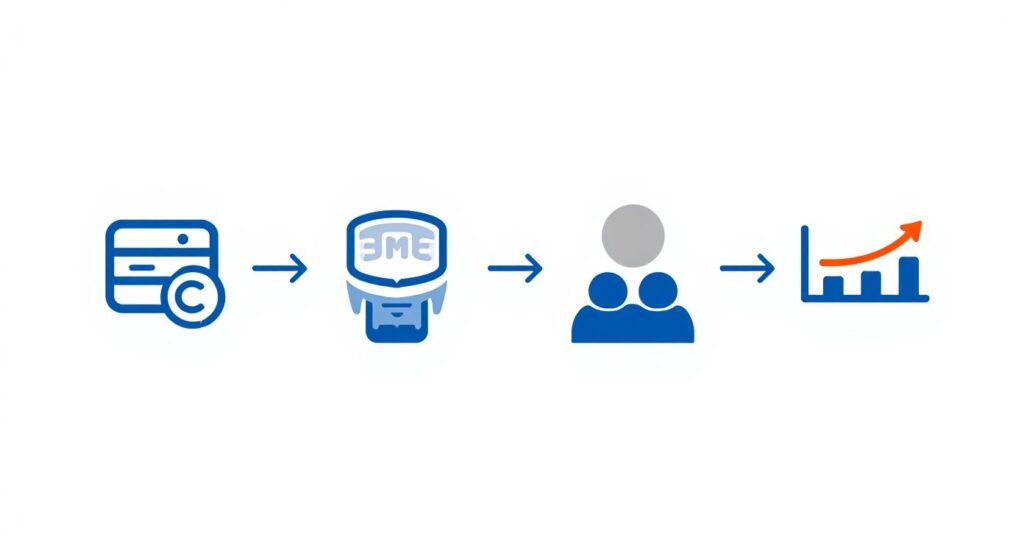
As you can see, this visual timeline highlights how a foundational technology piece, like an ATS, must be in place before you can effectively layer on more advanced systems like a CRM for talent pooling and analytics tools for deeper insights.
Fostering a Culture of Continuous Improvement
A recruitment roadmap should never be a static document set in stone. The talent market shifts, business priorities change, and what worked last quarter might not be effective next quarter. The most successful recruitment functions build a continuous improvement loop directly into their operating model.
This agile approach means systematically gathering feedback and analysing data to make intelligent adjustments to your strategy on the fly.
- Gather Feedback Systematically: Don’t wait for the annual review. Implement simple, regular surveys for both hiring managers and new hires. Ask hiring managers about the quality of candidates and the smoothness of the process. Ask new hires about their experience from the first contact right through to onboarding.
- Analyse Performance Data: Dive deep into your KPIs. If your ‘quality of hire’ metric is dipping for a specific department, investigate why. Is it a sourcing issue? A problem with the interview process? The data will tell you where to look.
- Adapt and Iterate: Use these combined insights—the qualitative feedback and the quantitative data—to make informed changes to your roadmap. This might mean reallocating your budget to a more effective sourcing channel or redesigning an interview stage that’s causing a high candidate drop-off rate.
This constant cycle of feedback, analysis, and adaptation is what ensures your recruitment roadmap remains a living, relevant guide that evolves with your business, keeping your talent strategy sharp and effective.
Common Questions About Building a Recruitment Roadmap
Even the most carefully constructed recruitment roadmap will invite questions. As a CHRO, getting ahead of these queries is vital to keep things moving and ensure your talent acquisition strategy doesn’t lose steam. Let’s tackle some of the most common questions that pop up, with direct, actionable answers.
How Often Should We Update Our Roadmap?
A recruitment roadmap isn’t a “set it and forget it” document. It can’t be. The talent market, especially in a dynamic economy like India’s, is always shifting. Your own business priorities will inevitably change, too. Think of your roadmap as a living guide that has to evolve right alongside your organisation.
A comprehensive, deep-dive review should happen annually. This syncs up perfectly with your yearly business planning and budgeting cycle, making it a natural part of the process. But you need to be more agile for the day-to-day.
Quarterly Reviews: These are your strategic check-ins. Use this time to measure performance against your KPIs, check progress on big projects, and make any necessary course corrections for the upcoming quarter.
Trigger-Based Updates: Certain business events should automatically trigger a review. This could be anything from a major product launch or an acquisition to unexpected market shocks that completely change your talent needs.
Your recruitment roadmap is like a ship’s navigational chart. The long-term destination is set once a year, but you have to constantly check your position and adjust for winds and currents every quarter to stay on course.
Handling Unexpected Hiring Surges
One of the biggest stress tests for any roadmap is a sudden, unforecasted demand for new hires. A surprise project or a big client win can create an urgent need for talent that simply wasn’t on the plan. This is where a well-built roadmap shows its real value—by providing a flexible framework, not a rigid set of instructions.
First things first: assess the surge against your current priorities. Does this new demand take precedence over existing plans? That calls for a quick, decisive chat with business leadership.
Once you have the green light, it’s time to lean on the infrastructure your roadmap helped you build.
Activate Your Talent Pipeline: This is your immediate go-to. Your CRM should be full of pre-vetted passive candidates you can start talking to right away, letting you skip the time-consuming sourcing stage.
Lean on Your Tech Stack: Fire up your AI sourcing tools to quickly scan the market and identify new potential candidates at scale.
Rally Your Referral Network: Launch a hyper-targeted referral campaign for the specific roles you need. Consider offering enhanced incentives for a short period to create urgency and generate immediate leads.
A solid roadmap gives you the agility to handle these surges without throwing your entire strategic plan into chaos.
Measuring the ROI of Recruitment Initiatives
Proving the return on investment (ROI) from your recruitment efforts is non-negotiable if you want to secure ongoing budget and C-suite buy-in. It’s all about connecting your hiring activities to real business outcomes. The trick is to look beynd simple metrics like cost-per-hire and start focusing on the value you’re creating.
Concentrate on the metrics that actually mean something to the leadership team:
Revenue per Employee: For new hires in revenue-generating roles (like sales), track this over their first 12 months. You can then directly compare this figure against their acquisition cost.
Time to Productivity: How fast do your new hires start making a real impact? A shorter time-to-productivity, driven by a slick hiring and onboarding process, is a direct indicator of ROI.
Turnover Cost Avoidance: Work out the total cost of turnover for a critical role. Every successful hire who stays with the company beyond the one-year mark represents a significant cost saving—a powerful ROI metric that often gets overlooked.
When you frame your results in these business-centric terms, you can clearly show the financial impact of your recruitment roadmap. It proves that what you’re doing is a strategic investment, not just another operational cost.
Are you ready to shift your talent acquisition from a reactive function to a strategic business driver? The expert team at Taggd specialises in building and executing data-driven recruitment roadmaps that deliver tangible results. Let us help you build the workforce your business needs to win in the market.
Find out how our RPO solutions can work for you at Taggd.