
Undue Hardship in the Workplace: Your Complete Guide
Understanding Undue Hardship: Legal Framework Made Simple
Navigating workplace accommodations can be tricky, especially when it comes to the concept of undue hardship. This term is essential for both employees seeking accommodations and employers in Indiana. It essentially means that providing a reasonable accommodation for a disability has become excessively difficult or expensive for an employer. It’s all about finding a balance between employee needs and business limitations.
Defining Undue Hardship
The Americans with Disabilities Act (ADA) mandates reasonable accommodations for employees with disabilities, unless these accommodations create undue hardship. This legal protection helps employees perform their essential job functions while recognizing the operational realities of businesses. Defining “significant difficulty or expense” can be subjective and requires careful evaluation. A small business might find a specific piece of equipment an undue hardship, while a larger corporation might not. Understanding the factors involved is crucial for both employers and employees.
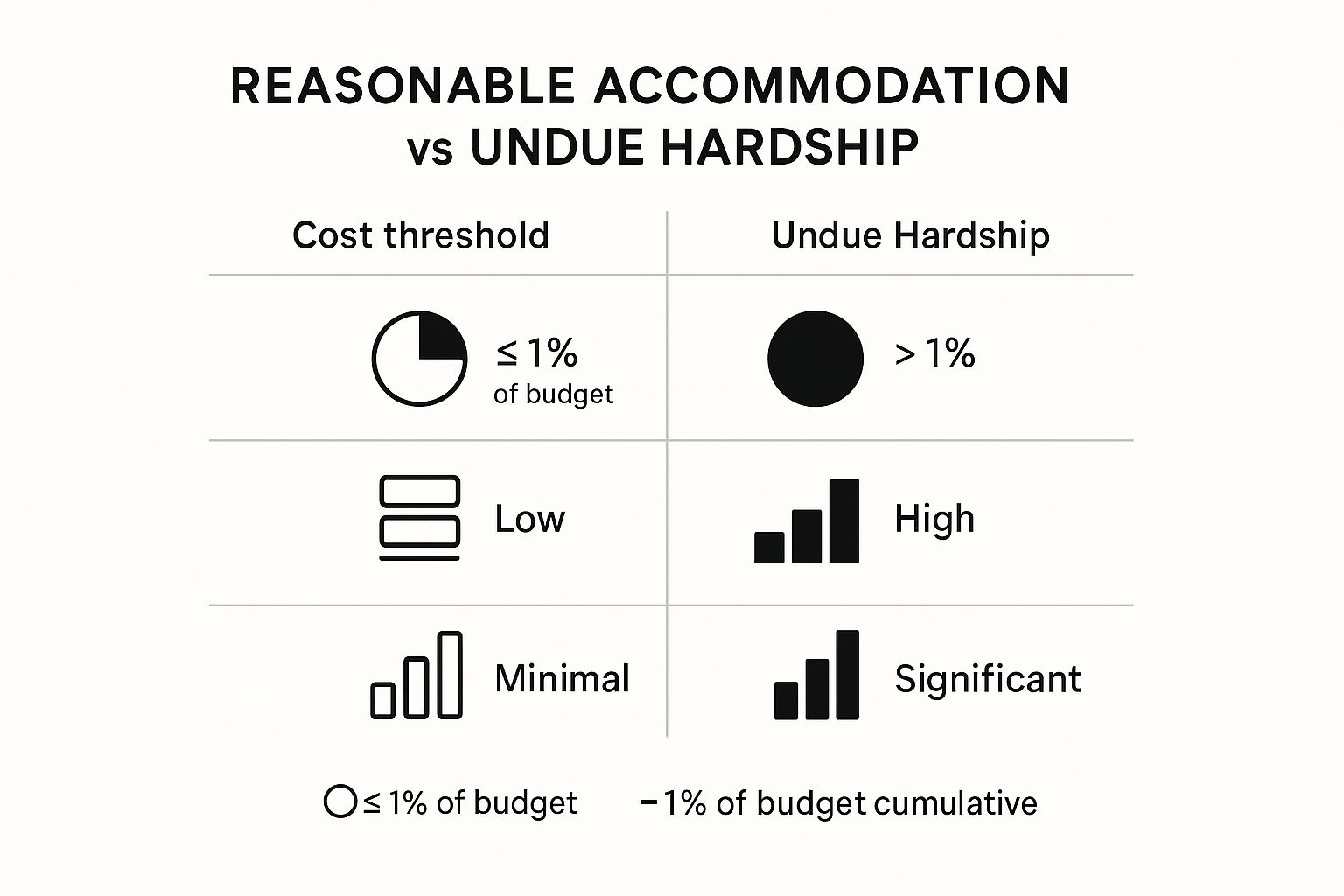
This infographic visualizes the key differences between a reasonable accommodation and an undue hardship. It compares cost, resource demand, and operational impact. Reasonable accommodations typically have a lower cost (â¤1% of budget), low resource demand, and minimal operational impact. An undue hardship, however, goes beyond these thresholds, potentially placing a significant burden on the employer.
The ADA defines undue hardship as actions requiring significant difficulty or expense. In Indiana, employers must navigate these requirements while adhering to federal and state regulations. While specific data on undue hardship claims in Indiana under the ADA isn’t readily available, understanding the legal definition is critical for both employers and employees. Learn more about undue hardship provisions: Undue Hardship FAQ
Factors Influencing Undue Hardship Determinations
Several factors determine if an accommodation constitutes undue hardship. The following table summarizes these key criteria and their potential impact:
To understand how undue hardship is evaluated, let’s look at the key factors involved. The following table summarizes these criteria.
Undue Hardship Evaluation Factors Key criteria used to assess whether an accommodation constitutes undue hardship
| Factor | Description | Impact Level |
|---|---|---|
| Financial Resources | The employer’s size and financial stability. | High |
| Nature and Cost of Accommodation | The specific accommodation requested and its associated costs (direct and indirect). | High |
| Operational Impact | How the accommodation affects business operations, workflow, and other employees’ duties. | Medium |
| Number of Employees | The number of employees at the facility and how the accommodation affects their work. | Medium |
This table clarifies how each factor can influence the overall assessment of undue hardship. Financial resources and the cost of the accommodation itself often carry the most weight. However, the impact on operations and other employees is also a significant consideration.
Understanding these factors helps draw a clearer line between reasonable accommodation and undue hardship, ensuring fairness for both employees and employers in Indiana.
Economic Hardship Patterns Across Indiana Communities
Economic hardship significantly affects families and communities across Indiana. However, the impact isn’t uniform. The struggles faced by someone in Indianapolis are vastly different from those experienced in a rural county. These variations become critical when Indiana workers and employers discuss accommodation requests.
Economic Indicators and Undue Hardship
Several economic indicators influence undue hardship decisions. Local wages, for example, heavily impact what qualifies as “significant difficulty or expense” for a business. Industry-specific issues, such as declining manufacturing in certain regions, further complicate these assessments. An accommodation perfectly reasonable for a thriving Indianapolis tech company might pose an undue hardship for a struggling rural factory.
Indiana’s Economic Landscape and National Trends
How does Indiana’s economy compare to national trends, and how do these comparisons affect accommodation decisions? While Indiana’s overall economic health might align with national averages in some areas, regional differences within the state can create unique pockets of hardship. Unemployment rates, for instance, often vary significantly between urban and rural areas. This variation influences both the need for accommodations and the resources available to employers.
Understanding these regional differences is crucial for addressing undue hardship. This concept, when connected to economic conditions, is complex and varies regionally. The Economic Hardship Index used in the United States considers factors like crowded housing, dependency, education, income, poverty, and unemployment. While Indiana-specific data isn’t readily available, national trends show that hardship is influenced by location and urban versus rural settings. Economic Hardship Index The South, for example, often shows low hardship in cities but higher levels in metropolitan areas, while the Northeast experiences the opposite. Understanding these nuances in Indiana is vital for effective solutions.
Regional Factors and Accommodation Decisions
Regional economies affect both employee needs and employer capabilities. In high-unemployment areas, employees may require more accommodations to find and keep jobs. However, employers in those same areas may have fewer resources, making some accommodations a financial burden. This dynamic creates a situation where the need for accommodation is high, but the ability to provide them is low. This delicate balance requires careful thought and open communication between employers and employees about accommodation requests. It also underscores the importance of creative solutions and community support to address these needs.
Material Hardship and Workplace Accommodations

Many accommodation requests in Indiana come from families grappling with the financial strain of disability-related expenses while also trying to cover basic living costs. This intersection of material hardship and the need for workplace accommodations has a profound impact on Hoosier families. For instance, the cost of transportation for medical appointments, particularly if specialized accessible transportation is necessary, can place a significant burden on a family’s budget. This financial pressure can make seemingly straightforward workplace accommodations, such as adjusted work schedules for medical appointments, feel insurmountable.
The Reality of Material Hardship in Indiana
When affording basic necessities becomes a struggle, the effects ripple through every aspect of life, including employment. This added complexity makes addressing accommodation requests even more challenging. The stress of securing essentials like food and housing can impact an employee’s job performance, increasing the urgency for necessary accommodations. Furthermore, these financial pressures can influence how employers assess the reasonableness of these requests.
Across the U.S., many lower-income households face substantial challenges related to material hardship. Research indicates that between 19% and 25% of households experienced difficulties affording basic needs like food, utilities, or housing between 1992 and 2003. More information on this research can be found here: Material Hardship Research. While Indiana-specific data is limited, national trends suggest similar struggles exist, particularly in Indiana’s urban centers. Understanding material hardship is therefore critical for employers statewide, especially those in urban areas where these challenges are most prevalent.
Community Support and Workplace Accommodations
Community support systems are crucial in supplementing workplace accommodations. For example, a local non-profit organization providing transportation assistance can lessen the burden on both the employee and the employer, making a modified work schedule more manageable. The accessibility of these resources, however, varies across Indiana. Rural communities often encounter unique obstacles due to limited access to such services. This emphasizes the need for innovative approaches and resourcefulness when considering undue hardship in these areas.
Material Hardship and Undue Hardship
When determining whether an accommodation request presents an undue hardship, understanding the employee’s financial reality is essential. For example, if an employee already faces considerable financial strain due to disability-related costs, an accommodation requiring additional personal expenses could constitute an undue hardship, even if it seems minor at first glance. This highlights the importance of open communication and collaboration between employers and employees in Indiana. When employers are aware of an employee’s financial circumstances, they are better positioned to understand the true implications of an accommodation request. This understanding enables informed decisions that address both the employee’s needs and the employer’s operational realities.
Workplace Accommodation Requests: Success and Rejection
Navigating workplace accommodation requests in Indiana requires a clear understanding of what defines reasonable accommodation versus undue hardship. This is essential for both employees and employers. This section explores real-world scenarios where accommodation requests have been approved, modified, or denied due to hardship considerations.
Successful Accommodation Examples
Sometimes, small changes can have a significant impact. A flexible work schedule, for example, can be crucial for an employee managing a chronic illness, enabling them to attend medical appointments without risking their job. Providing ergonomic equipment can greatly improve the work experience for someone with physical limitations. These accommodations are often low-cost for employers while significantly boosting employee well-being and productivity.
Pitfalls That Lead to Request Denials
Not all requests are approved. A request may be denied if it drastically changes the nature of the job or presents a significant safety risk. If an accommodation requires a colleague to shoulder a disproportionate workload, it could be considered an undue hardship. This can create team friction and disrupt workflow. Similarly, if an accommodation compromises safety protocols, it could endanger the employee, their coworkers, and the public.
Balancing Legal Compliance and Operational Realities
Indiana businesses must balance meeting their legal obligations under the ADA with maintaining efficient operations. This balancing act can be challenging and requires careful consideration of company resources and the specific accommodation requested. You may find this resource helpful: Navigating Employer Responsibilities. Open communication and collaboration between the employer and employee can often uncover creative solutions. Job restructuring or a departmental transfer could be viable alternatives that address both the employee’s needs and the employer’s operational requirements.
The Negotiation Process
Negotiation is frequently part of the accommodation process. Employees should be prepared to clearly explain their needs and how the accommodation will help them perform their essential job functions. Employers, in turn, should make a genuine effort to explore all possible options. This collaborative approach can result in mutually beneficial solutions.
Let’s take a look at some typical scenarios:
Common Accommodation Requests and Outcomes
| Accommodation Type | Approval Rate | Common Concerns | Alternative Solutions |
|---|---|---|---|
| Flexible Work Schedule | High | Impact on team coordination, client meetings | Staggered start/end times, remote work options |
| Ergonomic Equipment | High | Cost, availability | Exploring different equipment options, phased implementation |
| Job Restructuring | Medium | Impact on other employees’ roles and responsibilities | Re-evaluating job descriptions, cross-training |
| Transfer to Different Department | Medium | Availability of suitable positions, employee qualifications | Internal job postings, skills development opportunities |
This table illustrates the importance of considering alternative solutions when the initial request poses an undue hardship. By understanding the potential challenges and exploring creative alternatives, Indiana employers and employees can work together toward positive accommodation outcomes that promote both inclusion and productivity.
Protecting Your Rights: Indiana Worker Legal Protections

Knowing your legal rights as an Indiana worker is essential when discussing workplace accommodations. This knowledge empowers you to confidently address reasonable accommodations and undue hardship claims. This section offers crucial information about the protections available to Indiana workers regarding disability accommodations.
Understanding Your Rights Under the ADA
The Americans with Disabilities Act (ADA) is a federal law protecting individuals with disabilities from discrimination, including workplace discrimination. The ADA requires employers to provide reasonable accommodations to qualified individuals with disabilities unless doing so creates an undue hardship for the business.
However, defining “undue hardship” can be complicated. This ambiguity underscores the importance of understanding both your rights and your employer’s obligations.
Documenting Accommodation Requests
Thorough documentation of your accommodation requests is vital. Maintain records of every communication, including emails, letters, and notes from conversations.
Clearly describe the nature of your disability, the specific accommodation you’re requesting, and how it will help you perform your job duties. This documentation creates a strong foundation if disputes arise regarding your request. Detailed records also help clarify the necessity and feasibility of the accommodation, minimizing the risk of it being deemed an undue hardship.
You might be interested in: Best Companies to Work For.
Resources for Indiana Workers
Several resources exist to guide Indiana workers through the accommodation process. Both state and federal agencies offer support and guidance.
- The Equal Employment Opportunity Commission (EEOC): The EEOC enforces federal laws prohibiting employment discrimination, including the ADA. They offer information, investigate complaints, and can even file lawsuits on behalf of employees.
- Indiana Civil Rights Commission (ICRC): The ICRC handles discrimination complaints within Indiana. They provide similar services to the EEOC, focusing on state-specific regulations.
- Legal Aid Organizations: Many organizations across Indiana offer free or low-cost legal assistance to individuals experiencing employment discrimination. These organizations can be incredibly helpful for understanding your rights and navigating the legal system.
Enforcement and Timelines
Understanding the enforcement processes and typical timelines for resolving accommodation disputes helps manage expectations. While each case is unique, familiarity with the general process offers a helpful framework.
This includes knowing when to seek legal counsel, especially if your employer claims undue hardship without a valid reason. Remember, comprehensive documentation of your requests and communications with your employer is valuable in any discussions or legal proceedings.
Indiana Resources and Support Networks
Navigating workplace challenges related to accommodations and undue hardship can feel daunting. Indiana, however, offers a network of support designed to assist residents during these times. This section provides a practical guide to essential resources, connecting you with legal aid, disability advocacy groups, and economic assistance programs.
Legal Aid and Advocacy Organizations
Indiana residents facing workplace discrimination or needing clarity on their accommodation rights can find crucial legal support through several organizations:
- Indiana Legal Services: This non-profit offers free legal aid to low-income individuals on various civil matters, including employment law. They can help you understand undue hardship claims and navigate the legal complexities of accommodation requests.
- Disability Rights Indiana: This organization champions the rights of Hoosiers with disabilities, including those encountering workplace discrimination. They provide information, referrals, and legal representation in specific cases.
Accessing these resources offers valuable support and guidance when addressing undue hardship concerns, ensuring fair treatment and adherence to legal protections.
Economic Assistance Programs
Economic hardship can greatly impact accommodation needs and the definition of undue hardship. Indiana offers programs to help residents facing financial challenges:
- The Indiana Family and Social Services Administration (FSSA): The FSSA oversees several assistance programs, including TANF and SNAP. These programs offer temporary financial support and food assistance, helping families meet basic needs during difficult economic times.
- Township Trustee Offices: Each Indiana township has a trustee who can provide emergency assistance to residents facing immediate hardship, including help with housing, utilities, and food.
These resources can be especially helpful for individuals with disabilities who face higher costs due to their conditions and may require accommodation to maintain financial stability.
Community Organizations and Disability Support Groups
Beyond legal aid and financial programs, many community organizations throughout Indiana offer support specifically for disability-related challenges:
- Easterseals Crossroads: This organization offers a variety of services to individuals with disabilities, including employment assistance, assistive technology, and independent living support.
- The Arc of Indiana: The Arc advocates for the rights and inclusion of people with intellectual and developmental disabilities. They offer various community-based programs and support services for individuals and their families.
These organizations play a vital role in ensuring individuals with disabilities receive the support they need to thrive in the workplace and their communities, creating a safety net that minimizes the potential for undue hardship situations.
Accessing Resources Efficiently
Quickly finding help can make a significant difference when facing workplace or economic challenges. Here are some steps to access Indiana resources efficiently:
- 211 Helpline: Dialing 211 connects you with a community resource specialist who can offer information and referrals to relevant services in your area.
- Online Databases: Several websites maintain searchable databases of Indiana resources, allowing you to find specific services or organizations by location and need.
By utilizing these resources, Indiana residents can navigate the complexities of accommodation requests, undue hardship claims, and economic challenges with more confidence and support. Remember, no one has to face these challenges alone.
Key Takeaways For Successful Accommodation Outcomes

This section offers practical guidance for navigating undue hardship situations in Indiana workplaces. It’s designed to be helpful for both employees seeking accommodations and employers considering these requests. A core component is understanding what “significant difficulty or expense” truly means within Indiana’s specific economic context.
Key Considerations for Employees Requesting Accommodations in Indiana
- Clearly Define Your Needs: When requesting an accommodation, clearly articulate your disability, the limitations it presents, and how the accommodation directly addresses these challenges. For instance, if prolonged standing is difficult, explain how a sit-stand desk would help you perform your job duties effectively.
- Document Everything: Maintaining thorough records is crucial. Keep records of all communication, medical documentation, and any related expenses. This detailed documentation will support your request and demonstrate the need for the accommodation.
- Understand the Interactive Process: Open communication with your employer is essential. A collaborative approach can often lead to mutually beneficial solutions. If your initial request is considered an undue hardship, exploring alternatives might be a viable option.
- Know Your Rights: Familiarize yourself with the ADA and Indiana state regulations concerning workplace accommodations. Understanding your rights will empower you to effectively advocate for your needs.
Guidance for Indiana Employers Evaluating Hardship Claims
- Conduct a Thorough Assessment: When evaluating accommodation requests, carefully assess the actual costs involved, both direct and indirect. Consider the impact on your operations, workforce, and budget. Remember that regional economic factors in Indiana can influence what qualifies as an undue hardship.
- Engage in the Interactive Process: Open communication with the employee is key throughout the process. Explore alternative solutions and document each step of the discussion. This collaborative approach is vital in Indiana, given the state’s diverse business landscape.
- Consult Legal Counsel: Seeking expert legal advice will ensure compliance with all relevant laws and regulations. This is especially important when assessing undue hardship claims to avoid potential legal issues.
- Consider Resources and Support: Indiana offers various resources to assist employers with accommodation requests. Utilizing these resources can help you find cost-effective solutions and prevent undue hardship situations.
Finding the Right Balance
Successfully addressing undue hardship situations requires a balanced approach. It’s about respecting both the needs of employees and the limitations of employers. In Indiana, this involves open communication, creative problem-solving, and a commitment to adhering to the ADA. This collaborative strategy promotes positive outcomes for everyone.
Check out our guide on Real-World Case Studies.
Ready to improve your hiring process and cultivate a diverse, inclusive workforce? Visit Taggd today to learn more about our recruitment process outsourcing services.