India’s semiconductor ambitions are moving from policy announcements to real-world execution. With fabrication plants breaking ground in Dholera and ATMP facilities coming up in Jewar, the sector is experiencing its most significant transformation in decades. Tata Electronics’ INR 91,000 crore fab alone is expected to create over 20,000 jobs, while HCL–Foxconn’s INR 3,706 crore ATMP facility will anchor an entirely new employment hub.
But here’s the strategic reality: capital is moving faster than capability.
According to Taggd’s India Decoding Jobs Report 2026, the sector will require approximately 1.5 million skilled and 5 million semi-skilled workers across fabrication, ATMP, chip design, and supply chains by next year.
Of the projected 10 lakh semiconductor jobs by FY2026-27, approximately 3,00,000 are expected in fabrication and 2,00,000 in ATMP, with the remainder spanning chip design, software development, supply chain management, and quality assurance.
For CHROs in large manufacturing and technology enterprises, semiconductor hiring is no longer a future capability- it is an immediate execution risk. The constraint isn’t technology or infrastructure access. It’s talent readiness, velocity, and precision.
Why Semiconductor Hiring Is Fundamentally Different from Traditional Manufacturing?

Semiconductor manufacturing isn’t standard industrial production scaled up. It operates under a completely different paradigm, and hiring models must reflect that.
Consider the fundamental differences:
Role specialization goes several layers deeper. A process engineer in a semiconductor fab isn’t interchangeable with one from automotive or pharmaceuticals. They must understand ion implantation, photolithography, chemical vapor deposition, and yield optimization at nanometer scales. Equipment maintenance engineers need to work with multi-million-dollar tools from ASML, Applied Materials, or Tokyo Electron- equipment they’ve likely never encountered in India.
Cleanroom culture is non-negotiable. Operations happen in ISO Class 1-5 environments where a single particle can destroy a batch. This requires not just compliance but a mindset shift- discipline, contamination awareness, and process rigor that can’t be trained in weeks.
Quality and uptime expectations are unforgiving. A 1% yield loss in a fab can translate to crores in revenue impact. Downtime is measured in minutes, not hours. This demands a workforce calibrated to global semiconductor standards, not general manufacturing benchmarks.
The margin for hiring error is razor-thin. In traditional manufacturing, a mediocre hire might slow productivity. In semiconductor hiring, the wrong hire in a critical role can delay commissioning by months, compromise yield curves, or create compliance exposure that regulators won’t overlook.
This is why generic manufacturing hiring models fail. The playbook needs to be rewritten.
Key Hiring Challenges Facing India’s Semiconductor Manufacturers
India’s semiconductor manufacturers face hiring challenges driven by the rapid scale-up of fab and ATMP operations against a limited talent base.
The biggest recruitment challenges include a shortage of fab-ready and process-critical talent, intense global competition for experienced semiconductor professionals, and long hiring cycles that directly impact plant commissioning timelines.
Manufacturers also struggle with location constraints for greenfield fabs, high dependence on overseas-trained specialists, and fragmented hiring models that lack governance and accountability.
For large enterprises, these issues turn hiring into a business continuity and execution risk, not just an HR concern.
Acute Shortage of Fab-Ready Talent
India has strong engineering talent and a thriving semiconductor design ecosystem. But fabrication experience is virtually absent domestically. There are no operating fabs at scale, which means India-ready, fab-experienced professionals simply don’t exist in meaningful numbers.
Organizations are forced to rely heavily on overseas-trained professionals- primarily from Taiwan, South Korea, and the United States or invest in long ramp-up periods for fresh engineering graduates.
Programs such as Chips to Startup aim to train 85,000 engineers in VLSI and embedded systems by the end of FY 2027, but the gap between training completion and production readiness remains significant.
The learning curve is steep, and the timeline pressure is relentless.
Global Competition for the Same Talent Pool
India isn’t hiring in isolation. Every semiconductor fab globally is competing for the same finite pool of experienced process engineers, yield specialists, and equipment technicians.
Candidates with 10+ years of fab experience are being courted simultaneously by Taiwan, South Korea, the US, and now India. The “reverse brain drain” narrative sounds promising in policy circles, but the on-ground reality is more nuanced.
Compensation benchmarking is complex- India offers competitive packages by domestic standards, but they must be weighed against cost of living, career progression, family stability, and ecosystem maturity in established semiconductor hubs.
For CHROs, this means traditional India-based salary bands won’t suffice. Global talent requires globally informed offers, and speed matters as much as compensation.
Long Time-to-Hire for Critical Roles
Semiconductor roles aren’t filled in 30-45 days. Leadership positions- plant heads, yield directors, process integration leads can take 90 to 120 days or longer, especially when sourcing from international markets.
But plant commissioning timelines don’t wait. Every month of delay in hiring a critical technical leader can push go-live schedules, disrupt vendor coordination, and erode stakeholder confidence.
Talent acquisition teams face immense pressure, often without the specialized networks or domain expertise needed to accelerate closures.
The mismatch between business urgency and hiring velocity is one of the most underestimated risks in semiconductor project execution.
Infrastructure-Led Location Constraints
India’s new fabs are being built in greenfield locations- Dholera, Jewar, and other emerging clusters. State incentives and rapid approvals are driving projects in at least five additional locations, creating new employment hubs. But these are often non-metro regions without established urban infrastructure.
For senior talent, especially those relocating from Bangalore, Hyderabad, or overseas, this presents a significant barrier. Concerns around family adaptation, quality schooling, healthcare access, and lifestyle weigh heavily in decision-making. For mid-level engineers, relocation resistance is even more pronounced.
What looks like a talent problem is often a location and ecosystem problem. Hiring teams must account for this in their sourcing and offer strategies.
Vendor Fragmentation & Capability Gaps
Many organizations default to engaging multiple staffing vendors to cover volume hiring. The result is often fragmented accountability, inconsistent candidate quality, and poor hiring governance.
Traditional staffing firms operate transactionally. They lack deep semiconductor domain networks, can’t assess technical fit beyond resume keywords, and rarely provide workforce planning beyond immediate requisitions.
For a sector where role criticality and technical precision matter this much, this model is structurally insufficient.
CHROs end up managing vendors instead of managing talent strategy- a costly misallocation of leadership bandwidth.
Cost of Getting Semiconductor Hiring Wrong
Hiring missteps in semiconductors are enterprise risks. The cost of getting semiconductor hiring wrong goes far beyond recruitment expenses.
For semiconductor manufacturers, poor hiring decisions can delay fab commissioning, reduce yield and equipment uptime, increase safety and compliance risks, and strain leadership bandwidth.
Skill gaps in process-critical roles often lead to prolonged ramp-up times, higher attrition, and dependency on expensive global consultants directly impacting operational timelines, capex returns, and long-term competitiveness.
Delayed go-live timelines. A single unfilled critical role- say, a senior process engineer can push commissioning by quarters. In a capital-intensive industry where every month of delay erodes ROI, this is a board-level issue.
Yield losses due to skill gaps. Poor hiring decisions in process, yield, or quality roles directly impact production output. A 2-3% yield degradation can mean tens of crores in lost revenue annually.
Equipment downtime. Semiconductor fabs run 24/7. Equipment worth hundreds of crores sits idle if maintenance engineers lack the expertise to troubleshoot complex toolsets. Downtime is measured in minutes, but the financial and reputational cost is immense.
Compliance and safety exposure. Cleanroom protocols, chemical handling, and environmental compliance aren’t optional. A workforce that doesn’t internalize these standards creates regulatory and safety risks that can halt operations.
Leadership bandwidth drain. When hiring pipelines stall, plant heads and technical leaders spend more time recruiting than executing. This diverts focus from yield optimization, process stabilization, and operational excellence—the very things they were hired to deliver.
This is where CHROs start thinking: We need a different model.
Why In-House-Only and Transactional Hiring Models Fall Short?
Most organizations approach semiconductor hiring with one of two models: build an in-house TA team or engage transactional staffing vendors. Both have structural limitations.
In-house teams lack niche semiconductor networks. Even strong TA functions struggle with ultra-specialized roles. Semiconductor process engineers, yield specialists, and equipment engineers exist in tight global networks. Without prior fab hiring experience, in-house teams are building those networks from scratch- under time pressure.
Traditional staffing firms lack domain depth. Volume-focused staffing agencies excel at filling standard manufacturing roles. But semiconductor hiring requires understanding the difference between a CVD engineer and an etch engineer, knowing which candidates have TSMC or Intel pedigree, and assessing cultural fit for cleanroom environments. Most vendors can’t do this.
Project-based hiring needs long-term governance. Semiconductor fabs don’t hire in one wave and stop. Workforce needs evolve through commissioning, ramp-up, yield stabilization, and expansion phases. Transactional hiring- requisition by requisition- can’t provide the strategic workforce planning this requires.
This isn’t a critique of capability. It’s a recognition of structural misalignment. The problem is bigger than the tools being used to solve it.
How Leading Semiconductor Enterprises Are Rethinking Talent Strategy?
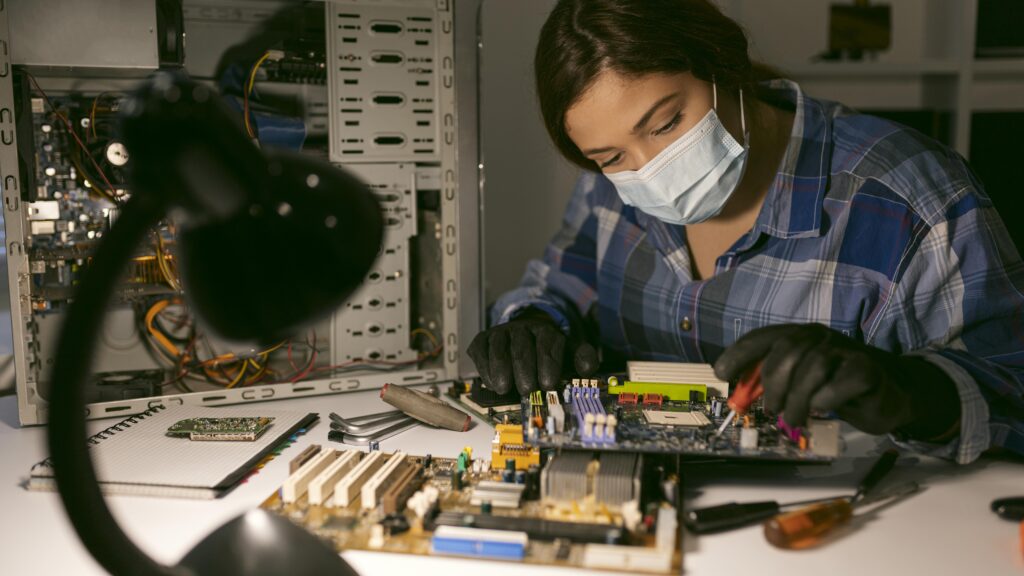
Forward-looking organizations are shifting from transactional hiring to integrated talent models.
Hybrid hiring models (RPO + leadership hiring). Rather than managing 10 vendors for volume roles and a separate partner for leadership search, leading enterprises are consolidating under unified governance. This ensures consistency in candidate quality, faster time-to-hire, and single-point accountability.
Industry-aligned talent pods. Instead of generalist recruiters, organizations are building or partnering with dedicated semiconductor hiring pods—teams with deep fab hiring experience, global candidate networks, and technical fluency in process, equipment, and yield functions.
Early workforce planning aligned to fab phases. Smart hiring doesn’t start when requisitions open. It begins 12-18 months earlier, with talent mapping, market intelligence, and phased hiring roadmaps aligned to plant commissioning timelines. This shifts TA from reactive to strategic.
Leadership hiring + volume hiring under one strategy. The plant head and the process technician aren’t separate hiring workstreams. They’re part of the same talent ecosystem. Integrated models ensure that leadership hires inform volume hiring, and volume pipelines support leadership onboarding.
This is the shift Taggd is seeing across the semiconductor ecosystem- from fragmented hiring to unified, domain-led talent strategy.
How Taggd Supports Semiconductor Hiring at Enterprise Scale
Taggd has been working at the intersection of manufacturing, technology, and specialized talent for over a decade. As India’s semiconductor sector scales, we’ve built dedicated capabilities to support enterprises through this transition.
Dedicated semiconductor hiring pods. We’ve assembled teams with prior fab hiring experience- recruiters who’ve closed process engineer roles, equipment technician roles, and leadership roles across semiconductor ecosystems. They bring networks, not just databases.
AI-led talent intelligence. Our platform combines AI-driven candidate matching with human expertise. We map talent availability across geographies, predict hiring timelines, and surface candidates who meet both technical and cultural fit criteria.
Leadership hiring for plant heads & specialists. From plant directors to yield managers to cleanroom operations heads, we’ve supported C-suite and senior leadership hiring for greenfield and brownfield semiconductor projects.
Scalable RPO models for greenfield & brownfield fabs. Whether you’re ramping a new fab or expanding an existing ATMP facility, we provide end-to-end hiring solutions-strategy, execution, governance, and analytics under one accountable model.
We’re not positioning this as the only way. But if you’re building semiconductor capability in India, you need a partner who’s done it before.
CHRO Takeaway: From Hiring to Capability Building
India’s semiconductor story will be written over the next 24 months. But the narrative won’t be shaped by subsidies, land allocation, or equipment procurement. It will be defined by how effectively organizations build, scale, and sustain niche talent at speed.
The sector faces real headwinds. According to Taggd’s India Decoding Jobs Report 2026, India’s semiconductor design GCCs saw a 15% drop in active job openings in FY25 due to geopolitical tensions and supply chain disruptions.
Ongoing material shortages and talent mobility limits could cut advanced role openings further in FY26- 27. Infrastructure gaps in uninterrupted power, quality water, and cleanroom facilities could increase costs and delay onboarding. Initial fab production challenges- low yields, process optimization issues could require retraining and affect fresh hire employability.
Yet the opportunity remains significant. Localisation of semiconductor production is expected to create over 3,00,000 new jobs in supply chain, procurement, materials management, and quality control by FY2026, strengthening domestic operational resilience.
Fabs and design centers are increasing recruitment for AI/ML engineers, data scientists, chip designers, and cybersecurity specialists as AI-driven manufacturing and digital twins become standard. Women’s participation in the semiconductor workforce is being targeted at 35% by 2030, and training and industry–academia partnerships are expected to bridge skill gaps over time.
For CHROs, the question isn’t whether to prioritize semiconductor talent. It’s whether your hiring model can execute at the velocity and precision this moment demands.
If current project pipelines and skilling investments stay on track, India’s semiconductor workforce could achieve record growth by FY2027 but only if hiring keeps pace with ambition.
FAQs
What are the biggest hiring challenges in India’s semiconductor manufacturing industry?
India’s semiconductor manufacturers face a shortage of fab-ready talent, intense global competition for experienced professionals, long hiring cycles, and location constraints at greenfield sites. These challenges directly impact fab commissioning timelines, yield stability, and operational readiness, making hiring a business-critical risk rather than a routine HR function.
Why is semiconductor hiring more complex than traditional manufacturing hiring?
Semiconductor hiring requires ultra-specialized skills, cleanroom discipline, and exposure to global-grade equipment and processes. Unlike traditional manufacturing, even small hiring errors can delay commissioning, reduce yields, or create compliance risks, leaving almost no margin for error in talent decisions.
How does talent shortage impact semiconductor fab commissioning timelines?
Unfilled or misfilled critical roles- such as process engineers, yield specialists, or equipment maintenance leaders can delay fab commissioning by months. In a capital-intensive industry, these delays significantly erode ROI, disrupt vendor coordination, and create board-level execution risks.
Why do in-house hiring teams struggle with semiconductor talent acquisition?
Most in-house TA teams lack access to niche global semiconductor networks and prior fab hiring experience. Without deep domain expertise, building talent pipelines from scratch under aggressive timelines becomes difficult, slowing hiring velocity and increasing dependence on external consultants.
What is the cost of getting semiconductor hiring wrong?
The cost of incorrect semiconductor hiring extends beyond recruitment spend. It includes delayed go-live timelines, yield losses, equipment downtime, compliance and safety risks, and leadership bandwidth drain- directly impacting operational efficiency, capex returns, and long-term competitiveness.
How are leading semiconductor companies rethinking their hiring models in India?
Leading enterprises are shifting to integrated hiring models that combine RPO and leadership search, use semiconductor-aligned hiring pods, and plan workforce needs 12–18 months in advance. This approach ensures faster hiring, better role fit, and stronger governance across fab life cycles.
What should CHROs look for in a semiconductor hiring partner?
CHROs should evaluate partners on semiconductor domain expertise, global talent access, SLA-backed hiring timelines, workforce planning capabilities, and unified governance. A strong partner should support both leadership and volume hiring under a single, accountable model.
Explore a Semiconductor-Ready Hiring Model
If you’re building semiconductor capability in India- whether fabrication, ATMP, or design-linked manufacturing- the talent challenge is real. But it’s solvable.
Talk to Taggd’s manufacturing and semiconductor hiring specialists to assess your talent readiness, explore integrated hiring models, and build workforce strategies aligned to your commissioning timelines.
Explore Semiconductor Hiring Solutions | Connect with Our Team