To hire software developers in India effectively, you need more than just a job description. It’s about creating a strategic, localised approach that taps into a vast and dynamic talent pool. This means looking beyond the sheer numbers to understand the cultural nuances, regional salary benchmarks, and what truly motivates top-tier engineering talent. A successful strategy doesn’t just post jobs; it builds a compelling employer brand that resonates with India’s ambitious tech professionals.
Understanding India’s Tech Talent Ecosystem

For any CHRO looking to hire in India, the first step is to get your head around the sheer scale and complexity of the technology sector. This isn’t just about acknowledging a large number of developers. It’s about really understanding the market forces, the educational pipeline, and the regional dynamics that shape this vibrant ecosystem. This foundational knowledge is absolutely crucial for building a hiring plan that is both ambitious and grounded in reality.
The numbers alone are mind-boggling. As of January 2025, India’s software developer community has swelled to 4.3 million professionals. That accounts for a massive 14.7% of the global total, making it the second-largest talent pool right after the United States.
What’s fuelling this? India’s renowned engineering education system, which graduates over 1.5 million STEM students every single year. Projections show the Indian developer population is on track to blow past 6 million by the end of 2025, thanks to explosive growth in AI/ML, fintech, and healthtech.
This rapid expansion creates both incredible opportunities and significant challenges. While the supply of talent is vast, the competition for elite developers is absolutely ferocious—a situation often called the talent war in India’s IT sector. Your hiring strategy must account for this intense competition from day one.
The table below breaks down these key figures and what they mean for your hiring strategy.
India Tech Talent Snapshot
| Metric | Figure | Strategic Implication for CHROs |
|---|---|---|
| Total Developer Pool | 4.3 million (Jan 2025) | A massive pool to source from, but requires sophisticated filtering to find the right fit. |
| Global Share | 14.7% (2nd largest) | India is not just a cost-saving destination; it’s a core global talent hub. |
| Annual STEM Graduates | 1.5 million+ | Continuous influx of fresh talent, ideal for building graduate programmes and future pipelines. |
| Projected Growth | 6 million+ by end of 2025 | The market is expanding. Plan for scale and anticipate future skill needs. |
This snapshot underscores a critical point: while talent is abundant, the right talent is in high demand. A nuanced, data-driven approach is essential.
The Geography of Talent
Knowing where to find specific skills is key to effective software developer hiring in India. The talent isn’t spread evenly across the country. Instead, it’s concentrated in distinct clusters, each with its own character, specialisations, and cost structures.
- Tier 1 Hubs (Bangalore, Hyderabad, Pune): These are the established powerhouses. Bangalore, the “Silicon Valley of India,” is a magnet for startups and R&D centres, boasting a deep pool of talent in AI/ML and enterprise software. Hyderabad and Pune aren’t far behind, with strong expertise in fintech, gaming, and cloud computing. The catch? This concentration comes with higher salary expectations and fierce competition.
- Tier 2 Challengers (Kochi, Coimbatore, Ahmedabad): These emerging cities offer a compelling alternative. They provide access to a growing pool of skilled, ambitious developers at a more sustainable cost. Cities like Kochi are becoming known for their vibrant startup culture, while Coimbatore is a hub for SaaS and mobile development. Tapping into these cities can be a real strategic advantage, often leading to lower attrition rates and a chance to build a unique employer brand from the ground up.
In-Demand Skills and Specialisations
The demand for specific tech skills in India is constantly shifting, mirroring global technology trends. Right now, the most sought-after expertise lies in areas that are driving digital transformation across every industry.
For a CHRO, this means a generic “software developer” job description just won’t cut it anymore. To attract the best, you have to be highly specific about the skills you need—whether that’s proficiency in Python for machine learning, experience with Kubernetes for DevOps, or expertise in React Native for cross-platform mobile development.
Here are the key areas where demand is hottest:
- Artificial Intelligence (AI) and Machine Learning (ML)
- Full-Stack Development (MERN/MEAN stacks)
- Cloud Computing (AWS, Azure, GCP)
- Cybersecurity and Data Privacy
- Fintech and Blockchain Technologies
Recognising these trends allows you to tailor your sourcing and assessment strategies to find professionals who can make an immediate impact. The next step, of course, is to create sourcing channels that effectively reach these specialists.
Sourcing and Attracting Top Indian Developers

In India’s tech market, if your strategy is just posting a job opening and waiting for the magic to happen, you’re already behind. It’s a method that’s pretty much doomed to fail. Why? The most skilled developers aren’t scrolling through job boards; they’re already employed, solving interesting problems.
These are your passive candidates—not actively looking, but definitely open to compelling opportunities. To succeed, you have to get proactive and meet this elite talent where they actually live and breathe tech. This means looking far beyond the usual recruitment channels. A multi-channel sourcing strategy is your best bet for building a healthy talent pipeline and giving you a real edge in the competitive game of software developer hiring in India.
Activating Modern Sourcing Channels
Your sourcing can’t be one-dimensional. Relying solely on a single platform, even a powerhouse like LinkedIn, will seriously limit your reach and the quality of your applicants. A blended, active approach is the only way to make sure you’re visible to both active job seekers and those high-value passive candidates.
Think about it: top Indian developers collaborate, learn, and show off their work on platforms that go way beyond professional networks. A GitHub profile, for example, is a living, breathing résumé. It gives you a direct window into a developer’s code quality, project contributions, and what they’re truly passionate about. In the same way, someone who is active on Stack Overflow is demonstrating their problem-solving skills and dedication to the developer community in real-time.
Here are the channels you absolutely need to consider:
- Professional Networks: LinkedIn is still a beast for identifying candidates with the right experience. The trick is to use advanced filters and send personalised, non-generic messages that show you’ve actually done your homework.
- Niche Tech Communities: You have to go where the developers are. Get involved in communities on platforms like GitHub, Stack Overflow, and technical forums that align with your tech stack. This is where you’ll find the passionate, deeply skilled individuals.
- Employee Referral Programmes: In a relationship-driven culture like India’s, referrals are pure gold. A well-designed programme can quickly become your most effective sourcing channel. It brings in vetted candidates who are likely a good cultural fit from the start. Make sure you incentivise your current team to tap into their networks.
For a deeper dive, check out these best candidate sourcing practices for tech hiring to sharpen your strategy.
Crafting a Magnetic Employer Brand
Attracting top-tier talent isn’t about “selling a job.” It’s about inviting them to join a mission. Your employer brand is the story you tell about what it’s really like to work at your company. And in India, developers are placing a huge emphasis on purpose and growth, often more so than just a high salary.
Your Employer Value Proposition (EVP) is the heart of this brand. It needs to spell out exactly what you offer that your competitors don’t. It’s the promise you make to your people in return for their skills and dedication.
Your EVP can’t just be a generic list of perks. It has to be an authentic reflection of your company culture, highlighting the unique opportunities for growth, learning, and impact that a developer will find on your team.
A powerful EVP for Indian tech talent needs to be built on a few key pillars that consistently pop up as top priorities for developers in the region.
The Pillars of a Winning EVP
To build an EVP that truly connects, you need to zero in on what Indian software developers value most. This goes beyond the paycheque and speaks directly to their professional ambitions.
1. Challenging and Impactful Work
Top engineers thrive on solving tough problems. You need to showcase the complex technical challenges they’ll get to tackle and the direct impact their work will have on the business or your customers. Don’t be vague; get specific about the projects and the technologies involved.
2. A Culture of Continuous Learning
Tech moves fast, and great developers know they need to keep their skills sharp to stay relevant. You have to demonstrate a real commitment to their professional growth. This could look like:
- Sponsored certifications in hot areas like cloud or AI.
- Subscriptions to top-tier learning platforms.
- A dedicated budget for attending tech conferences.
- Internal mentorship programmes that actually work.
3. Clear and Transparent Career Paths
Ambitious developers want to see a future for themselves at your company. It’s crucial to map out clear career ladders that show a tangible path from a junior developer to senior, lead, or architect roles. Being transparent about performance expectations and promotion criteria builds trust and is a massive factor in retaining your best people.
By focusing on these sourcing strategies and building a powerful employer brand, you stop being just another company with a job opening and become a true talent magnet.
Building an Effective Interview and Assessment Process
Once you have a steady stream of candidates, the real challenge begins: figuring out who can actually move the needle for your business. A well-designed interview process isn’t just a filter; it’s your best tool for predicting future performance. The catch? In India’s fast-moving tech market, if you’re too slow, you’ll lose the best people. But move too fast, and you risk a very expensive bad hire.
The solution is a multi-stage framework that’s efficient, insightful, and leaves every candidate with a great impression. Every touchpoint, from the initial screening to the final chat, should give you valuable data while making the developer feel respected, whether they get the offer or not.
Rethinking the Technical Screen
The first technical test is usually an automated coding challenge. And yes, platforms like HackerRank are popular for a good reason—they offer a scalable way to check for basic skills. But treating them as a simple pass/fail gate is a mistake. You can easily screen out brilliant developers who just don’t perform well on abstract algorithm puzzles under a ticking clock.
Think of this stage as a quick pulse check, not the definitive verdict. A smarter approach looks like this:
- Use Real-World Problems: Give them challenges that look like the actual work your team does. If you’re a fintech, that might be a small data processing task. For a SaaS company, maybe it’s a simple API interaction.
- Focus on the Fundamentals: You’re not looking for a competitive programming champion. You just need to confirm they have a solid grasp of core concepts—things like data structures, clean coding habits, and logical thinking.
- Keep it Reasonable: A 45-60 minute test is plenty of time to see what you need to see without burning out your candidates.
This initial screen gives you a signal on their technical basics. That way, your engineers can spend their valuable interview time on deeper, more collaborative problem-solving.
A Multi-Stage Interview Framework
A solid interview process typically has three or four distinct stages, with each one designed to test a different aspect of a candidate’s abilities. When it comes to software developer hiring in India, standardising this framework is the key to making objective, data-driven decisions.
The best interview frameworks balance technical depth with an assessment of collaborative and problem-solving skills. Remember, you’re not just hiring a coder; you’re hiring a future team member who needs to communicate, innovate, and grow with the company.
A proven structure usually includes a technical deep-dive, a system design challenge, and a behavioural interview.
1. The Technical Deep-Dive
This is a one-on-one session with a senior engineer, focused entirely on practical application. The interviewer might present a small, self-contained coding problem and have the candidate work through it in a shared editor. This isn’t about getting the “right” answer. It’s a chance to see how they think, how they respond to feedback, and how comfortable they are in their preferred programming language.
2. The System Design Challenge
For any mid-level to senior role, this is a must-have. The candidate gets a broad, open-ended problem like, “Design a URL shortening service,” or “Architect a basic e-commerce product page.” The real goal here is to gauge their ability to think about scale, trade-offs, and high-level architecture. It’s a window into how they understand the moving parts of a complex software system.
3. The Behavioural and Cultural Fit Interview
This conversation, often led by the hiring manager or team lead, digs into past behaviour to predict future performance. Forget hypotheticals. Ask direct questions about their actual experiences:
- “Tell me about a time you had a major disagreement with a colleague over a technical decision. What happened?”
- “Walk me through the most complex project you’ve shipped. What were the biggest hurdles, and how did you get past them?”
This interview is critical for understanding their problem-solving style, communication skills, and whether they’ll genuinely thrive in your company culture. To go deeper, you can explore powerful interview techniques to end hiring headaches that will sharpen your approach.
By standardising your questions and using a consistent evaluation scorecard, you dramatically reduce bias and ensure every candidate gets a fair shot. This rigour is what leads to confident, successful hires.
Navigating Compensation and Employment Laws
When you’re ready to hire software developers in India, putting together a compelling offer is about much more than just the salary. The best proposals are a thoughtful mix of competitive pay, essential benefits, and a solid grasp of local employment norms. Get this part wrong, and you don’t just risk losing a great candidate—you could stumble into legal headaches and tarnish your reputation as an employer.
To craft an offer that genuinely stands out, you need a data-driven perspective on compensation benchmarks. These figures aren’t uniform across the country; they shift significantly based on experience and, crucially, geography. A senior developer in Bangalore, for example, will have very different salary expectations than someone with the same skills in an emerging tech hub like Ahmedabad. Your strategy has to be local.
Understanding the Salary Landscape
The Indian tech market is incredibly competitive, and salaries directly reflect the fierce battle for specialised talent. It’s absolutely vital to benchmark your offers against current market rates if you want to stay in the game.
For example, in major hubs like Bangalore and Hyderabad, it’s not uncommon for entry-level software developers to start at around ₹9 LPA. Niche skills push these numbers even higher; data scientists often see offers in the ₹9.6-13.6 LPA range, while penetration testers can command up to ₹11.8 LPA.
As a general rule, you can expect:
- Entry-level roles (0-2 years): ₹5-7 LPA
- Mid-level developers (3-6 years): ₹10-16 LPA
- Senior talent (7+ years): ₹16-25+ LPA, especially with the demand for full-stack developers with AI/ML skills growing by 15% each year.
For a deeper dive into these trends, our complete guide to getting a tech job in India offers more detailed insights.
One of the most common pitfalls is applying a single, nationwide salary band. This approach inevitably leads to being uncompetitive in major hubs or overpaying in smaller cities. A nuanced, location-aware compensation strategy isn’t just a nice-to-have; it’s non-negotiable for successful software developer hiring in India.
To give you a clearer picture, here’s a snapshot of what you might expect for different roles and experience levels.
Sample Salary Benchmarks for Software Developers in India
These figures are illustrative annual salary ranges in INR Lakhs (LPA) and can vary based on location, company, and specific skill sets.
| Role | Entry-Level (0-2 Yrs) | Mid-Level (3-6 Yrs) | Senior (7+ Yrs) |
|---|---|---|---|
| Frontend Developer | ₹4 – ₹7 LPA | ₹8 – ₹15 LPA | ₹16 – ₹25+ LPA |
| Backend Developer | ₹5 – ₹8 LPA | ₹10 – ₹18 LPA | ₹20 – ₹35+ LPA |
| Full-Stack Developer | ₹6 – ₹9 LPA | ₹12 – ₹22 LPA | ₹25 – ₹45+ LPA |
| Mobile Developer (iOS/Android) | ₹5 – ₹8 LPA | ₹10 – ₹17 LPA | ₹18 – ₹30+ LPA |
| DevOps Engineer | ₹6 – ₹10 LPA | ₹14 – ₹25 LPA | ₹26 – ₹50+ LPA |
| Data Scientist | ₹7 – ₹12 LPA | ₹15 – ₹28 LPA | ₹30 – ₹60+ LPA |
Remember, these are just benchmarks. The key is to stay informed about real-time market data to ensure your offers are both fair and attractive.
Key Components of a Compensation Package
In India, a total rewards package is a mosaic of several distinct components. Getting to grips with each one is essential for structuring an offer that is both appealing and legally sound.
- Base Salary: This is the fixed, foundational part of the offer and what most candidates look at first.
- Performance Bonus: An annual bonus tied to individual and company performance is standard practice, especially in product-based companies.
- Provident Fund (PF): This is a mandatory retirement savings scheme. Both the employer and employee contribute 12% of the employee’s basic salary. It’s a critical, non-negotiable benefit.
- Health Insurance: Group medical insurance is a huge draw. A comprehensive plan that covers the employee and their family can be a powerful differentiator in a tight market.
- Gratuity: This is a statutory benefit paid to employees who complete at least five years of continuous service with a single company.
Navigating Indian Employment Laws
Beyond the numbers, the legal framework governing employment in India has its own quirks that can directly impact your hiring timelines and contracts. Misunderstanding these can create significant friction down the line.
One of the most critical differences to wrap your head around is the notice period. Forget the two-week standard common in many Western countries. In India, a notice period of 60 to 90 days for software developers is the norm.
This has a few major implications for your hiring process:
- Longer Timelines: You have to build this two-to-three-month delay into your project planning right from the start.
- Risk of Counteroffers: That long window gives the candidate’s current employer plenty of time to put together a tempting counteroffer, increasing the chances you’ll lose your top choice.
- Negotiating Buyouts: Some companies will offer to “buy out” a portion of the notice period, paying the candidate’s current employer to release them sooner. It’s an effective tactic for critical hires, but it comes at a cost.
Finally, make sure your employment contracts are drafted meticulously to comply with Indian labour laws. Key clauses should cover probation periods (usually 3-6 months), confidentiality, and intellectual property rights. It’s always a good idea to consult with a local legal expert to ensure your agreements are airtight and enforceable.
Driving Retention Through Onboarding and Growth
Getting top talent to sign on the dotted line is a huge win, but let’s be honest—that’s where the real work begins. In the fast-paced Indian tech market, a successful software developer hiring India strategy has to go way beyond just recruitment. The minute that offer is accepted, your focus needs to pivot to integration and long-term engagement. This is how you turn a promising new hire into a loyal, high-performing team member.
Think about it: a clunky or passive welcome can kill a new developer’s excitement fast. Before they’ve even had a chance to settle in, they’re already second-guessing their decision and are prime targets for competitor offers. A structured, thoughtful onboarding process, on the other hand, shows you’re invested in their success from day one and makes a world of difference for retention.
Building a 90-Day Integration Framework
The first three months are everything. They set the tone for a developer’s entire experience with your company. A solid 90-day plan isn’t just about handing over a laptop and dealing with paperwork; it’s a strategic process to get them feeling supported, productive, and connected to the culture.
- Pre-Joining Engagement (Week 0): The time between offer acceptance and their first day is a golden opportunity. Don’t let the momentum drop. Send some company swag, have their new team send a welcome note, and give them a clear schedule for week one. Simple gestures like these make them feel part of the team before they even walk through the door.
- Structured First Week (Days 1-5): Plan their first week down to the detail. This should cover introductions to key people, an overview of the tech stack, and some clear, achievable first tasks. Crucially, pair them with an onboarding buddy—a peer who can answer all the “silly” questions and help them get the lay of the land, socially and technically.
- First Month Goals (Days 6-30): The main goal here is integration. Get them contributing to a low-risk part of a project so they can score an early win. Regular, informal check-ins with their manager are non-negotiable to clear any hurdles and let them know their work is already valued.
- Deepening Impact (Days 31-90): By this point, your new developer should be taking on meatier tasks and collaborating more broadly. This is the perfect time for their first formal performance chat, focusing on constructive feedback, their growth aspirations, and setting clear goals for the next quarter.
Fostering Long-Term Loyalty and Growth
Once a developer is settled in, the game shifts. Now it’s all about creating an environment where they can see themselves building a career, not just holding a job. In India’s tech scene, ambition and the hunger for learning are massive drivers. If you don’t offer clear paths for growth, you’re practically inviting them to look elsewhere.
The hiring landscape has changed dramatically. IT giants are no longer doing mass campus hires; they’re targeting specialists. This has blown up the demand for full-stack developers (30-35% YoY growth), cloud engineers (2 million needed by FY25), and AI experts. In this climate, holding onto skilled mid-career professionals who can hit the ground running is more critical than ever. You can dig deeper into these high-demand career paths for software engineers in India.
Retaining your best developers isn’t about flashy perks. It’s about building a culture of real opportunity. They need to see a tangible future for themselves at your company—one filled with challenging projects, skill development, and genuine recognition.
This chart drives the point home, showing the kind of salary jumps Indian developers expect as they level up. It’s a stark reminder of why you need well-defined career ladders.
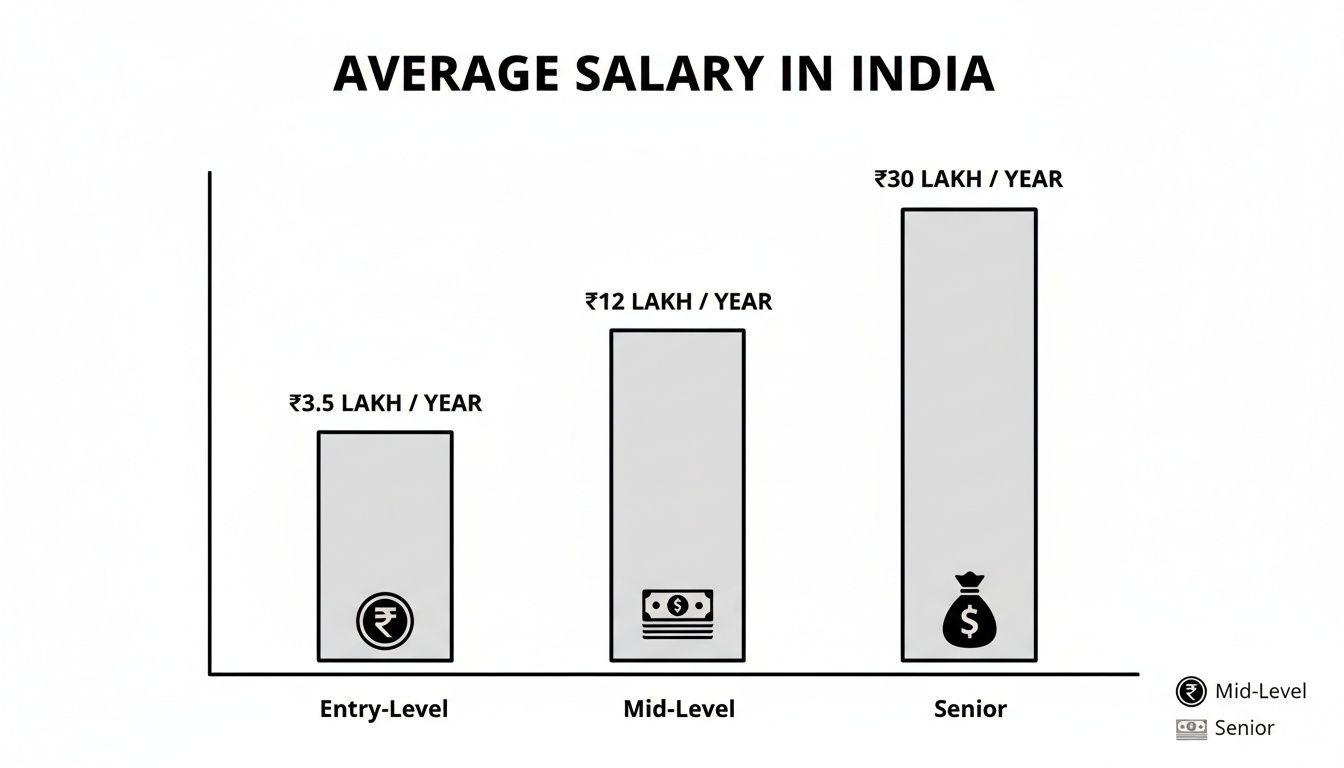
That steep curve isn’t just about money; it represents a demand for growth and greater responsibility. If you don’t provide it, someone else will.
To build a culture that keeps them, focus on these essentials:
- Transparent Career Ladders: Don’t make it a mystery. Clearly map out the journey from junior to senior to architect. Document the specific skills, responsibilities, and performance metrics needed to get to the next level.
- Investment in Upskilling: Show you’re serious about their growth. Offer budgets for certifications in hot areas like AI/ML and cloud, and sponsor tickets to tech conferences.
- A Culture of Recognition: Make it a habit. A simple “great job” in a team meeting or a company-wide shoutout for exceptional work costs nothing but pays huge dividends in morale.
- Flexible Work Policies: This is a big one. The post-pandemic workforce expects flexibility. Offering hybrid or remote options shows you trust your team and is a powerful retention tool that top developers now see as standard.
Answering Your Top Questions About Hiring Developers in India
When you’re looking to hire tech talent in India, a few key questions always come up. It’s a dynamic market, and having clear, on-the-ground answers is the first step to building a smart hiring strategy. Let’s tackle the most common concerns we hear from CHROs and business leaders.
What Are the Biggest Challenges When Hiring?
The main hurdles are all connected. First off, you’re dealing with intense competition. The demand for top-tier developers is so high that it drives salaries up and creates a market where the best people are often juggling multiple offers. This leads directly to the next big challenge: a high offer-rejection rate, sometimes even after you’ve gotten a verbal “yes.”
Then there’s the sheer volume of applicants. Figuring out how to accurately assess technical skills in such a large pool is a huge operational lift. You need a rock-solid screening process that filters effectively but doesn’t frustrate and drive away the very people you want to hire.
Finally, you can’t have a one-size-fits-all approach. The cultural norms, salary expectations, and talent profiles are completely different in a Tier 1 city versus a Tier 2 city. Understanding these local nuances is critical.
This is where many organisations decide to bring in a specialised recruitment process outsourcing (RPO) partner. An experienced firm gives you the market intelligence and scalable frameworks to cut through these challenges. It’s tough to replicate that deep, local knowledge internally, especially when you’re hiring at scale.
A good partner can be the difference-maker in managing candidate expectations and actually getting offers accepted.
How Important Is Employer Branding?
It’s everything. Honestly, in the long run, it’s probably your most powerful asset. In a market flooded with opportunities, top Indian developers are looking for more than just a pay cheque. They want to solve interesting problems, see a clear path for growth, and be part of a culture that’s innovative and supportive.
A strong employer brand is a magnet for passive candidates—those highly skilled developers who aren’t actively job hunting but are open to the right opportunity. It’s your single best tool for cutting through the noise and being seen as an employer of choice.
Your brand story needs to be authentic and clearly communicate:
- Your Mission and Impact: What real-world problems are you solving? Why should a top developer care?
- Innovative Projects: What exciting tech will they get their hands on? Are you pushing boundaries?
- Commitment to Development: How are you going to invest in their skills and career?
This narrative helps you attract people who are not just a great technical match, but a great cultural one, too.
What Is a Typical Notice Period?
This is a big one that often catches international companies by surprise. The standard notice period for software developers in India is 60 to 90 days. You absolutely must factor this into your hiring timeline from day one.
This long wait has real implications. It means your new hire might not be contributing for two or three months after signing the offer. While some companies might negotiate a “buyout” to shorten the period (by paying the outgoing employer), it’s not always possible and it definitely adds to your hiring costs.
For CHROs, the takeaway is simple: build this extended timeline into your project plans and set realistic expectations with your stakeholders. There are no shortcuts here.
Should We Hire in Tier 1 or Tier 2 Cities?
This decision comes down to your company’s specific goals, budget, and how much risk you’re comfortable with. There isn’t a single “correct” answer, and many companies are now using a hybrid strategy to get the best of both worlds.
- Tier 1 Cities (e.g., Bangalore, Hyderabad, Pune): These are the established tech hubs. You’ll find the largest, most diverse talent pools here, with deep expertise in niche skills like AI/ML or enterprise SaaS. The trade-off? This is where you’ll face the country’s highest salary costs and the most intense competition for talent.
- Tier 2 Cities (e.g., Kochi, Ahmedabad, Coimbatore): These rising tech centres offer a compelling alternative. You gain significant cost advantages, generally see lower attrition rates, and can tap into a growing pool of skilled and ambitious developers. Building a team here can be a strategic play to foster loyalty away from the hyper-competitive Tier 1 scene.
Ultimately, you need to weigh immediate access to a massive talent pool against the benefits of long-term cost savings and better employee retention. An RPO partner with feet on the ground in these regions can give you the detailed data you need to make a call that’s right for your business.
Streamline your tech recruitment and build a high-performing engineering team in India with Taggd. Our expert RPO solutions provide the market intelligence, sourcing power, and strategic guidance you need to navigate this dynamic market successfully. Discover how we can help you hire smarter and faster.