
A Guide to the Bradford Formula for HR
The Bradford Formula is a straightforward yet surprisingly powerful HR tool that helps you look at employee absence in a new light. It’s built on a simple premise: frequent, short, unplanned absences are often far more disruptive to a business than a single, long-term absence.
What Is the Bradford Formula in HR

Think about it like this: if your star player is out for a month with a planned surgery, you can prepare. You can reassign projects and adjust deadlines. But if that same player calls in sick unexpectedly every other Monday, the constant stop-start chaos can bring a team to a grinding halt. The Bradford Formula puts a number on that disruption.
Developed at Bradford University back in the 1980s, this mathematical method gives more weight to the frequency of absences than their duration. It assigns a score to each employee’s attendance record, giving HR managers and team leaders an objective way to flag patterns that might otherwise fly under the radar.
Shifting from Reactive to Proactive Management
Let’s be honest, without a system, managing absence is often a reactive fire-fight. An employee is off sick, and everyone else scrambles to pick up the slack. You only realise there’s a recurring issue when it’s already caused significant problems. The formula helps you get ahead of the curve.
By tracking scores, you can proactively spot individuals with high-frequency, short-term absences. This isn’t about jumping to disciplinary action. It’s a trigger, a sign that something needs a closer look. A high score can be a symptom of deeper issues, like:
- Low morale or feeling disengaged
- Work-related stress and burnout
- An underlying health condition the employee is trying to manage
- Struggles with work-life balance
The real magic of the Bradford Formula isn’t in the score itself, but in the conversation it prompts. It turns cold, hard data into a chance for supportive, human intervention.
A Tool for Supportive Conversations
At the end of the day, the formula is just a starting point. A high score doesn’t automatically brand an employee as unreliable; it simply says a conversation is overdue. This data gives managers the backing to check in with their team members, ask thoughtful questions, and get the real story behind the numbers.
Is an employee having a tough time with childcare? Are they dealing with a health problem they haven’t felt comfortable sharing? By using the Bradford Formula as a catalyst for genuine dialogue, you can uncover root causes, offer the right support, and build a healthier, more trusting work environment. It transforms a simple score into a powerful management insight.
How to Calculate the Bradford Formula Score
At first glance, calculating a Bradford Formula score might seem like something you’d need a degree in mathematics for, but it’s actually incredibly straightforward. The formula was designed for managers and HR professionals, not statisticians, to get a quick and objective snapshot of employee absence patterns.
All you need are two key pieces of information for a specific period, which is typically a rolling 52 weeks.
The entire calculation boils down to this simple but powerful formula:
S² x D = B
Let’s unpack what each of these letters means and how they come together to tell a story about employee attendance.
Understanding the Components
To work out the score, you just need to find two numbers:
- S (Spells): This is the total number of separate times an employee has been absent. It doesn’t matter if an absence was for one day or ten—each continuous period of sickness counts as one single spell. The focus here is purely on the frequency of absences.
- D (Days): This is the grand total of all days the employee was absent during the period you’re measuring. You simply add up every single day they were off.
The real “magic” of the formula is in that little squared symbol (S²). By squaring the number of spells, the formula intentionally gives much more weight to frequent, short-term absences, which are often far more disruptive to a business than a single, longer-term one. Finally, B represents the final Bradford Formula score.
Practical Calculation Examples
The easiest way to really grasp the Bradford Formula is to see it in action. Let’s look at two different employees who were both absent for a total of 14 days over the same year.
Employee A: One Long Absence This person had a single, continuous absence that lasted for 14 days. This could have been for something like a planned surgery or recovering from one significant illness.
- Number of Spells (S) = 1
- Total Days Absent (D) = 14
- Calculation: 1² x 14 (which is simply 1 x 14)
- Bradford Score (B) = 14
Employee B: Multiple Short Absences This employee also missed 14 days of work, but their time off was scattered across seven separate instances, each lasting just two days.
- Number of Spells (S) = 7
- Total Days Absent (D) = 14
- Calculation: 7² x 14 (which is 49 x 14)
- Bradford Score (B) = 686
The difference is stark. Even though both employees missed the exact same number of workdays, Employee B’s score is almost 50 times higher. This shows exactly what the formula is designed to do: it flags the frequent, unpredictable absence patterns that cause the most headaches for operations and team scheduling. For any employer looking to streamline HR processes, this score gives you an immediate, objective number to start a conversation about attendance management.
To see this in more detail, here’s a table showing how different absence patterns can produce wildly different scores, even when the total days lost are similar.
Bradford Score Examples Across Different Absence Patterns
This table compares how different combinations of absence spells and total days impact the final Bradford Factor score, highlighting the formula’s focus on frequency.
| Employee Scenario | Number of Spells (S) | Total Days Absent (D) | Calculation (S² x D) | Bradford Score (B) |
|---|---|---|---|---|
| Employee C (Low Frequency) | 2 | 10 | 2² x 10 = 40 | 40 |
| Employee D (High Frequency) | 5 | 10 | 5² x 10 = 250 | 250 |
| Employee E (Single Long-Term) | 1 | 20 | 1² x 20 = 20 | 20 |
| Employee F (Very High Frequency) | 10 | 12 | 10² x 12 = 1200 | 1200 |
As you can see, Employee F, with just 12 total days off, ends up with a massive score of 1200 because those days were spread across 10 separate instances. Meanwhile, Employee E, who was absent for 20 days straight, has a minimal score of just 20. This is the Bradford Formula in its purest form—identifying disruption.
The chart below shows a standard curve, a concept often used in analytics to show a direct relationship between two variables. While not directly plotting absenteeism, it illustrates the kind of clear, data-driven correlations that formulas like the Bradford Factor provide.
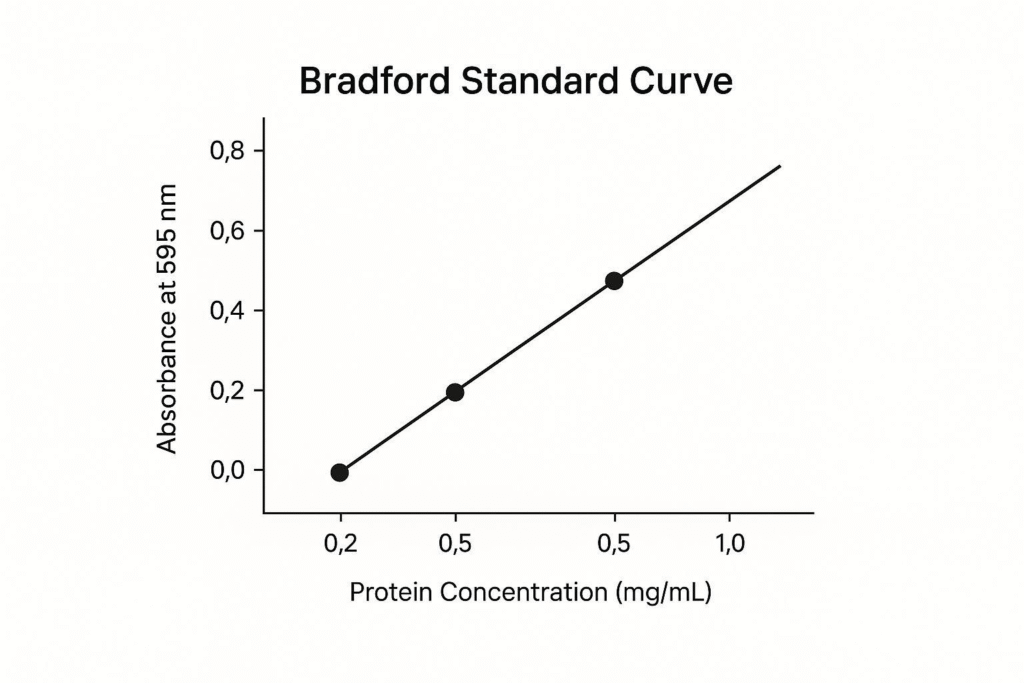
This kind of visualisation helps us understand how a change in one factor (like the frequency of absence) can have a disproportionately large impact on the outcome (the final score).
Setting Your Bradford Formula Trigger Points

A calculated Bradford Formula score is just a number. It only becomes a practical management tool when you give it meaning by setting clear trigger points. These thresholds are what turn a simple score into a framework for consistent, fair, and supportive action.
Without this structure, the formula loses its power. It’s a bit like having a speedometer with no speed limits marked—the data is right there in front of you, but you have no idea when you need to slow down. Trigger points provide that crucial context, giving managers a clear sign on when and how to step in.
Most organisations find a tiered system works best, often imagined as a simple “traffic light” model. This approach creates a clear pathway for addressing different levels of concern, ensuring the response is always proportional to the attendance pattern.
Building Your Traffic Light System
Creating a tiered system helps standardise your response to absenteeism, which is vital for fairness. A typical structure might look something like this, but remember, you have to adapt the scores to fit your unique environment.
- Green Zone (e.g., Score 0-50): This is the “no action needed” zone. Scores in this range generally reflect normal, low-level absences that have a minimal impact on the business. It’s the baseline for healthy attendance.
- Amber Zone (e.g., Score 51-200): A score here is a gentle nudge. It doesn’t signal a major problem, but it does suggest a pattern might be emerging. The right move here is usually an informal, supportive chat during a return-to-work interview to see if there are any underlying issues.
- Red Zone (e.g., Score 201+): Hitting this threshold points to a significant level of disruption. This score would trigger a more formal review, which could lead to a verbal or written warning, depending on your company’s established disciplinary procedures.
The goal of trigger points is not to penalise but to provide clarity. They empower managers to start a conversation at the right time, using the Bradford Formula score as an objective starting point rather than a subjective opinion.
Customising Your Thresholds Is Essential
There is no one-size-fits-all set of trigger points. Simply copying another company’s thresholds is a recipe for failure. What works for a massive manufacturing plant will be completely unsuitable for a small tech startup.
Your trigger points must be tailored to your specific context. You need to consider factors like your company’s size, industry norms, and your overall organisational culture. For instance, a small, tight-knit team might have a lower tolerance for frequent absences and, as a result, set lower trigger points.
Ultimately, your trigger system should be a catalyst for supportive conversations, not just a rigid disciplinary tool. By setting fair and realistic thresholds, you create a system that helps managers identify when a candidate for support is needed, long before absenteeism becomes a serious performance issue. This proactive approach helps build trust and shows you are committed to both business continuity and employee wellbeing.
Implementing the Bradford Formula Fairly and Legally
The Bradford Formula is a powerful tool, but its real value comes down to one thing: how you use it. If you roll it out without a clear, fair, and legally sound strategy, you can create more problems than you solve, breeding employee mistrust and even landing yourself in legal hot water. A successful rollout hinges on careful planning, open communication, and consistent application across the board.
Think of the formula like a sophisticated piece of medical equipment. In the hands of a trained professional, it offers invaluable diagnostic data. But if you use it without expertise or context, it can do more harm than good. The key is to treat it as a management insight tool, not an automatic trigger for disciplinary action.
Creating a Clear and Transparent Policy
First things first: you need to communicate your policy clearly and proactively. Nobody should ever be surprised by a Bradford Formula score or what it might mean. Being transparent from the get-go builds trust and makes sure everyone understands the rules of the game.
Your communication plan should cover a few essential points:
- How the formula works: Explain the S² x D calculation in simple terms. The most important thing to stress is that it gives more weight to the frequency of absences.
- The rolling period: Be crystal clear about the timeframe you’re using for the calculation. This is typically a rolling 52-week period.
- Your trigger points: Let everyone know the exact scores that will prompt action, whether that’s an informal chat or a more formal review.
This kind of transparency empowers your employees. It helps them manage their own attendance and see for themselves how frequent, short absences can add up.
Navigating Legal and Ethical Considerations
While using the Bradford Formula is perfectly legal, you have to apply it with extreme care to avoid any hint of discrimination. Certain absences are protected by law, and you absolutely must exclude them from the calculation to stay fair and compliant.
The formula should always be the start of a conversation, not the end of it. Its purpose is to flag patterns for a human-led investigation, ensuring that context and individual circumstances are always considered before any action is taken.
Making reasonable adjustments as required by law isn’t optional—it’s crucial. For instance, absences directly linked to a known disability or a chronic health condition should generally be handled outside of the standard Bradford scoring system. This also applies to other protected situations.
You must exclude any absences related to:
- Disability: Any absence linked to a condition covered under disability legislation.
- Pregnancy: All pregnancy-related sickness has to be recorded separately and must be excluded from the formula.
- Bereavement or compassionate leave: These situations should be managed with empathy and flexibility under separate policies.
Training Managers for Consistent Application
Your managers are on the front line of this policy, and how they handle it will make or break its success. If it’s applied inconsistently, you’re on a fast track to employee grievances and a serious dip in morale.
Provide thorough training that gives your managers the skills to:
- Interpret scores correctly: They need to understand that a high score is a signal to investigate, not to discipline.
- Conduct supportive conversations: Teach them how to use return-to-work interviews to get the story behind the numbers.
- Apply the policy consistently: Make sure every team member is treated equitably, without any personal feelings or biases getting in the way.
By taking these steps, you can weave the Bradford Formula into your attendance management strategy as a constructive and supportive element. It can help you reduce disruptive absenteeism while fostering a workplace culture that’s both fair and understanding.
Common Criticisms and How to Address Them

While the Bradford Formula is a handy tool for spotting patterns, it’s not without its critics. To use it responsibly, you have to be upfront about its limitations and ready to tackle common concerns. A purely numbers-driven approach, without any human context, can feel harsh and quickly erode trust.
The biggest knock against the formula is its simplicity. By design, it treats every short-term absence the same. This can unintentionally penalise good employees who have genuine, recurring health issues that aren’t covered by legal disability protections. Think of someone managing a chronic condition like migraines—they might have several short, unpredictable absences.
Similarly, parents or anyone with caring responsibilities often face last-minute situations where they need to take a day off. A rigid application of the Bradford Formula could put them at a disadvantage, adding a layer of stress to an already tough time. Ignoring these real-life nuances is a surefire way to alienate your team.
Reframing the Formula as a Starting Point
The most common mistake is to treat a high score as an automatic red flag for disciplinary action. This single misunderstanding is at the core of most criticisms. The formula was never designed to be a judge and jury; it’s a diagnostic tool, plain and simple.
A high Bradford score shouldn’t be seen as an accusation. Instead, think of it as a signal—a data point that tells you it’s time for a supportive, human conversation to understand the story behind the numbers.
When a score crosses a certain threshold, the goal is to ask questions, not jump to conclusions. This compassionate approach can turn a potentially negative interaction into a positive one. It helps you get to the root cause, which could be anything from burnout to disengagement. Understanding these factors is a key part of managing employee attrition and learning how to prevent it.
Strategies for Compassionate and Fair Application
To balance out the formula’s potential for harshness, it’s crucial to build fairness and flexibility directly into your policy. This ensures you’re using the tool intelligently and with compassion, building trust instead of fear.
Here are a few ways to address the criticisms head-on:
- Human Oversight is Non-Negotiable: Never let the formula run on autopilot. A manager or HR professional must review every high score, considering the individual’s context and history before any action is even considered.
- Encourage Open Dialogue: Foster a culture where employees feel safe discussing health conditions or personal challenges without worrying about being penalised. This gives you the context you need to interpret scores fairly.
- Adjust for Known Conditions: For employees with declared chronic illnesses or caring duties, consider adjusting the trigger points or managing their absences outside of the standard formula. It’s a powerful way to show fairness and empathy.
By acknowledging its limitations and reinforcing its proper role, you can use the Bradford Formula as a powerful tool to support your workforce, not punish it.
Answering Your Bradford Formula Questions
As you get ready to bring the Bradford Formula into your attendance management system, it’s natural for questions to pop up. The tool itself is straightforward, but the real art lies in applying it fairly and effectively. Answering these common queries head-on will help build trust and make sure the system is used the way it’s intended—as a tool for support, not punishment.
Let’s clear up some of the most common points of confusion so you can use the formula with confidence and fairness.
What Is a Good or Bad Bradford Formula Score?
This is one of the most common questions, and the answer is straightforward. There is no universal good or bad score. The number only gains meaning when compared with the trigger points your own company has set.
For example:
A manufacturing company might treat a score of 250 as the trigger for a formal review because shift coverage is critical. In an office with more flexible work, that same score of 250 might only prompt an informal chat.
The power lies in how you define it. You decide what each score means for your business, your culture, and your operational needs. Without your own trigger points, a Bradford score is just a number without context.
The key is to define what level of absence is a concern within your organisation. A score is not inherently bad, it simply signals that an absence pattern has crossed a line you have already identified as needing attention.
Can the Bradford Formula Be Used for Part Time Employees?
Yes, but it requires a thoughtful approach. A rigid, standard system risks penalising part time staff.
Part time employees work fewer days, which means a few absences can raise their Bradford score much faster than it would for a full time colleague. Two single day absences might be minor for a full timer, but for someone working two days a week, it could push them into a high risk range.
To make the system fair, many organisations use a pro rata version of the formula or set different trigger points for part time teams. This keeps the system balanced and ensures the score reflects real disruption, no matter how many hours someone works.
The idea is consistency in principle, flexibility in practice.
Should We Tell Employees Their Bradford Formula Score?
Transparency is essential if you want to use the Bradford Formula ethically and fairly. So yes, you should tell employees their scores and explain the policy clearly. Keeping it hidden creates mistrust, anxiety, and a sense of being monitored without context.
When you introduce the policy, make sure every employee understands:
How the formula works.
What your company’s trigger points are.
What happens when someone reaches a trigger point.
The best time to share an employee’s score is during a supportive return to work discussion. Presenting it as an objective data point depersonalises the conversation. It shifts the focus from blame to understanding and support.
This kind of openness turns the formula from a secret HR tool into a transparent, shared framework that everyone can work with.
At Taggd, we understand that managing your workforce effectively requires the right tools and strategies. To learn how our recruitment process outsourcing can help you build a resilient and engaged team, visit us at https://taggd.in.