
Continuous Feedback in Workplace: A CHRO’s Ultimate Guide
Continuous feedback in the workplace isn’t just a new buzzword; it’s a fundamental shift in how we manage and grow our people. It’s the move from a static, yearly snapshot to a dynamic, ongoing conversation about performance.
Think of it as swapping an old, folded paper map for a live GPS. One gives you a single, outdated picture of the road, while the other offers real-time guidance, course corrections, and a clear path forward. This is about weaving performance discussions into the very fabric of your daily workflow, making them timely, relevant, and immediately actionable. It’s how you ensure everyone is pulling in the same direction, all the time—not just in the weeks leading up to a formal review.
Why Annual Reviews Are Failing Your Organisation

The traditional annual performance review is like a yearly health check-up. It gives you a single picture of health on one specific day, but it completely misses the crucial day-to-day fluctuations, the small wins, and the setbacks that truly shape an employee’s journey. It’s a model that’s slow, often incredibly stressful, and simply can’t keep up with the pace of modern business.
Imagine if your fitness tracker only synced your data once a year. How could you possibly adjust your diet, exercise, or sleep to improve your wellbeing in the moment? You couldn’t. The annual review operates on this same broken logic, bottling up critical insights for one big, high-pressure meeting.
For today’s workforce, this lack of regular, meaningful interaction is a fast track to disengagement. People crave coaching and development in the flow of work, not a look in the rearview mirror at projects they wrapped up months ago.
The Shift from Judging to Developing
At its heart, continuous feedback flips the script from judgement to development. It’s no longer about a retrospective critique of the past 12 months. Instead, it becomes a forward-looking dialogue focused squarely on growth and potential. This isn’t just about scheduling more meetings; it’s about catalysing a deep cultural transformation.
This new model reframes managers as coaches, not critics. The real goal is to build a responsive, agile culture where guidance is a normal, expected part of how things get done. For any Chief Human Resources Officer (CHRO), this is the foundational block for creating an environment where people feel seen, supported, and genuinely motivated to bring their best work to the table.
A culture of continuous feedback is the antidote to the engagement crisis. It turns development into an ongoing conversation, not a once-a-year event.
Key Failures of the Traditional Model
The cracks in the annual review system have become impossible to ignore, and they directly impact the health of an organisation. Here are some of the biggest issues:
- Recency Bias: It’s human nature. Managers remember what happened last month far more clearly than what happened 10 months ago. This leads to reviews that are skewed and don’t reflect a full year of contribution.
- Lack of Timeliness: By the time the feedback is finally delivered, the moment to praise great work or gently correct a misstep is long gone. The opportunity is lost.
- High Stress and Anxiety: Let’s be honest, almost everyone dreads the formal, high-stakes nature of the annual review. This tension stifles the honest, open dialogue that’s needed for real growth.
- Administrative Burden: The process has ballooned into a time-sucking administrative chore for HR, managers, and employees, delivering little real-world value for the massive effort invested.
Once we acknowledge these deep-seated failures, it becomes clear why continuous feedback isn’t just a “nice-to-have” anymore. It’s a business necessity for building a modern, high-performance team.
Building a Culture of Continuous Feedback
Rolling out a continuous feedback system is about so much more than just adopting new software. It’s a genuine cultural shift, one that absolutely requires a foundation of trust, psychological safety, and open dialogue.
Without this groundwork, even the slickest, most advanced tools are bound to fall flat. The real goal is to create an environment where feedback isn’t seen as a threat, but as a gift—a valuable tool that helps everyone grow.
This kind of transformation has to start at the top. When leaders and managers actively seek out feedback themselves and show a bit of vulnerability, they send a powerful signal: this is a normal, healthy part of how we get better. This is what helps foster a culture where employees feel secure enough to share their thoughts, accept constructive input, and have real conversations about performance.
The Four Pillars of a Thriving Feedback Culture
To build this kind of environment, CHROs need to focus on weaving four core principles into the very fabric of the organisation. These pillars make sure every piece of feedback is productive, supportive, and actually helps employees move forward. Think of them as the legs of a table—if you take one away, the whole thing becomes wobbly.
- Timeliness: Feedback loses its punch with every day that passes. Delivering insights in the moment, or as close to it as possible, makes the advice relevant and immediately actionable.
- Specificity: Vague comments like “good job” or “be more proactive” don’t help anyone. Effective feedback is tied to specific situations and behaviours, offering clear examples that an employee can actually learn from.
- Balance: A culture that only harps on criticism will quickly crush morale. It is crucial to balance constructive guidance with genuine, positive reinforcement to keep people motivated and to recognise their hard work.
- Forward-Looking Focus: While feedback is based on past events, its true power is in shaping the future. The conversation should always pivot towards “what can we do differently next time?” instead of just dwelling on past mistakes.
This shift is catching on fast. In India, for instance, continuous feedback is rapidly taking the place of the old annual appraisal as companies look for more dynamic ways to understand performance. A Deloitte report even found that around 70% of companies globally were rethinking performance management, with many in India using frequent pulse surveys to keep a finger on the employee pulse in real-time.
Putting Principles into Practice
Let’s imagine a project team misses a key deadline. In a traditional company, the manager might wait weeks for a formal review to bring up the failure. But in a continuous feedback culture, the approach is completely different.
The manager schedules a quick team debrief the very next day (timeliness). Instead of pointing fingers, they might say, “I noticed in the final two days, our communication seemed to break down, which led to rework on the presentation slides” (specificity). They immediately follow up with, “I really appreciate the incredible effort everyone put in during that final push to get it over the line” (balance).
The core purpose of feedback is not to judge the past but to improve the future. It’s a compass, not a report card.
Finally, the manager guides the conversation forward: “For our next sprint, what’s one process change we can make to ensure our communication stays aligned from start to finish?” (forward-looking focus). This approach corrects the issue, reinforces positive behaviours, and empowers the team to own the solution—all without the stress and anxiety of a formal review.
Of course, building this kind of culture starts with hiring the right people. It’s vital to understand the best practices for assessing and hiring a culture fit candidate to support these efforts from day one.
Driving Business Outcomes with Continuous Feedback
While a strong culture is a goal worth chasing on its own, any major organisational shift has to deliver on the bottom line. Let’s be clear: continuous feedback isn’t just a “nice-to-have” initiative. It’s a powerful strategic lever that directly impacts business results. For CHROs, the key is framing this change as a crucial investment in productivity and long-term organisational health to get that all-important executive buy-in.
This approach isn’t about abstract benefits; it’s about connecting the dots to tangible, data-backed outcomes. When you weave feedback into the fabric of daily operations, you’ll see real improvements in employee engagement, talent retention, and the overall capability of your workforce. The positive effects ripple out across every department, influencing everything from sales targets to product innovation.
Boosting Employee Engagement and Motivation
One of the first and most profound impacts of a well-executed continuous feedback system is a sharp rise in employee engagement. It’s simple, really. When people receive regular, meaningful feedback, they feel seen, valued, and connected to the company’s mission. That consistent dialogue is a constant reminder that their work actually matters.
Research backs this up time and again—employees who get meaningful feedback are far more likely to be all in. Regular check-ins cut through ambiguity, clarify expectations, and provide the encouragement people need to tackle tough projects. The result is a highly motivated team where individuals are inspired to go the extra mile.
A continuous feedback loop acts as the heartbeat of an engaged organisation. It provides the steady rhythm of recognition and guidance that keeps motivation high and aligns individual effort with collective goals.
This dynamic is especially clear in the Indian workforce. Recent data from Culture Amp shows that in organisations with strong feedback cultures, a staggering 80% of employees feel motivated to exceed expectations. What’s more, with 79% of Indian employees engaged, the region is in the top quartile globally.
The table below highlights just how significant the impact is when you compare a continuous feedback environment in India to the global average, painting a clear picture of its effect on the workforce.
Impact of Continuous Feedback on Key Employee Metrics
This table illustrates the direct correlation between a continuous feedback culture and key indicators of employee satisfaction and retention, based on recent engagement data.
| Metric | Continuous Feedback Environment (India) | Global Average Comparison |
| Employees Motivated to Exceed Expectations | 80% | 65% (Global Average) |
| Overall Employee Engagement Rate | 79% | Top Quartile Globally |
| Employees See Themselves Staying for 2+ Years | 76% | Significantly higher than the norm |
| Employees Feel Their Work is Valued and Meaningful | 82% | 68% (Global Average) |
As the data shows, the difference isn’t minor—it’s a substantial competitive advantage that translates directly into a more committed and productive team.
Improving Talent Retention and Reducing Attrition
High employee turnover is an incredibly expensive problem. It drains your company of institutional knowledge and racks up significant recruitment costs. One of the biggest reasons people leave? They feel unappreciated or see no clear path for career growth. Continuous feedback tackles these root causes head-on.
By creating a system for ongoing dialogue, managers can spot and solve employee concerns before they spiral out of control. It offers a structured way to talk about career goals, recognise contributions, and offer support when things get tough. This makes employees feel invested in, which dramatically increases their loyalty.
The same research reinforces this link to retention. In workplaces that champion continuous feedback, 76% of employees see themselves staying with their current employer for at least two more years. This shows the powerful stabilising effect of a solid feedback culture. Of course, retention starts with great hiring. You can learn more about how to hire top talent and accelerate your recruitment process to build that strong foundation from day one.
Accelerating Skill Development and Performance
A continuous feedback culture turns the workplace into a dynamic learning environment. Instead of waiting a full year for developmental input, employees get timely coaching they can use right away. This real-time guidance dramatically speeds up the learning curve for new skills and helps people refine the ones they already have.
This constant loop of performance, feedback, and adjustment builds a more agile and capable workforce. It empowers teams to pivot quickly, correct their course without delay, and innovate more effectively.
Think about the practical benefits:
- Faster Onboarding: New hires get up to speed much quicker with regular, supportive check-ins.
- Targeted Growth: Feedback pinpoints specific skill gaps that can be addressed with focused training or coaching.
- Improved Agility: Teams adapt to changing project requirements or market shifts much faster when communication is constant.
By focusing on these three core business outcomes, CHROs can build an undeniable case for continuous feedback. It stops being an “HR project” and becomes what it truly is: a critical driver of organisational success.
Practical Frameworks for Effective Feedback
Knowing that continuous feedback is important is one thing, but actually delivering it well is another challenge entirely. For most managers, the real struggle is figuring out how to structure these conversations. How do you make them clear, objective, and empowering, rather than just critical or, worse, vague?
This is where a few tried-and-tested frameworks can be absolute lifesavers. They turn good intentions into consistent, high-quality interactions.
By giving managers simple, memorable models, CHROs can take the mystery out of the feedback process. These frameworks offer a common language and a reliable structure, making sure that feedback across the entire organisation is constructive and genuinely helpful. They cut out the guesswork and anxiety, which makes it much easier for managers to start these crucial conversations in the first place.
This infographic really drives home the link between how often feedback is given, how engaged employees are, and the direct impact on performance.
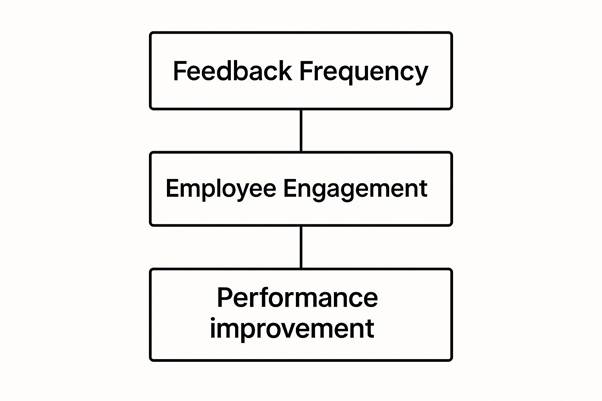
As you can see, more frequent and well-structured feedback is the engine that drives both engagement and, ultimately, better results for the business.
Using the SBI Framework for Clarity
One of the most powerful models for giving clear, objective feedback is the SBI (Situation-Behaviour-Impact) framework. It’s brilliant because it’s designed to strip out judgment and focus only on what was observed, making the feedback much easier for the employee to hear and act on.
It breaks the conversation down into three straightforward parts:
- Situation: First, you set the scene. Where and when did this happen? This grounds the feedback in a specific, shared moment.
- Behaviour: Next, you describe exactly what the person did or said. The key here is to stick to observable actions, not your interpretation of their motives.
- Impact: Finally, you explain the result of that behaviour. What effect did it have on the team, the project, or even you personally?
This simple structure stops feedback from feeling like a personal attack. So, instead of a vague and judgmental comment like, “You were unprofessional in that meeting,” a manager using SBI can be far more effective.
SBI Example in Action:
- (Situation): “In this morning’s client presentation…”
- (Behaviour): “…when the client asked about our Q3 delivery timeline, you interrupted your colleague mid-sentence to give a different answer.”
- (Impact): “…and the impact was that it created a moment of confusion for the client and made the team appear misaligned.”
See the difference? This feedback is specific, actionable, and focuses on the outcome, not the person’s character. This kind of clarity is the bedrock of a healthy feedback culture.
Turning Feedback into Coaching with the GROW Model
While SBI is fantastic for looking back at a specific event, the GROW (Goal, Reality, Options, Will) model is the perfect tool for turning that feedback into a forward-looking coaching conversation. It’s all about empowering the employee to find their own solutions, which shifts the manager’s role from instructor to supportive guide.
This model is especially effective in developmental discussions and weekly check-ins. It guides the conversation through four clear stages:
- Goal: What does the employee want to achieve? This sets a positive direction for the chat.
- Reality: What’s the current situation? This is about exploring the present challenges without placing blame.
- Options: What are the possible ways forward? This is a brainstorming step to explore every potential action.
- Will (or Way Forward): What specific action will the employee commit to? This crucial last step ensures the conversation ends with a concrete plan.
A Real-World GROW Dialogue
Let’s see how this works by building on the SBI example from before. After giving the SBI feedback, the manager can smoothly pivot into a GROW coaching conversation to help the employee improve.
Manager (Goal): “Looking ahead, what’s your goal for how we present as a unified team in client meetings?”
Employee (Reality): “I want us to look completely aligned. I realise now that I got too eager and spoke out of turn because I was worried about the client’s perception of the timeline.”
Manager (Options): “That makes sense. What are some options we could explore to ensure we handle those tough questions smoothly next time?”
Employee: “Well, we could agree on a designated lead for Q&A beforehand. Or, if one of us feels the need to jump in, we could use a subtle signal.”
Manager (Will): “Those are both great ideas. Which one do you want to commit to trying in our next client meeting?”
This simple, structured dialogue completely changes the dynamic. It takes a moment of corrective feedback and turns it into an empowering opportunity for growth—which is exactly what a strong feedback culture is all about. This proactive approach to development is also a key factor in how leading companies, including how GICs in India, can attract and hire the best talent.
Using AI and Technology to Scale Feedback
Getting a continuous feedback culture off the ground across a large company is a massive undertaking. Let’s be honest, the big question is always: How can we make sure every team gets timely, consistent, and genuinely helpful feedback without completely burning out our managers? The answer isn’t to replace the human element with tech, but to amplify it.
For many organisations, the sheer scale of these conversations feels impossible. But the right tools can make this ambition a reality. Instead of being another admin headache, technology should automate the boring stuff, surface deeper insights, and help build connections that might otherwise never happen.
Weaving Feedback into the Daily Grind
The best technology is the kind that meets people where they already are. Forget forcing everyone to log into a clunky, separate platform once a quarter. Modern feedback systems slot right into the daily flow of work.
Think about the platforms your teams live in every day, like Slack or Microsoft Teams. Dedicated feedback tools can integrate directly with them, which opens up a world of possibilities:
- Real-time Recognition: A manager can give a public shout-out for a job well done right in the team’s channel. The recognition is instant and everyone sees it.
- Instant Coaching: A quick, private bit of feedback can be shared moments after a meeting or as soon as a project milestone is hit. This makes the advice timely and super relevant.
- Automated Nudges: Gentle reminders can be sent out to managers and their team members to encourage regular check-ins, keeping the feedback loop from going quiet.
This kind of seamless integration turns giving and receiving feedback into a natural, low-friction part of the workday, not some formal, scheduled event that everyone dreads.
The Rise of AI-Powered Insights
But it’s not just about simple integration anymore. Artificial intelligence is adding a powerful new layer to continuous feedback. AI-powered tools are now going way beyond just collecting data; they’re providing sophisticated analysis that actually helps managers become better coaches.
Technology should be the accelerator of human connection, not the replacement for it. The goal is to use AI to empower managers with insights, freeing them up to have more meaningful, human-centred conversations.
AI algorithms can sift through feedback data to spot patterns and trends that would be impossible for any person to see. For instance, these tools can analyse the sentiment of feedback across different departments, flagging teams that might be struggling with morale. They can also identify skills gaps or pinpoint high-potential employees by looking at the kind of feedback they’re getting. This data-driven approach allows CHROs to make much smarter decisions about where to invest in training and development.
In India, AI-driven systems are quickly becoming a core part of performance management. They’re helping to align what people are working on with the company’s bigger goals and creating a more transparent culture where growth is the norm. A recent report even found that employees who get consistent, AI-assisted feedback are 3.6 times more likely to feel motivated at work. That’s a powerful link between technology and engagement. You can discover more about how AI is reshaping performance management in India to get the full picture.
Making the Right Technology Choice
For CHROs, the game is about picking technology that actually supports your company’s unique culture and goals. When you’re building the business case for this kind of investment, focus on the real-world problems these tools solve. Show how they can scale meaningful interactions, give leaders data they can actually use, and ultimately build a more connected and high-performing workforce. The right platform doesn’t just manage feedback; it builds a smarter, more responsive feedback ecosystem.
Common Questions About Continuous Feedback
Switching from the familiar rhythm of the annual review to a more dynamic, real-time feedback model is a big move. It’s only natural for questions and concerns to pop up. For CHROs steering this change, having clear, confident answers ready is crucial for a smooth transition.
Getting ahead of these common worries can melt away resistance and build the momentum you need for a genuine cultural shift. Let’s tackle some of the most frequent questions that come up when companies think about making this change.
How Do You Prevent This from Becoming Micromanagement?
This is probably the number one fear for managers and employees alike. The line between supportive coaching and constant scrutiny can feel razor-thin, but the difference is massive—it all comes down to intent and focus.
Micromanagement is rooted in control. It’s the manager who dictates how every task gets done, obsessively checks on progress, and gets hung up on tiny details. It kills autonomy and basically screams, “I don’t trust you.”
Continuous feedback, when done right, is all about development. It’s about empowering people with insights that help them grow. The focus is on the outcome of the work, not the nitty-gritty of the process. Think of it like a helpful GPS offering a better route, not a backseat driver yanking the wheel every five seconds.
To keep that boundary healthy, organisations need to:
– Train managers to be coaches: Focus on asking powerful questions instead of just giving orders.
– Keep feedback goal-oriented: Tie every conversation back to progress on larger objectives.
– Encourage employee ownership: The aim is to build self-sufficient, capable team members, not dependent ones.
What Happens to the Annual Review?
A great question, and the answer isn’t always the same. Moving to continuous feedback doesn’t automatically mean you have to scrap the annual review entirely. Instead, it fundamentally changes its job. Many companies find a hybrid approach works best.
The annual review is no longer the single, high-stakes performance conversation of the year. It transforms into something far less intimidating and way more productive. It becomes a capstone conversation—a moment to look back on the year’s journey, connect the dots from all the ongoing check-ins, and have bigger-picture discussions about career paths and compensation.
With continuous feedback, the annual review stops being a moment of surprise and becomes a moment of synthesis. It’s just a summary of a conversation that’s been happening all year.
There are no bombshells or recency bias because performance has been an open dialogue from the start. This new role frees up the annual review to do what it was always meant to do: handle strategic career planning and formal salary talks, without the pressure of carrying 12 months of pent-up feedback.
How Can We Train Managers to Deliver Difficult Feedback?
Giving constructive criticism is a skill. Just like any other, it takes training and practice to get it right. You can’t just tell managers to “give more feedback” and hope for the best. You have to give them the tools and the confidence to handle these tough conversations well.
This is where those structured frameworks we talked about earlier are a lifesaver. Your training should be practical and hands-on.
– Teach a Framework: Get managers comfortable with a model like SBI (Situation-Behaviour-Impact). It gives them a simple script for keeping feedback objective, specific, and far less confrontational.
– Use Role-Playing: Set up safe scenarios where managers can practice giving tough feedback on common workplace issues. It builds muscle memory and takes the fear out of the real thing.
– Lead with Empathy: Train managers to come from a place of support. The conversation should be about the employee’s growth, not their mistakes. The goal is to build people up, not tear them down.
When you invest in this kind of training, you make sure feedback quality is consistent across the board. You turn what could be a negative moment into a powerful opportunity for growth.
How Do You Measure the ROI of a Continuous Feedback Programme?
Measuring the return on investment (ROI) for a cultural shift like this means looking beyond the obvious. Sure, you can track the quantity of feedback conversations, but the real value is in the impact on the business.
To make a strong business case, CHROs need to connect the dots between the programme and tangible results. The key is to get a baseline before you start, then track how these critical areas change over time:
– Employee Engagement Scores: Use regular pulse surveys to see if people feel more motivated, satisfied, and connected to the company.
– Retention and Attrition Rates: Keep an eye on voluntary turnover, especially among your top performers. A great programme should make people want to stay because they feel seen and supported.
– Performance and Productivity Metrics: Link feedback to team-specific KPIs. Is the sales team closing more deals with regular coaching? Are engineering projects being delivered faster?
– Promotion Velocity: Track how quickly your people are learning new skills and stepping into bigger roles.
By focusing on these strategic outcomes, you can show that continuous feedback in the workplace isn’t just another HR initiative—it’s a direct investment in building a more engaged, productive, and resilient organisation.
At Taggd, we specialise in building high-performing teams from the ground up. If you’re ready to create a culture that attracts and retains top talent through strategic recruitment, explore our Recruitment Process Outsourcing solutions at https://taggd.in.