
Winning the War for Talent Attraction in India
Picture your company as a magnet. Talent attraction is the ongoing effort to dial up its magnetic force, making it so powerful that the best and brightest professionals are naturally drawn in your direction. It’s the critical difference between desperately chasing candidates for open positions and building a brand that top talent actively wants to be a part of.
Why Talent Attraction Is Your New Competitive Edge
In today’s fast-moving job market, just posting a job ad and waiting for applications to roll in is like fishing with an empty hook. It’s a reactive tactic that forces you to compete for the same small, overcrowded pool of active job seekers.
Talent attraction flips this on its head. It’s a proactive strategy focused on building a rock-solid reputation that speaks for itself, long before you even have a job opening.
Think of it this way: reactive recruiting is like sending out party invitations the day before and hoping someone shows up. Proactive talent attraction, on the other hand, is like being the most sought-after event planner in town. People are already following your every move, buzzing with anticipation for your next event, well before you’ve even announced a date.
This mindset shift from just “filling a seat” to “building a following” is absolutely essential. It helps you create a continuous pipeline of engaged, high-quality candidates who are already sold on your company’s mission, culture, and values.
The Business Case for Proactive Attraction
So, why does this matter so much, especially in a dynamic market like India? Simply put, the battle for skilled professionals has never been more intense. Mastering talent attraction gives you a powerful, undeniable advantage.
- Slash Your Time-to-Hire: With a warm pipeline of interested candidates already in your corner, you spend far less time starting your search from square one.
- Boost Your Quality of Hire: Candidates who are already interested in your brand are often a much better fit, both culturally and motivationally. In fact, 61% of recruiters find that informed candidates turn into better employees.
- Drive Down Recruitment Costs: A strong employer brand means you’re less reliant on costly agencies and job boards, as more candidates will find their way to you organically.
- Strengthen Your Employer Brand: Every positive interaction you create builds your reputation, making every future hire that much easier.
A powerful talent attraction strategy doesn’t just fill today’s empty seats; it secures your company’s future by ensuring you always have a steady flow of the right people. It transforms recruiting from a frantic chore into a strategic powerhouse.
This approach requires you to deeply understand what makes your company a brilliant place to work—your unique Employee Value Proposition (EVP)—and then tell that story compellingly and consistently everywhere you can. It’s about blending smart marketing principles with HR, treating potential candidates like valued customers whose trust and attention must be earned over time.
From Recruiting to Attraction: A Fundamental Shift
The real difference boils down to the timeline. Recruiting is often a short-term, transactional task, kicked off by an immediate need. Talent attraction is a long-term game of building genuine relationships.
It’s a continuous, ongoing effort. The goal is to ensure that when a position does open up, you already have a community of qualified people who are ready and excited to talk. By focusing on strengthening this magnetic pull, you stop competing solely on salary and start winning hearts and minds with your story.
You can find more practical strategies for this in our guides on employer branding and talent attraction. Making this proactive shift isn’t a luxury anymore—it’s a core necessity for any business serious about sustainable growth.
Understanding the Modern Indian Talent Landscape

Before you can build a winning talent attraction strategy, you first have to understand the lay of the land. The Indian job market isn’t just growing; it’s going through a fundamental shift. Powerful economic and technological forces are shaking things up, creating incredible opportunities on one hand and massive recruitment headaches on the other.
Think of the talent pool like a fast-flowing river. For years, the currents were predictable. Now, new tributaries are diverting the flow, creating powerful rapids in some places and leaving others almost dry. This means that just casting your net in the same old spots simply won’t work anymore.
This transformation is hitting high-growth sectors the hardest. In 2025, India’s job market is expected to grow by around 9%, largely because of tech disruptions changing what kind of talent is in demand. The biggest hiring pushes are happening in Information Technology (IT), Retail, Telecom, and Banking, Financial Services, and Insurance (BFSI). This surge, fuelled by digitalisation and global outsourcing, has created a major supply-demand problem for specialised skills. To get a better handle on this, you can understand India’s talent landscape for 2025 and see the trends shaping the next wave of hiring.
The Great Skills Imbalance
At the heart of today’s recruitment challenge is a widening gap. Companies desperately need certain skills, but the talent just isn’t there in the numbers required. This isn’t a general shortage of people; it’s a very specific, acute scarcity of professionals with the skills needed for the future.
The competition isn’t just for software developers anymore. It’s for specialists in niche, high-impact fields. The fiercest battles for talent are being fought over people with expertise in:
- Artificial Intelligence and Machine Learning: Professionals who can actually build and launch intelligent systems.
- Data Science and Analytics: Experts who can translate raw data into smart business strategy.
- Cybersecurity: The guardians who protect digital assets from constant threats.
- Green Technologies: The innovators driving sustainability and renewable energy solutions.
This imbalance puts professionals with these skills firmly in the driver’s seat. They’re fielding multiple offers, demanding higher salaries, and can afford to be choosy about where they work. For organisations, this creates a high-stakes game where old-school hiring methods just don’t cut it.
Shifting Candidate Expectations
Making the skills gap even trickier is a huge shift in what today’s professionals expect from an employer. The modern Indian workforce, especially the younger generations, wants more than just a steady paycheque. Their career choices are now heavily influenced by a need for purpose, growth, and a decent work environment.
The new psychological contract between an employer and an employee isn’t just about financial security anymore. It’s about a mutual investment in growth, well-being, and shared values.
What this means is that your talent attraction efforts have to speak to a whole new set of priorities. Candidates are asking tough questions that go way beyond the job description:
- Does this company do meaningful work and have a clear purpose?
- Are there real opportunities for me to learn, grow, and advance my career?
- Is the culture inclusive, flexible, and genuinely supportive of its people?
- Is the leadership team transparent and authentic?
If you can’t provide solid answers to these questions, you’ll struggle to attract top performers, no matter how much money you throw at them. The companies that are winning are the ones taking a more agile, human-centric approach. They’ve moved beyond transactional recruiting and are focused on building real connections, backed by a strong, people-first employer brand. This new reality demands a much more thoughtful and strategic way of thinking about talent attraction.
The Pillars of a Winning Talent Attraction Strategy
Building a powerful talent attraction machine isn’t about guesswork; it requires a strong, intentional framework. A successful strategy rests on three core pillars that work together to create a magnetic pull, drawing the right people to your organisation long before they even apply.
These pillars are:
- A compelling Employer Brand
- An exceptional Candidate Experience
- Intelligent Proactive Sourcing
By mastering each of these, you’ll shift from a reactive hiring model to a sustainable system that builds a continuous pipeline of engaged talent. This approach turns recruiting from a frantic, short-term fix into a strategic, long-term advantage. Let’s break down how to build each pillar from the ground up.
Pillar 1: Develop a Magnetic Employer Brand
Your employer brand is essentially your reputation as a place to work. It’s the story people tell about your company when you’re not in the room. A strong employer brand doesn’t just happen by accident; it’s carefully built around your unique Employee Value Proposition (EVP).
The EVP is the heart and soul of your brand. It’s the clear, compelling promise of what employees get in return for their skills and commitment. Think of it as the “why” behind working for you, covering everything from compensation and benefits to culture, career growth, and work-life balance. Once you’ve defined your EVP, your job is to broadcast it consistently across every channel.
- Your Careers Page: This is your brand’s home base. It should be more than a list of jobs; it needs to tell a story with employee testimonials, videos, and clear insights into what it’s really like to work with you.
- Social Media: Platforms like LinkedIn are perfect for showcasing your work environment and celebrating your team’s achievements. Authentic, behind-the-scenes content builds trust and connection.
- Job Descriptions: Every job post is an advertisement for your brand. Ditch the dry, corporate jargon and write compelling copy that reflects your company’s personality and values.
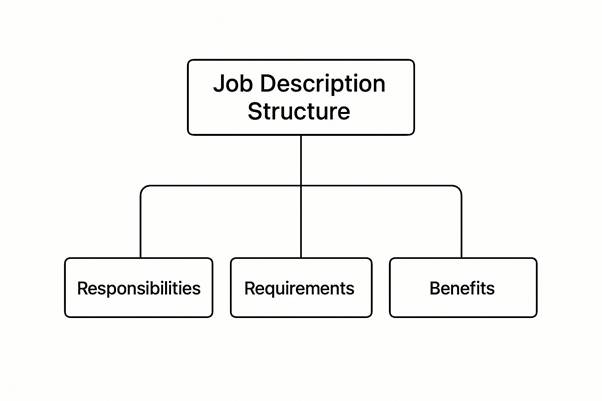
As you can see, a great job post balances the company’s needs (responsibilities, requirements) with the candidate’s needs (what’s in it for them), creating a much more appealing exchange.
Pillar 2: Engineer an Unforgettable Candidate Experience
The candidate experience is the sum of every single interaction a potential hire has with your company, from their first click on a job ad to their final interview. A poor experience can seriously damage your employer brand and drive away top talent—in fact, 63% of candidates report they would likely reject a job offer after a negative experience.
Your hiring process is a direct reflection of your company culture. A respectful, transparent, and efficient process signals that you value people’s time and effort, making them want to join your team.
Mapping the candidate journey is the first step. Look at every touchpoint from the candidate’s perspective and identify the friction points. Is the application ridiculously long? Is communication clear and timely? Are interviewers prepared and engaged?
To elevate the experience, focus on a few key areas:
- Simplify the Application: Make sure your application process is mobile-friendly and can be completed in minutes, not hours.
- Communicate Proactively: Keep candidates in the loop at every stage, even if it’s just to let them know they are no longer being considered. Silence is frustrating and unprofessional.
- Train Your Interviewers: Give your hiring managers the skills to conduct structured, insightful interviews that feel like a positive, two-way conversation.
- Gather Feedback: Actively ask candidates for feedback on their experience, regardless of the outcome. This provides invaluable data for continuous improvement.
Pillar 3: Implement Proactive Sourcing
The final pillar is about ditching the passive “post and pray” approach and embracing active, intelligent sourcing. Proactive sourcing means identifying and engaging potential candidates before you even have an open role. It’s about building relationships and communities of talent that you can tap into when the need arises.
This mindset shift is crucial for long-term success. A proactive approach keeps your talent pipeline full, reduces time-to-hire, and gives you a massive advantage over competitors who only start looking when a vacancy appears.
Here is a quick comparison to highlight the difference in thinking:
Comparing Proactive vs Reactive Recruitment
| Aspect | Proactive Talent Attraction | Reactive Recruiting |
| Timing | Continuous, long-term relationship building. | Begins only when a job vacancy opens. |
| Talent Pool | Engages both active and passive candidates. | Primarily targets active job seekers. |
| Approach | Strategic and intentional; builds talent communities. | Transactional and urgent; fills an immediate need. |
| Candidate Quality | Access to a wider, often higher-quality, talent pool. | Limited to whoever is looking for a job at that moment. |
| Time-to-Hire | Significantly reduced due to a ready pipeline of talent. | Often long and unpredictable. |
| Brand Impact | Strengthens the employer brand through consistent engagement. | Can feel impersonal and damage the brand if rushed. |
As the table shows, a proactive strategy transforms recruiting from a fire-fighting exercise into a strategic business function. It requires moving beyond traditional job boards and using more forward-thinking channels.
- Talent Communities: Create and nurture online groups or newsletters for professionals in your industry. Share valuable content, host webinars, and build a network of engaged followers who see you as a thought leader.
- Referral Programmes: Your best employees often know other great people. A well-structured referral programme can be your single most effective source of high-quality hires. Studies show referred employees are often a better culture fit and have higher retention rates.
- Direct Sourcing: Use tools like LinkedIn Recruiter to identify passive candidates—those skilled professionals who aren’t actively looking but would be open to the right opportunity. A personalised, thoughtful outreach can spark their interest.
By building these three pillars, your talent attraction strategy becomes a robust, self-sustaining system. It creates a powerful flywheel effect where a strong brand improves the candidate experience, which in turn fuels your proactive sourcing efforts with a steady stream of interested, high-calibre professionals.
Tapping into Diversity and Skills-First Hiring

To build an employer brand that truly stands out, you have to look beyond the old hiring playbook. The most forward-thinking organisations are leaning into two powerful strategies: fostering genuine diversity and adopting a skills-first hiring mindset. These aren’t just trendy talking points; they’re smart business moves that directly tackle today’s skills shortages.
Think of it this way. For decades, most companies have been fishing in the same small, crowded pond, all competing for the same handful of fish. But what if you discovered vast, uncharted waters teeming with incredible talent that your competitors have completely ignored? That’s what happens when you broaden your search to include diverse talent pools and skills-based candidates.
This shift is already happening in a big way across India. Recent research shows that a massive 67% of companies in the country are planning to tap into diverse talent pools to fill their open roles. That’s a huge leap compared to the global average of just 47%. This isn’t just talk; it’s a dedicated push to bring more women and other underrepresented groups into the workforce.
The Real Advantage of Diverse Talent Pools
A genuine commitment to diversity and inclusion (D&I) does far more than just widen your candidate pipeline—it makes your entire business stronger. It’s been proven time and again that teams made up of people with different backgrounds, life experiences, and perspectives are more innovative, better at solving complex problems, and more in tune with a diverse customer base.
When you intentionally seek out diverse talent, you’re making a conscious effort to attract candidates from all walks of life. This means looking at:
- Gender Diversity: Proactively attracting and retaining more women.
- Generational Diversity: Creating balanced teams with a mix of fresh perspectives and deep experience.
- Geographic Diversity: Searching for talent beyond the usual big-city hubs.
- Neurodiversity: Building a workplace where different ways of thinking aren’t just accepted, but celebrated.
By actively cultivating an inclusive culture, you send a powerful message: this is a place where everyone has the opportunity to thrive. This becomes a cornerstone of your employer brand, making you a top choice for high-performers everywhere. You can learn more by exploring our guide on embracing diversity in hiring.
Making the Switch to a Skills-First Approach
Right alongside diversity, a skills-first hiring approach is changing the game. This philosophy is simple but profound: focus on what a candidate can do, not just their degree or the exact number of years on their CV. It’s about prioritising proven skills and future potential over traditional credentials.
This shift is essential for closing the skills gap. Think about it—there are countless brilliant people out there who have the precise technical and soft skills you need but may not have a conventional university background. If you’re hung up on rigid degree requirements, you could be filtering out your perfect hire before you even see their application.
When you adopt a skills-first mentality, you stop hiring résumés and start hiring people. You focus on what they can actually accomplish, which opens the door to a massive, untapped pool of qualified talent.
Putting this into practice involves a few key changes to your hiring process:
- Rethink Your Job Descriptions: Strip out any unnecessary degree requirements. Instead, clearly define the core skills needed to excel in the role.
- Use Skills-Based Assessments: Move beyond just talking. Use practical tests, small projects, or technical challenges to see a candidate’s abilities in action.
- Train Your Interviewers: Make sure your hiring managers know how to conduct competency-based interviews that dig into specific skills and past behaviours.
This approach is gaining serious traction. Indian companies are leading the way, with around 30% planning to adopt a skills-first mindset, far outpacing the 19% global average. By focusing on skills, you don’t just find better candidates for the job today—you build a more adaptable and resilient organisation for tomorrow.
Navigating the IT Talent Shortage with Smart Tactics

Nowhere is the battle for top talent fiercer than in India’s booming IT industry. The relentless pace of technological change has opened up a chasm between the skills companies desperately need and what’s actually available in the talent pool. This isn’t just a headache for HR; it’s a serious operational risk that can stall growth.
The shortage is particularly acute for experts in hot-button fields like artificial intelligence, cybersecurity, and data analytics. This skills gap is so severe that 66% of organisations across the Asia-Pacific region, India included, now see it as a major threat to their business.
In such a competitive arena, the old recruiting playbook just won’t cut it. To win, companies need to get smarter and more agile with their strategies.
Shifting Focus from Experience to Potential
One of the most powerful moves leading firms are making is to hire for potential rather than just ticking boxes on an experience checklist. Chasing the “perfect” CV often means getting into a costly bidding war over a tiny group of seasoned experts. Smart companies are looking deeper.
They’re identifying candidates who have solid foundational skills, a genuine knack for learning, and the right attitude to fit their culture. This approach immediately widens the talent pool, allowing you to discover bright, motivated people you can shape to fit your specific tech stack and business goals.
When you invest in raw potential, you’re not just plugging a short-term gap. You’re building a loyal, long-term asset—someone who will grow with your company, not just work for it.
Building Your Own Talent Pipeline
Instead of perpetually hunting for ready-made experts in a crowded market, the most forward-thinking tech companies are growing their own. They’re creating structured pathways to develop the exact skills they need from within, breaking their dependence on external hiring. It’s a proactive solution to a chronic problem.
Here are a few practical ways to build a sustainable tech talent pipeline:
- Robust Apprenticeship Programmes: Forge partnerships with universities and colleges to create formal internships that offer hands-on experience and a clear route to full-time roles.
- Intensive Upskilling Initiatives: Invest in training existing employees, giving them the opportunity to move into high-demand tech roles from other parts of the business.
- Mentorship and Coaching: Pair up-and-coming talent with senior experts. This simple act can dramatically speed up their development and help them feel connected to the team.
This “build, don’t just buy” mindset is a massive boost for talent attraction. It sends a clear signal that your company invests in its people, making you a magnet for ambitious professionals eager to build a real career.
Using Technology to Find the Right Fit
Finally, leading organisations are using technology to make their entire talent acquisition process smarter. AI-powered tools are completely changing the game, helping recruiters see beyond the surface-level keywords on a résumé.
These systems can:
- Analyse candidate profiles for core competencies and transferable skills that aren’t obvious.
- Pinpoint high-potential individuals who a human screener might accidentally overlook.
- Dramatically improve the match between a role’s real needs and a candidate’s underlying abilities.
This tech-forward approach helps level the playing field, making sure you evaluate candidates on what they can achieve, not just the job titles they’ve held. The ongoing talent war in India’s IT sector demands more than just posting a job ad and hoping for the best. By focusing on potential, building your own pipeline, and using smart tech, you can get ahead of the competition and secure the talent you need to thrive.
Measuring the Success of Your Talent Attraction Efforts
You’ve built what you believe is a brilliant talent attraction strategy, but how do you actually know it’s working? To show its real impact on the business, you need to look past old-school metrics like time-to-fill. It’s time to focus on Key Performance Indicators (KPIs) that tell the true story of your success.
Measuring what you’re doing isn’t just about defending your budget. It’s about finding out what’s resonating with candidates so you can do more of it, and identifying what’s falling flat so you can fix it. Think of these metrics as the gauges on your talent attraction dashboard—they show your speed, your efficiency, and most importantly, whether you’re actually moving in the right direction.
Key Metrics That Truly Matter
When you track the right things, you get a clear, data-driven picture of how you’re performing. Let’s dig into a few of the most important metrics that should form the backbone of your measurement plan.
1. Quality of Hire
This is the big one. Quality of Hire measures the actual value a new employee contributes to the company, usually assessed 6 to 12 months after they’ve joined. It answers the fundamental question: “Did we make a good hire?”
A high score here is fantastic news. It proves your strategy isn’t just bringing in bodies; it’s attracting people who excel in their roles and enrich your company culture. This metric directly links your recruitment work to bottom-line business results like productivity and employee retention.
2. Candidate Satisfaction (CSAT)
This metric is all about the experience. It tracks how candidates feel about your hiring process, whether they got the job or not. A simple survey sent after the process wraps up is often the best way to capture this.
A positive candidate experience is one of your most powerful, yet underrated, marketing tools. Candidates who feel respected are more likely to become brand advocates, even if they don’t get an offer. In fact, research shows 80% of candidates who had a good experience would consider applying to the same company again.
Keeping an eye on CSAT helps you smooth out any rough patches in your hiring journey. This not only protects your employer brand but also ensures you don’t accidentally turn off great people who might be a perfect fit for a future role.
3. Offer Acceptance Rate
This one is simple but powerful: what percentage of candidates who receive a formal job offer actually accept it? A high acceptance rate is a strong signal that your offers are competitive and your employer brand is compelling enough to seal the deal.
If you see this rate start to dip, treat it as an early warning. It could mean your compensation packages aren’t keeping up with the market, there’s a crack in your employer brand, or a poor final-stage experience is leaving a sour taste.
4. Talent Pipeline Strength
This KPI is about looking ahead. It measures the health of your future talent supply by tracking the number of qualified, engaged people in your talent community who could be a great fit for open or upcoming roles.
A strong pipeline means you’re not starting from scratch every time a position opens up. It allows you to fill roles faster and with better-matched individuals because you’ve already built the relationship.
A Modern View of Talent Attraction KPIs
To really get a handle on performance, it’s helpful to see these metrics side-by-side. The table below summarises some of the most effective modern KPIs you can use to measure the impact of your talent attraction strategy.
| Metric | What It Measures | Why It’s Important |
| Quality of Hire | The long-term value a new employee brings, based on performance reviews and retention. | Connects recruiting efforts directly to business outcomes like productivity and innovation. |
| Candidate Satisfaction (CSAT) | The overall experience of applicants throughout the hiring process. | Protects your employer brand and turns candidates into advocates, regardless of the outcome. |
| Offer Acceptance Rate | The percentage of candidates who accept a job offer. | Indicates the competitiveness of your compensation, benefits, and overall employee value proposition. |
| Source of Hire | The channels where your successful candidates are coming from (e.g., referrals, job boards). | Shows which channels deliver the best ROI, helping you allocate your budget more effectively. |
| Talent Pipeline Strength | The number of qualified and engaged candidates in your talent pool for future roles. | Reduces time-to-hire for future openings and ensures a ready supply of high-quality talent. |
By regularly tracking these kinds of strategic metrics, you change the conversation entirely. You move away from seeing recruitment as a cost centre and start demonstrating how talent attraction is a strategic investment that drives the business forward. This data-driven approach gives you the proof you need to show real ROI and secure the support to keep bringing in top talent.
Frequently Asked Questions
Putting a new talent attraction plan into motion always throws up a few questions. Let’s tackle some of the most common ones we hear from organisations in India as they move from strategy to real-world execution.
How Can a Small Business Compete for Top Talent?
Small businesses can absolutely hold their own in the talent market by being clever and playing to their strengths. Forget trying to outbid the big corporations on salary; instead, lean into what makes you different.
Can you offer real flexibility with remote or hybrid work? Can you give employees a direct line to leadership, where their ideas are actually heard and valued? These things matter.
Focus on the opportunity for genuine impact and fast-tracked career growth. In a smaller setup, people often get to wear more hats and learn faster than they would in a massive, siloed company. Make sure your employer brand screams these advantages from the rooftops—on your social media, on your careers page, and in every job description. You’ll attract the kind of people who care more about purpose and development than corporate perks.
Your Employee Value Proposition (EVP) is what you promise your team internally—it’s the total package of benefits and experience. Your Employer Brand is how you tell that story to the outside world. A killer talent attraction strategy makes sure that story is authentic, exciting, and true.
How Long Until a New Strategy Shows Results?
It’s a mix. While some quick wins can show up almost immediately, building a truly magnetic talent attraction function is more of a marathon than a sprint.
You should start seeing some encouraging signs within the first three to six months. This might look like better engagement on your job posts or a noticeable uptick in the quality of applications coming through.
But the big, game-changing results take a bit longer to bake. Seeing a real shift in major metrics like Quality of Hire, Offer Acceptance Rate, and a drop in your overall recruitment costs usually takes 12 to 18 months. That’s the time it takes for your employer brand to really gain traction in the market and for your talent pipelines to fill up with quality candidates.
Ready to build a powerful talent pipeline and attract top performers? Taggdprovides expert Recruitment Process Outsourcing solutions to help you win the war for talent. Learn how we can help you build a magnetic employer brand.