
Unlocking Performance with Tangible Rewards
In a business world that often defaults to digital pings and cash bonuses, tangible rewards are a powerful, physical symbol of true appreciation. These are the kinds of rewards—both physical items and experiences—that stick with people, creating lasting memories and a far deeper emotional connection than money alone ever could.
Why Physical Rewards Create Deeper Connections
Let’s be honest, a cash bonus is always nice. But what happens to it? More often than not, it gets absorbed into the daily grind of life. It pays for the weekly grocery shop, chips away at a bill, or just vanishes into a savings account. Its impact, while practical, is temporary and rarely leaves behind a memorable story.
Tangible rewards, on the other hand, play on a completely different psychological field. They exist outside of regular income and carry a unique emotional weight. Think about the difference between getting a pay rise and being gifted a luxury watch for a decade of loyal service. The first is a transaction; the second is a trophy.
The Lasting Impact of Trophy Value
This “trophy value” is precisely what makes a physical reward so impactful. It acts as a constant, visible reminder of a job well done. Every time an employee uses that premium coffee machine you gave them or glances at the framed voucher for a weekend getaway they earned, they don’t just see an object. They relive their success and remember the company that acknowledged it.
This creates a powerful, positive feedback loop. A cash bonus is spent and forgotten, but a tangible reward becomes a part of the employee’s life—and a great story to tell. It’s something they’ll talk about with family, friends, and even their colleagues, amplifying the act of recognition far beyond the moment it was given.
A tangible reward is more than just an item; it’s a narrative. It tells a story of achievement, appreciation, and value, strengthening the bond between an employee and the organisation in a deeply personal way.
Building Emotional Connections
This personal connection is where tangible rewards really shine. A thoughtfully chosen gift shows that the company sees its people as individuals, not just numbers on a payroll. It proves you’ve paid attention to their interests and what matters to them outside of work.
A cash bonus is one-size-fits-all, but offering a choice between several high-value tangible rewards is a game-changer. It allows for genuine personalisation. Imagine offering choices like these:
- For the tech enthusiast: The latest noise-cancelling headphones or a brand-new tablet.
- For the wellness-focused: A one-year premium gym membership or a spa retreat package.
- For the family-oriented: Vouchers for a theme park or a family holiday.
This level of thoughtfulness isn’t just nice; it communicates genuine care and respect. It transforms recognition from a simple financial transaction into a meaningful gesture of gratitude. This emotional connection is absolutely critical for building a culture where people feel truly seen and valued.
Ultimately, while cash takes care of an employee’s financial needs, tangible rewards speak to their emotional needs—the need for recognition, status, and belonging. For CHROs looking to build a resilient, motivated, and deeply engaged workforce, understanding this distinction is key to fostering a strong, lasting connection to the company.
The Hidden Power of Tangible Rewards Over Cash

Sure, a cash bonus gets the job done. But let’s be honest—its impact is often short-lived and feels impersonal. It just melts into an employee’s bank account, getting swallowed up by bills, groceries, or other everyday expenses. This is where tangible rewards have a unique and lasting power, forging a much stronger psychological link to the achievement itself.
The magic behind this difference is a simple human quirk known as mental accounting. We all naturally put money and resources into different mental buckets. A cash bonus gets filed away under “income,” making it feel like just another part of a regular transaction. A tangible reward, on the other hand, is mentally filed under “gift” or “trophy.” This separates it from the day-to-day grind of a payslip and gives it a special meaning.
That mental separation is what makes the reward so much more memorable. A cash bonus is spent and quickly forgotten, but a physical gift—a new gadget, a high-quality piece of luggage, or an exclusive experience—becomes a lasting symbol of success.
The Lasting Appeal of Trophy Value
A tangible reward has what we call “trophy value.” It’s a physical testament to an accomplishment that can be seen, used, and talked about. This visibility amplifies its impact long after the initial moment of recognition has passed.
Picture an employee who earns a premium espresso machine for leading a challenging project. Every single morning, as they brew their coffee, they’re reminded of their hard work and the company that recognised it. It creates a recurring positive feeling that a one-off cash payment simply can’t match.
This effect doesn’t just stop with the individual. A tangible reward often becomes a conversation starter, giving the employee a natural way to share their success story with colleagues, family, and friends. This public acknowledgement reinforces their pride and turns a personal win into a source of inspiration for everyone around them. You can find more ideas on this by exploring how to use creative compensation to boost your recruiting efforts.
Fostering Deeper Personal Accomplishment
Because tangible rewards feel completely separate from a salary, they cultivate a much stronger sense of personal achievement. This is especially true within the Indian corporate world. A survey looking into employee motivation found that Indian employees view tangible rewards very differently from cash, which has a direct impact on their dedication. They see these gifts as special acknowledgements, which in turn leads to greater commitment and better performance.
Think about the difference in impact:
- Cash Bonus: “The company paid me extra for my hard work.” It sounds transactional, doesn’t it?
- Tangible Reward: “The company gave me this incredible travel voucher because I smashed my targets.” This feels personal, celebratory, and earned.
The language itself shifts from a simple payment to a meaningful gesture of appreciation. And that shift is crucial for building real, lasting loyalty.
For a CHRO, this distinction is critical. Reallocating even a portion of the incentive budget from cash to carefully selected tangible rewards can deliver a significantly higher return on motivation, engagement, and long-term employee loyalty.
At the end of the day, cash is a functional tool that pays the bills, but it rarely inspires. Tangible rewards, on the other hand, build stories, create memories, and serve as lasting emblems of success. They speak to an employee’s fundamental need to feel valued and celebrated, not just compensated. This emotional connection is what transforms a good rewards programme into a great one.
Building Your Tangible Rewards Catalogue
Crafting a rewards programme that actually works starts with what you offer. A modern, compelling catalogue of tangible rewards isn’t a one-size-fits-all list; it’s a thoughtfully curated collection designed to resonate with a diverse workforce. You have to move beyond generic options if you want to create genuine excitement and make your programme a true differentiator in the talent market.
The goal here is to build a flexible catalogue that caters to different tastes, career stages, and personal aspirations. When employees see rewards they genuinely want, their motivation to earn them skyrockets. This is how your recognition efforts transform from a simple gesture into a powerful performance driver.
The Foundation of Choice: Personalised Gift Cards
Gift cards consistently come out on top for employees. Why? They offer the perfect blend of a tangible gift and personal freedom. They’re far more memorable than cash but still give an employee the flexibility to choose something they truly desire. For an Indian workforce, this means offering a wide array of relevant options.
Consider these popular categories:
- Premier Retail: Vouchers for leading e-commerce sites like Amazon or Flipkart, or for popular fashion and electronics retailers.
- Dining and Experiences: Gift cards for well-known restaurant chains, food delivery services like Zomato, or even local fine-dining establishments.
- Travel and Leisure: Vouchers for travel portals like MakeMyTrip, or for hotel chains, giving employees the gift of a future holiday.
This next image really drives home how different tangible rewards are valued by employees.
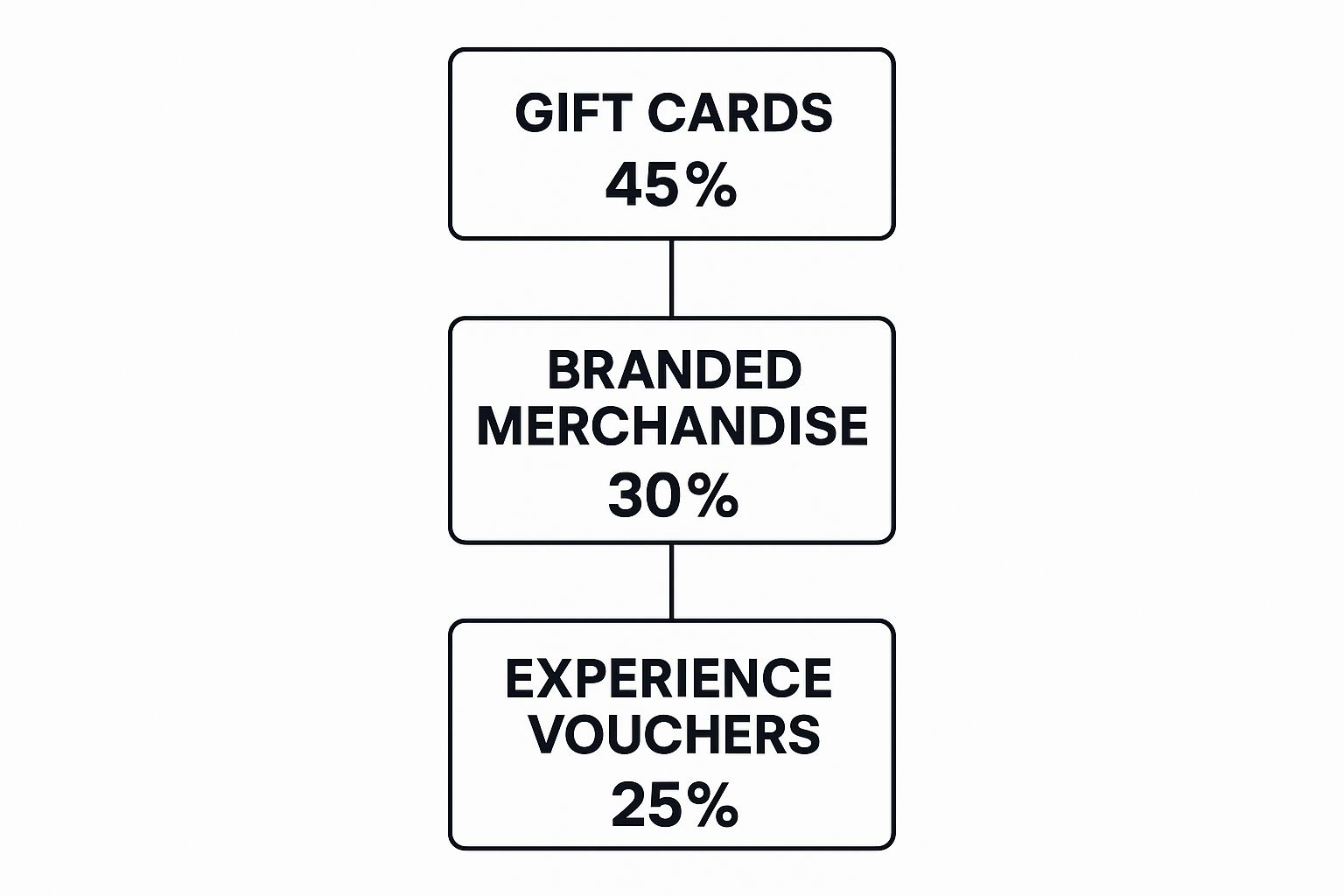
As the hierarchy shows, while experiences are highly valued, the sheer flexibility of gift cards puts them in the top spot. They are the cornerstone of any successful rewards catalogue.
Beyond the Basics: Premium Merchandise and Experiences
While gift cards provide flexibility, high-value merchandise and unique experiences create “trophy value.” These are the rewards that become stories shared with colleagues and family, serving as lasting reminders of a job well done. Your catalogue absolutely needs a spectrum of these options to appeal to varied interests.
A great rewards catalogue anticipates the desires of your employees. It should feel less like a corporate list and more like a boutique of possibilities, where every option is something to aspire to.
To build a truly exciting offering, it helps to think in terms of employee personas:
- For the Tech-Savvy: The latest gadgets always create a buzz. Think noise-cancelling headphones from brands like Bose or Sony, smartwatches, tablets, or even premium work-from-home equipment like ergonomic chairs. These items not only have a high perceived value but are used almost daily.
- For the Adventurous and Cultured: Experiential rewards create memories that last a lifetime. This could be anything from travel vouchers for weekend getaways, tickets to a major cricket match, or passes for exclusive culinary classes or wine-tasting sessions.
- For the Wellness-Focused: An increasing number of employees prioritise their health and well-being. You can cater to this by including rewards like annual gym memberships, subscriptions to mental health apps like Calm, or vouchers for luxurious spa treatments. This sends a powerful message that the company cares about their holistic well-being.
Curating a Multi-Layered Rewards Strategy
To truly understand how these different reward types can be applied, let’s compare them side-by-side. Each category serves a unique purpose and has a distinct psychological impact on your team.
Comparing Tangible Reward Types and Impact
| Reward Category | Examples for an Indian Workforce | Best For | Psychological Impact |
|---|---|---|---|
| Flexible Gift Cards | Amazon, Flipkart, Zomato, Myntra, Croma vouchers | On-the-spot recognition, regular performance incentives, peer-to-peer awards | Empowers choice, feels personal yet practical, provides immediate gratification. |
| Premium Merchandise | Latest smartphones, noise-cancelling headphones (Bose/Sony), smartwatches, premium coffee machines | Major project milestones, sales target achievements, long-service awards | Creates “trophy value,” serves as a lasting, physical reminder of success and status. |
| Experiential Rewards | Weekend getaways (MakeMyTrip), concert/IPL tickets, fine dining vouchers, spa days | Top performer awards, team achievements, annual recognition events | Builds lasting memories, associates positive experiences with the company, highly shareable. |
| Wellness & Lifestyle | Cult.fit memberships, spa packages, subscriptions to wellness apps (Calm), hobby class vouchers | Promoting work-life balance, recognising consistent effort, wellness challenges | Shows the company cares for holistic well-being, reduces burnout, feels deeply considerate. |
This table illustrates that an effective catalogue isn’t about picking one type of reward over another. Instead, it’s about building a layered approach that recognises different levels of achievement.
Not every accomplishment warrants a weekend trip, just as a major milestone deserves more than a small gift card. You should organise your tangible rewards into tiers to ensure the recognition is always proportional to the contribution. This tiered approach ensures fairness and keeps employees motivated at all levels.
Ultimately, a well-constructed catalogue of tangible rewards is more than just a list of prizes; it’s a strategic tool. It communicates your company’s values, shows employees they are seen as individuals, and turns recognition into a powerful engine for engagement and performance.
Designing a High-Impact Rewards Program
A truly effective tangible rewards program is so much more than just a catalogue of cool prizes. It’s a carefully built strategy. Simply handing out gifts without a clear purpose can feel random and, frankly, won’t do much to drive real business outcomes. The magic is in the design—the framework that connects recognition directly to performance, company values, and organisational goals.
Think of a well-designed program as a compass for your workforce. It clearly points everyone toward the behaviours and achievements the company values most. This transforms recognition from a simple giveaway into a strategic tool that reinforces what really matters. It means every single reward should have a “why” behind it that every employee understands.
Setting Clear Objectives First
Before you even start daydreaming about the rewards themselves, you have to define what success looks like for the program. What business objectives are you actually trying to achieve? A program without clear goals is like a ship without a rudder—it’s moving, but it has no destination.
Your objectives need to be specific, measurable, and tied directly to business needs. Are you trying to:
- Increase sales productivity? Your program could reward top performers who smash their targets.
- Boost cross-departmental collaboration? You could create team-based rewards for successful project completions.
- Improve customer satisfaction scores? Recognition might be tied to glowing customer feedback or high net promoter scores.
- Reinforce core company values? You could reward employees who consistently live out behaviours like innovation or integrity.
By starting with the end in mind, you make sure your investment in tangible rewards generates a clear return, whether that’s in productivity, retention, or a stronger company culture.
Linking Rewards to Performance and Values
Once your objectives are locked in, the next crucial step is forging a clear, direct link between performance and the rewards. Employees must see exactly how their actions lead to recognition. Ambiguity is the enemy of motivation; if the rules feel fuzzy or subjective, engagement will nosedive.
Transparency is absolutely non-negotiable here. The criteria for earning rewards must be communicated openly and applied consistently to everyone. This builds trust and ensures the program is seen as fair and achievable, not some exclusive club where only a select few can win.
The most impactful programs make recognition a predictable outcome of exceptional effort. When employees know that achieving ‘X’ will result in earning ‘Y’, their motivation becomes focused and their efforts become aligned with company goals.
This clarity is what turns your program into a genuine performance driver. In India, for instance, tangible rewards have become a major piece of the employee motivation puzzle. A 2023 study found a 16% increase in their use compared to previous years, proving their growing strategic importance. You can read more about these global trends in employee rewards to see just how much their impact is rising.
The Power of Choice and Effective Communication
A classic mistake is assuming everyone is motivated by the same thing. A fancy new gadget might thrill one employee, while another would be far more excited about a travel voucher. This is exactly why offering choice is one of the most powerful features you can build into your program.
Modern rewards platforms that let employees pick their own prize from a curated catalogue give engagement a massive boost. Choice does two critical things:
- Ensures Desirability: It guarantees the reward is something the employee genuinely wants, making it a much stronger motivator.
- Shows Respect: It sends a clear message that you see and value your employees as individuals with their own unique tastes.
Finally, even the world’s best-designed program will fall flat if no one understands how it works. Communication is the bridge between your strategy and your people. You need a solid plan to launch the program and keep it top-of-mind. This means explaining the ‘why,’ detailing the mechanics, and celebrating winners publicly to create a buzz and inspire others. Just as a structured, data-driven approach is vital to success, like understanding how recruitment process outsourcing can drive high-impact hiring, a structured communication plan is what will ensure your rewards program delivers on its full potential.
Embedding Recognition into Your Company DNA

The most successful employee rewards programmes are the ones you barely notice. They aren’t some separate, clunky HR initiative. Instead, they’re woven right into the daily rhythm of the company. If you truly want to make recognition a part of your corporate identity, tangible rewards have to feel like a natural reflex, not a scheduled event.
This is about changing recognition from a top-down, once-in-a-while announcement into a constant, multi-directional conversation. It’s about building a culture where showing appreciation isn’t just encouraged—it’s an active, visible part of how your teams get things done. The real goal is to make celebrating wins as routine as a weekly team meeting.
Making Recognition a Daily Habit
For recognition to take root deep within your organisation, it must be easy and frequent. The simple act of giving and receiving thanks needs to be completely effortless. This is where plugging recognition into your existing workflows is essential for making it a lasting practice, not just a temporary campaign.
Here are a few practical ways to make that a reality:
- Integrate with Communication Tools: Use plugins or apps that let people give instant recognition right inside platforms like Slack or Microsoft Teams. This makes it easy for managers and colleagues to give kudos and small tangible rewards, like a coffee voucher, the second great work happens.
- Start Meetings with Recognition: Kick off your weekly team huddles or monthly all-hands meetings with a dedicated “wins” section. Publicly celebrating an employee and handing them a tangible reward, no matter the size, sets a positive tone and shows everyone what good looks like.
- Empower Peer-to-Peer Platforms: Roll out a points-based system where employees can give each other points for great collaboration, offering help, or living the company values. These points can then be cashed in for tangible rewards from a curated catalogue, turning everyone into an agent of recognition.
When recognition becomes a shared responsibility, its power multiplies. A tangible reward given by a peer often carries a unique weight, validating an employee’s contribution in the eyes of those they work with most closely.
This approach democratises appreciation, making sure it flows not just from managers down, but also sideways between colleagues. This peer-to-peer acknowledgement is the bedrock for building stronger teams and a more connected culture. For GICs in India, this cultural glue is a major differentiator, and you can learn more about how GICs can attract and hire the best talent through these kinds of powerful cultural initiatives.
Amplifying Impact Through Public Celebration
While a private thank you is always meaningful, public celebration is what truly cements recognition into your company’s DNA. Presenting a tangible reward in a public forum—whether it’s in person or on a company-wide video call—magnifies its impact tenfold. It doesn’t just honour the person receiving it; it sends a clear signal to everyone about what success looks like at your organisation.
Think of it as creating “recognition rituals.” These are the moments that become part of company legend. For instance, a software company might have a quarterly “Innovation Award,” where the winning team gets not just a bonus, but also the latest tech gadgets, all presented by the CEO. This ceremony does more than reward; it inspires.
These public acts transform individual achievements into teachable moments for the whole company. When an employee is recognised with a tangible gift for amazing teamwork, it provides a concrete example for others to follow. It shows everyone, “This is the kind of collaboration we celebrate here.” By consistently and visibly linking tangible rewards to specific, valued behaviours, you create a self-reinforcing culture where everyone understands what it takes to succeed and feels motivated to be a part of it.
Your Top Questions About Tangible Rewards, Answered
As a leader, rolling out any new initiative is bound to bring up questions. When it comes to tangible rewards, CHROs and HR leaders often have very practical concerns about measurement, legal compliance, and just making it all work logistically.
Getting these details right isn’t just about ticking boxes; it’s what makes a rewards programme run smoothly and deliver the impact you’re aiming for. Let’s tackle some of the most common queries with clear, straightforward answers.
How Do We Measure the ROI of a Tangible Rewards Programme?
Measuring the return on your investment in tangible rewards goes much deeper than just tallying up what you’ve spent. It’s about drawing a direct line from your programme to key business metrics and seeing how they shift after you’ve launched. This is how you demonstrate its true financial and cultural value.
Start by keeping a close eye on indicators like:
– Employee Turnover Rates: A dip in voluntary departures is a direct cost saving you can point to.
– Engagement Survey Scores: Look for a clear uptick in scores related to feeling valued, motivated, and recognised.
– Productivity Data: Track the metrics tied directly to the behaviours you’re rewarding. This could be anything from sales quotas being met to project deadlines being hit consistently.
By comparing what you’ve invested in rewards to the financial gains from these improvements, you can calculate a solid ROI. It’s the kind of data that proves the strategic worth of your programme to the leadership team.
What Are the Tax Implications of Tangible Rewards in India?
Navigating the tax landscape is absolutely crucial for staying compliant. In India, the rules around tangible rewards are quite specific, and understanding them helps you avoid unpleasant surprises for both the company and your employees.
Under Indian tax law, gifts from an employer valued up to ₹5,000 in a financial year are generally tax-exempt for the employee. If the value crosses this threshold, the entire amount is considered a ‘perquisite’ and becomes taxable as part of their salary.
Keep in mind that the tax treatment for vouchers and gift cards can sometimes have nuances. It’s always a smart move to consult a tax professional. This ensures your programme is structured in a way that’s compliant and beneficial for everyone involved.
How Can We Manage Rewards for a Remote Workforce?
Managing tangible rewards for a team that’s spread out or fully remote requires a smart combination of technology and dependable logistics. The goal is to create an equitable and exciting experience for every single employee, no matter where they log in from.
A digital-first approach is usually the most effective for remote teams. E-vouchers and digital gift cards are a breeze to deliver—they land instantly in an employee’s inbox. When you want to send a physical item, partnering with a rewards provider that has a robust, nationwide fulfilment network is non-negotiable.
An online rewards portal is really the ideal solution here. It lets employees choose their own gift and securely enter their shipping address, making the whole process seamless, personal, and hassle-free.
Ready to build a high-impact rewards programme that attracts top talent and drives performance? Taggd specialises in creating recruitment and retention strategies that deliver results. Learn more about our solutions at https://taggd.in.