
Virtual Recruitment: Master Your Hiring Today
Virtual recruitment isn’t just a buzzword anymore. At its core, it’s about using technology to handle the entire hiring process online—from finding and vetting candidates to bringing them on board. It’s a complete pivot from the old-school, in-person methods to a digital-first strategy that quite literally opens up a world of talent.
The Strategic Shift to Virtual Recruitment
No longer just a crisis-response tool, virtual recruitment has become a fundamental part of how modern companies find and attract talent. Think of it like this: you’re moving from a local brick-and-mortar shop with a limited customer base to a global e-commerce platform that can reach anyone, anywhere. This digital leap means your organisation can find, assess, and hire the best people for the job, no matter where they live.
For Chief Human Resources Officers (CHROs), getting this right is non-negotiable for building a competitive and agile workforce. It’s not simply about switching face-to-face interviews for video calls. The real goal is to architect a fully integrated, efficient, and genuinely engaging hiring experience, from the first time a candidate hears about you to the moment they accept your offer. This guide will walk you through how to use virtual tools to build a seamless and effective hiring machine.
Embracing a New Hiring Mindset
Making the move to virtual hiring is a major change, not just in process but in philosophy. It demands a real commitment to digital tools and, crucially, a sharp focus on forging a strong human connection through a screen. The aim is to make the whole experience more accessible, driven by data, and built around the candidate.
Here are the key pillars of this new mindset:
- Global Talent Access: Your perfect hire might not be in your city, or even in your country. Virtual recruitment tears down those geographical walls, letting you find and hire them without the logistical headaches of travel.
- Enhanced Efficiency: When you automate the initial screening and scheduling, you free up your recruiters to do what they do best: engage with top candidates and build meaningful relationships.
- Improved Candidate Experience: A smooth, tech-forward hiring process sends a powerful message. It tells candidates that your company is modern, innovative, and adaptable—all highly attractive qualities for today’s top talent.
A winning virtual recruitment strategy isn’t about swapping in-person interviews for video calls one-for-one. It’s about completely redesigning the hiring journey to be more flexible, inclusive, and effective for a digital-first world.
Ultimately, this strategic pivot empowers your organisation to be far more nimble in its talent acquisition. You can react faster to market shifts and lock down the best people before your competitors even get a chance. It’s about building a talent pipeline that’s ready for whatever comes next.
Mapping Your Virtual Hiring Journey
To get virtual recruitment right, you need more than just a collection of tools; you need a clear, well-thought-out map. The entire digital hiring process can be broken down into a series of distinct, connected stages. When you see it this way, everything clicks into place.
Think of it like a modern assembly line. Each station—from sourcing and assessing to finally onboarding—has a specific job to do, powered by its own specialised technology. When you organise it correctly, the system works smoothly to produce a fantastic result: a great new hire who is ready to hit the ground running from day one. This structured approach helps you visualise the whole workflow and see exactly where each tool fits in.
The Initial Contact Sourcing and Screening
It all starts with digital sourcing. This is where you cast a wide net across online job boards, professional hubs like LinkedIn, and even social media to catch the attention of potential candidates. As the applications start pouring in, an Applicant Tracking System (ATS) becomes your command centre, keeping all that candidate data organised in one central spot.
This is also where AI-powered screening tools really shine. These systems can sift through hundreds of CVs in minutes, flagging candidates whose skills and experience actually match what you’re looking for. This frees up your team from the grind of manual reviews, letting them focus on what they do best: engaging with top-tier talent.
The infographic below really brings this streamlined flow to life, showing how you move from finding candidates all the way to welcoming them aboard.
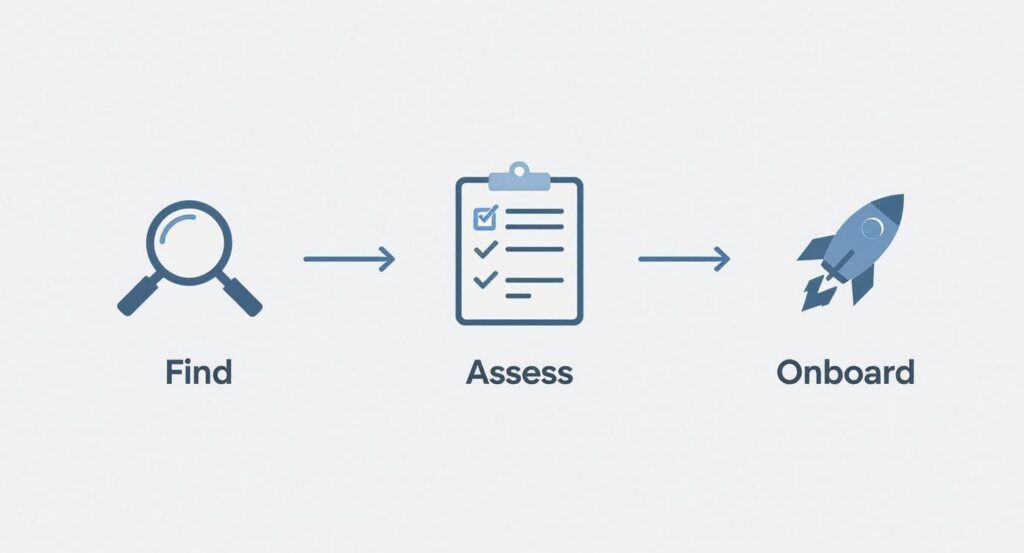
As you can see, each phase flows logically into the next, creating a hiring process that’s both structured and incredibly efficient.
The Assessment Phase Interviews and Skills Tests
Once you’ve shortlisted your top candidates, it’s time for the assessment phase. This is where video interview platforms become indispensable. They typically come in two flavours:
- Asynchronous (one-way) interviews: You send preset questions, and candidates record their answers on their own time. It’s a brilliant way to handle scheduling headaches, especially across different time zones.
- Synchronous (live) interviews: These are your classic, real-time video calls. They allow for that crucial face-to-face interaction and the kind of deep, dynamic conversation you need with a hiring manager.
But interviews are only part of the story. Online skills assessments give you hard, objective data on a candidate’s actual abilities. Whether it’s a coding challenge for a developer or a case study for a marketer, these tests are about verifying that the skills on a CV translate to real-world performance.
This entire digital-first approach is especially powerful in India, where the shift to flexible work is completely reshaping the talent market. The move has led to a staggering 34% of jobs in the country’s startup world becoming fully remote. And it’s what candidates want—organisations with clear flexible work policies are seeing a 27% higher application rate. It’s clear that virtual recruitment isn’t just a trend; it’s a major competitive advantage. You can learn more about how hiring trends are evolving in India on talentoindia.com.
To give you a clearer picture, here’s how the different stages of the virtual funnel come together, powered by specific technologies.
Stages of the Virtual Recruitment Funnel
This table breaks down the key stages of a modern virtual hiring process, showing the main activity and the technology that makes it happen.
| Stage | Primary Activity | Key Technology Used |
|---|---|---|
| Awareness & Attraction | Sourcing candidates from online job boards and social media. | Applicant Tracking System (ATS), LinkedIn Recruiter |
| Application & Screening | Collecting applications and using AI to filter for the best fits. | AI Resume Screeners, Online Application Forms |
| Engagement & Assessment | Conducting interviews and testing technical abilities. | Video Interview Platforms, Online Skills Assessment Tools |
| Offer & Onboarding | Extending offers and preparing new hires for day one. | Digital Offer Management Software, Onboarding Portals |
As you can see, each stage has a clear purpose and is supported by tools designed to make the process more efficient and effective for everyone involved.
A well-structured virtual assessment process does more than just evaluate skills; it demonstrates your organisation’s efficiency and respect for a candidate’s time, significantly strengthening your employer brand.
Finally, the journey wraps up with a smooth digital onboarding experience. Using online portals, new hires can knock out paperwork, dive into training materials, and even meet their new teammates virtually. This ensures they feel welcomed and fully prepared long before their first official day on the job.
The Technology Powering Your Hiring Engine
Great virtual recruitment doesn’t happen by magic. It runs on a smart, integrated technology stack. Think of these tools less like software and more like the gears and pistons inside your talent acquisition engine. Each component has a specific job, and they all work together to create a hiring process that’s smooth, powerful, and drives your organisation forward.
The right tech does more than just add convenience. It automates the tedious stuff, gives you invaluable data, and frees up your team to focus on what really matters: building genuine connections with top candidates. Putting together the right stack is about matching the technology to your bigger goals for growth and talent management.
The Central Nervous System: An Applicant Tracking System
At the core of any modern hiring operation, you’ll find an Applicant Tracking System (ATS). This is your digital command centre—a central hub where every piece of candidate information, every communication, and all progress is logged and neatly organised. It handles everything from posting jobs to scheduling interviews, saving you countless hours of manual admin work.
But a good ATS is more than just a database. It’s the single source of truth for your entire recruitment funnel. This ensures everyone is on the same page, improves collaboration between hiring managers, and helps you stay compliant. By centralising all this data, it also sets the stage for analytics that can show you where your process is getting stuck and where you can improve.
Intelligent Screening with AI
Artificial Intelligence (AI) is completely changing the game at the top of the recruitment funnel. AI-powered screening tools can sift through thousands of CVs in minutes, pinpointing the most relevant candidates based on skills, experience, and other criteria you set. This capability drastically cuts down the shortlisting time, letting your recruiters get in touch with qualified people faster than ever.
It’s not just about speed, either. AI plays a massive part in reducing unconscious bias. By focusing on objective qualifications instead of demographic details, these tools help create a more level playing field for everyone. The result is a more diverse and better-qualified talent pool right from the start.
An effective virtual recruitment tech stack does more than digitise old processes. It reimagines them, using automation and data to build a faster, fairer, and more candidate-centric hiring experience.
Dynamic Assessments Through Video Interviews
Video interviewing software is probably the most visible piece of the virtual recruitment puzzle, and it offers incredible flexibility. It generally comes in two flavours:
- Asynchronous Interviews: Recruiters send a list of questions, and candidates record their answers whenever it suits them. This is perfect for initial screenings and for connecting with candidates across different time zones without the logistical headaches.
- Synchronous (Live) Interviews: These are the real-time, face-to-face conversations that allow for the deep, interactive dialogue you need for final-stage interviews. They’re fantastic for assessing communication skills and seeing if someone is a good cultural fit in a dynamic setting.
These technologies are vital for creating a process that’s both flexible and accessible. For a closer look, you can find more on how a dedicated recruitment platform eases digital hiring and creates a seamless experience. When integrated properly, these tools don’t replace human interaction; they make it better by ensuring every conversation is more focused and meaningful. You end up with a smarter, more strategic way to build your team.
Why Virtual Hiring Is a Competitive Advantage
Moving to a virtual recruitment strategy is more than just a nod to convenience; it’s a strategic move that delivers real, measurable business results. Think of it as an investment in efficiency, talent quality, and how the world sees your brand. The returns are clear, starting with hefty cost reductions and leading all the way to a stronger, more diverse team.
By taking the hiring process online, organisations slash many of the big-ticket expenses tied to traditional methods. Gone are the costs for candidate and hiring manager travel, venue rentals for career fairs, and printing stacks of materials. This shift has a direct, positive impact on the bottom line, freeing up cash that can be put to better use in other critical parts of the business.
Accelerating Your Time to Hire
In a fierce market for top talent, speed is your secret weapon. Virtual recruitment leverages automation to drastically shrink hiring cycles, helping you snap up the best candidates before your competitors even get a chance. Think about it: automated screening, seamless scheduling across different time zones, and digital offer management all work together to eliminate the frustrating bottlenecks that plague conventional hiring.
This newfound speed means your teams get the people they need, faster. Productivity gaps shrink, and key projects stay on track. A quicker, more streamlined process also leaves a great impression on candidates, showing that you respect their time and run a tight ship.
Expanding Your Talent Horizon
Perhaps the single greatest advantage of virtual recruitment is its power to demolish geographical barriers. When you’re no longer restricted to hiring from a single city or region, your potential talent pool doesn’t just grow—it explodes. You suddenly have access to a global workforce, allowing you to find people with those rare, niche skills and diverse perspectives who were previously out of reach.
This isn’t just about filling roles; it’s about enriching your company culture with a wider tapestry of experiences and ideas. A more diverse workforce is a well-established driver of innovation and superior business outcomes.
Virtual recruitment transforms hiring from a localised search into a global talent discovery mission. It empowers you to build a team based purely on skill and potential, not on postal code.
The move to virtual hiring services in India is no longer a trend; it’s a mainstream strategy, particularly in sectors like tech and finance. Many employers are reporting cost savings of 30–70% or even more compared to in-house hiring, once you factor in overheads like office space and infrastructure.
Enhancing Your Employer Brand
Finally, never underestimate the power of a modern, seamless digital hiring process as a branding tool. It sends a clear message to the market: your company is forward-thinking, flexible, and tech-savvy—all qualities that top talent today actively seeks out. A positive, intuitive virtual experience creates a lasting impression, making candidates more likely to accept your offer and become advocates for your brand.
This strong perception is vital for attracting the next generation of leaders and innovators. For anyone looking to sharpen their employer identity, it’s worth learning how to scale your employer branding with online recruitment events. In the end, virtual hiring isn’t just about filling jobs; it’s about positioning your company as an employer of choice in a very crowded field.
Overcoming Common Virtual Recruitment Hurdles
While going digital-first has its perks, it also brings a whole new set of headaches. You can’t just take your old hiring methods and move them online; it’s not that simple. Nailing virtual recruitment means having a solid plan to sidestep the common traps and build a process that’s fair, strong, and actually works.
The trickiest parts are often the ones you can’t easily measure. How do you really get a feel for a candidate’s personality? How can you tell if they’ll click with your team culture when you’re just talking through a screen? Without the usual in-person vibes and casual chats, making these crucial calls gets a lot tougher.
Assessing Soft Skills and Cultural Fit
Figuring out if someone has the right soft skills—like communication, teamwork, or the ability to adapt—is a huge challenge online. Nuances get lost over video calls, where body language is limited and a bad connection can create awkward silences. This is a real problem when you’re trying to build a team that gels well together.
To get around this, hiring managers need to be much more deliberate about how they structure their interviews. Here are a few practical ideas:
- Behavioural Questions: Don’t just ask what they would do. Ask what they did. Frame questions around real situations, like, “Tell me about a time you had to work with a difficult colleague to get a project done.”
- Case Studies: Give them a real problem your team has actually faced. How they tackle it tells you volumes more about their problem-solving skills and how they might fit into your culture than any standard Q&A session.
- Involve the Team: Set up a quick, informal video chat between your final candidates and the people they’d be working with. This peer-to-peer interaction can give you priceless insights into how they’d fit into the team dynamic.
The real goal isn’t just to find someone who can do the job; it’s to find someone who will make your team better. A well-designed virtual process helps you uncover that potential by zeroing in on actions and behaviours, not just canned answers.
Navigating Technology and Data Security
Another common hurdle is making sure your tech is helping, not hurting, the candidate experience. A clunky application form or a video platform that keeps crashing can be incredibly frustrating. You risk losing great talent simply because your process is a pain to get through. A system that isn’t user-friendly can also unintentionally shut out perfectly good candidates who aren’t tech wizards.
On top of that, handling candidate data online means you have to be serious about security. With data privacy laws getting stricter, organisations must ensure their virtual recruitment process is completely compliant. This means secure data storage, crystal-clear consent forms, and being upfront about how personal information is used and protected.
Building a winning virtual hiring system means tackling these issues head-on. By structuring interviews to reveal true personality, offering clear technical support, and putting data security first, you create a process that’s not just effective, but also one that candidates can trust.
Actionable Best Practices for Hiring Success
Running a world-class virtual recruitment process isn’t just about having the right tech stack; it’s about putting the human experience front and centre. The real goal is to build genuine connections within a digital world, making sure every candidate feels seen, valued, and respected from their first click to their final interview.
This starts with clear, proactive communication at every single stage. Sure, an automated email confirming an application is a start, but a personalised follow-up from a recruiter makes a world of difference. Transparency is just as critical—let candidates know the timeline, what to expect next, and always offer constructive feedback, even if they aren’t the right fit this time.
Cultivating a Human-Centric Digital Experience
The candidate’s journey needs to be intuitive and completely seamless. A clunky, frustrating application process can turn top talent away before you even know they were interested. Your digital platforms have to be easy to navigate, mobile-friendly, and ask for minimal effort from the applicant.
Here are a few proven strategies to create an experience that stands out:
- Train Your Team: Give your hiring managers the tools they need for effective online interviews. This means teaching them how to read digital body language, build rapport through a screen, and ask behavioural questions that get to the heart of a candidate’s character.
- Personalise Your Outreach: Use the data you have about a candidate to tailor your communication. Mentioning a specific project from their portfolio or a shared connection shows you’ve done your homework and that you see them as an individual, not just another application.
- Prioritise Feedback: Build a structured feedback loop into your process. A transparent approach doesn’t just help unsuccessful candidates grow; it dramatically boosts your reputation as an employer.
The most effective virtual hiring processes feel less like a transaction and more like a conversation. Success lies in using technology to facilitate human connection, not replace it.
Using Data to Refine and Optimise
To keep improving your virtual recruitment strategy, you need to follow the data. Dig into key metrics like time-to-hire, cost-per-hire, and candidate satisfaction scores to find bottlenecks and see where you can do better. This data-driven approach takes the guesswork out of refinement and gives you a clear path forward.
This is especially true in India, where the hiring outlook is incredibly strong. An impressive 94% of employers are planning to recruit, and 72% are looking to expand their workforce. This growth is happening as AI becomes more integrated, which 87% of Indian employers see as a force for creating new roles, not a threat to existing ones. It’s clear that virtual recruitment isn’t just about filling current positions; it’s about actively expanding the talent ecosystem.
By putting these best practices into action, you can make sure your hiring process is smooth, professional, and ultimately, effective. For more guidance, check out our guide to ease the online recruitment process for HR professionals.
Frequently Asked Questions
Making the switch to a digital-first hiring model naturally brings up a few questions. As a CHRO, you want to get it right. Here’s a quick look at some of the most common queries we hear.
Is Virtual Recruitment a Good Fit for Every Role?
Frankly, no. It’s brilliant for knowledge-based and remote positions where skills can be assessed through conversation and online tests. But for roles that require physical dexterity—think manufacturing or skilled trades—it has its limits.
The smart play here is a hybrid model. Use your virtual toolkit for the initial heavy lifting like screening and first-round interviews. Then, bring your top candidates in for a practical, in-person assessment. This way, you get the efficiency of digital hiring without sacrificing the certainty that someone has the tangible skills needed for the job.
How Do We Keep the “Human” in Human Resources?
This is a big one. It’s easy to lose that personal touch when you’re not in the same room. The key is being deliberate about creating connection.
– Cameras On, Always: Make video a non-negotiable for live interviews. So much is communicated through non-verbal cues, and seeing someone’s face builds immediate rapport.
– Ditch the Generic Emails: Personalise your communication. Imagine the impact of a short, genuine video message from the hiring manager sent to a top candidate. It stands out.
– Set Up a Virtual Coffee Chat: Before an offer is made, arrange a quick, informal video call between your final candidate and a few team members. It’s a low-pressure way for everyone to gauge cultural fit and see if the chemistry is there.
What’s the Single Biggest Mistake to Avoid?
The most common pitfall is trying to force your old, in-person process into a new, online format. It just doesn’t work. Virtual recruitment isn’t about digitising your existing steps; it’s about completely rethinking the journey from a digital perspective.
Don’t just buy the tools and call it a day. That leads to a clunky, disjointed experience for candidates. The goal is to design a seamless, engaging, and human-first process that was born to be digital from the very start.
By thinking through these points, you can build a virtual recruitment framework that’s not just efficient, but genuinely effective.
Ready to build a world-class hiring engine? Let Taggd handle the complexities of recruitment so you can focus on building your team.