Executive Summary
India stands at a pivotal inflection point in its economic and environmental history. The nation’s ambitious climate commitments (500 GW of non-fossil-fuel capacity by 2030, net-zero emissions by 2070, and a USD 15 trillion green economy by mid-century) are transforming the country’s labour market in unprecedented ways. Green and sustainability jobs are no longer peripheral; they are central to corporate strategy, regulatory compliance, and long-term competitiveness.
Drawing on the latest data from the ILO, World Bank, CEEW, LinkedIn, SEBI, India Decoding Jobs 2026, India Skills Report 2026, and Taggd’s own proprietary hiring intelligence, this whitepaper answers three critical questions:
- What is the true scale of India’s green jobs opportunity, and where is it concentrated?
- Where does the talent gap lie, and what is the financial cost of under resourcing your green workforce?
- What is the strategic talent acquisition playbook for enterprises aiming to lead the sustainability transition?
The findings are clear: the green economy is not a CSR talking point. It is the next major wave of India’s economic growth, and the organisations that move earliest to build green capabilities will gain a structural competitive advantage that will compound over decades.
Introduction: The 2026 Compensation Imperative
1.1 Defining the Green Economy Landscape
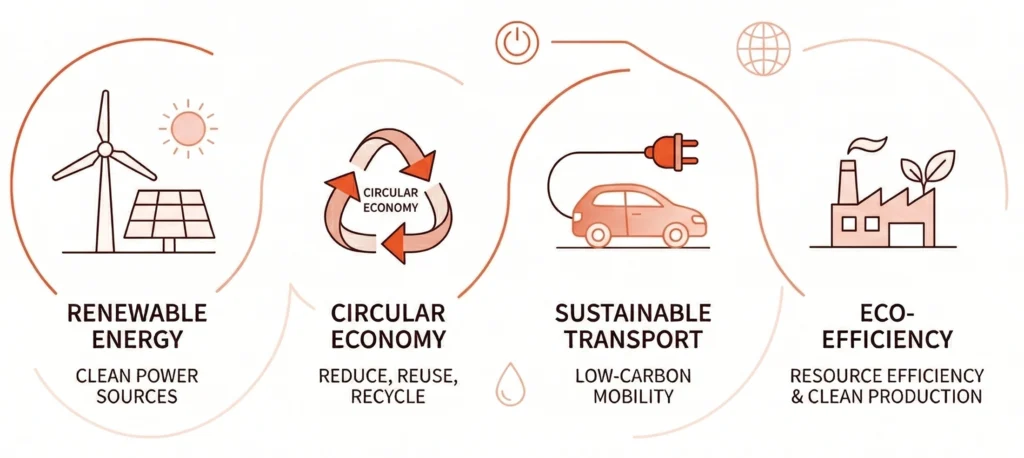
The International Labour Organization (ILO) defines green jobs as “decent jobs that contribute to preserving or restoring the environment, be they in traditional sectors such as manufacturing and construction, or in new, emerging green sectors such as renewable energy and energy efficiency.” In India, the Skills Council for Green Jobs (SCGJ) has operationalised this definition to span five
mega-sectors: renewable energy, electric vehicles (EVs), green construction, sustainable textiles, and waste management.
What makes India’s green transition distinctive is its dual character: the country must simultaneously decarbonise existing high-employment industries while rapidly scaling new green sectors. This creates an extraordinary talent
management challenge, one that requires business leaders to think not just about recruiting but about large-scale workforce transformation.
1.2 The Numbers That Every Boardroom Must Know
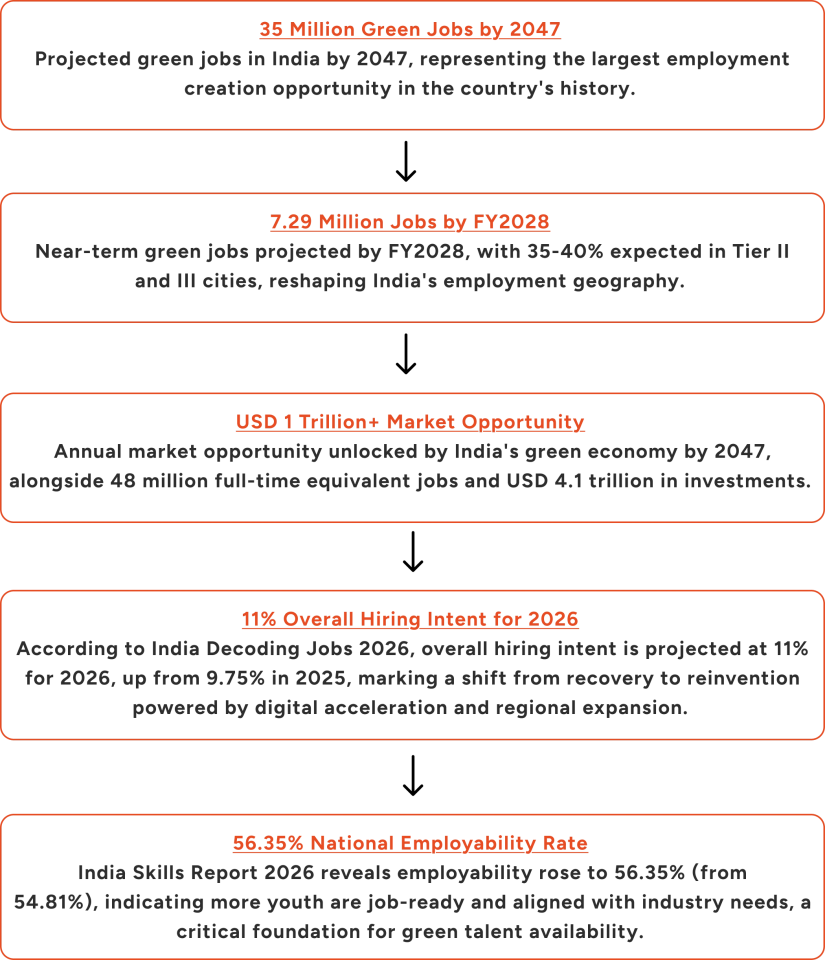
These are not speculative numbers. They are projections rooted in enacted government policy, deployed capital, and measured sector-by-sector employment multipliers. For business leaders, the implication is clear: every
enterprise operating in India will be touched by the green transition, and many will be reshaped by it.
1.3 India’s Global Green Partnerships: Accelerating Talent Mobility and Technology Transfer
India is not building its green economy in isolation. The country has strategically forged bilateral and multilateral partnerships that are creating cross-border talent pipelines, technology transfer mechanisms, and collaborative training frameworks. These partnerships are directly shaping India’s green workforce development and
creating international career pathways for Indian sustainability professionals.
India-France: Partnership for the Planet
France has committed over €4 billion through the French Development Agency (AFD) for nearly 100 projects in India since 2008, with 83% contributing to climate change mitigation and adaptation. The Indo-French Horizon 2047 Roadmap elevated the “Partnership for the Planet” as one of three strategic pillars, focusing on:
- Green Hydrogen: The Indo-French Roadmap on Development of Green Hydrogen (October 2022) aims to create over 6 lakh jobs by 2030 through India’s Green Hydrogen Mission, with France contributing electrolyzer technology and certification systems.
- Solar Energy: Through the International Solar Alliance (co-founded by India and France), both nations are promoting solar energy deployment and training programs.
- Nuclear Energy: The Jaitapur Nuclear Power Project and collaboration on small modular reactors are creating specialized nuclear engineering roles.
The Indo-French Year of Innovation in 2026 will spotlight collaborative green technologies, creating opportunities for Indian sustainability professionals to work on joint Indo-Pacific biodiversity initiatives.
India-Germany: Green Skills and Technology Corridor
Germany has committed up to €10 billion till 2030 for India’s green transition under the Green and Sustainable Development Partnership (2022). Key workforce development initiatives include:
- Indo-German Green Skills Programme: Funded with €3 million, this program trains workers in solar energy and electric vehicle technologies.
- Green Hydrogen Collaboration: The Indo-German Green Hydrogen Roadmap (October 2024) established the Indo-German Energy Forum Subgroup V on Green Hydrogen, focusing on production, storage, and distribution expertise.
- Indo-German Centre of Excellence for Skilling in Renewable Energy: New initiative for curriculum development, industry collaboration, and job-market oriented training.
- Skilled Migration: Germany’s aging population requires an additional 350,000 skilled workers for its energy transition by 2030, creating opportunities for trained Indian professionals in HVAC, plumbing, and renewable energy roles.
As of 2025, around 2.8 lakh Indians reside in Germany, with India becoming the largest source of international students (over 42,000).
India-Australia: Renewable Energy Partnership
The India-Australia Renewable Energy Partnership, launched in November 2024, outlines 8 key collaboration areas including solar PV, green hydrogen, energy storage, and capacity building. Both countries are working together to build the future renewable workforce, including through skills and training.
The India-Australia Green Hydrogen Taskforce Recommendation Report (accepted October 2025) and a world-class rooftop solar skills training centre in India are creating cross-border training pathways.
India-Japan, UK, and EU Partnerships
- India-Japan: Deepened cooperation in carbon capture, biofuels, green chemicals, and advanced technologies (August 2025)
- India-EU: The EU-India Clean Energy and Climate Partnership (third phase 2025-2028) includes renewable hydrogen, offshore wind, and energy efficiency collaboration
- Multilateral: India strengthened renewable energy cooperation with the UK, Norway, Portugal, Denmark, Brazil, and Jordan in 2025
Strategic Implication for Talent Leaders: These partnerships are creating dual talent pathways: Indian professionals can work on international green projects while building expertise that feeds back into India’s domestic green economy. Organisations that leverage these international training frameworks and bilateral talent mobility programs will access subsidized upskilling and global exposure for their sustainability workforce.
Sector-by-Sector Breakdown: The green employment opportunity is distributed across multiple high-growth sectors, each with distinct talent profiles and hiring timelines. The following table provides a strategic overview for workforce planning:
| Specialization | Premium Range | Scarcity Level |
| Renewable Energy (Solar, Wind) | 1 Million+ by 2030; 3.26M solar by 2050 | Solar engineers, wind turbine technicians, energy auditors, grid managers |
| Electric Vehicles (EV) Ecosystem | 10 Million direct jobs by 2035 | Battery engineers, EV software architects, charging infra planners, robotics specialists |
| Green Construction | 3.5 Million by 2030 | Sustainability architects, energy efficiency consultants, LEED/GRIHA-certified engineers |
| Regenerative Agriculture | 6–7 Million by 2030 | Drone operators, soil technicians, climate smart farming advisors, agroforestry specialists |
| Circular Economy / Waste Management | 1.2 Million by 2025 | E-waste specialists, waste-to-energy engineers, recycling process managers |
| ESG & Sustainability Reporting | Fastest growing white-collar segment | ESG analysts, BRSR reporting specialists, carbon accountants, sustainability managers |
| Sustainable Textiles | 50M+ workers to be reskilled | Circular design specialists, sustainable supply chain managers, organic certification experts |
Geographic Hotspots: Where Green Jobs Are Being Created Green employment is currently concentrated in India’s major metros, but the geography is shifting rapidly. This has significant implications for hiring strategy
and compensation benchmarking.
Metro Hubs: Mumbai, Bengaluru, Delhi-NCR — Currently the primary centres for ESG roles, green tech startups, and sustainability leadership positions. Emerging Tier II Hubs: Jaipur, Indore, Visakhapatnam, Coimbatore, Bhubaneswar, Chandigarh, Ahmedabad — These cities are projected to account for 35–40% of all new green jobs by FY2028.
Industrial Corridors: Maharashtra, Tamil Nadu, Gujarat, Haryana — Transitioning auto manufacturing hubs driving EV talent demand.
Rural Frontlines: Regenerative agriculture and clean cooking initiatives are creating millions of rural green jobs, particularly for women.
According to India Decoding Jobs 2026, Tier-2 cities now account for 32% of all planned hiring, rapidly closing the gap with Tier-1 hubs that hold 53%. This decentralization represents both a cost-optimization opportunity and a strategic imperative for organizations building distributed green talent networks.
1.4: Industry-Specific Green Job Opportunities Across India’s Core Sectors
While renewable energy and EVs dominate green jobs headlines, India’s sustainability transition is creating green roles across every major industry. The following sector-by-sector analysis reveals where traditional industries are
creating new sustainability positions:
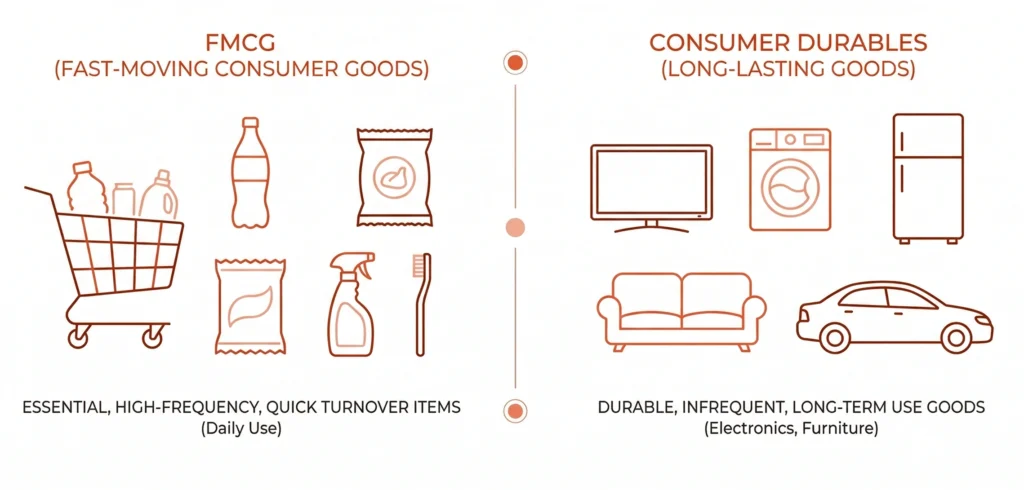
FMCG and Consumer Durables
The FMCG sector is undergoing a packaging revolution driven by Extended Producer Responsibility (EPR) regulations and consumer demand for sustainable products. 25 out of 27 Hindustan Unilever factories operate on zero-liquid discharge systems, while ITC has committed to 100% recyclable packaging.
Key Green Roles:
- Sustainable Packaging Engineers: Designing biodegradable and compostable packaging solutions (India’s biodegradable packaging market reached USD 3.51 billion in 2024)
- Circular Economy Specialists: Managing EPR compliance and reverse logistics
- Water Resource Managers: Operating ZLD systems and water recycling infrastructure
- Sustainable Procurement Managers: Sourcing recycled materials and bio based alternatives
- ESG Reporting Analysts: Managing BRSR compliance for FMCG listed entities
Where to find these roles

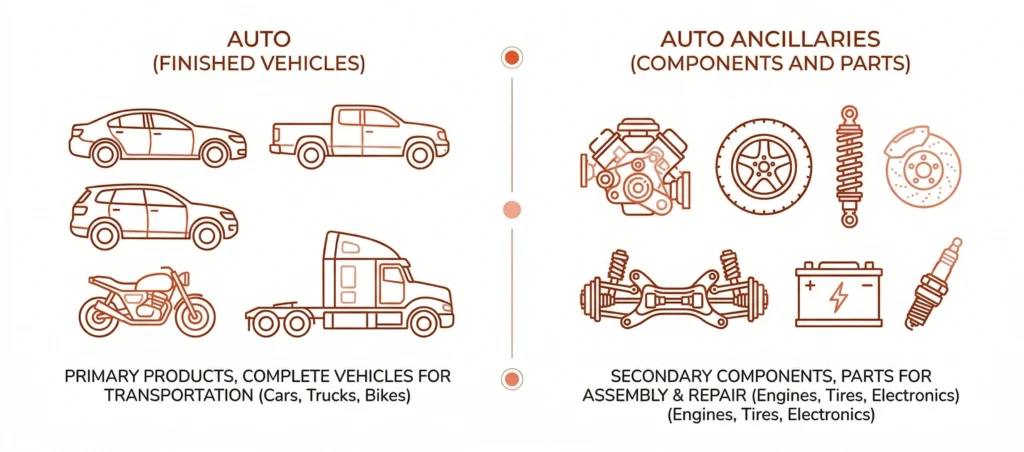
Auto and Auto Ancillaries
EV adoption is gathering pace, with India selling 2.3 million EVs in FY25. The EV ecosystem could generate 10 million jobs by 2035.
Key Green Roles:
- EV Battery Engineers: Designing and testing lithium-ion, solid-state, and sodium-ion battery systems
- Charging Infrastructure Planners: Deploying 2.9 million charging stations by 2030
- Power Electronics Specialists: Developing inverters, converters, and motor controllers
- Automotive Software Architects: Building battery management systems (BMS) and vehicle-to-grid (V2G) platforms
- Lifecycle Assessment Analysts: Measuring carbon footprint across the vehicle value chain
Where to find these roles

Heavy Engineering and Manufacturing
Tata Steel plans to cut CO₂ intensity to below 2 tCO₂ per tonne of crude steel by 2025, driving demand for low-carbon engineering expertise.
Key Green Roles:
- Energy Efficiency Engineers: Implementing waste heat recovery and cogeneration systems
- Scrap-Based Production Specialists: Transitioning from blast furnaces to electric arc furnaces
- Carbon Accounting Engineers: Measuring Scope 1, 2, and 3 emissions across manufacturing operations
- Green Supply Chain Managers: Sourcing low-carbon raw materials and optimizing logistics
- Industrial IoT Specialists: Deploying sensors for real-time energy monitoring and optimization
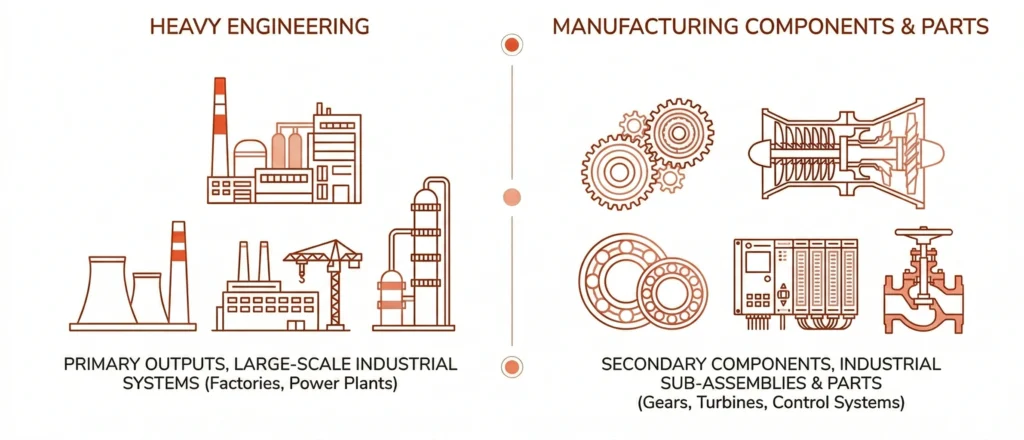
Where to find these roles

GCC (Global Capability Centers)
The GCC market in India is projected to reach USD 100 billion by 2030 with around 2.5 million roles, with hiring shifting toward platform engineering, cybersecurity, and AI-driven sustainability analytics.
Key Green Roles:
- ESG Data Scientists: Building AI models for ESG risk scoring and climate scenario analysis
- Sustainability Software Engineers: Developing carbon accounting platforms and ESG dashboards
- Climate Risk Quantitative Analysts: Modeling physical and transition climate risks for financial institutions
- Green FinTech Product Managers: Launching green bonds, sustainability linked loans, and carbon credit trading platforms
- Responsible AI Specialists: Ensuring AI systems meet environmental and ethical standards
Where to find these roles

EPC (Engineering, Procurement, and Construction)
Green construction could create 3.5 million jobs by 2030, with energy-efficient projects generating almost double the employment per unit of investment.
Key Green Roles:
- LEED/GRIHA-Certified Project Managers: Delivering green-certified buildings
- Building Energy Modelers: Using software like EnergyPlus and IES VE for energy simulations
- Sustainable Materials Procurement Specialists: Sourcing low-carbon cement, recycled steel, and mass timber
- Net-Zero Construction Consultants: Designing buildings with on-site renewable energy and passive cooling
- Green Certification Auditors: Ensuring compliance with IGBC, GRIHA, and international green building standards
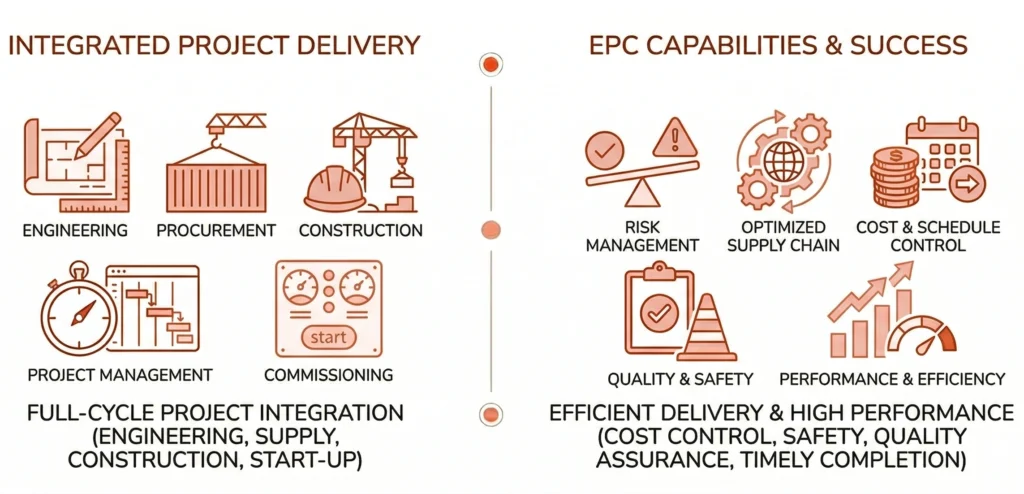
Where to find these roles

Pharma and Life Sciences
The pharmaceutical sector is facing pressure to reduce its environmental footprint, particularly around wastewater treatment and cold chain logistics.
Key Green Roles:
- Green Chemistry Researchers: Developing synthesis pathways that minimize hazardous waste
- Sustainable Manufacturing Engineers: Implementing continuous manufacturing and solvent recovery systems
- Cold Chain Sustainability Managers: Transitioning to natural refrigerants and solar-powered cold storage
- Pharmaceutical Waste Management Specialists: Treating and disposing of active pharmaceutical ingredients (APIs) safely
- Life Cycle Assessment (LCA) Analysts: Measuring environmental impact from R&D through distribution
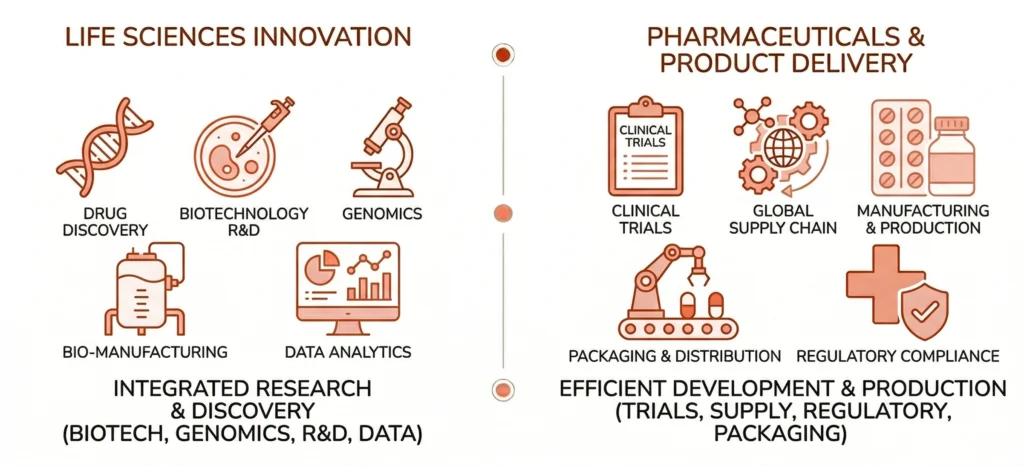
Where to find these roles

Oil & Gas
The oil and gas sector is undergoing a dual transition: optimizing existing operations while diversifying into renewables and green hydrogen.
Key Green Roles:
- Carbon Capture, Utilization, and Storage (CCUS) Engineers: Designing CO₂ capture systems for refineries
- Green Hydrogen Plant Managers: Operating electrolyzers powered by renewable energy
- Methane Leak Detection Specialists: Using satellite imagery and drones to identify fugitive emissions
- Energy Transition Strategy Consultants: Helping oil majors diversify into solar, wind, and biofuels
- Flare Gas Recovery Engineers: Capturing and monetizing gas that would otherwise be flared
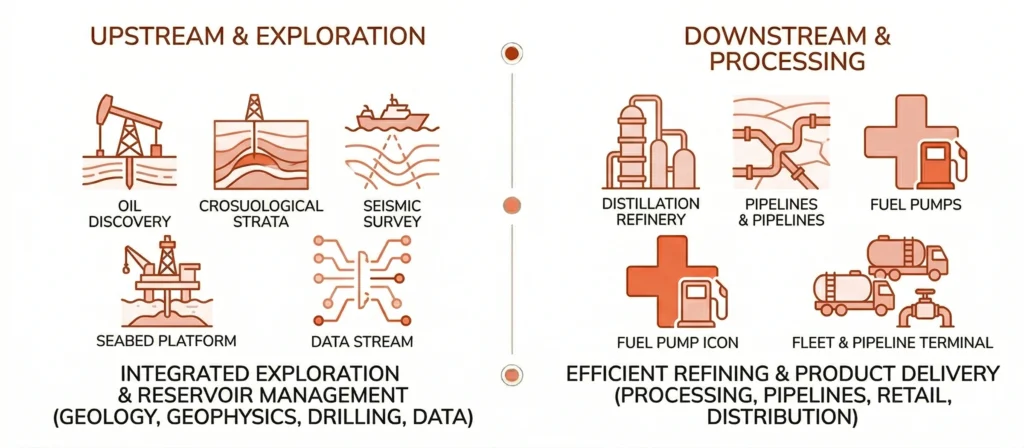
Where to find these roles

From FMCG and BFSI to heavy engineering and GCCs, multiple industries are expanding sustainability hiring as regulatory and investor pressure intensifies.
Power (Thermal & Renewables)
India’s renewable capacity reached 190 GW by mid-2025, targeting 500 GW by Solar energy alone is projected to host 3.26 million jobs by 2050.
Key Green Roles for Thermal Power:
- Thermal Plant Flexibilization Engineers: Retrofitting coal plants for rapid ramp-up/ramp-down to accommodate intermittent renewables
- Flue Gas Desulfurization (FGD) Specialists: Installing pollution control equipment to meet emission norms
- Coal-to-Renewable Transition Planners: Repurposing thermal plant sites for battery storage or solar park
Key Green Roles for Renewables:
- Solar PV Installers and Technicians: Installing and maintaining rooftop and utility-scale solar
- Wind Turbine Technicians: Performing preventive maintenance and blade repairs
- Grid Integration Engineers: Managing variability and ensuring grid stability
- Energy Storage Specialists: Deploying battery energy storage systems (BESS) and pumped hydro
- Power Purchase Agreement (PPA) Analysts: Structuring renewable energy offtake agreements
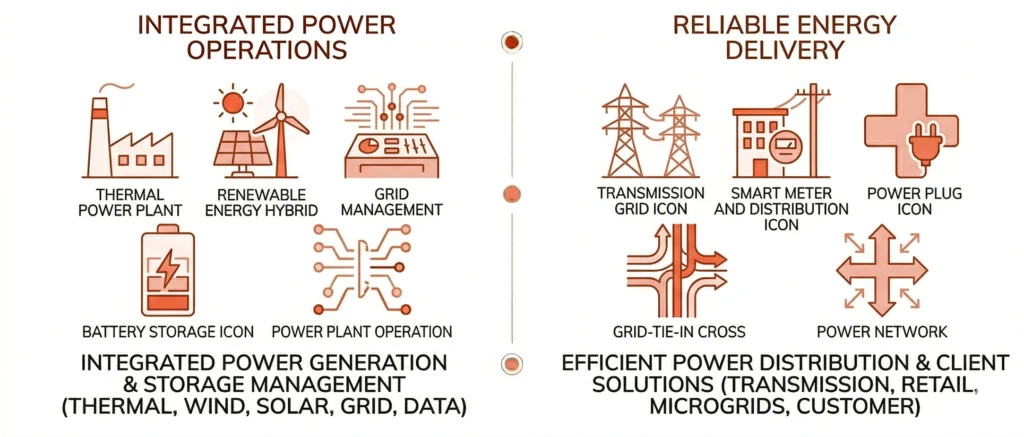
Where to find these roles
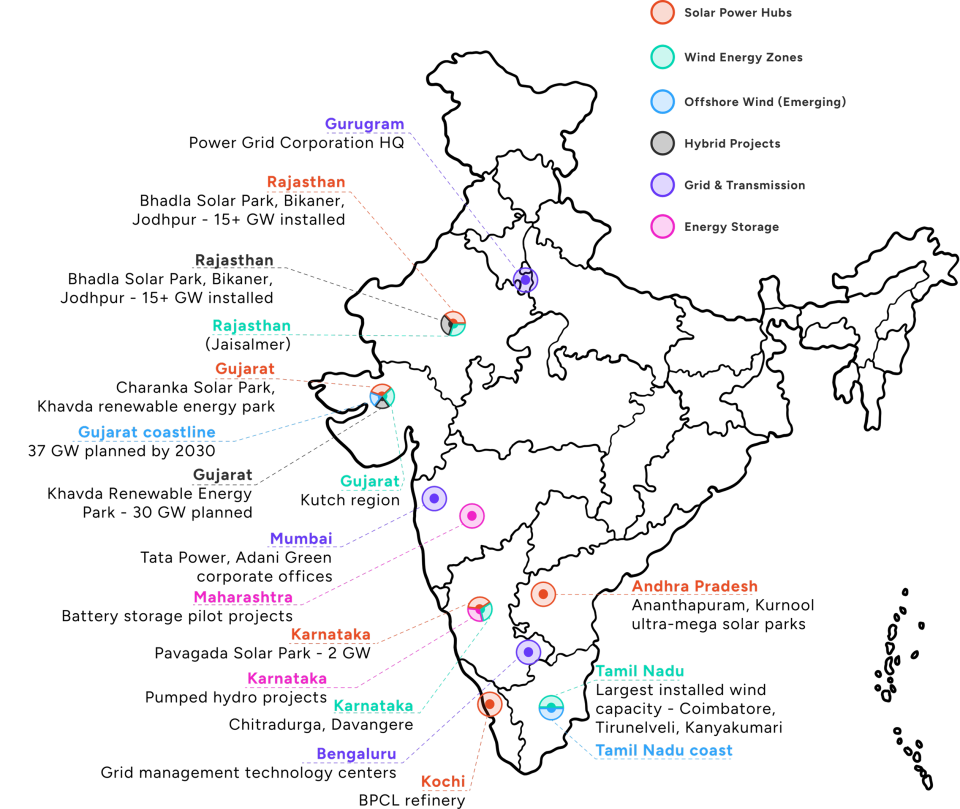
Many of these roles did not exist a decade ago. Discover the fastest growing and emerging green jobs that are redefining India’s talent landscape.
The Green Talent Crisis: A Strategic Risk Hiding in Plain Sight
2.1 The Demand-Supply Chasm
India’s green ambitions are colliding with a harsh workforce reality. As sustainability hiring in India accelerates across sectors, demand is outpacing supply at an unprecedented rate. This is not a pipeline problem that will resolve itself. It is a structural talent gap that requires deliberate organisational strategy.
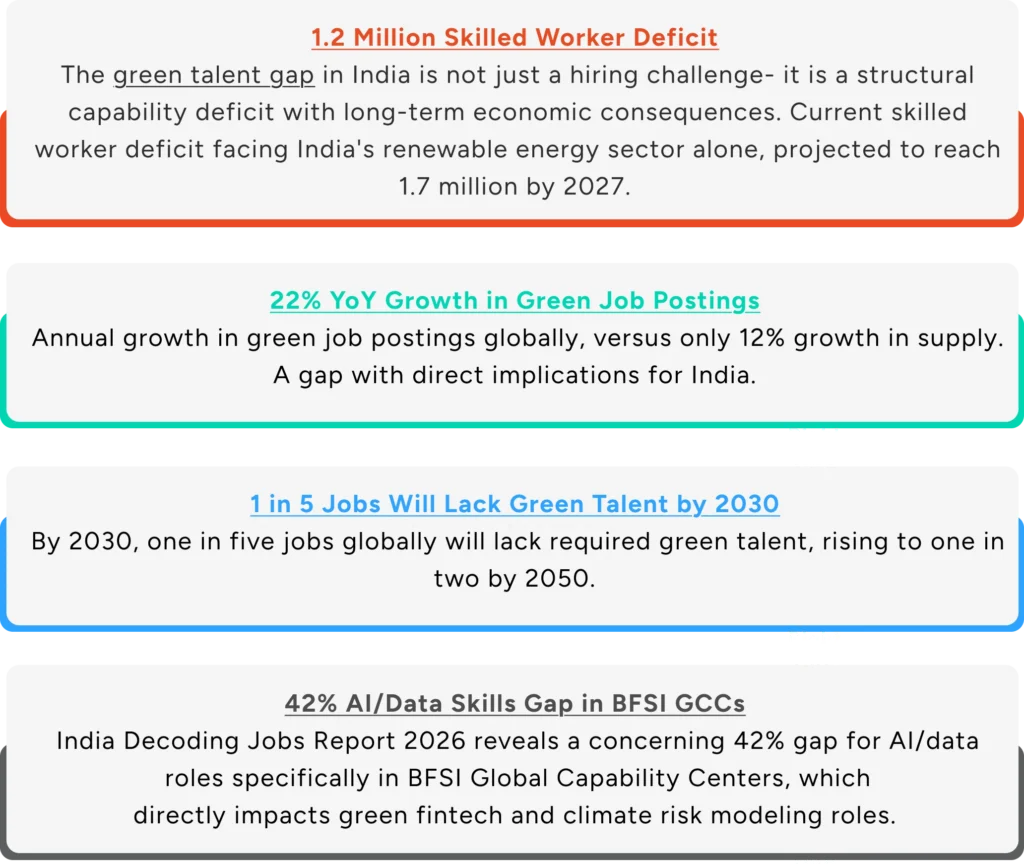
The Financial Cost of the Talent Gap
The talent shortage has produced a measurable salary premium war. Organisations that have not built proactive green talent pipelines are now competing in a seller’s market, paying premium prices for a limited pool of candidates.
| Role Category | Salary Range (INR per annum) |
| Entry-level ESG Analyst / Sustainability Executive | ₹3.6 – 8.3 LPA |
| Renewable Energy Project Manager | ₹3.6 – 16.6 LPA; Senior roles ₹12+ LPA |
| Chief Sustainability Officer (CSO) | ₹68.7 LPA |
| Energy Efficiency Consultant | ₹12.5 LPA |
| Carbon Accounting Specialist | ₹6 – 14 LPA |
| EV Battery Engineer | ₹12.5 LPA |
| Green Finance / Climate Risk Analyst (Senior) | ₹30+ LPA |
Most strikingly, green professionals command a premium of up to 40% over carbon intensive peers, according to a World Bank analysis of Indian labour markets. This wage inflation is being driven by a combination of regulatory mandates, investor pressure, and growing corporate sustainability commitments, and it is accelerating.
2.3 Root Causes of the Green Skills Deficit
Understanding why the talent gap exists is essential to designing effective solutions. Taggd’s analysis identifies six structural root causes:
1. Nascent and Fragmented Training Ecosystem: While India’s Skill Council for Green Jobs (SCGJ) has trained over 1 million individuals and developed 77 nationally approved qualifications across 900+ institutions, the overall pipeline remains far too thin relative to demand. The government’s current skilling budget of approximately ₹5-6 billion per annum w ould need to be scaled tenfold to bridge the gap.
2. Unrealistic Experience Requirements: “Companies ask for 10 years of experience in a field that’s barely a decade old,” notes a sustainability professional who served as an Ashoka-EDF Climate Corps Fellow. Hiring managers are applying legacy recruitment frameworks to emerging roles, systematically excluding candidates with adjacent experience.
3. Low Awareness Among Candidates: Only 35% of urban Indian youth can identify a green job or know how to access relevant training. The green jobs ecosystem is suffering from a fundamental information asymmetry. There are millions of potential candidates who do not know the opportunity exists.
4. ESG as Compliance, Not Strategy: “There’s a severe shortage of people with genuine ESG expertise because it’s a niche skill, and the need for formal training is underestimated,” says the Head of Sustainability at Tech Mahindra. Many organisations are treating ESG hiring as a reporting function rather than a strategic capability.
5. Gender Gap in Green Talent: Women hold only 10% of green skills globally, compared to 17% among men. The gender gap in green leadership is growing, having widened by 25% over seven years. However, there’s a positive countertrend: India Skills Report 2026 reveals that women’s employability (54%) has surpassed men’s (51.5%) for the first time, driven by hybrid work models and digital skills growth. This creates a strategic opening for inclusive green talent strategies.
6. Unstructured Hiring Ecosystems: Hiring across India’s climate sector remains fragmented. Many companies struggle to define roles clearly or align hiring requirements with actual skill demand, resulting in even well-trained candidates being filtered out by HR systems that haven’t adapted.
The Regulatory Imperative: SEBI’s BRSR & Corporate Accountability
3.1 ESG Has Moved From Voluntary to Statutory
The single most consequential catalyst for green talent demand in corporate India is not altruism or investor sentiment. It is regulatory mandate. SEBI’s Business Responsibility and Sustainability Reporting (BRSR) framework has fundamentally transformed the calculus for India’s listed companies.
| SEBI BRSR Timeline | Requirement |
| FY 2022-23 | Mandatory BRSR filing for top 1,000 listed companies by market cap |
| FY 2023-24 | BRSR Core introduced: Top 150 companies must disclose on 9 key ESG parameters |
| FY 2024-25 | Top 250 companies: BRSR Core assurance + voluntary Scope 3 & value chain disclosures |
| FY 2025-26 | Top 250 companies: Mandatory value chain ESG reporting |
| FY 2026-27 | Top 500 companies: Full BRSR Core assurance; value chain assurance begins |
3.2 What BRSR Means for Your Talent Strategy
The BRSR framework is not just a reporting exercise. It is a talent architecture requirement. To comply with SEBI’s nine principles, companies need a range of specialised roles that many organisations are only beginning to build:
- Scope 1, 2 and 3 emissions tracking requires carbon accounting specialists and environmental data engineers
- Water and waste intensity reporting requires environmental engineers embedded in operations teams
- Wage parity and diversity disclosures require HR analytics professionals who understand sustainability metrics
- Value chain ESG reporting (from FY2025-26) requires supply chain sustainability managers who can work across the MSME ecosystem
- Third-party assurance requirements demand internal audit professionals trained in ESG frameworks
The non-compliance penalty under SEBI regulations is ₹2,000 per day for failure to submit BRSR disclosures. But the reputational and investor-relations risk of poor or unverifiable ESG data far exceeds any financial penalty.
3.3 Technology Enabling the Green Transition
For technology leaders, the sustainability transition is creating entirely new technology domains. The green economy is intrinsically digital:
- AI and IoT in energy management systems (EMS) require embedded software engineers with environmental systems knowledge
- GIS and satellite imagery for biodiversity and carbon monitoring demand data scientists trained in environmental science
- Blockchain for carbon credit verification requires distributed systems architects with sustainability expertise
- Climate risk modelling for financial institutions requires quantitative analysts with climate science literacy
India Skills Report 2026 confirms that India holds 16% of global AI talent, projected to reach 1.25 million professionals by 2027. Over 90% of Indian employees already use Generative AI tools, signaling accelerated digital integration that can power green innovation.
The Gen Z Factor: Why Employer Brand Depends on Green Credentials
4.1 The Workforce Is Demanding Sustainability, Not Just Requesting It
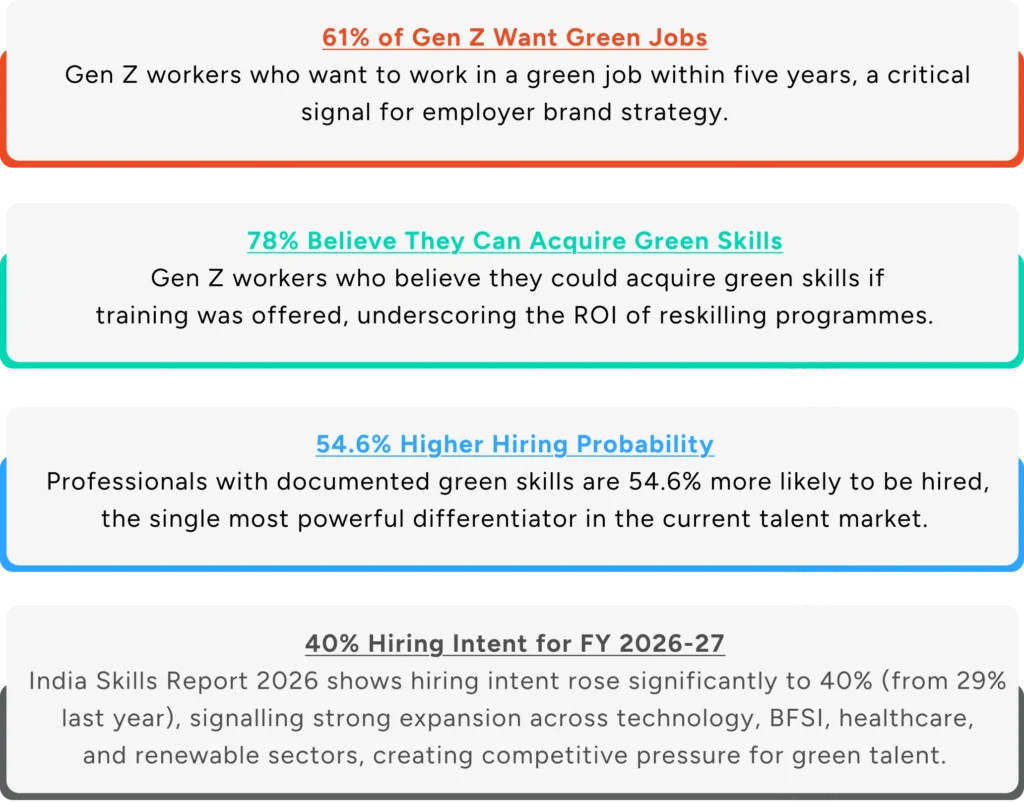
A profound demographic shift is reshaping the talent market. Gen Z, which will constitute one-third of the global workforce within five years, has made sustainability a non-negotiable dimension of employment decisions. For
organisations facing talent competition, green employer branding is no longer optional.
4.2 The Employer Brand Imperative
Indian companies with credible sustainability commitments are reporting measurable improvements in talent acquisition metrics. Engineering graduates and MBA professionals increasingly evaluate potential employers on environmental and social performance, not just on compensation packages.
Organisations that invest in transparent ESG reporting, green skills development programmes, and visible sustainability leadership are finding:
- Reduced time-to-hire for critical sustainability and technology roles
- Lower offer rejection rates from top-tier candidates
- Higher retention among millennial and Gen Z employees, reducing costly attrition
- Stronger campus recruitment pipelines from tier-1 engineering and management institutes
India Skills Report 2026 reveals that 92.8% of students seek internships or hands on exposure, especially high in Karnataka, Madhya Pradesh, and Tamil Nadu, creating opportunities for organisations to build green talent pipelines through experiential learning programmes.
Taggd’s Strategic Playbook for Green Talent Acquisition
Based on Taggd’s experience deploying talent solutions for India’s fastest-growing sustainable enterprises, and drawing on proprietary hiring intelligence, we present a five-pillar strategic framework for green talent acquisition:
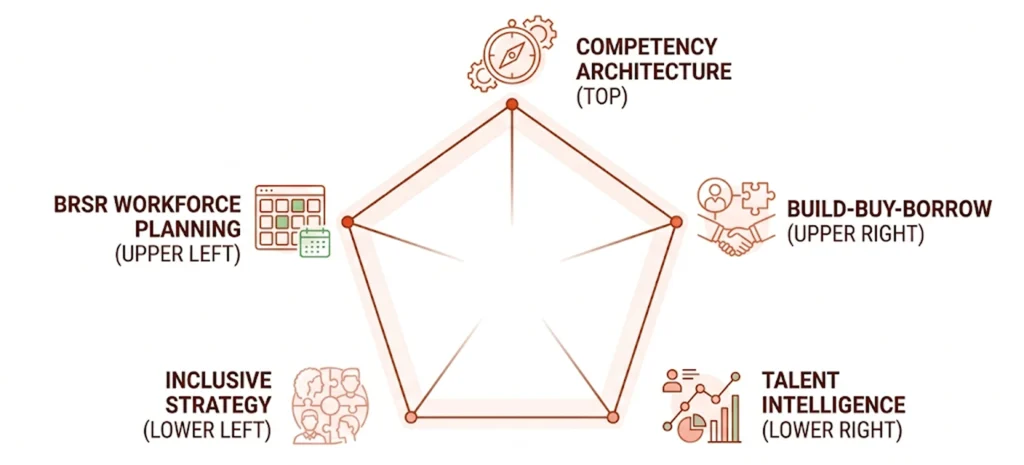
Pillar 1: Competency Architecture for Green Roles
The most common hiring failure in the green space is importing legacy competency frameworks into sustainability roles. Organisations must develop new competency architectures that reflect the unique requirements of green work, including technical sustainability literacy, systems thinking, regulatory knowledge, and cross functional collaboration.
Action Steps:
- Conduct a Green Skills Audit across all business units to map current capability vs. emerging requirements
- Develop role-specific competency matrices for all sustainability-adjacent positions
- Eliminate experience requirements based on role age. Prioritise competency over tenure
Leading enterprises are now adopting structured sustainability hiring strategies that combine reskilling, talent intelligence, and inclusive workforce design.
Pillar 2: Build-Buy-Borrow Strategy
Given the supply constraint, no organisation can rely on external hiring alone to meet its green talent needs. A structured build-buy-borrow strategy is essential:
- BUILD: Invest in internal reskilling programmes aligned to your sustainability roadmap. Tech Mahindra’s internal green IT certification model is a replicable benchmark.
- BUY: Partner with specialised talent platforms like Taggd that maintain pre-vetted green talent pools across all levels and sectors.
- BORROW: Engage green freelancers, consultants, and fractional CSOs for specialised short-term requirements while building internal capability.
India Skills Report 2026 shows that India’s gig and freelance workforce is expected to reach 23.5 million by 2030, with project-based hiring growing 38%, creating flexible pathways for green talent acquisition.
Pillar 3: Talent Intelligence-Driven Hiring
India’s green talent market is moving too fast for traditional recruitment processes. Organisations need real-time talent intelligence: market compensation data, emerging skill demand signals, and competitor talent mapping to make high confidence hiring decisions.
Action Steps:
- Use AI-powered talent platforms to benchmark green role compensation against real-time market data
- Identify passive candidates with adjacent skills (engineering, data science, supply chain) who can be upskilled into green roles
- Track skill emergence signals from LinkedIn, SCGJ certifications, and academic programmes to identify talent early
India Decoding Jobs 2026 reveals that 44% of organisations have already adopted AI tools in hiring, from resume screening to predictive analytics, marking a clear shift toward smarter, faster, and more unbiased hiring processes.
Pillar 4: Inclusive Green Talent Strategy
Given that women currently hold only 10% of green skills globally, organisations that invest in inclusive hiring will access talent that competitors overlook. Moreover, India Skills Report 2026 shows that women’s employability (54%) has surpassed men’s (51.5%) for the first time, creating a significant untapped talent pool.
Action Steps:
- Design entry-level green apprenticeship programmes targeting women, rural youth, and workers transitioning from carbon-intensive industries
- Partner with SCGJ-certified institutions to access trained candidates who are not visible in traditional recruiting channels
- Create pathways for informal sector workers, particularly in waste management and agriculture, to enter formal green employment
Pillar 5: BRSR-Aligned Workforce Planning
The most forward-thinking talent leaders are using India’s BRSR disclosure roadmap as a workforce planning calendar. Each new mandatory disclosure requirement creates a new capability need. Organisations that anticipate these needs 12-18 months ahead will avoid the talent scramble that reactive organisations face.
| BRSR Requirement (Upcoming) | Talent Capability Needed |
| Scope 3 GHG emissions disclosure (FY 2024-25) | Carbon accounting specialists; supply chain sustainability analysts |
| Value chain ESG reporting (FY 2025-26) | Supply chain ESG managers; MSME engagement specialists |
| Full BRSR Core assurance (FY 2026-27) | Internal audit ESG specialists; climate data engineers |
| Carbon Credit Program reporting | Green credit analysts; environmental project managers |
| Climate risk disclosure (RBI framework) | Climate risk analysts; scenario modelling specialists (for BFSI) |
The Business Case: Green Talent as Competitive Advantage
6.1 Framing Green Talent as Investment, Not Cost
For financial decision-makers, the green talent conversation must be reframed from an ESG compliance cost to a strategic investment with quantifiable returns. The evidence is compelling:
| Investment in Green Talent | Measurable Business Return |
| Hiring a Chief Sustainability Officer | Access to green bonds & ESG-linked credit at 50-150 bps lower rates |
| Building BRSR compliant reporting team | Avoidance of SEBI penalties + enhanced investor credibility |
| Green skills development programme | 40% reduction in attrition among sustainability-aware employees |
| ESG-aligned employer branding | 30-50% reduction in hiring costs for engineering & technology roles |
| Proactive sustainability talent pipeline | 10-25% revenue advantage through green product premium pricing |
| Carbon accounting capability | Eligibility for green procurement contracts from large corporates |
6.2 The Investment Multiplier
The economics of green investment are overwhelmingly positive for employment. Every USD 1 million invested in renewable energy creates nearly three times as many jobs as equivalent investment in conventional energy, according to IRENA. For financial leaders evaluating capital allocation, this employment multiplier has significant implications for both ESG reporting and community impact metrics.
6.3 Industry-Specific Signals
Different industries are experiencing the green talent imperative at different speeds. The following signals should guide priority-setting:
- Manufacturing & Infrastructure: Over 70% of employers in automotive, aerospace, and mining expect carbon-reduction initiatives to reshape their business models within five years.
- BFSI: RBI’s Climate Risk Disclosure Framework requires banks and NBFCs to disclose climate-related governance and risk by FY2025-26, creating urgent demand for climate risk analysts.
- Information Technology: Sustainability is now the fastest-growing skill in the Indian technology industry on LinkedIn in some sub-sectors.
- FMCG & Retail: Scope 3 emissions mapping requires full supply chain analysis, making sustainable procurement the fastest-growing individual green skill globally (+15% year-on-year).
Conclusion: The Green Talent Imperative is Now
India’s green economy is not a distant aspiration. It is an unfolding reality that is reshaping the nation’s competitive landscape, regulatory environment, and talent markets at unprecedented speed. The data presented in this whitepaper reveals an unambiguous truth: organisations that build green capabilities today will define the
winners and losers of the next two decades.
The numbers are staggering. 35 million green jobs by 2047. 7.29 million jobs by FY2028. A USD 1 trillion+ annual market opportunity. But behind these projections lies a starker reality: India faces a structural green talent deficit that threatens to constrain the very transition these numbers promise. The 1.2 million skilled worker shortage in renewables alone, the 22% annual growth in green job postings versus only 12% growth in talent supply, and the
reality that one in five jobs will lack green talent by 2030 are not abstract labour market statistics. They are immediate strategic risks that will manifest as delayed projects, inflated compensation costs, competitive disadvantages, and missed regulatory deadlines.
Three Strategic Imperatives for Business Leaders
1.Treat Green Talent as Infrastructure, Not Headcount
Just as organisations invest years ahead in manufacturing capacity, IT infrastructure, or distribution networks, green talent must be viewed as foundational infrastructure for the sustainability transition. The organisations building ESG reporting teams, carbon accounting capabilities, and renewable energy expertise today are not preparing for compliance. They are building the operational backbone that will determine their ability to access capital, retain customers, and attract top-tier talent in a rapidly decarbonising economy.
2. Act on the BRSR Timeline, Not Your Comfort Timeline
SEBI’s BRSR roadmap is a workforce planning calendar in disguise. Value chain ESG reporting becomes mandatory for the top 250 companies in FY2025-26. Full BRSR Core assurance extends to the top 500 by FY2026-27. These are not distant milestones. Organisations that wait until the compliance year to begin hiring will find themselves competing in a seller’s market where green professionals command 40% salary premiums and time-to-hire has doubled. The playbook is clear: map your BRSR requirements to talent needs 18 months in advance. Build internal capability through reskilling. Partner with specialized platforms like Taggd to access pre-vetted talent pools. And most importantly, stop treating sustainability roles as “nice to have” additions to your organisation chart. They are mission-critical.
3. Leverage India’s Global Green Partnerships for Competitive Advantage
India’s bilateral partnerships with France, Germany, Australia, and the EU are creating subsidised training pathways, international talent mobility frameworks, and technology transfer mechanisms that forward-thinking organisations can exploit. The Indo-German Green Skills Programme, the India-France Green Hydrogen Roadmap, and the India-Australia Renewable Energy Partnership are not diplomatic abstractions. They are talent development infrastructures that reduce your training costs while providing global exposure to your sustainability workforce.
The Opportunity Hiding in the Crisis
While the green talent gap represents a strategic risk, it simultaneously presents an asymmetric opportunity for organisations willing to move decisively. The data shows that:
- Professionals with green skills are 54.6% more likely to be hired , creating a powerful employer value proposition 61% of Gen Z want green jobs, meaning sustainability credentials are now a primary talent magnet
- Women’s employability has surpassed men’s for the first time, creating an untapped talent pool in a sector where women hold only 10% of green skills globally
- India’s gig workforce will reach 23.5 million by 2030, enabling flexible “borrow” strategies for specialized sustainability expertise
Organisations that invest now in green employer branding, inclusive hiring strategies, internal reskilling programmes, and partnerships with platforms like Taggd will not just fill roles faster. They will attract talent that competitors cannot access, at costs competitors cannot match, with retention rates competitors cannot achieve.
A Call to Action
India’s sustainability transition is not a policy aspiration or a CSR initiative. It is the largest structural economic shift in the nation’s history, creating opportunities and risks of a magnitude that will reshape competitive dynamics across every sector. The green economy will generate trillions in value and tens of millions of jobs. But
these gains will accrue disproportionately to the organisations that recognise talent as the binding constraint.
The question facing every boardroom is not whether to build green capabilities. The question is whether you will build them proactively or reactively. Whether you will invest today at market rates or tomorrow at premium rates. Whether you will attract top-tier talent through differentiated employer branding or compete for the same
limited pool as every other late mover.
Taggd exists to help India’s most ambitious organisations answer these questions with action, not aspiration. Our green talent solutions, proprietary hiring intelligence, and deep sector expertise are purpose-built for the complexity of this moment. We do not just fill sustainability roles. We help you build the talent architecture that will power your organisation through the most consequential economic transition of the century.
The green workforce imperative is not tomorrow’s challenge. It is today’s competitive advantage. Are you ready to build it?