Digital engineering is where the future is heading. Why? Because it brings together the physical world of product creation with the dynamic power of real-time data, simulation, and artificial intelligence. This shift demands a completely new breed of talent—professionals who blend deep engineering principles with modern tech fluency. This fusion is no longer just a nice-to-have; it’s the very core of a company’s competitive edge.
The New Blueprint for Innovation
Imagine building a bridge that doesn’t just carry traffic. This bridge also predicts its own maintenance needs and optimises traffic flow on the fly. That’s the monumental leap from traditional engineering to digital engineering.
This isn’t just an IT upgrade. It’s a fundamental business evolution where intelligent, data-driven systems are woven into the entire product lifecycle, from the first sketch to the final day of operation.
For Chief Human Resources Officers (CHROs), this transition changes absolutely everything about talent strategy. The people you need to hire are now hybrids, fluent in both the unchanging laws of physics and the fast-moving language of code. This guide will break down why this specific blend of skills is the foundation of modern innovation and how it reshapes the talent playbook.

Shifting from Physical to Digital-First Models
The real difference is moving away from a world of physical prototypes and siloed data to one of integrated digital twins and continuous feedback loops. Think of a digital twin as a virtual clone of a physical asset, system, or process that gets updated with real-time data. This allows organisations to simulate, predict, and optimise performance without ever touching the physical object.
Consider these key distinctions:
- Prototyping: Instead of building expensive physical models one by one, teams can create and test thousands of virtual versions in a simulated environment. This drastically cuts costs and speeds up development time.
- Data Integration: Data is no longer trapped in separate spreadsheets or departments. It flows freely across the entire lifecycle, creating a single source of truth that every stakeholder can access.
- Lifecycle Management: Products become living assets. They can be monitored, updated, and improved remotely, long after they’ve left the factory floor.
This digital-first approach simply cannot work without a talent pool that understands both the core engineering domain and the software systems that bring it to life.
Digital engineering isn’t about replacing engineers with software developers. It’s about creating a new class of professional who can bridge the gap between the physical and digital worlds, turning data into actionable insights and innovation.
Traditional vs Digital Engineering a Quick Comparison
To really grasp the change, it helps to see the old and new models side-by-side. The table below lays out the fundamental differences, making it clear why a new kind of talent is not just beneficial, but essential.
| Aspect | Traditional Engineering | Digital Engineering |
|---|---|---|
| Data Model | Static, document-based | Dynamic, model-based |
| Lifecycle | Linear and sequential | Iterative and interconnected |
| Validation | Physical testing | Virtual simulation & validation |
| Collaboration | Siloed departments | Integrated, cross-functional teams |
| Maintenance | Reactive and scheduled | Predictive and condition-based |
As you can see, the shift is profound. It moves from a static, linear process to a dynamic, interconnected ecosystem where data is king. This new world requires a new way of thinking and a new set of skills.
Gaining a Competitive Edge with Fused Talent
Companies that get this right—blending deep engineering knowledge with modern tech skills—aren’t just tweaking their old processes. They are completely rewriting the rules of the game.
When you tear down the walls between the people who design the physical product and the ones who write the software, something powerful happens. This fusion of talent creates a synergy that doesn’t just speed up innovation; it unlocks immense business value that siloed companies can only dream of.
It’s a direct line to tangible, market-leading results. Imagine an engineer who can run a fluid dynamics simulation and, in the next breath, write the code to analyse that data in the cloud. That’s how the entire product lifecycle shrinks, and it’s the secret to outmanoeuvring rivals and launching superior products faster than anyone thought possible.
Driving Tangible Business Outcomes
The real-world impact of this fused talent model shows up in three critical business areas. Think of them as pillars for a competitive advantage that’s incredibly tough for traditional organisations to copy.
- Drastically Shorter Product-to-Market Cycles: Forget the old, slow hand-offs from mechanical to electrical to software teams. Integrated teams work together from day one. Using digital twins, they can test, validate, and tweak virtual prototypes on the fly, solving problems in a few hours that used to take months of building physical models. That kind of speed is a total game-changer.
- Hyper-Personalised Customer Experiences: Fused talent is what makes “smart” products possible—products that learn from user behaviour and adapt. This needs engineers who get both the physical limits of the product and the software architecture required to push out personalised features and updates over the air.
- Predictive Operations and Maintenance: By embedding sensors and connecting products to the cloud, companies can keep an eye on their assets in real time. This takes a team that understands everything from material science and operational stress to the data models needed to predict a failure before it happens. The result? A massive drop in downtime and operational costs.
The core message for CHROs is that this integrated talent doesn’t just improve efficiency—it unlocks new revenue streams and builds a more resilient, future-proof organisation. It’s the engine that powers sustainable growth and market leadership.
A Real-World Scenario in Automotive
Picture an automotive company designing a new electric vehicle. The old way involves building expensive physical prototypes and literally crashing them into walls—a slow and costly process.
With a digital engineering approach, a fused team of mechanical engineers and software specialists creates a high-fidelity digital twin of the car. This virtual model allows them to simulate thousands of crash scenarios under different conditions, optimising structural integrity without ever bending a single piece of real metal.
But it doesn’t stop there. The very same team can then model the battery’s performance, test software updates for the infotainment system, and run simulations for its autonomous driving features—all within the same digital space. This is only possible with engineers who are just as comfortable with physics-based modelling as they are with cloud computing and machine learning algorithms.
The Widening Talent Gap
This growing demand for hybrid skills is putting huge pressure on the talent market. Research from the World Economic Forum paints a stark picture: by 2030, about 63 in every 100 Indian workers will need significant reskilling to keep up with AI and digital tech.
This isn’t a future problem; it’s happening now. Many employers already point to this talent gap as their single biggest barrier. The race is on, with sectors like BFSI increasing their share of data engineer employment to 57%—a 9.6% jump in just one year. This shows just how fierce the competition for digital engineering talent has become. You can explore more insights on the state of data engineering in India to see the full scale of the supply-demand imbalance.
Profiling the Modern Digital Engineer
So, what does this new breed of talent actually look like on the ground? A modern digital engineer isn’t just a traditional engineer who picked up some coding, nor are they a software developer who happens to know their way around machinery. This is a genuinely new kind of professional—a true hybrid.
They bring together a unique mix of deep technical knowledge, digital savvy, and a sharp eye for business. For CHROs, this means moving past the old, siloed job descriptions and starting to look for a fundamentally different kind of problem-solver.
It helps to think of this professional as standing on three core pillars, all working together to spark real innovation.
The Three Pillars of a Digital Engineer
The ideal candidate isn’t defined by one standout skill but by their proven knack for weaving different capabilities together. This means your sourcing and assessment have to change, too—you need to evaluate how well candidates connect these pillars to get things done.
- Foundational Engineering Knowledge: This is the bedrock. They have a solid grasp of physical systems, materials science, and the core principles of their specific engineering field. They don’t just know how things work; they understand why.
- Modern Tech Fluency: Layered on top of that foundation is a mastery of today’s digital tools. This means they’re comfortable with AI/ML, data analytics, cloud computing, and cybersecurity. They can build, analyse, and secure the digital systems that bring the physical world to life.
- Sharp Business Acumen: This is the glue that holds it all together, linking technical work directly to business goals. A true digital engineer understands what the market wants, how product lifecycles work, and the impact their engineering decisions have on the bottom line.
This powerful combination of skills is often called a ‘T-shaped’ professional. Think of someone with deep expertise in one core area (the vertical part of the ‘T’) but also a broad, practical understanding across many others (the horizontal bar). Building these blended capabilities is crucial for growth. You can learn more about the power of combination skills for upskilling in our detailed guide.
When you’re sourcing a digital engineer, you’re really looking for a business-minded technologist who has a rock-solid engineering foundation. You’re searching for an integrator, not just a specialist in a single box.
This infographic perfectly illustrates how fusing these talent pillars translates into direct business wins.
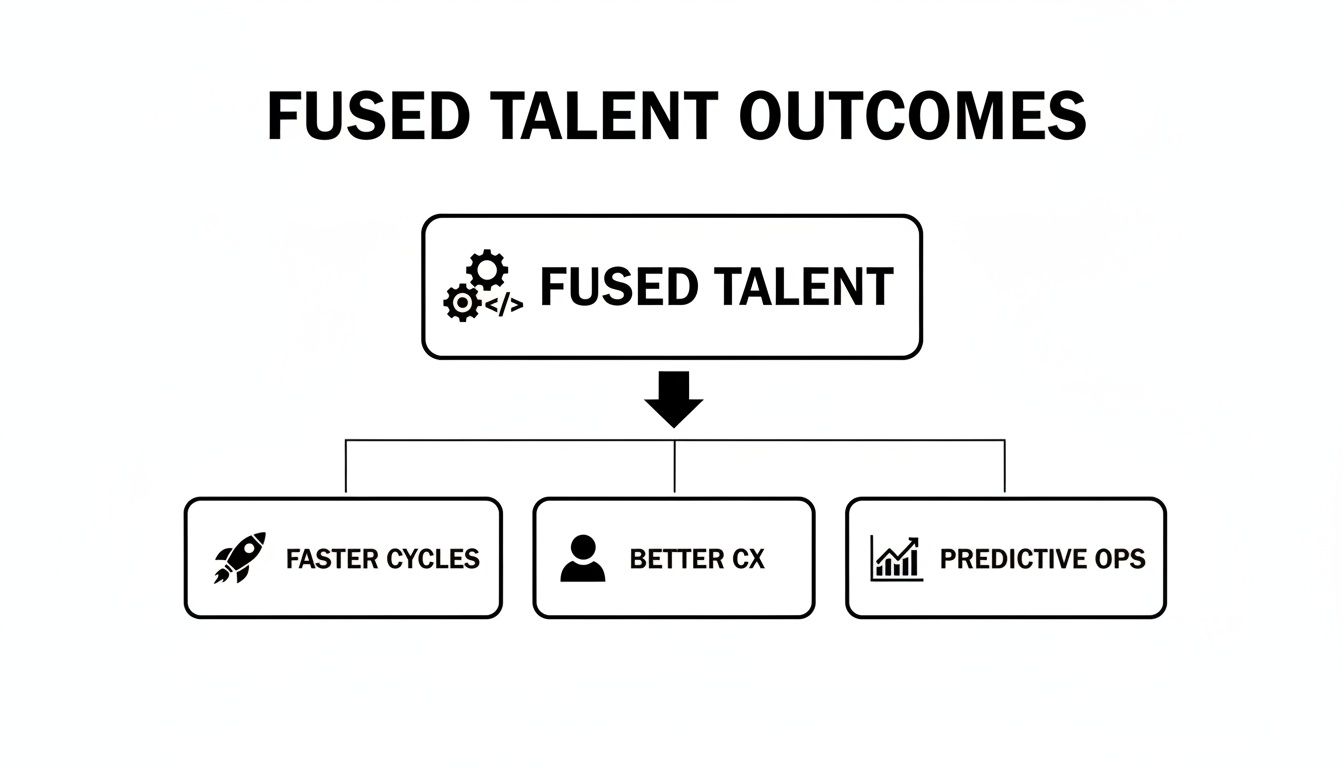
The key takeaway here is simple: integrated talent directly leads to tangible results like faster product cycles, smarter customer experiences, and more efficient, predictive operations.
Overcoming Today’s Digital Talent Hurdles
While the vision of a digital engineering dream team is compelling, the reality on the ground for CHROs is a minefield of challenges. Finding talent that truly blends engineering discipline with tech fluency isn’t as simple as posting a new job description. It’s a full-blown battle in a market where demand has completely outrun supply.
Understanding these real-world pain points is the first, most crucial step toward building a strategy that actually works.
The competition for professionals who can bridge the physical and digital worlds is nothing short of fierce. Your top performers aren’t just looking for a job—they’re being actively courted with aggressive offers, turning retention into a constant struggle. High attrition isn’t always a red flag about your culture; it’s often just a symptom of an overheated market where your best people are always on someone else’s radar.
The Rise of Global Capability Centres
This competitive pressure is being cranked up to eleven by the rapid expansion of Global Capability Centres (GCCs). These hubs are magnets for top-tier talent, driving up both demand and salary expectations in key markets.
Take the GCC landscape in India, for example. It’s absolutely booming. Projections show that these centres will soon blow past 1,900 in number, employing over 2 million professionals. This surge isn’t just about hiring in volume anymore; it’s a major shift toward value-driven recruitment, laser-focused on snapping up multi-skilled experts in AI, data engineering, and cloud infrastructure.
Bridging the Academic-Industry Skills Gap
Adding another layer of difficulty is the stubborn gap between what universities teach and what the industry actually needs. Academic programmes, for all their strengths, often struggle to keep pace with the sheer speed of technological change. They produce graduates with a solid theoretical foundation but with very little hands-on experience in applying integrated, cross-functional skills.
This leaves companies with a tough choice: either pour massive resources into upskilling new hires from scratch or jump into the bidding war for the small pool of seasoned professionals who already have this hybrid expertise. It puts an enormous strain on internal training and development programmes.
Acknowledging these market realities—intense competition, rising compensation benchmarks, high attrition, and a systemic skills gap—is crucial. These aren’t just minor challenges; they are the core strategic issues that must be addressed to build a successful digital engineering workforce.
This environment perfectly explains the struggles CHROs are facing and highlights why creative, non-traditional talent solutions are no longer optional. Many organisations are now having to explore new hunting grounds to find the skilled professionals they need. For some actionable ideas, check out our guide on where to find the most in-demand tech talent.
Your Playbook for Building a Digital Engineering Dream Team
Putting together an elite digital engineering team isn’t about just fighting over the same small pool of candidates. It requires you to fundamentally rethink your entire approach to talent. For CHROs, this means creating a playbook that zeroes in on three core strategies: redefining how you hire, growing talent from within, and redesigning your organisation for speed.
This is your practical guide to getting ahead of the hiring curve and building a talent engine that actually fuels innovation.
Redefine Your Hiring and Assessment
The old way of hiring—relying on university prestige or specific software experience—is a dead end. To spot genuine digital engineering talent, your assessment process needs to look exactly like the real-world problems they’ll be asked to solve.
It’s time to move from just screening resumes to using practical, project-based tests. Give candidates a tricky problem that forces them to combine solid engineering principles with software logic. This doesn’t just show you what they know; it shows you how they think and connect different skills to get to a solution.
This focus on real skills is critical as the market gets hotter. India’s IT sector recently saw a 16% year-on-year jump in hiring, with a huge demand for professionals who know their way around AI, cloud, and data engineering. With remote work opening up talent pools in Tier-2 and Tier-3 cities, a skills-first hiring strategy makes sure you find the best people, no matter where they are. You can read more about India’s evolving tech job market on Forbes India.
Cultivate a Robust Internal Talent Pipeline
Let’s be clear: you can’t hire your way out of this talent crunch. The companies that will win are the ones building their own talent from the inside out. This means making smart investments in upskilling and creating obvious paths for people to grow across disciplines.
- Targeted Upskilling Programmes: Kick off learning programmes that connect the dots between traditional engineering and modern tech. Offer certifications in cloud platforms, data analytics, and machine learning to your mechanical, electrical, and civil engineers.
- Rotational Assignments: Set up opportunities for engineers to get their hands dirty in software development, data science, or product management. This kind of cross-pollination is one of the quickest ways to build that hybrid expertise you need.
- Rewarding Multidisciplinary Growth: Make sure your career paths and pay scales directly reward employees who develop and use integrated skills. You have to recognise and promote the “T-shaped” people who will become your future innovation leaders.
By investing in your current workforce, you not only close critical skills gaps but also boost retention and engagement. It sends a powerful message that your organisation is committed to building careers, not just filling roles.
Rethink Your Organisational Design for Agility
Finally, even the most brilliant talent will get stuck in a rigid, siloed company structure. The last piece of your playbook is to redesign your organisation to encourage the very cross-functional teamwork that digital engineering depends on.
Start by knocking down the old walls between IT, engineering, and product development. Shift towards a more agile model built around mission-focused “squads” or “pods.” These should be small, independent teams with a mix of skills, think mechanical engineers, software developers, data analysts, and UX designers—all working on a single product or feature.
This kind of structure isn’t just about better communication. It creates a powerful sense of shared ownership and speeds up decision-making, letting your teams test ideas and innovate at a pace your siloed competitors can’t hope to match. It’s the foundational change you need to truly tap into the potential of your digital engineering talent.
How a Strategic RPO Partnership Gives You an Edge
In a market this competitive, the old “post and pray” method for finding digital engineering talent just doesn’t cut it anymore. It’s a losing strategy. This is where a specialised Recruitment Process Outsourcing (RPO) partner comes in. Think of them not as just another vendor, but as a strategic extension of your own team—one that turns talent acquisition from a reactive cost centre into a proactive competitive advantage.
An expert RPO partner doesn’t just scroll through the usual job boards. They live and breathe the digital engineering ecosystem. They’re out there building specialised talent pipelines from places you might not even think to look. This means actively engaging with tech communities, scouting talent at hackathons, and spotting rising stars through their open-source project contributions. It’s how they find those brilliant passive candidates who aren’t even looking for a new job but are a perfect fit for you.
Building a Proactive Talent Engine
One of the biggest shifts a strategic RPO brings is moving from frantically filling open roles to building a sustainable talent pipeline for the future. This proactive approach means you have a ready pool of qualified, vetted candidates before you even have a vacancy. The result? A drastic reduction in your time-to-hire.
They also bring sophisticated, skills-based assessment frameworks to the table. These go way beyond a simple CV review to evaluate real-world problem-solving abilities. This ensures you’re hiring professionals who can genuinely blend deep engineering principles with modern tech fluency.
An expert RPO partnership is the strategic lever that enables your business to consistently secure the digital engineering talent needed to innovate and grow. It’s about building a capability, not just filling a role.
What’s more, a top-tier RPO acts as your eyes and ears on the ground, providing critical market intelligence that sharpens your entire talent strategy. We’re talking real-time data on compensation benchmarks, deep insights into what your competitors are doing, and sharp analysis of emerging skill trends. This kind of intelligence allows you to make data-driven decisions that position your company as a true employer of choice. When you understand these dynamics, navigating the complexities of high-impact hiring becomes much more manageable.
To dive deeper into this model, explore our guide on leveraging digital RPO for critical hiring strategies. This kind of partnership gives your organisation the specialised focus and market agility it needs to build a winning digital engineering team.
Your Top Digital Engineering Talent Questions, Answered
Making the leap to a digital engineering model naturally brings up some tough, practical questions for any leader. Let’s tackle the most common ones we hear from CHROs and business heads.
Where On Earth Do We Start?
The first step is always to look inwards. Before you can build, you need a blueprint of what you already have.
Conduct a thorough skills audit of your current engineering teams. This isn’t just a box-ticking exercise; it’s a deep dive to map your existing capabilities against what the future demands. It will show you, in stark terms, the gap between your traditional engineering talent and the tech-first mindset you need to cultivate. Use these findings to completely rethink your key job roles, crafting descriptions that speak directly to this new breed of fused engineering and tech talent.
How Can We Compete for Talent Against the Big Tech Giants?
You probably can’t out-brand them, so don’t try. Instead, change the game.
Shift your employer branding to focus on the one thing a tech giant often can’t offer: the chance to solve unique, complex, and mission-critical business problems. Top-tier digital engineering talent isn’t just looking for a cool logo on their payslip; they’re driven by impact. Show them exactly how their code, their designs, and their thinking will directly shape business outcomes. Highlight your commitment to a culture that values genuine innovation, gives them the autonomy to experiment, and invests in their continuous learning.
The surest way to prove the value of this new talent model is to tie it directly to the numbers that matter. Track improvements in product development speed, reductions in operational downtime, and a clear uptick in your innovation rate. This isn’t just a talent strategy; it’s a business growth engine.
When you can show a direct line from their work to business success, you create a narrative that is far more compelling than any big-name brand.
At Taggd, we don’t just find people; we build the high-impact digital engineering teams that drive real-world innovation. Our strategic RPO solutions are designed to give you the edge in attracting and retaining the fused tech and engineering talent that your future depends on.
See how we can help you build your future-ready workforce at https://taggd.in.