Hiring top talent for FMCG roles in India’s Tier 2 and Tier 3 cities is a whole different ball game. It throws up a unique set of hurdles, from simply finding enough people to building a local employer brand that resonates.
The heart of the matter is this: while these emerging markets are the undeniable future of consumer growth, the rulebook for attracting and keeping the right people is completely different from the one used in the big metros. Getting this right, cracking the code of these FMCG recruitment challenges, is now the single biggest factor that separates market leaders from the laggards.
The Untapped Potential of India’s Emerging Markets
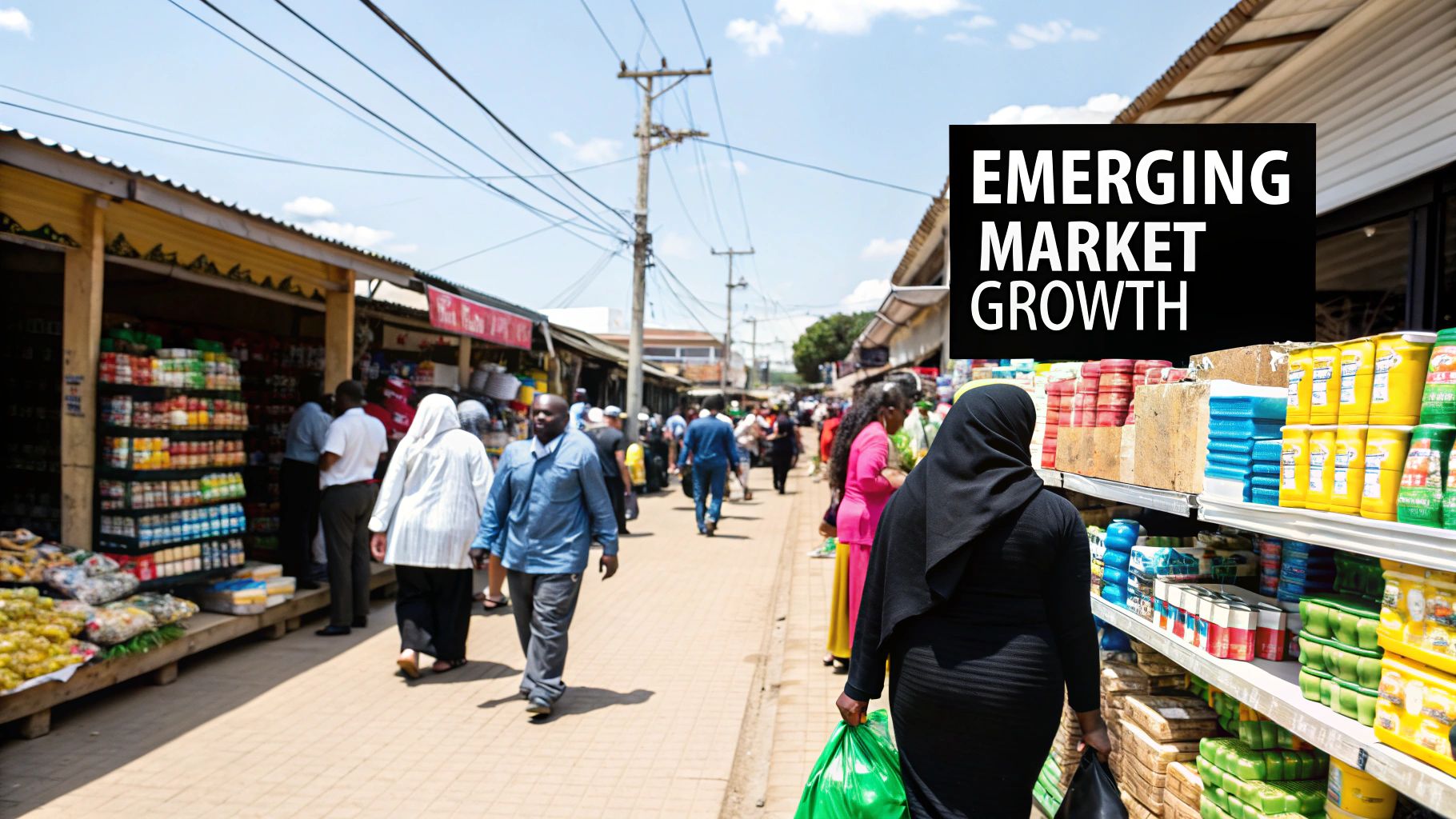
The story of India’s economic boom is no longer just a tale of its sprawling metropolitan hubs. A massive shift is happening right under our noses. Tier 2 and Tier 3 cities are quickly becoming powerhouses of consumption and demand. For Fast-Moving Consumer Goods (FMCG) companies, tapping into these markets isn’t just a “nice to have” expansion plan; it’s a strategic imperative for survival and growth.
Imagine discovering a string of incredibly fertile farmlands just off the beaten path. While everyone else is fighting over the same, crowded territory, these new areas promise huge rewards for those willing to roll up their sleeves and cultivate them. Consumers here have more money to spend, bigger aspirations, and a growing hunger for branded products.
The Scale of the Opportunity
The numbers tell an undeniable story. Analysis shows that nearly 600 Tier 2 and Tier 3 cities are already powering 36% of the nation’s FMCG consumption. But that’s just the beginning. This figure is expected to jump to an incredible 45% by the end of 2025, making up half of the entire sector’s growth in a decade. You can dive deeper into these market dynamics in recent industry reports.
This isn’t a fleeting trend; it’s a fundamental rewiring of India’s consumer economy. The companies that build a strong foothold in these emerging markets today are laying the groundwork for market leadership for years to come.
Of course, this explosive potential comes with its own set of significant operational headaches. The most urgent among them are the FMCG recruitment challenges in Tier 2 & 3 locations. To win the market, you first have to win the war for local talent. This guide breaks down the core obstacles and lays out a clear path forward.
To put it simply, here’s a snapshot of the main hurdles you’ll face on the ground.
Key Recruitment Challenges in Tier 2 & 3 Markets at a Glance
This table offers a quick summary of the primary recruitment obstacles FMCG companies face when expanding beyond metro areas.
| Challenge Area | Primary Impact on Business Operations |
|---|---|
| Talent Scarcity | Limited pool of candidates with specific skills slows down hiring and limits scalability. |
| Skill Deficits | A gap between available skills and modern commerce needs requires heavy investment in training. |
| Retention Issues | High attrition rates, often driven by local factors, lead to constant hiring cycles and instability. |
| Employer Branding | National brand recognition doesn’t always translate locally, making it hard to attract top talent. |
| Compensation Gaps | Mismatched salary expectations between metro and non-metro talent can derail negotiations. |
Tackling these issues requires more than just tweaking your existing strategy; it demands a specialised approach. Partnering with a Recruitment Process Outsourcing (RPO) expert can provide the on-the-ground intelligence and execution firepower needed to unlock this massive growth potential.
Navigating the Talent Scarcity and Retention Puzzle
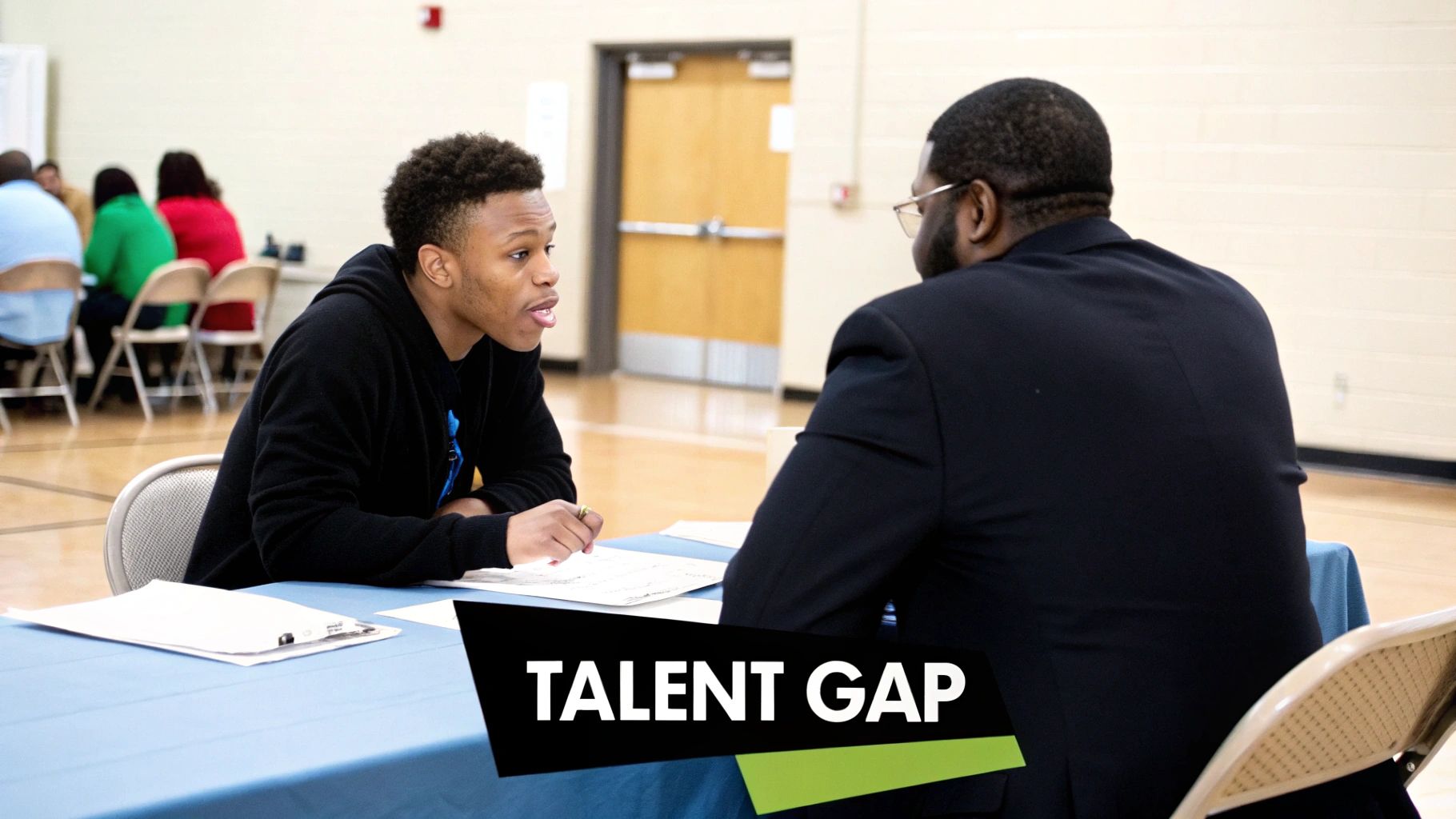
Let’s get straight to it. The single biggest roadblock to winning in Tier 2 and Tier 3 markets is the glaring gap between the talent you need and the talent you can actually find there. This isn’t just a minor headache for HR; it’s a full-blown crisis that directly hits your sales, logistics, and distribution, the very engine of your FMCG business.
Think of it like prospecting for a rare mineral. You know it’s there, but it’s not just lying on the surface. You can’t show up with the same old tools you use in a well-established mine. You need specialised gear, deep local knowledge, and a completely different game plan to find it, dig it out, and make it valuable. Talent in these emerging markets is no different.
The Great Migration and its Aftermath
So, where did all the talent go? A huge part of the problem is the classic ‘brain drain’. Ambitious, skilled graduates from smaller towns often see metro cities like Mumbai, Bengaluru, or Delhi as the only places to build a real career. They pack their bags for better pay cheques, faster promotions, and the buzz of big-city life.
This creates a massive talent vacuum back in their hometowns. The local pool of people who understand modern sales techniques, digital marketing, or complex supply chains dries up. When FMCG companies arrive, ready to expand, they discover the experienced professionals they’re counting on simply aren’t there. This makes FMCG recruitment challenges in Tier 2 & 3 locations an urgent, day-one problem.
The core problem isn’t a lack of people; it’s a shortage of people with the specific, ready-to-deploy skills required for a modern, competitive FMCG business. Companies must shift their mindset from simply “hiring” to actively “cultivating” local talent.
This scarcity backs companies into a corner. Your options? Either you lower your standards and prepare for a massive investment in training, or you get into a costly bidding war to poach the few qualified people from your competitors. Neither is a winning strategy for the long run.
Attrition: The Leaky Bucket Syndrome
The most painful symptom of this talent mismatch is a shockingly high attrition rate. When you can’t find the right fit, or when a new hire’s expectations clash with the reality of the job, they walk. This creates a “leaky bucket” where your recruiters are constantly scrambling just to keep roles filled, killing your sales momentum and creating chaos.
The numbers tell a stark story. Attrition for FMCG sales teams in India’s Tier 2 and Tier 3 cities is a staggering 28%, blowing past the national average of 18%. A major reason for this is the reluctance of candidates to move from their hometowns and their strong preference for metro jobs, which is a huge hurdle for growth. You can dive deeper into the data on how entrepreneurs are redefining the FMCG landscape.
This constant employee churn is incredibly damaging. Here’s why:
- Disrupted Customer Relationships: Sales runs on trust. When your sales rep changes every six months, those vital relationships with local distributors and shop owners crumble, directly hurting your orders and market share.
- Skyrocketing Recruitment Costs: The endless cycle of hiring, onboarding, and then immediately backfilling the same role burns through cash. That’s money that should be going into market development, not just plugging holes.
- Loss of Institutional Knowledge: Every person who leaves takes priceless local market insights with them, who the key players are, what competitors are doing, and how to get things done. Replacing that knowledge is tough and takes time.
- Team Instability and Morale: Nothing kills team spirit faster than constant turnover. It creates a feeling of instability and makes it impossible to build a cohesive, motivated sales force.
For a CHRO, this is far more than a statistic. It’s a critical business risk that can derail your entire expansion plan. Fixing the retention puzzle is every bit as important as finding talent in the first place. It demands a strategy that looks beyond the paycheque to solve the real reasons good people leave.
Bridging the Critical Skill Gaps for Modern Commerce
Simply finding people is only half the battle when you’re wrestling with FMCG recruitment challenges in Tier 2 & 3 locations. The real challenge runs much deeper. It’s a quality issue, a massive gap between the traditional skills you find locally and the modern abilities needed to win in today’s market. The playbook that worked a decade ago? It’s completely obsolete.
The market today is carved out by e-commerce, driven by data analytics, and built on digital consumer engagement.
Of course, legacy sales skills, like managing distributor relationships and getting prime shelf space, still matter. But they’re no longer enough to move the needle. The FMCG landscape in these booming markets has gone digital. Consumers find products online, local kirana stores use apps to manage stock, and sales data is a goldmine waiting for someone who knows how to read it.
The New Skills Imperative for FMCG
The problem is, the local talent pool often hasn’t had the exposure or training in these critical new areas. This isn’t about a lack of intelligence or drive; it’s a structural gap. It’s born from limited access to the kind of training and career experiences that are common in metro hubs.
Think about it. A salesperson who can charm a distributor is valuable. But one who can also look at sales data and predict local demand for the upcoming festive season? That’s a game-changing strategic asset. This disconnect between old and new skills hits the bottom line, hard.
A critical mistake is seeing this as just a training problem. It’s a strategic deficiency. It leaves companies flying blind to market shifts and unable to compete with smarter, faster rivals. Without data-literate teams, expansion becomes a game of guesswork, not a calculated strategy.
This skills deficit is especially sharp in three key areas:
- Digital Marketing: Knowing how to run hyperlocal social media campaigns, work with local influencers, or manage listings on online marketplaces is now fundamental to building a brand and driving sales in smaller cities.
- Data Analytics: The ability to analyse sales figures, inventory turnover, and consumer behaviour is what leads to accurate forecasting. It helps you optimise stock levels and craft targeted promotions that actually connect with local tastes.
- Modern Supply Chain Management: Competence with logistics software and demand planning tools is crucial for getting products to hundreds of small outlets efficiently, preventing both stockouts and costly overstocking.
The fallout from these gaps is severe, creating a major bottleneck for growth. Research shows that skill shortages in digital marketing and data analytics mean 40% of FMCG roles in Tier 2/3 cities stay unfilled for over 90 days. This is happening even as 65% of manufacturing recruitment, the very backbone of the FMCG supply chain, is now being driven by these exact regions. You can get more insights on this hiring shift on economictimes.com.
Connecting Skill Gaps to Business Outcomes
For a CHRO, the task is to translate these skill gaps into real, quantifiable business risks. A lack of modern skills isn’t just an HR problem; it’s a direct threat to revenue and market share.
Just consider these all-too-common scenarios:
- Lost Sales: Without data analytics, a company might completely miss a competitor’s new small-pack strategy gaining traction, leading to a slow response and lost customers.
- Inefficient Spending: A team that doesn’t get digital marketing might pour its budget into old-school advertising that no one sees, while a competitor captures the entire local online audience for a fraction of the cost.
- Inventory Chaos: Weak demand forecasting leads to one of two disasters: frustrating stockouts that send retailers and customers to your rivals, or excess inventory that ties up capital and risks expiry.
To truly win in these markets, FMCG firms have to change how they hire. Instead of just looking for traditional sales experience, the priority needs to be on candidates with a digital mindset and a hunger to learn new technologies. To sharpen your strategy, you can explore a detailed breakdown of the top skills that are currently in high demand. This isn’t a passive wish; it demands a proactive approach with specialised sourcing and solid upskilling programmes to build a workforce that’s ready for what’s next.
Building a Magnetic Employer Brand Outside the Metros
In a bustling Tier 1 city, your company’s name on a product is often enough to get candidates in the door. But one of the most humbling FMCG recruitment challenges in Tier 2 & 3 locations is the realisation that your well-known consumer brand might have almost zero pull as a place to work. Just because everyone buys your biscuits doesn’t mean they want to help bake them.
Think of it like being a famous movie star. In Mumbai, you can’t walk down the street without being recognised. But in a small, remote town, you might just be another visitor. Your fame hasn’t reached there, and you have to build trust and reputation from scratch. This is exactly the task facing FMCG companies in new territories; your employer brand needs its own, localised identity.
Crafting a Compelling Local Offer
Simply copying your metro-based employer value proposition (EVP) and pasting it into a new location is a recipe for failure. The motivations and priorities of talent in smaller cities can be worlds apart from their metro counterparts. A fast-paced, high-pressure career track that excites a graduate in Bengaluru might be a major turn-off for someone in Nagpur who values community and work-life balance above all else.
Building an effective local brand requires a real shift in perspective. Instead of leading with aggressive career ladders, focus on what makes your company a great place to work within the local context.
The goal is not just to be seen as a company that sells products in the area, but as an organisation that is invested in the community, understands local values, and offers stable, meaningful careers close to home.
This means highlighting the unique benefits that will actually resonate with the local talent pool. Consider building your localised EVP around these powerful pillars:
- Work-Life Balance: Emphasise the very real advantage of shorter commutes, having more time for family, and living a less stressful lifestyle compared to the metro grind.
- Community Impact: Showcase how your company contributes to the local economy and participates in community initiatives. People are proud to work for an organisation that improves their own town.
- Closeness to Roots: Acknowledge the deep value many candidates place on staying near their families and support networks. Position this not as a compromise, but as a key benefit of joining your team.
- Stability and Growth: In markets where job security is paramount, highlight the stability of the FMCG sector and offer clear, achievable career paths within the region itself.
To dive deeper, you can find more actionable ideas in our detailed guide on how to build effective employee branding strategies.
The Compensation Conundrum
Getting compensation right is another massive hurdle. Your packages have to be competitive enough to attract the best local talent, but without creating huge disparities with your national pay structures that could cause internal friction. It’s a delicate balancing act.
This is where an RPO partner with an on-the-ground presence becomes your market intelligence unit. They provide real-time data on local salary benchmarks, what competitors are offering, and which non-monetary benefits carry the most weight. This kind of insight is critical for crafting offers that are both attractive and sustainable. By truly understanding the local landscape, you can build a magnetic employer brand that not only attracts but also retains the high-calibre talent you need to win in these emerging markets.
Designing a Sustainable Talent Pipeline with RPO
Pinpointing the complex FMCG recruitment challenges in Tier 2 & 3 locations is a great start, but a diagnosis without a cure doesn’t get you very far. The real solution is a fundamental shift: moving away from a reactive, “fire-fighting” mindset to a proactive, pipeline-building strategy. This is exactly where a strategic Recruitment Process Outsourcing (RPO) partnership can turn a chronic weakness into a serious competitive edge.
Let’s use an analogy. Think of your talent needs like a farmer trying to grow crops in a fertile but dry region. Relying on sporadic rainfall, much like last-minute hiring drives, might give you a small, unreliable harvest. But what if you installed a modern irrigation system? That system would deliver a steady, controlled flow of water, guaranteeing a healthy and sustainable yield, season after season. A good RPO partner is the architect of that irrigation system for your talent.
Moving Beyond Transactional Hiring
Traditional recruitment is almost always transactional. A manager flags an open role, a job description gets posted, and the hunt begins. This approach falls flat in emerging markets because it completely ignores the unique local dynamics at play. An RPO model changes the game by focusing on building a long-term, sustainable flow of qualified candidates before you even need them.
Instead of just filling empty seats as they appear, a specialised partner like Talent Hired gets deeply embedded in the local ecosystem. They don’t just search for talent; they actively cultivate it. This means rolling out a multi-pronged strategy that tackles the core challenges of talent availability, skill gaps, and local brand perception head-on.
The real value of an RPO partnership isn’t just about outsourcing the hiring process; it’s about insourcing deep local market intelligence and execution capability. It’s about building a talent infrastructure that supports your business growth, not just reacts to it.
This strategic approach is built on several key pillars, all designed to create a continuous stream of right-fit candidates. It turns your recruitment function from a frantic, unpredictable scramble into a well-oiled machine.
Core Strategies for a Sustainable Pipeline
A strong talent pipeline in these regions rests on three foundational strategies that a dedicated RPO partner can execute with real precision.
- Forging Alliances with Regional Colleges: An RPO provider builds deep, lasting relationships with local Industrial Training Institutes (ITIs), polytechnics, and regional colleges. This is far more than just showing up for a campus job fair. It involves co-creating curriculum modules, offering meaningful internships, and building your employer brand with students long before they’re on the job market. This creates an exclusive channel of fresh, motivated talent practically moulded to your specific needs.
- Deploying Hyperlocal Digital Sourcing: Throwing a job post up on a national portal and hoping for the best is a waste of time and money. An RPO partner uses hyperlocal digital campaigns on platforms that actually resonate with local audiences, think regional job boards, community WhatsApp and Facebook groups, and content in the local vernacular. This targeted approach ensures your opportunities reach the right people, in the right place, speaking their language.
- Leveraging Deep Community Networks: Often, the best talent comes through trusted local referrals. An RPO’s on-the-ground team builds and nurtures relationships with community leaders, local business associations, and industry influencers. This network becomes a goldmine for high-quality candidates who are essentially pre-vetted by their own community, leading to a much better cultural fit and higher retention rates.
For CHROs grappling with hiring across dozens of locations, understanding how an enterprise RPO can provide a clearer picture helps to see how these strategies can be scaled effectively.
This diagram breaks down what it takes to build a strong employer brand at the local level, focusing on compensation, work-life balance, and genuine community integration.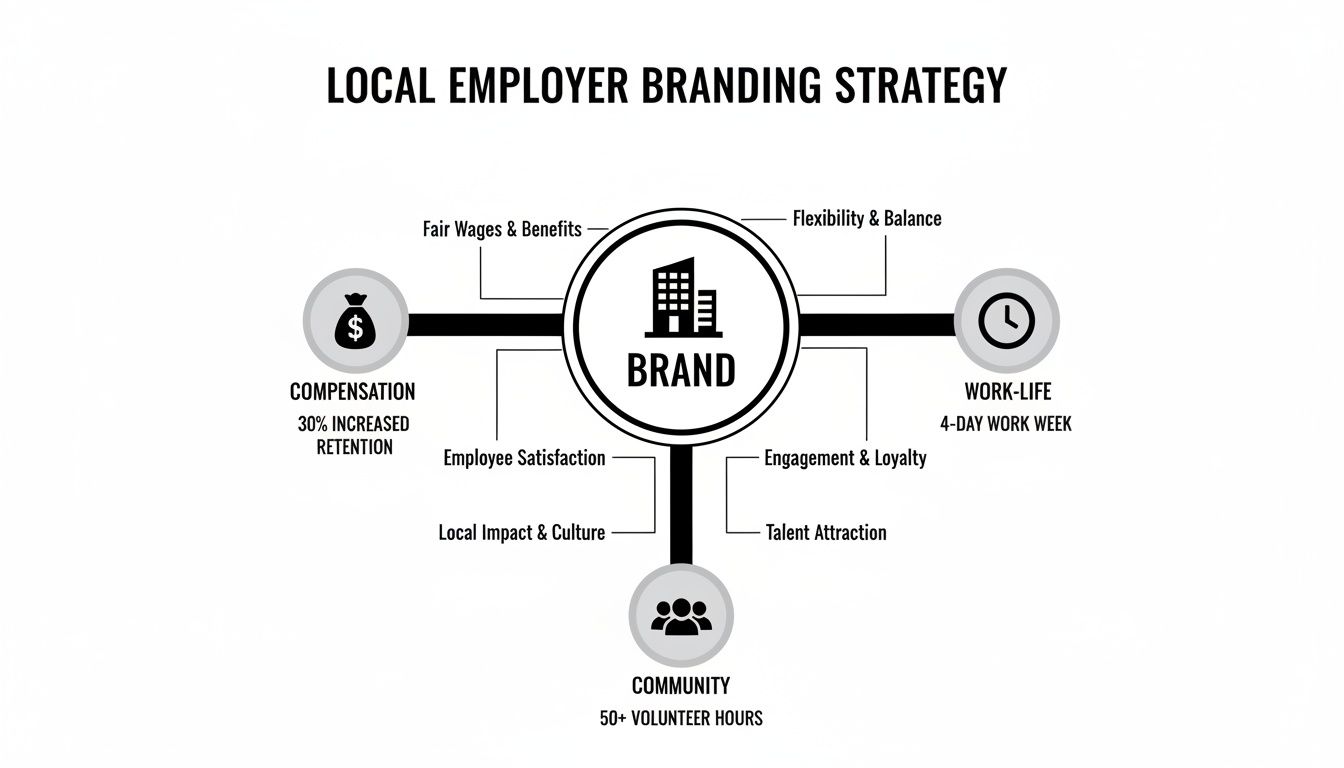 As the visual shows, a successful brand isn’t just about the salary. It has to equally address financial incentives, lifestyle benefits, and a sense of belonging to truly connect with local talent.
This table contrasts the old way of hiring with the strategic advantages an RPO partner brings to the table in these crucial markets.
Conventional Hiring vs Strategic RPO in Tier 2 & 3 Markets
| Recruitment Function | In-House Approach | Talent Hired RPO Solution |
|---|---|---|
| Sourcing Strategy | Reactive posting on national job boards when a vacancy arises. | Proactive, hyperlocal sourcing through local colleges, community networks, and regional digital platforms. |
| Employer Branding | A generic, one-size-fits-all corporate brand message. | A localised employer value proposition that highlights community impact, stability, and relevant benefits. |
| Candidate Pipeline | Starts from scratch with every new requisition, leading to long hiring times. | Maintains a continuous, “warm” pipeline of pre-vetted local candidates, ready to engage. |
| Market Intelligence | Limited understanding of local compensation benchmarks, talent motivations, and competitor activity. | Provides deep, on-the-ground intelligence to inform competitive offers and retention strategies. |
| Team Focus | HR team is bogged down with transactional hiring tasks for multiple locations. | Frees up the core HR team to focus on strategic initiatives like employee development and culture. |
Ultimately, the RPO approach is about future-proofing your growth.
By putting these strategies into action, an RPO partner does more than just find people. They build a self-sustaining talent ecosystem that continuously feeds your organisation the skilled, motivated individuals you need to not just enter, but truly dominate India’s emerging markets. This proactive approach ensures your growth is fuelled by your people, not limited by a lack of them.
Your Action Plan for Winning in Emerging Markets
Winning in India’s fast-growing Tier 2 and Tier 3 markets isn’t about luck. It’s the direct result of a smart, well-executed talent strategy. While the FMCG recruitment challenges in Tier 2 & 3 locations are complex, they are absolutely solvable. But it requires a fundamental shift in thinking, from simply reacting to hiring needs to proactively planning your future workforce.
For CHROs, the way forward starts by asking some tough questions. Your answers will shine a light on the gaps in your current approach and show you exactly where a specialist partner can make the biggest difference. Think of this as your strategic checklist to turn recruitment from a constant headache into a powerful engine for growth.
Evaluate Your Current Recruitment Model
First things first, you need to conduct a candid internal audit. An honest look at your existing processes will reveal the vulnerabilities holding back your expansion plans.
- Local Market Intelligence: How well do you really understand salary benchmarks, what truly motivates candidates, and what your competitors are doing in each target city? Are your decisions driven by real-time, local data or are they based on assumptions from the big metros?
- Employer Brand Resonance: Does your company’s story, your employer value proposition (EVP), actually connect with local aspirations? Or are you just pushing a generic corporate message? Things like community impact, job stability, and a healthy work-life balance often matter far more to talent in these regions.
- Talent Pipeline Health: Are you continuously building a pipeline of qualified local candidates, or do you find yourself starting from scratch with every new vacancy? Do you have solid relationships with regional colleges, local communities, or vocational institutes?
Answering these questions often reveals a hard truth: in-house teams, already stretched thin, just don’t have the hyperlocal focus needed to win. This is precisely where a dedicated partner can step in and provide immediate value.
The biggest mistake FMCG leaders make is underestimating the sheer effort needed to build a localised recruitment engine. A “one-size-fits-all” strategy is the fastest way to high attrition, missed targets, and stalled growth in these markets.
Pinpoint Where an RPO Partnership Adds Value
A Recruitment Process Outsourcing (RPO) partner isn’t just another vendor. They become an extension of your team, bringing specialised skills and on-the-ground execution power that you might be missing.
Think about where you feel the most pain. Is it the frustratingly slow pace of hiring frontline sales staff? The endless struggle to find good mid-level managers? Or the constant churn that destabilises your teams? An RPO solution is designed to tackle these specific pain points with precision, giving you the infrastructure to build a stable, high-performing workforce for the long haul.
The intricate FMCG recruitment challenges in Tier 2 & 3 locations are no longer an insurmountable barrier. They are a strategic puzzle waiting for the right solution. With a clear roadmap and a dedicated partner like Talent Hired, you can build the talent foundation needed to not just compete, but to truly dominate India’s next wave of consumer growth.
Frequently Asked Questions
Recruiting in emerging Tier 2 and Tier 3 cities raises unique challenges for CHROs. Here, we tackle the questions that often come up around FMCG hiring in these areas and how Recruitment Process Outsourcing (RPO) can help.
What Is the Biggest Mistake When Recruiting In Tier 2 And Tier 3 Cities
Many companies fall into the trap of using a metro-focused game plan for smaller cities. They overlook local talent pools, discount what truly motivates candidates, and neglect the power of a community-centric employer brand.
A classic example: a role marketed on rapid promotions may spark little interest. Yet, a position that offers stability and respect for family time can hit the mark. It all comes down to local insights, from crafting the right salary mix to shaping a clear career narrative that resonates.
How Does RPO Help Reduce High Attrition Rates In These Locations
Partnering with an RPO means getting the match right from day one. We tap into deep regional networks and dig into what drives each candidate, be it career goals, community ties or work-life balance. That way, skill sets and cultural fit align naturally.
Long-term retention starts with understanding people, not just matching bullet points on a CV.
We also co-develop retention plans:
- Structured onboarding sessions for smooth integration
- Local mentorship programmes to build community support
- Transparent career paths that align with local aspirations
This approach directly tackles why people tend to move on.
Is RPO More Cost-Effective Than Building An In-House Team
Building your own hiring team has its appeal until you factor in ramp-up time, training costs and the fallout from a poor hire. In smaller markets, these challenges multiply, and budgets take a hit.
An RPO partner arrives with ready-made local connections and proven hiring workflows. You slash time-to-hire, convert fixed costs into variable ones, and scale up or down as needed. Here’s the edge:
- Immediate access to regional expertise
- Scalable hiring model customised to your hiring peaks
- Reduced fixed recruitment overhead, lowering your break-even point
The payoff? A significantly higher return on investment, especially crucial when you’re expanding into new territories.
Ready to solve your hiring puzzles and tap into India’s growing markets? Taggd offers RPO services crafted for Tier 2 & 3 demands. Discover how we can build your sustainable talent pipeline.