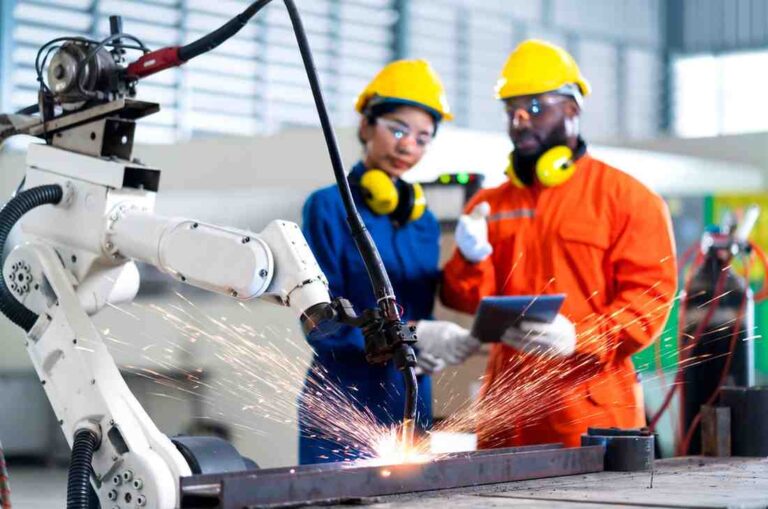
Lean manufacturing talent refers to professionals who can systematically eliminate waste, improve process efficiency, increase throughput, and build a culture of continuous improvement across the shop floor. They combine deep knowledge of lean principles, operational realities, and change leadership to translate strategy into measurable productivity gains.
Because of this impact, demand for lean professionals has never been higher.
Manufacturers everywhere are investing in productivity, waste reduction, and continuous improvement. But the success of any lean transformation ultimately depends on one critical factor: access to experienced practitioners who can drive sustainable results in real operating environments.
Unfortunately, demand for lean manufacturing talent far exceeds supply. As global competition intensifies and margin pressures mount, organizations understand that operational excellence is existential.
Yet identifying professionals who have truly delivered impact, not just certifications, remains one of the toughest hiring mandates CHROs and talent leaders face.
This guide helps CHROs and TA leaders understand the essential capabilities required in lean hiring, why recruitment is increasingly complex, and how leading manufacturers secure top continuous improvement talent faster. More importantly, it outlines practical strategies to turn lean hiring from a recurring bottleneck into a structured competitive advantage.
Why Lean Talent Has Become a Strategic Priority
For manufacturing leaders and CHROs, the connection between lean manufacturing talent and bottom-line performance has never been clearer.
Organizations with strong continuous improvement capabilities consistently outperform competitors across critical business metrics. This isn’t about incremental gains- it’s about survival in an increasingly competitive global marketplace.
Margin Pressure and Cost Competitiveness
Manufacturing industry hiring trends show that lean capability is no longer optional. Lean manufacturing talent- especially Lean Manufacturing Technicians is rapidly emerging as one of the most critical role clusters across the industry.
The reason is simple: margins are under relentless pressure from rising material costs, wage inflation, and volatile energy prices. Leadership teams are expected to protect profitability while still delivering on quality, speed, and customer expectations.
Organizations with experienced lean professionals systematically eliminate waste, reduce operating costs by 15-25%, and protect profitability without compromising quality.
When raw material costs spike 30% but you cannot raise prices, lean manufacturing talent becomes the difference between profit and loss.
Global Competition Intensifying
Manufacturers compete globally whether they want to or not. Low-cost producers in Asia, highly automated European facilities, and innovative North American operations all vie for the same customers.
Organizations that master lean principles- through exceptional lean skills talent- deliver superior quality at competitive prices. Those that don’t struggle to justify their cost structures and gradually lose market share.
Automation Investment Returns
Manufacturers are investing billions in automation, robotics, and Industry 4.0 technologies. But technology alone doesn’t deliver ROI- it requires continuous improvement professionals who can optimize processes, eliminate bottlenecks, and ensure automated systems run at peak efficiency.
Lean manufacturing talent maximizes automation returns by integrating technology within optimized workflows.
Quality Expectations Rising
Customer tolerance for defects has essentially reached zero. A single quality failure can trigger massive recalls, contract terminations, and permanent reputation damage.
Lean professionals with Six Sigma expertise build quality into processes, reduce defect rates by 50-70%, and establish the discipline required to maintain consistently high standards.
Faster Production Cycles Required
Product lifecycles are compressing. Time-to-market determines competitive position. Manufacturers must launch new products faster while ramping production more quickly.
Lean manufacturing recruitment that brings in experts who can reduce changeover times, optimize line balancing, and accelerate production ramp-ups becomes strategically critical. The ability to respond to market opportunities faster than competitors often determines who captures new business.
These drivers make lean hiring a boardroom issue, not just an operations concern. CFOs recognize that lean professionals protect margins. CEOs understand that operational excellence capabilities determine competitive position. CHROs who position continuous improvement hiring as strategic talent acquisition gain the resources and executive attention necessary to succeed in building manufacturing workforce in India.
Core Skills Required in Lean Manufacturing Professionals
Understanding the essential lean skills helps CHROs evaluate candidates effectively and communicate requirements to hiring managers. The best lean manufacturing talent combines technical methodologies, operational capabilities, and behavioral skills:
Technical and Methodology Skills
Lean Principles and Philosophy: Genuine lean professionals understand the Toyota Production System foundations- respect for people, continuous improvement culture, just-in-time production, and visual management. This isn’t theoretical knowledge but practical application experience eliminating the eight wastes, implementing 5S, and establishing standardized work.
Six Sigma Methodology: DMAIC (Define, Measure, Analyze, Improve, Control) expertise enables data-driven problem solving. Lean professionals with Green Belt or Black Belt certification bring statistical rigor to improvement projects, reducing variation and establishing process control. The combination of lean speed and Six Sigma precision delivers superior results.
Kaizen and Continuous Improvement: The ability to facilitate rapid improvement events, engage frontline workers in problem-solving, and create sustainable improvement cultures distinguishes exceptional lean talent. Kaizen expertise means knowing how to generate ideas, test solutions quickly, and institutionalize improvements across operations.
Value Stream Mapping: This critical skill enables professionals to visualize entire production processes, identify waste, and design optimized future states. Value stream mapping reveals hidden inefficiencies, quantifies improvement opportunities, and aligns teams around transformation priorities.
Root Cause Analysis: Using tools like 5-Why analysis, fishbone diagrams, and Pareto charts, lean professionals solve problems permanently rather than treating symptoms. Root cause expertise prevents problem recurrence and builds organizational problem-solving capability.
TPM and OEE Improvement: Total Productive Maintenance knowledge maximizes equipment effectiveness. Lean professionals who improve Overall Equipment Effectiveness (OEE) from 65% to 85%+ deliver millions in productivity gains by reducing downtime, increasing speed, and improving quality.
Operational Skills
Shop Floor Leadership: The best lean manufacturing talent earns credibility with production teams, supervisors, and plant management. They understand manufacturing realities, communicate effectively across organizational levels, and lead change without formal authority. Shop floor presence and respect cannot be learned from books- they require years of hands-on experience.
Cross-Functional Coordination: Lean improvements often require coordination across production, quality, maintenance, supply chain, and engineering. Effective continuous improvement professionals navigate organizational silos, build coalitions, and drive projects that require multi-department collaboration.
Process Optimization Expertise: Beyond theoretical knowledge, top lean professionals possess practical experience optimizing specific manufacturing processes- machining, assembly, forming, coating, packaging. Industry-specific process knowledge enables faster problem diagnosis and more effective solutions.
Behavioral Capabilities
Change Management Skills: Lean transformation requires cultural change, not just technical improvements. Exceptional lean manufacturing recruitment identifies professionals who can overcome resistance, build commitment, and sustain changes after initial enthusiasm fades. Change management capability determines whether improvements stick or revert to old practices.
Stakeholder Influence: Without direct authority over production teams, lean professionals must influence through data, relationships, and demonstrated value. The ability to persuade skeptical plant managers, engage resistant supervisors, and win operator buy-in separates effective practitioners from those with only theoretical knowledge.
Problem-Solving Mindset: The best lean talent approaches challenges systematically, remains persistent when initial solutions fail, and views setbacks as learning opportunities. This mindset= combining analytical rigor with creative thinking enables breakthrough improvements that others miss.
This combination of technical skills, operational experience, and behavioral capabilities makes lean manufacturing talent exceptionally scarce. CHROs must evaluate candidates across all three dimensions—technical certifications alone don’t indicate genuine lean expertise.
Key Lean Roles Companies Are Hiring For
Companies investing in operational excellence are actively hiring for several high-impact lean positions.
The most in-demand roles include Lean Manufacturing Engineers, Continuous Improvement (CI) Managers, Six Sigma Black Belts, Operational Excellence Leaders, and shop-floor focused Lean Technicians.
These professionals help eliminate waste, improve productivity, standardize processes, and deliver measurable cost and quality gains- making them critical to competitiveness in modern manufacturing.
Understanding the specific roles within operational excellence recruitment helps CHROs allocate resources and develop targeted hiring strategies:
Lean Manufacturing Engineer
These professionals work directly on production floors implementing lean tools, optimizing workflows, and driving daily improvements. They typically hold engineering degrees, possess lean certification, and have 3-7 years of hands-on manufacturing experience. High demand exists for those with specific industry experience- automotive, aerospace, medical devices, consumer goods.
Top responsibilities:
- Lead value stream mapping and waste elimination initiatives
- Improve cycle time, throughput, and productivity
- Implement 5S, Kaizen, SMED, and standard work
- Collaborate with production, quality, and maintenance teams
- Track KPIs and deliver measurable cost savings
Continuous Improvement Manager
Managing multiple improvement initiatives across facilities, these leaders build CI capability, develop improvement roadmaps, and deliver measurable results against operational KPIs. They combine project management expertise with deep lean knowledge and typically oversee teams of lean engineers or specialists.
Top responsibilities:
- Prioritize and govern CI project portfolios
- Coach teams on lean and problem-solving methods
- Align improvements to safety, quality, delivery, and cost
- Develop future lean leaders and internal talent
- Report business impact to senior leadership
Operational Excellence Leader
Senior roles responsible for enterprise-wide lean transformation, these executives establish improvement strategy, build organizational capability, and drive cultural change. Competition for experienced operational excellence leaders with proven track records is particularly intense, as they’re essential for large-scale lean transformations.
Top responsibilities:
- Define enterprise lean strategy
- Lead large-scale change management
- Build governance, standards, and capability frameworks
- Sponsor cross-functional transformation programs
- Drive sustainable performance improvement
Industrial Engineer
Focused on process design, capacity planning, and efficiency optimization, industrial engineers with lean expertise combine traditional IE methods with continuous improvement tools. Organizations increasingly seek IEs who can integrate lean principles into new product launches and facility designs.
Top responsibilities:
- Conduct time and motion studies
- Design line balancing and plant layouts
- Improve labor productivity and flow
- Support new product and facility launches
- Develop data-driven efficiency models
Quality and Process Improvement Specialist
Combining quality systems knowledge with lean and Six Sigma expertise, these professionals reduce defects, improve first-pass yield, and establish process control. The intersection of quality and continuous improvement makes this role critical yet challenging to fill.
Top responsibilities:
- Run root cause and corrective action programs
- Improve first-pass yield
- Implement statistical process control
- Lead Six Sigma projects
- Strengthen compliance and audit readiness
Lean Technician
Lean Technicians translate improvement strategy into shop-floor execution. They work closely with operators to sustain standards, visual management, and daily kaizen.
Top responsibilities:
- Maintain 5S and visual workplace systems
- Support daily Gemba and tier meetings
- Identify small improvements and quick wins
- Update standard operating procedures
- Assist with training operators on lean practices
TPM and Reliability Manager
Specialists in Total Productive Maintenance who maximize equipment uptime, establish preventive maintenance programs, and engage operators in equipment care. Given that equipment effectiveness often determines manufacturing capacity, TPM expertise commands premium compensation and generates fierce competition among employers.
Each role requires slightly different skill combinations and experience levels. Effective lean manufacturing recruitment requires understanding these nuances and sourcing candidates accordingly. Generic job postings rarely attract qualified lean professionals- targeted outreach based on specific role requirements yields far better results.
Recruitment Challenges in Hiring Lean Manufacturing Talent

Hiring lean manufacturing talent is difficult because demand for proven practitioners far exceeds supply. Companies are competing for professionals who can deliver measurable cost reduction, waste elimination, and productivity gains from day one, not just theoretical knowledge.
Most candidates understand lean concepts, but far fewer have led real shop-floor transformations, influenced operators, or sustained cultural change. Add to this industry-specific requirements, certification expectations, and the need for cross-functional leadership, and the talent pool becomes extremely limited.
As a result, organizations face longer time-to-hire, rising salaries, and aggressive counteroffers, making lean recruitment one of the toughest challenges for manufacturing leaders in 2026.
Understanding why lean manufacturing recruitment is uniquely difficult helps CHROs develop realistic strategies and allocate appropriate resources:
1. Limited Experienced Supply
The supply challenge isn’t just scarcity- it’s distinguishing true practitioners from certificate holders. Thousands of professionals claim lean expertise based on week-long training programs, but genuine lean manufacturing talent requires 5-10 years of hands-on implementation experience.
Universities graduate industrial engineers with lean coursework, but classroom knowledge differs fundamentally from driving measurable results on actual production floors. CHROs must identify candidates who’ve actually led kaizen events, deployed value stream mapping, and sustained improvements- not just those who’ve attended workshops.
2. High Competition for Proven Talent
Every manufacturing plant wants lean professionals. Automotive suppliers compete with OEMs. Food processors fight medical device manufacturers. Industrial equipment makers battle aerospace companies. The competition for continuous improvement hiring spans industries because lean principles transfer across sectors.
This creates a zero-sum talent war where every hire is won at a competitor’s expense. Exceptional lean talent receives multiple offers simultaneously, often with 20-30% salary premiums over current compensation.
3. Geographic Constraints
Manufacturing facilities are often located in secondary markets or rural areas, far from major metropolitan talent pools. Lean manufacturing talent needs daily shop floor presence- remote work isn’t viable. This geographic reality significantly constrains candidate availability.
A facility in rural Alabama can’t easily recruit lean professionals from Detroit or Chicago without offering substantial relocation packages and overcoming candidates’ reluctance to move families to smaller communities. This geographic friction increases cost-per-hire and extends recruiting timelines considerably.
4. Cultural Fit Imperative
Lean transformation requires cultural change, not just technical tools. Hiring lean professionals who don’t fit organizational culture creates friction that undermines improvement initiatives.
The ideal candidate must balance pushing for change with respecting existing culture, challenge current practices without alienating stakeholders, and persist through resistance without creating permanent adversaries. Cultural fit assessment requires deeper evaluation than standard interviews provide, extending already-lengthy hiring processes.
5. Speed of Deployment Requirements
Lean transformation programs run on aggressive timelines driven by business urgency. Plants need to reduce costs by Q3, improve quality before audits, or increase capacity to meet new customer commitments.
These deadlines don’t accommodate 4-6 month recruiting cycles. The mismatch between urgent business needs and prolonged hiring timelines creates constant pressure on CHROs. Delayed hires mean delayed results, which often means delayed competitive improvements that customers or boards expect.
These challenges compound one another. Limited supply increases competition. Competition extends timelines. Extended timelines conflict with business urgency. Geographic constraints reduce available candidates further. Traditional recruitment approaches struggle against these interconnected obstacles.
To get deeper insights and unlock smart hiring strategies for manufacturing talent in emerging cities, check out this blog on Manufacturing Hiring in Tier-2 and Tier-3 Cities.
The Hidden Costs of Leaving Manufacturing Lean Roles Unfilled
When calculating lean manufacturing recruitment costs, most organizations focus only on direct hiring expenses. But unfilled continuous improvement positions create cascading costs that dwarf recruitment budgets:
Operational Inefficiency Continues: Every week without lean expertise means waste continues, efficiency opportunities remain unexploited, and costs stay elevated. A facility running at 70% OEE when 85% is achievable leaves millions in productivity on the table annually. For a mid-sized plant generating $100M revenue, the difference between current and optimized performance often exceeds $5M annually- dwarfing the cost of hiring lean professionals.
Scrap and Rework Remain High: Without systematic quality improvement, defect rates persist at elevated levels. A 2% scrap rate on $50M material spend costs $1M annually in direct waste, plus downstream impacts on customer satisfaction and repeat business. Lean skills focused on quality improvement can reduce these costs by 50-70%, but only if positions get filled.
Productivity Targets Slip: Manufacturing leaders commit to productivity improvements in annual plans. When lean roles remain vacant, these targets become unachievable. Missed productivity commitments trigger budget shortfalls, force headcount additions to meet volume, and erode leadership credibility. The financial impact compounds as operating budgets built on expected improvements no longer balance.
Frontline Morale Suffers: Production employees recognize inefficiencies, frustrations, and quality problems daily. When improvement initiatives stall due to unfilled lean positions, frontline morale deteriorates. Workers lose confidence in leadership’s commitment to improvement, engagement declines, and the best employees consider opportunities elsewhere. The cultural damage from abandoned improvement efforts often takes years to repair.
Automation ROI Weakens: Capital investments in automation and technology deliver promised returns only when integrated into optimized processes. Without lean manufacturing talent to eliminate waste before automation, improve material flow, and optimize machine utilization, expensive equipment runs at 60% effectiveness instead of 90%. A $5M automation investment generating half the expected ROI because lean expertise wasn’t available represents a strategic failure far exceeding recruitment costs.
These hidden costs make continuous improvement hiring financially urgent. When plant managers, CFOs, and board members understand the true cost of unfilled lean positions, recruitment budgets and timelines receive appropriate priority. The question shifts from “Can we afford specialized recruitment?” to “Can we afford NOT to fill these positions immediately?”
Why Traditional Hiring Approaches Fall Short
Most internal talent acquisition teams excel at bulk hiring and filling standard roles. But lean manufacturing recruitment requires specialized capabilities that generalist recruiters don’t typically possess:
Difficulty Identifying Genuine Hands-On Experts
Resumes claiming “lean expertise” flood applicant systems, but distinguishing true practitioners requires technical fluency that generalist recruiters lack.
Can candidates discuss specific VSM projects they’ve led? Have they actually facilitated kaizen events or just attended them? What measurable results did their improvements deliver?
Without deep lean knowledge, recruiters struggle to separate authentic expertise from superficial claims.
Inability to Validate Project Depth
Effective operational excellence recruitment requires assessing not just what candidates did, but how deeply they contributed. Did they lead the improvement or just participate? Did they drive sustainable change or implement temporary fixes?
Without understanding lean methodologies personally, internal recruiters cannot probe effectively during screening conversations.
Limited Access to Passive Plant Leaders
The best lean manufacturing talent isn’t actively job searching- they’re embedded in improvement projects at competitor facilities. Job postings don’t reach them. LinkedIn messages get ignored.
Engaging these passive candidates requires industry networks, relationship-building over months, and credible conversations about technical challenges. Internal teams rarely possess these specialized networks.
Challenges Building Multi-Location Pipelines
Manufacturing organizations often need lean professionals across multiple plants in different regions. Building location-specific pipelines, understanding regional compensation norms, and managing geographic relocation complexities overwhelms internal teams already managing hundreds of other requisitions.
Struggling with Volume Plus Specialization
When organizations need to hire both high-volume production workers and specialized lean professionals simultaneously, internal teams prioritize volume over expertise. The urgent need to staff production lines consumes recruiting capacity, leaving specialized continuous improvement hiring under-resourced and delayed indefinitely.
These limitations don’t reflect poor recruiter performance- they reflect capability mismatches. Asking corporate recruiters to source niche lean manufacturing talent is like expecting general contractors to perform specialized electrical work. The solution isn’t training generalists- it’s accessing specialists who live in this domain daily.
How Leading Manufacturers Are Rethinking Lean Hiring
Organizations that consistently win lean manufacturing recruitment focus on speed, credibility, and candidate experience. They present clear transformation roadmaps, empower hiring managers to move fast, and showcase real leadership commitment to continuous improvement.
Top employers also highlight successful lean outcomes, modern facilities, and strong career paths, giving candidates confidence they can create measurable impact. By combining faster decisions with a compelling value proposition, these companies secure scarce lean professionals before competitors even finish interviews.
They focus on-
Competency-Based Evaluation
Rather than relying on resumes and certifications, leading manufacturers implement structured assessments that validate actual lean capabilities.
They require candidates to walk through specific improvement projects, explain problem-solving approaches, and demonstrate technical knowledge through case discussions. This rigor identifies genuine practitioners while filtering out those with only superficial expertise.
Cross-Industry Talent Mapping
High-performing organizations recognize that lean skills transfer across manufacturing sectors. They actively recruit lean professionals from adjacent industries- automotive talent into aerospace, food processing experts into pharmaceuticals, consumer goods specialists into medical devices.
This cross-industry approach expands available talent pools significantly while bringing fresh perspectives that drive innovation.
Strong Assessment Frameworks
Leading manufacturers develop standardized assessment processes that efficiently validate capabilities while respecting candidates’ time.
Structured interviews, practical problem-solving exercises, and facility walk-throughs enable accurate evaluation in 2-3 interactions rather than lengthy 6-8 round processes that lose top candidates to faster competitors.
Faster Decision Cycles
Top manufacturers empower plant managers and operations leaders with clear hiring authority. When exceptional lean manufacturing talent is identified, they extend offers within days rather than weeks.
This decision speed becomes a competitive advantage- the first acceptable offer often wins regardless of whether it’s the highest compensation package.
External Expertise for Ramp-Ups
Rather than straining internal resources during lean transformation initiatives requiring multiple hires simultaneously, sophisticated organizations partner with specialized recruitment firms.
This enables rapid scaling when business urgency demands it, without permanent headcount additions or compromising internal teams’ focus on other priorities.
These practices require investment in specialized capabilities and process discipline. Most organizations implement them not by expanding internal teams indefinitely but by strategically partnering with experts who possess domain-specific lean recruitment expertise.
How RPO Models Help Secure Lean Talent Faster
Specialized Recruitment Process Outsourcing (RPO) has evolved far beyond administrative support. Modern RPO partners focused on operational excellence recruitment deliver strategic capabilities that transform lean manufacturing talent acquisition:
Dedicated Domain Recruiters
Specialized RPO firms employ recruiters who focus exclusively on continuous improvement and operational excellence hiring. These specialists understand lean methodologies, speak Six Sigma language, and maintain deep networks within manufacturing communities.
Their expertise enables meaningful conversations with candidates about improvement projects, technical challenges, and career development in ways generalist recruiters cannot replicate.
Access to Pre-Mapped Talent
Leading RPO providers maintain ongoing relationships with thousands of lean professionals, continuously tracking their skills, career aspirations, and availability timing.
When your requisition opens, you’re not starting from zero- you’re accessing pre-qualified candidates already engaged and interested. This dramatically reduces time-to-first-interview from weeks to days.
Practical Skill Validation
RPO partners with lean manufacturing recruitment expertise validate candidates’ practical capabilities, not just certifications. They assess actual project experience, probe improvement methodologies, and verify measurable results.
This technical screening ensures hiring managers interview only qualified candidates, dramatically improving time efficiency and hiring quality.
Faster Shortlist Creation
By leveraging existing networks and proven sourcing strategies, specialized RPO reduces time-to-shortlist from 6-8 weeks to 2-3 weeks.
This acceleration prevents candidate loss to competitors and addresses business urgency that drives improvement initiatives. Faster shortlisting also maintains hiring manager engagement and prevents requisitions from languishing.
Scalable Hiring Across Multiple Plants
When lean transformations require hiring across five, ten, or twenty facilities simultaneously, specialized RPO scales effortlessly.
They deploy dedicated teams, activate regional networks, and deliver consistent candidate quality across all locations. This scalability enables aggressive improvement roadmaps without overwhelming internal resources.
Predictable Costs and ROI
RPO models provide cost predictability that contingent agency relationships don’t offer. Fixed monthly fees or per-hire pricing enable accurate budgeting. More importantly, the operational improvements that hired lean professionals deliver- cost reductions, quality improvements, productivity gains- generate ROI that dwarfs recruitment investment within months.
The key advantage isn’t just filling positions faster- it’s accessing lean manufacturing talent that drives measurable business results. Specialized RPO transforms continuous improvement hiring from a cost center into a strategic capability that accelerates operational excellence initiatives.
Building a Sustainable Lean Talent Pipeline
While immediate hiring needs demand attention, forward-thinking CHROs simultaneously build long-term lean manufacturing talent capabilities:
Leadership Succession Planning: Identify high-potential lean professionals within your organization and develop clear advancement paths. Create opportunities for them to lead increasingly complex improvement initiatives. Internal succession reduces external hiring pressure while building loyalty among your best continuous improvement talent.
Internal Capability Building: Develop lean certification programs that convert production supervisors, quality engineers, and industrial engineers into improvement practitioners. While this doesn’t replace hiring experienced leaders, it builds bench strength and reduces dependence on external lean manufacturing recruitment for all positions.
Early Career Programs: Partner with universities offering industrial engineering or operations management programs. Create internships and rotational programs that develop future lean talent. These programs take 3-5 years to yield results but deliver exceptional ROI through lower acquisition costs and cultural alignment.
Continuous Pipelining: Maintain ongoing relationships with lean professionals even when you’re not actively hiring. Engage them in improvement conferences, share facility tour opportunities, and build awareness of your continuous improvement culture. When positions open, these warm relationships convert at significantly higher rates than cold outreach.
These long-term investments transform operational excellence recruitment from perpetual crisis to systematic capability. Organizations that build sustainable pipelines hire faster, pay less, and retain longer than competitors trapped in reactive cycles.
Partner With Taggd to Strengthen Your Lean Workforce
Taggd specializes in manufacturing hiring solutions– connecting manufacturing organizations with the lean manufacturing talent that drives operational excellence and competitive advantage.
Our dedicated continuous improvement recruitment team combines deep manufacturing expertise, extensive industry networks, and proven methodologies to deliver results where traditional approaches fail.
What distinguishes Taggd in lean manufacturing recruitment:
Manufacturing-Specific Expertise: Our recruiters focus exclusively on operational excellence roles across manufacturing sectors- automotive, aerospace, food processing, pharmaceuticals, medical devices, consumer goods. We understand lean methodologies, speak Six Sigma language, and recognize genuine expertise versus superficial claims.
Extensive Lean Professional Networks: We maintain active relationships with thousands of continuous improvement professionals across industries and geographies. Our network provides immediate access to candidates who would take competitors months to discover. This isn’t a resume database-it’s intelligence on skills, career goals, and availability.
Rigorous Capability Assessment: We validate practical lean skills, not just certifications. Our technical screening ensures you interview only candidates with genuine hands-on experience driving measurable improvements. This saves hiring managers time while dramatically improving quality-of-hire.
Multi-Plant Hiring Capability: Whether you need lean professionals for one facility or twenty, we scale recruitment capacity to match your timelines. Our geographic reach and local networks enable simultaneous hiring across regions without compromising quality or speed.
Accelerated Results: Through pre-qualified pipelines and streamlined processes, we reduce continuous improvement hiring cycles by 40-60%, helping you launch lean initiatives on schedule rather than delayed by talent constraints.
Ready to accelerate your lean transformation through superior talent?
Let’s discuss how Taggd can help you access the lean manufacturing talent driving your operational excellence agenda.
Contact us to schedule a confidential consultation and discover how we’ve helped leading manufacturers build world-class continuous improvement teams across multiple facilities.