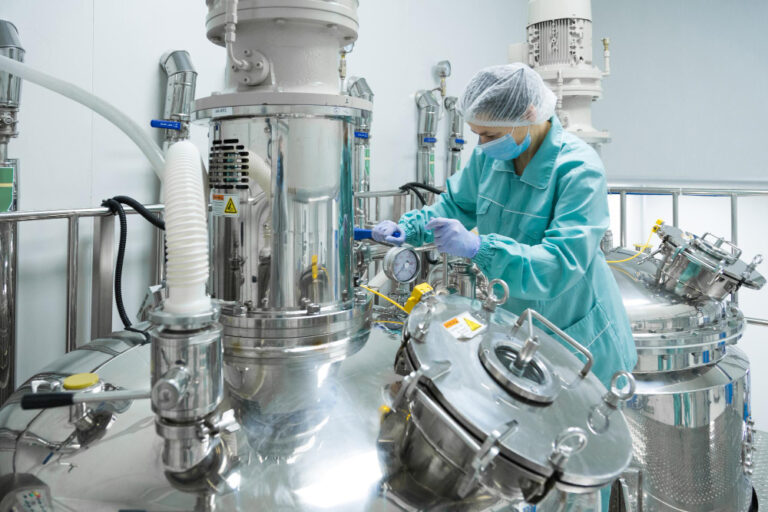
Automation in pharma manufacturing is no longer a plant-floor efficiency project. It’s a workforce redesign problem.
McKinsey acknowledged that over 60 trillion U.S. work hours in the global pharma sector could be impacted by machine learning, with drug manufacturing workers facing high automation risk due to repetitive tasks, yet their expertise remains difficult for robots to fully emulate, necessitating a shift in workforce strategy (Drug Discovery & Development on automation’s influence on pharma jobs).
That single point changes the CHRO agenda. The question isn’t whether automation will alter work. It already is. The primary question is how to build a workforce that can operate, validate, improve, and scale increasingly digital facilities without losing compliance discipline or manufacturing continuity.
That’s why pharma automation hiring has to be treated as part of business transformation. Smart factories, connected manufacturing, digital quality systems, AI-led analytics, MES environments, industrial IoT, and robotics all create value only when the organisation has the right mix of operators, engineers, validation specialists, digital leaders, and reskilled manufacturing talent behind them.
The New Reality of Pharma Manufacturing
Automation is changing the operating model
Pharma manufacturing has moved well beyond isolated automation projects. Plants are increasingly expected to run as connected environments where MES, IoT-enabled equipment, robotics, digital quality systems, and predictive analytics support throughput, traceability, and compliance at the same time.

That shift matters because smart manufacturing changes the operating model in three ways.
First, work becomes system-dependent. A production line no longer relies only on machine uptime and operator discipline. It depends on how well controls engineers, MES specialists, validation teams, maintenance, quality, and production leaders coordinate decisions.
Second, work becomes data-mediated. Teams don’t just execute SOPs. They interpret equipment signals, exception trends, digital batch records, and process alerts. That requires stronger analytical capability inside manufacturing, engineering, and quality.
Third, work becomes interdependent. In automated facilities, a seemingly narrow technical issue can affect deviation management, release cycles, maintenance schedules, and audit readiness. CHROs can’t organise talent in rigid silos and expect performance to hold.
Practical rule: Automation doesn’t remove the need for people. It raises the value of people who can combine manufacturing judgement with digital fluency.
Why hiring is harder than the technology roadmap suggests
Many leadership teams underestimate the workforce implications because the automation roadmap looks clearer than the talent roadmap. Technology vendors can specify platforms. Internal teams often can’t specify the capabilities needed to run those platforms six, twelve, or twenty-four months later.
That’s where pharma automation hiring becomes difficult. The market for niche talent is already tight, and pharma doesn’t compete only with other pharma companies. It competes with automotive, electronics, semiconductor, and industrial manufacturing employers for people who understand controls, instrumentation, connected systems, and digital operations.
Traditional recruitment methods struggle in this environment for a simple reason. They’re built for replacement hiring. Automated manufacturing needs capability-led hiring. CHROs need to plan ahead for roles that don’t map neatly to older job families, and they need managers to hire for adjacent skills, not just direct industry replication.
A smart factory strategy without a talent strategy creates a predictable outcome. Systems get installed faster than workforce capability develops. Plants then compensate with expensive external hiring, overloaded specialist teams, and slower transformation than the business expected.
Mapping Critical Roles and Future Skills
India’s pharma and biotech technology workforce is projected to grow from 285,000 professionals in 2025 to 425,000 by 2030, at a CAGR of 8.3%, with emerging roles such as Regulatory Automation Specialists and Digital Twin Architects, and Hyderabad, Bangalore, and Pune acting as major hubs (EIN Presswire on India’s pharma and biotech technology workforce).
For CHROs, that projection is useful because it shows where demand is heading, but it also shows that role design can’t stay generic.

The role architecture of smart pharma manufacturing
A practical workforce model starts by grouping roles into capability clusters rather than treating every vacancy as a standalone requisition.
Automation and digital roles
- Automation Engineers who configure and maintain control environments.
- PLC Programmers who handle logic design and troubleshooting on plant systems.
- Robotics Engineers who support automated handling and process execution.
- SCADA Engineers who manage visualisation, control interfaces, and plant monitoring.
- MES Specialists who connect process execution with data integrity and compliance.
- Industrial IoT Engineers who integrate sensors, connectivity, and operational data flows.
Manufacturing roles
- Process Engineers
- Validation Engineers
- Production Managers
- Manufacturing Excellence Leads
These roles remain central, but their mandate is changing. They now need to operate in digitally instrumented environments rather than largely manual ones.
Quality roles
- CSV Specialists
- Digital QA Professionals
- Compliance Specialists
In automated environments, quality doesn’t sit at the end of the process. It’s embedded into system design, validation logic, data capture, and exception handling.
Engineering and leadership roles
- Electrical Engineers
- Instrumentation Engineers
- Maintenance Engineers
- Plant Heads
- Digital Manufacturing Leaders
- Engineering Heads
A useful companion perspective appears in Taggd’s view of pharmaceutical talent and the skills and roles in demand, especially for organisations updating legacy role taxonomies.
The skills CHROs should prioritise
Hiring for experience alone won’t hold up. Automated facilities need a broader skills lens.
| Skill area | What to prioritise | Why it matters |
|---|---|---|
| Technical | PLC, MES, robotics, industrial IoT, AI-enabled manufacturing, data analytics, digital validation | These skills connect equipment, data, process control, and compliance execution |
| Behavioural | Continuous learning, problem-solving, collaboration, change management | Automated plants need teams that can adapt as systems, workflows, and interfaces evolve |
| Leadership | Digital transformation capability, cross-functional leadership, innovation mindset | Plant and function leaders must align engineering, quality, production, and talent decisions |
The strongest hires in automated manufacturing usually combine domain depth with transferability. Pure platform knowledge without plant context rarely scales well.
Building a Workforce Plan for Automated Facilities
A future-ready workforce doesn’t emerge from a hiring plan alone. It comes from a staged operating model that links automation investments to talent architecture.

A practical talent roadmap for smart manufacturing
The most useful framework is a four-phase roadmap.
| Phase | Priority |
|---|---|
| Assess | Map current workforce capabilities and identify future skill gaps |
| Plan | Forecast hiring needs aligned with automation initiatives |
| Build | Hire critical digital and automation talent while upskilling existing employees |
| Scale | Strengthen leadership pipelines, measure workforce readiness, and continuously optimise talent strategies |
This looks simple on paper. The challenge is execution discipline. Most organisations spend too much time in Build and too little in Assess and Plan.
Capability mapping and forecasting must drive decisions
Start with capability mapping. Don’t begin with job titles. Begin with workflows. Which parts of manufacturing, engineering, validation, quality, and maintenance will change as automation expands? Which capabilities become critical, adjacent, or obsolete? This reveals the actual gap between current talent and future operating needs.
Then move to workforce forecasting. CHROs should tie hiring demand to automation milestones, plant expansion schedules, validation timelines, digital quality rollouts, and maintenance requirements. That prevents a familiar problem. Firms implement systems first, then scramble to find scarce specialists once project deadlines are already slipping.
Geography also matters more than many hiring plans assume.
Hiring strategies that lack geographic nuance cause firms to overpay in saturated zones like Mumbai while ignoring emerging hubs like Ahmedabad and Chandigarh, which now hold 40% of India’s new automation roles. These zones offer comparable talent at a 30% lower cost-per-hire and enable 18% faster time-to-fill (Taggd’s analysis of pharma hiring trends in India).
A more detailed operating view appears in Taggd’s perspective on digital manufacturing hiring in India, particularly for companies building multi-location hiring plans.
If your automation roadmap is national but your talent strategy is still city-specific and legacy-biased, you’ll pay more and move slower.
Upskilling internal mobility and employer branding
The Build phase has three moving parts.
- Targeted hiring for critical capability gaps
Use external hiring for roles that are difficult to build internally in the near term. That usually includes specialised controls, advanced MES, digital validation, and certain leadership roles. - Upskilling for adjacent talent pools
Production engineers, validation professionals, instrumentation staff, maintenance teams, and quality specialists can often move into more digital roles if the learning pathway is structured and tied to real system adoption. - Internal mobility for manufacturing resilience
Internal mobility matters because automated facilities still need institutional knowledge. People who understand process realities, GMP discipline, and site history can become high-value digital adopters if the transition is well managed.
Employer branding needs to evolve as well. Messaging that worked for conventional plant hiring won’t attract automation talent. Digital candidates want to know whether they’ll work on smart manufacturing programmes, connected systems, analytics-led operations, and modern engineering environments.
They also want clarity on career progression. If the organisation presents digital work as a side project rather than a core operating model, stronger candidates won’t engage.
A practical workforce strategy should also include leadership succession. Plant Heads, Engineering Heads, and Digital Manufacturing Leaders need development pathways that combine operational excellence with digital transformation leadership. Without that layer, automation programmes often remain technically sound but organisationally fragile.
Why Hiring Alone Is Not a Sustainable Strategy
The talent gap is bigger than recruiting can fix
A hiring-only response to automation looks decisive, but it usually creates a fragile workforce model. It assumes the market can supply specialised talent at the right speed, in the right locations, and at a sustainable cost. That assumption rarely holds for long.
The stronger argument for a broader model is already visible in the market. With 85% of biopharma executives planning AI investments by 2025 but only 60% viewing upskilling as vital, Indian firms face a critical talent bottleneck. Only 35% of India’s current pharma workforce has basic AI literacy despite a 62% surge in automation-related job openings (ZS on pharmaceutical trends and the AI upskilling gap). That gap can’t be solved by recruitment teams alone.
There’s another structural issue. Automated manufacturing still depends on process knowledge, quality judgement, and operational context. If companies over-index on external hiring and underinvest in reskilling, they risk weakening the very institutional capability that keeps plants stable.
The four-part model that actually works
The sustainable model is straightforward:
Recruit + Upskill + Reskill + Retain = future-ready workforce
Each part does a different job.
- Recruit for capabilities the business doesn’t currently have and can’t build fast enough.
- Upskill the people already closest to future-state workflows.
- Reskill employees whose current roles are changing materially.
- Retain high-value talent by giving them visible career mobility and relevant learning pathways.
A useful framing appears in Taggd’s perspective on whether to build or buy talent for workforce transformation. The practical answer is almost never one or the other. It’s a portfolio decision.
CHROs who get this right usually build learning ecosystems around real work. They partner with engineering institutes, refresh graduate hiring programmes, create role-based academies, and make internal movement easier across production, engineering, digital, and quality. The result isn’t just a better hiring outcome. It’s a workforce that can absorb change without repeated talent shocks.
Using AI and RPO to Accelerate Talent Acquisition
Where AI improves pharma automation hiring
AI has become useful in recruitment for one reason. It helps talent teams make better decisions faster in markets where role requirements are evolving quickly.
In pharma automation hiring, the strongest AI use cases are practical:
- Talent intelligence for mapping where specialised capability is available
- Skills-based hiring that identifies adjacent-fit candidates, not just exact-title matches
- AI sourcing to uncover scarce profiles across fragmented talent pools
- Candidate rediscovery to revisit prior applicants as role requirements shift
- Recruitment analytics to spot bottlenecks across sourcing, assessment, conversion, and offer stages
- Market intelligence for location strategy, salary positioning, and demand planning
AI supports recruiters. It doesn’t replace recruiter judgement, hiring manager calibration, or workforce planning discipline. In highly regulated, technically nuanced environments like pharma, human evaluation remains essential.
When an RPO partner becomes a strategic accelerator
The case for an RPO model becomes stronger when the hiring problem is linked to transformation rather than volume alone.
A clear market example is Sanofi’s €400 million investment to double its Hyderabad GCC workforce to 2,600 by 2026, with hiring focused on data scientists and AI/ML engineers for digital drug development. This reflects a broader pattern in which AI/ML hiring remains a consistent growth area despite layoffs in traditional pharma roles.
The lesson for CHROs isn’t just scale. It’s orchestration. Transformation hiring needs coordinated market mapping, employer value articulation, hiring process design, analytics, and delivery discipline.
An RPO partner becomes especially relevant in these situations:
- Greenfield manufacturing where the workforce has to be built in sequence, not through ad hoc requisitions
- Plant expansion that creates simultaneous demand across production, engineering, quality, and automation
- Digital transformation programmes that require niche talent and role redesign at the same time
- High-volume automation hiring where internal TA teams may not have enough specialist bandwidth
- Leadership hiring for Plant Heads, digital leaders, and engineering leadership
- Multi-location recruitment where local market intelligence matters as much as sourcing scale
The operating shift is captured well in this comparison.
| Traditional Hiring | Future-Ready Workforce Strategy |
|---|---|
| Hire for current vacancies | Hire for future capabilities |
| Experience-first | Skills-first hiring |
| Reactive recruitment | Continuous workforce planning |
| Manual sourcing | AI-powered talent intelligence |
| Limited training | Continuous upskilling and reskilling |
| Function-based hiring | Capability-led workforce planning |
For companies facing niche-demand pressure, Taggd’s perspective on filling niche roles in the pharma industry through RPO is directionally aligned with what works in the field. The best RPO models don’t just process requisitions. They help translate transformation plans into executable talent systems.
Your Workforce Readiness Checklist and Future Outlook
India’s pharmaceutical sector is projected to generate 3 million new jobs by 2030 across manufacturing, R&D, sales, and regulatory domains, with a significant portion requiring automation and digital proficiency (Pharma Rec India on manufacturing growth and job implications).
That projection matters less as a headline and more as a warning. Organisations that treat automation talent as a narrow specialist issue will struggle to build capacity at scale.

A CHRO checklist for workforce readiness
Use this as a practical self-audit.
- Have we identified automation-critical roles across manufacturing, engineering, quality, validation, and leadership?
- Are we hiring for future capabilities rather than only replacing current vacancies?
- Have we mapped current and future skills against the automation roadmap?
- Are we investing in upskilling for employees closest to future-state workflows?
- Do we have internal mobility pathways for production, engineering, and quality talent moving into digital roles?
- Do we know where automation talent is available by city, function, and capability cluster?
- Is our employer brand attracting digital and automation talent with a credible value proposition?
- Can we scale hiring during expansion without disrupting plant execution?
- Are we using AI for workforce intelligence rather than only for applicant processing?
- Do we have leadership succession plans for digital manufacturing environments?
The maturity test is simple. Can your organisation build capability as fast as it installs technology?
For organisations diagnosing gaps more systematically, Taggd’s view of the pharma workforce readiness gap is a useful prompt for leadership discussion.
What comes next for pharma manufacturing talent
The next phase of pharma manufacturing will bring more human-machine collaboration, broader use of AI-assisted manufacturing, stronger digital twin applications, and smarter quality environments. Industry 5.0 won’t reduce the importance of people. It will raise the premium on judgement, adaptability, systems thinking, and cross-functional leadership.
That’s the central lesson for CHROs. The companies that win won’t be the ones with the most automation alone. They’ll be the ones that can continuously evolve the workforce behind it.
The Four Pillars of Pharma Automation Talent Strategy
- Strategic Workforce Planning. Forecast future skill needs based on automation roadmaps.
- Skills-First Hiring. Prioritise capabilities in automation, digital manufacturing, and analytics.
- Continuous Learning and Upskilling. Build internal capability through structured development programmes.
- AI-Enabled Talent Acquisition. Use talent intelligence, AI sourcing, and recruitment analytics to improve hiring speed and quality.
That’s the playbook for pharma automation hiring. Not a faster requisition engine. A workforce transformation model.
If your organisation is scaling automated manufacturing, building digital capability, or planning multi-location pharma hiring in India, Taggd can help connect workforce strategy with execution.
Its AI-powered talent fulfilment, RPO, talent mapping, and leadership hiring capabilities are built for complex sectors where speed matters, but capability fit matters more.