
Predictive Hiring Your Guide to Smarter Recruiting
Predictive hiring is all about using data from past hires to build models that forecast which candidates are most likely to nail it in a specific role. It’s a data-backed approach to recruitment that helps us move beyond gut feelings, aiming for smarter, more objective decisions every time.
This method essentially looks at the historical performance data of your current team to pinpoint the exact traits and skills of your top performers. From there, you can build a success profile to measure new applicants against.
What Is Predictive Hiring and Why Is It a Game Changer?

Think of traditional hiring like navigating with an old paper map. You have a general idea of your destination, sure, but you’re mostly relying on familiar landmarks and your own intuition. You might get lost, take a few wrong turns, and almost certainly arrive later than you’d hoped.
Predictive hiring, on the other hand, is like using a GPS. It analyses real-time data to give you the fastest, most reliable route to finding that perfect candidate.
This strategic shift turns recruitment from a reactive function into a proactive, data-informed process. Instead of just scrambling to fill an open position, you’re actually forecasting a candidate’s future performance and how well they’ll fit into your company culture. In today’s competitive talent market, that’s a massive advantage where making the right hire the first time has huge financial and operational knock-on effects.
The Core Difference From Traditional Methods
Let’s be honest, traditional recruitment often hinges on subjective factors. A recruiter’s gut instinct, an interviewer’s first impression, or even the prestige of a candidate’s university can heavily sway the final decision. While these things aren’t totally irrelevant, they are notoriously susceptible to unconscious bias and inconsistency.
Predictive hiring works to minimise these variables by zeroing in on objective, measurable data points. It forces us to ask critical questions based on hard evidence:
- What skills actually correlate with high performance in this specific role?
- Which personality traits are common among the employees who consistently get promoted?
- What past experiences are the best predictors of long-term retention at our company?
By answering these questions with data, organisations can build a genuine blueprint for success. This foundation ensures every hiring decision is backed by evidence of what truly works, not just a hunch.
To make this crystal clear, let’s look at a side-by-side comparison. The table below breaks down the fundamental differences in approach, tools, and outcomes between old-school hiring and modern predictive strategies.
Traditional Recruitment vs Predictive Hiring at a Glance
| Aspect | Traditional Recruitment | Predictive Hiring |
|---|---|---|
| Decision-Making | Based on intuition, “gut feelings,” and subjective resume reviews. | Based on data models, statistical analysis, and objective job-fit scores. |
| Primary Tools | Resumes, unstructured interviews, and manual screening processes. | AI-powered assessments, machine learning algorithms, and historical performance data. |
| Focus | Short-term goal of filling an open position quickly. | Long-term goal of improving hire quality, performance, and retention. |
| Bias | Highly susceptible to unconscious human biases (affinity, halo effect). | Designed to reduce bias by focusing on objective, performance-related criteria. |
| Outcome | Inconsistent hiring quality and potentially higher turnover rates. | Consistently higher quality of hire, lower turnover, and improved team performance. |
As you can see, the shift isn’t just about using new tools; it’s a completely different way of thinking about how to build a winning team. One is about filling a seat, the other is about investing in future success.
How a Predictive Hiring Model Actually Works

Think of a predictive hiring model like a seasoned chef trying to perfect a signature dish. The chef doesn’t just guess the ingredients; they carefully study the finished product to write a precise recipe. In the same way, a predictive model looks at your star employees—the ones who consistently knock it out of the park—to build a “recipe for success” for every new hire.
The process kicks off by gathering a wide range of data on your current and past employees. The goal is to figure out what really separates your top performers from everyone else. The model then uses sophisticated machine learning algorithms to sift through all this information, uncovering hidden patterns and connections that even the most experienced recruiter might overlook.
It’s all about getting past what a CV says on the surface and understanding the real drivers of success within your company’s unique culture.
Defining and Measuring Success
Before a single byte of data is analysed, you have to tackle the most critical step: defining what “success” actually looks like for a particular role. This success profile is the bedrock of the entire model. Without a clear target, the algorithm is just shooting in the dark.
Success metrics can change dramatically depending on the role and your business goals, but some common examples include:
- High Performance Ratings: Consistently exceeding expectations in performance reviews.
- Longevity: Low turnover rates and long tenure with the company.
- Promotion Velocity: How quickly an employee climbs the ladder.
- Sales Quotas Met: A crystal-clear, quantifiable measure for sales roles.
Getting this definition right ensures the model is fine-tuned to find candidates who won’t just fill a seat, but will actively drive your key business objectives forward.
The Data That Feeds the Model
Once you know what success looks like, the model needs data to learn from. This means collecting a broad spectrum of information to paint a complete picture of your workforce. The algorithms chew on this historical data to pinpoint the traits, skills, and experiences that consistently lead to the successful outcomes you’ve defined.
A predictive model is only as good as the data it’s trained on. High-quality, diverse data is essential for building an accurate and unbiased system that genuinely reflects what it takes to succeed at your company.
To get the full picture, the system pulls from multiple sources, such as:
- Performance Data: Information from annual reviews and manager feedback.
- Resume Information: Details on past experience, education, and skills.
- Assessment Results: Data from cognitive, personality, or skills-based tests.
By weaving these different inputs together, the model builds a data-backed profile of your ideal candidate. To see how technology can streamline this, you can learn more about how a modern recruitment platform eases digital hiring and integrates these complex processes. This gives you the power to screen new applicants against a proven benchmark for success.
Here’s the rewritten section, designed to match the human-written, expert tone and style of the provided examples.
The Real-World Business Impact of Predictive Hiring
So, what does all this theory mean in practice? The real test of predictive hiring isn’t in the elegance of its algorithms, but in the tangible business results it delivers. When you can reliably forecast a candidate’s future success, the positive effects don’t just stay within HR—they ripple out across the entire organisation.
This isn’t just about swapping out old processes for new tech. It’s about building a workforce that’s more resilient, performs at a higher level, and gives you a genuine competitive edge. The most immediate win you’ll notice is a sharp drop in your time-to-hire. By letting the tech handle the initial heavy lifting of screening, your recruitment team can stop drowning in unqualified applications and start engaging with the best-fit talent right away. In a tight market, that speed is everything.
Boosting Your Bottom Line
Beyond just filling roles faster, predictive hiring directly tackles some of the biggest money pits in talent management, delivering a powerful return on investment (ROI). It helps shift recruiting from being seen as a cost centre to a strategic function that drives business growth.
Think about the direct financial wins:
- Slash Employee Turnover: We all know a bad hire hurts. The cost often climbs past 30% of that employee’s first-year salary. Predictive models are built to spot candidates who have the core traits linked to long-term success and retention, dramatically cutting down on those costly early exits.
- Improve Quality of Hire: By zeroing in on objective performance metrics instead of gut feelings, you start consistently bringing on people who not only perform better but also get up to speed much quicker. This translates directly to higher productivity and stronger business outcomes.
- Strengthen Diversity and Inclusion: Let’s be honest, unconscious bias is a real problem in hiring. Predictive tools help level the playing field by standardising evaluations based on skills and proven success factors. This naturally helps you build more diverse teams, which have been proven time and again to be more innovative and profitable.
A well-implemented predictive hiring strategy doesn’t just fill roles faster. It fills them with the right people—the ones who are far more likely to stay, excel, and drive your company’s long-term success.
A Strategic Advantage in India’s Tech Sector
This data-first approach is especially crucial in a super-charged market like India’s technology sector, where the hunt for specialised talent is incredibly fierce. In fact, the Indian recruitment industry is bracing for a 15-20% jump in IT and tech job openings in 2025.
The demand for niche roles in AI and cloud computing is expected to skyrocket by a massive 30-35%. In this environment, predictive tools are essential for spotting and securing top talent before your competitors even know they’re on the market. This shift towards data-driven hiring is a major reason for the overall 40% increase in staffing activities—it gives companies the speed and accuracy they need to keep up. To get a deeper dive into this trend, you can explore the 2025 Indian recruitment industry outlook.
Your Step-by-Step Roadmap to Implementation
Making the shift to a predictive hiring model is a journey, not an overnight flip of a switch. It can feel like a huge undertaking, but when you break it down into a clear, phased roadmap, the process becomes entirely manageable. This is all about building a solid foundation, testing your approach, and then scaling up thoughtfully.
Think of this as your implementation playbook. It’s designed to turn a complex project into a series of achievable wins, helping you get early buy-in from stakeholders and start seeing the benefits much faster.
Stage 1: Audit Your Data Readiness
First things first: you have to look inward at your data. A predictive hiring model is only as smart as the information it learns from, so a thorough data audit is non-negotiable. It’s time to get honest about the quality and quantity of your existing HR data.
Start by asking some tough questions:
- Is our historical data on employee performance clean, consistent, and easy to access?
- Do we have at least a few years of data to work with so we can spot meaningful trends?
- Are there obvious gaps in how we collect data that need to be fixed first?
This initial audit will tell you straight away if you have the right raw materials to build an accurate predictive model.
Stage 2: Define What Success Looks Like
You can’t predict success until you’ve defined it. Sit down with department heads and team leaders to create a crystal-clear success profile for your key roles. This needs to go way beyond a generic job description; it should pinpoint the specific behaviours, skills, and outcomes that separate your top performers from everyone else.
These metrics become the target your predictive model aims for. For a sales role, success might be consistently smashing quotas. For a developer, it could be code quality and delivering projects on time. Getting this definition right is absolutely crucial for tuning the algorithm to find the people you actually need.
A well-defined success profile acts as the north star for your entire predictive hiring strategy. It ensures that the technology is aligned with real-world business objectives, not just abstract data points.
Stage 3: Choose the Right Technology Partners
Once your data is in order and you know what success looks like, you’re ready to look at technology. The key is to find partners who not only have powerful algorithms but also genuinely understand the nuances of talent acquisition. The right platform should slot into your existing Applicant Tracking System (ATS) without a headache and give you results that are transparent and easy to explain.
For organisations looking to fast-track this, exploring how recruitment process outsourcing can drive high-impact hiring is a smart move, combining expert guidance with the right tech.
Stage 4: Run a Pilot Programme
Don’t try to boil the ocean. Kick things off with a small, controlled pilot programme that focuses on just one or two specific roles. This is your chance to test the model in a low-risk environment, check its accuracy, and get priceless feedback from your hiring managers. A successful pilot gives you the hard data and success stories you need to get everyone else on board for a wider rollout.
Stage 5: Scale Across the Organisation
With a successful pilot under your belt, it’s time to start a phased rollout to other departments. Use what you learned from the initial test to fine-tune your process. You’ll need to keep a close eye on the model’s performance, constantly gather feedback, and make tweaks to ensure it stays accurate and fair as your business grows and changes.
This visual shows the tangible business outcomes you can expect from a successful implementation, starting with faster hiring and leading to higher quality talent.
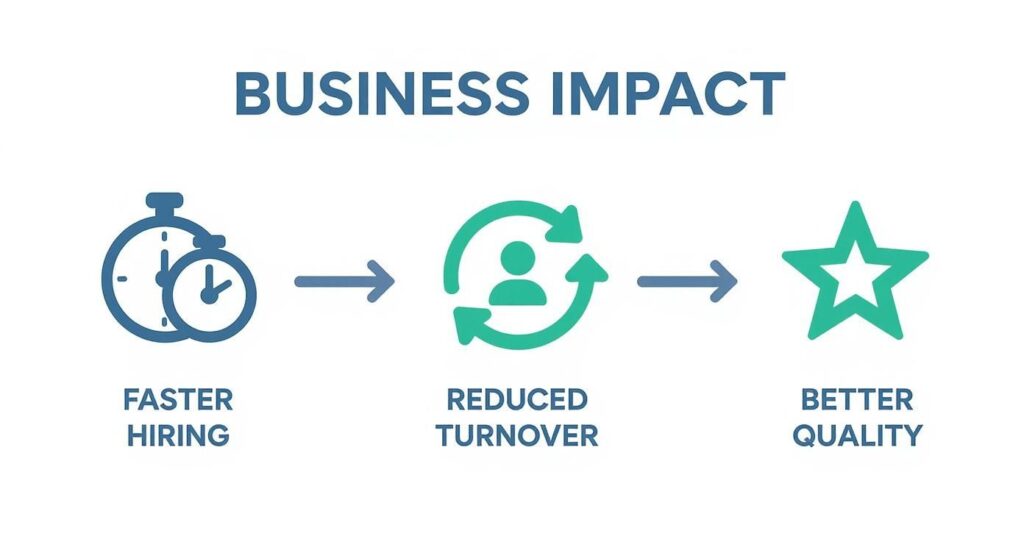
Ultimately, following these steps allows you to systematically improve key hiring metrics, turning recruitment from a cost centre into a true strategic driver of business growth.
Connecting with India’s Next Generation of Talent
The Indian workforce is seeing a massive generational shift, and predictive hiring is perfectly timed to meet the expectations of this new wave of talent. Digitally native candidates, especially Gen Z, don’t just prefer a tech-forward hiring process—they flat-out expect it. Long, clunky application forms and slow, impersonal communication are immediate deal-breakers for them.
Think about it. This generation grew up with personalised, on-demand experiences in every other part of their lives, from Netflix to Swiggy. They expect the same smooth, smart experience from potential employers. Predictive tools help create this journey by tailoring everything from job recommendations to interview scheduling, showing candidates you actually value their time and potential.
Speaking the Language of a Digital-First Workforce
To really connect with emerging talent, companies have to move beyond the old one-size-fits-all approach to recruitment. A data-driven approach lets you understand what this generation truly values in an employer and show that you get it right from the first interaction.
Predictive analytics can help you:
- Personalise Your Outreach: Pinpoint candidates whose skills and career goals genuinely align with your open roles. This makes your first contact far more relevant and engaging.
- Create a Fairer Process: Using objective data to assess candidates cuts down on unconscious bias, signalling a commitment to meritocracy that really resonates with younger workers.
- Provide Faster Feedback: Automating the first few screening stages means recruiters can give timely updates, keeping top candidates interested and showing you respect their time.
Building a hiring process that is fast, fair, and personalised is no longer a “nice-to-have”. It’s a strategic must-have for attracting and holding onto the best young talent in India.
This demographic shift is changing the Indian talent market at a rapid pace. By 2025, Gen Z will make up 27% of the Indian workforce, and their digital-first mindset is forcing employers to adapt or be left behind. This is critical, especially when you consider that nearly 80% of Indian employers report struggling to find skilled candidates.
Predictive analytics gives you a huge advantage by helping forecast a candidate’s growth potential and cultural fit—both vital for long-term retention in such a competitive market.
In the end, predictive hiring is a powerful way to demonstrate that your organisation is forward-thinking and understands what Millennials and Gen Z expect from employers in India. It positions your company not just as a place to work, but as a modern employer of choice that’s ready for the future.
Navigating the Ethical Landscape of AI in Hiring
While predictive hiring offers some powerful advantages, it’s not something you can just switch on and walk away from. We have a critical responsibility to use it ethically. The biggest trap is that an AI model, trained on your company’s historical hiring data, could accidentally learn and amplify past biases.
Think about it: if your hiring in the past has skewed away from diversity, the algorithm will learn that pattern. It might start favouring candidates who look just like your past hires, creating a cycle that keeps talented people out.
This is exactly why human oversight isn’t just a good idea—it’s non-negotiable. Predictive hiring should be seen as a tool to support human intelligence, not replace it. It can serve up data-driven recommendations, but the final decision must always rest with a person who can apply context, empathy, and real-world judgment. The goal is to build a system that’s not just effective, but fundamentally fair.
Ensuring Fairness and Transparency
To stop algorithms from reinforcing old biases, your organisation needs to be proactive. This goes way beyond just launching the technology. It means staying vigilant and being transparent with both your internal teams and the candidates themselves.
Here are a few key strategies:
- Regular Algorithm Audits: You have to routinely check your models for any hint of bias against protected groups. This helps you catch and correct issues before they become baked into your process.
- Maintain a Human in the Loop: Always, always ensure a human recruiter or hiring manager makes the final call. This is your most important safeguard against a purely algorithmic decision.
- Candidate Transparency: Be upfront with candidates about how you’re using technology in your hiring process. This isn’t just about building trust; it’s about respecting their data privacy.
The goal is to create a hiring process where technology removes bias rather than amplifying it. By combining data-driven insights with human judgment, you can build a system that is both smarter and more equitable.
The good news is that the view on AI’s role is becoming more positive, especially in India. A recent survey of 1,300 Indian employers found that a massive 87% believe AI will not harm overall employment.
In fact, 13% see AI and predictive hiring as a way to create new jobs, particularly in sectors like IT and analytics. You can discover more insights into India’s 2025 hiring outlook and the role of AI. This shows a clear strategic shift towards using these tools to expand and improve the workforce, with an ethical approach at the core.
Frequently Asked Questions
Stepping into the world of predictive hiring is a big move, and it’s natural to have questions. We hear a lot of the same queries from HR leaders, so we’ve gathered the most common ones here to give you some clear, straightforward answers.
How Much Historical Data Do We Need?
This is probably the most common question we get, and the answer might surprise you. You likely need less than you think to get started.
While it’s true that more data is better, most predictive hiring platforms can begin building a reliable model with as few as 50-100 past hire records for a specific role. The really crucial part isn’t the sheer volume of data, but its quality. Clean, consistent data—especially with performance outcomes tied to it—is what really makes the models accurate.
Will It Make Human Recruiters Obsolete?
Absolutely not. This is a common misconception. Think of predictive hiring as a powerful assistant for your recruitment team, not a replacement.
It handles the heavy lifting—the time-consuming initial screening and data analysis—which frees up your recruiters to do what humans do best. They can now focus more of their energy on building genuine relationships with top-tier candidates, digging into cultural fit, and using their intuition to make those final, critical judgements. The machine provides the insights, but the person makes the call.
Predictive analytics provides the data-driven insights, but human judgment provides the essential context and empathy. It’s a partnership designed to make smarter, more informed decisions, not to remove the human element from hiring.
What Are the Biggest Implementation Mistakes?
When we see predictive hiring initiatives stumble, it usually comes down to a few common pitfalls. Here are the big ones to watch out for:
– Poor Data Quality: Trying to build a model on a foundation of messy, inconsistent, or incomplete historical data. Garbage in, garbage out, as they say.
– Vague Success Metrics: Not taking the time to clearly define what a “good hire” actually looks like. If you don’t have measurable outcomes, the algorithm won’t know what to optimise for.
– Lack of Human Oversight: Becoming too reliant on the algorithm and forgetting that it’s a tool. You always need a human in the loop to review recommendations and make the final decision.
How Do We Measure ROI?
Measuring the return on your investment is more straightforward than you might think. It’s all about tracking a few key metrics before and after you bring the system online.
Look for tangible improvements in areas like:
A reduction in your average time-to-hire.
– A noticeable decrease in employee turnover rates, especially within the first year.
– An improvement in performance scores or productivity metrics for new hires.
At Taggd, we specialise in data-driven recruitment strategies that deliver measurable results. Discover how our Recruitment Process Outsourcing services can transform your hiring outcomes by visiting us at https://taggd.in.