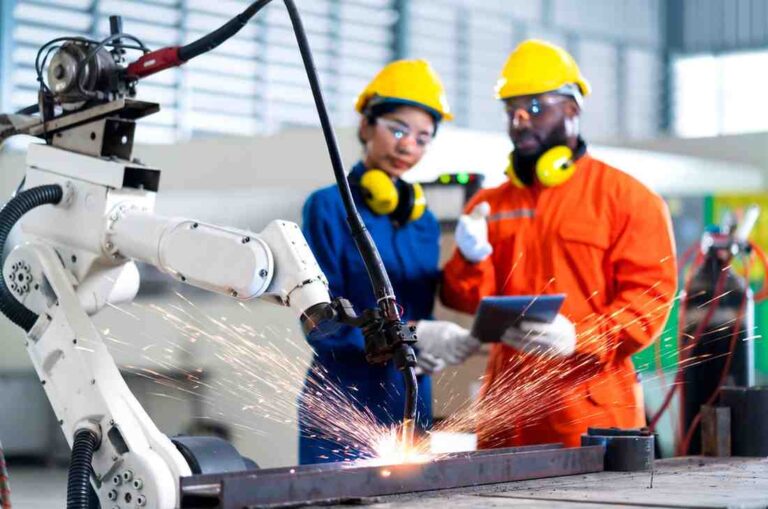
Attrition on the manufacturing floor is no longer just a routine HR metric to track. It’s now a strategic CHRO problem, striking at the very heart of a company’s ability to produce, innovate, and turn a profit. We’re seeing a perfect storm of rapid industrial growth, a widening skills gap, and fundamentally new workforce expectations. What was once a manageable leak has become a pipeline burst that demands immediate C-suite attention.
From Factory Floor Leak to Boardroom Crisis
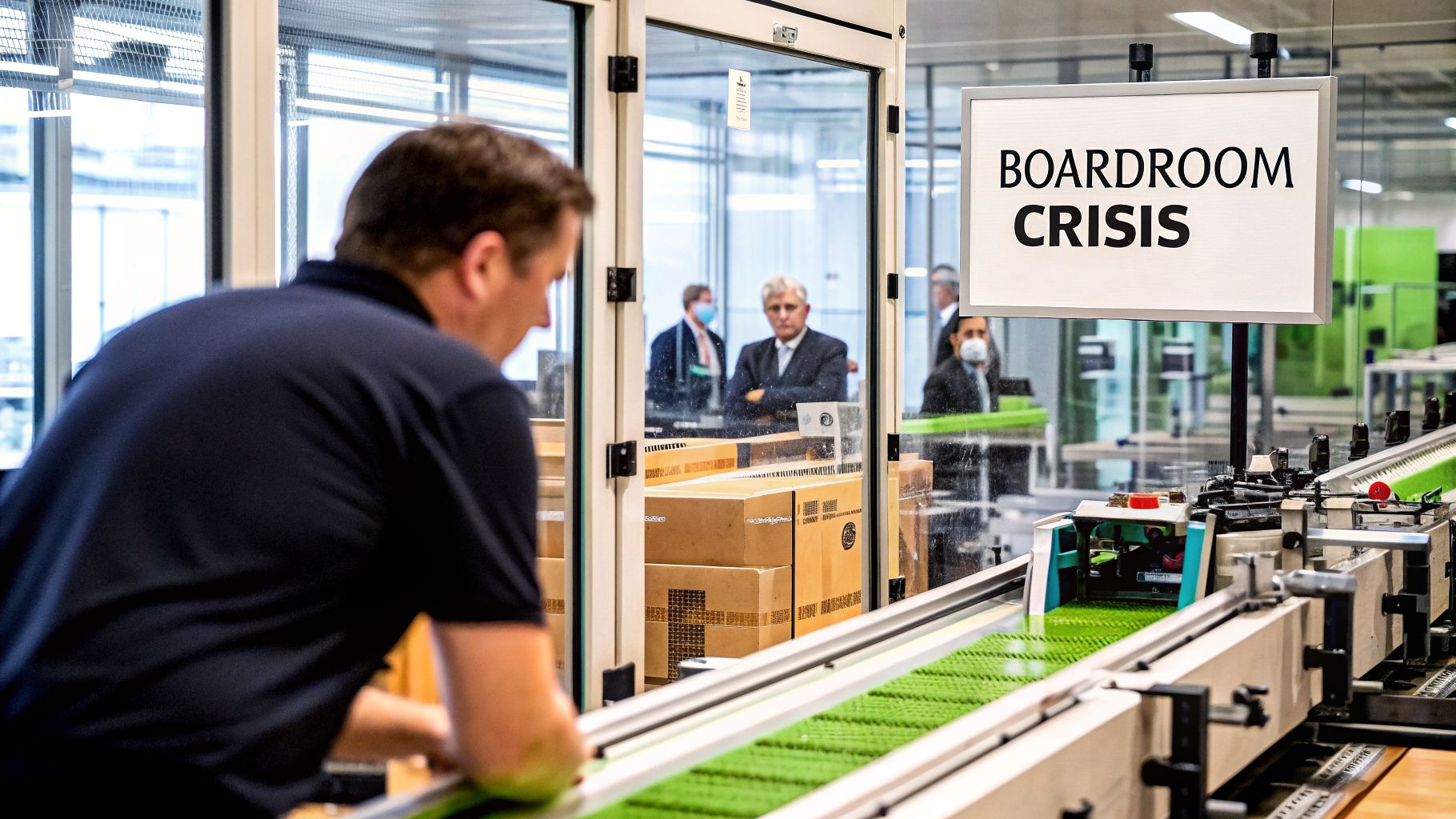
For decades, we saw employee turnover in manufacturing as an operational headache, a predictable cost of doing business, handled by the HR department. The primary goal was simple: replace workers who left and keep the production line moving.
But that perspective is now dangerously outdated. Today, attrition isn’t just a leak; it’s a full-blown crisis that has rightly earned its place on the boardroom agenda. This shift from an HR task to a strategic imperative is being driven by some powerful forces. As India’s industrial sector booms, the very foundation of that growth, its workforce, is becoming alarmingly unstable.
The following table really brings home how the thinking around attrition has been forced to change. It’s no longer about just filling seats; it’s about safeguarding the future of the business.
How Attrition Evolved from an HR Task to a C-Suite Priority
| Aspect | The Past (Operational View) | The Present (Strategic View) |
|---|---|---|
| Primary Concern | Replacement cost and administrative burden | Threat to production, innovation, and market share |
| Responsibility | HR department’s administrative task | A core strategic issue for the CHRO and C-suite |
| Focus | Filling vacant positions quickly to maintain headcount | Retaining skilled talent and building a stable workforce |
| Impact Area | Contained within HR and line management | Affects entire business: operations, finance, R&D, and strategy |
| Metrics | Basic turnover rate | Cost-to-replace, productivity loss, and skills gap analysis |
This evolution shows that ignoring high turnover is no longer an option. It has become a direct threat to a company’s long-term health and competitiveness.
The Widening Skills and Expectations Gap
The modern factory floor is a world away from its predecessor. It’s no longer just about manual labour; it requires skilled technicians who can operate CNC machines, manage robotics, and interpret complex data. This shift has created a severe skills gap, making experienced workers incredibly valuable and difficult to replace.
At the same time, a new generation is entering the workforce with entirely different expectations. They want more than just a paycheque. They are looking for:
- Clear Career Pathways: Employees want to see a future for themselves within the company, not just a dead-end job on the line.
- Meaningful Upskilling: Opportunities to learn new, valuable skills are a powerful magnet for ambitious talent.
- Supportive Leadership: The old-school, command-and-control management style is failing. Modern workers thrive under leaders who act as coaches and mentors.
This clash between legacy management styles and modern employee expectations is a major reason people are walking out the door.
Attrition has evolved from a simple replacement cost to a direct threat against production schedules, innovation capacity, and overall market competitiveness. It is a hidden tax on profitability that can no longer be ignored by top leadership.
A Problem of Growth and Competition
India’s own manufacturing success has magnified the problem. In India’s manufacturing sector, attrition rates have stubbornly hovered around 14% in 2024. While that’s a slight improvement from 15.4% in 2023, it’s still a number that should make any leader nervous.
Even as manufacturing output surged by an impressive 5.4% in July 2025, employment stability has failed to keep pace. This points to a deep vulnerability in the talent pipeline. You can explore the latest attrition trends to understand this dynamic further on HRKatha.com.
This incredible growth creates intense competition for a limited pool of skilled talent, not just from other manufacturers but also from high-paying adjacent sectors. The consequence is clear: CHROs must now lead the charge with proactive, strategic solutions to protect their company’s most vital asset, its people.
The Real Reasons Your Best Workers Are Leaving
To get a handle on the attrition puzzle, CHROs have to look past the usual excuses. The real reasons your best people are walking out the door in 2026 are far more complex and tangled than ever before. It’s not just about a few extra rupees in their pay packet; it’s a seismic shift in what talent wants and where they can find it.
Picture your workforce as a reservoir of expertise. For years, the flow in and out was mostly balanced. Now, several new, powerful currents are draining that reservoir faster than you can possibly refill it, threatening to run it dry. Understanding these currents is the first step towards building a dam.
The Fierce War for Niche Skills
Initiatives like “Make in India” and various production-linked incentive (PLI) schemes have been great for industrial growth. The flip side? They’ve also created a hyper-competitive battleground for talent. This isn’t a general labour shortage; it’s a targeted war for specialists.
Companies are now desperately hunting for professionals who can run a modern, automated factory floor. The demand for these roles has gone through the roof:
- Automation Specialists: The experts who can programme, maintain, and troubleshoot the robotic systems that are now the heart of productivity.
- Skilled Welders: True artisans whose precision is absolutely critical in sectors from automotive to heavy machinery.
- CNC Machinists: The skilled technicians operating the computer-controlled tools that define modern manufacturing.
This fierce competition means your rivals, often flush with new investment, are actively trying to poach your most valuable employees. They aren’t just dangling a slightly better salary; they’re offering a massive premium for proven skills, leaving a critical vacuum in their wake.
The Great Expectations Mismatch
The new generation entering the manufacturing sector has a completely different set of expectations. The old model of a long, static career on the shop floor simply doesn’t cut it anymore. Today’s talent is looking for growth and purpose, not just tenure.
They’re actively searching for:
- A Clear Career Path: They want to see a tangible, achievable ladder from an entry-level role to a supervisory or specialised position. If they don’t see a path forward, they see a dead end.
- Meaningful Work-Life Integration: It’s no longer just about clocking in and out. They expect a workplace that respects their time and well-being beyond the factory walls.
- A Sense of Purpose: Younger employees are far more motivated when they understand how their specific role contributes to the company’s bigger picture and overall success.
When a company’s culture is stuck in the past valuing years of service over skill and a command-and-control style over collaboration, it creates a deep disconnect. Your brightest talent won’t wait around for the organisation to catch up; they’ll simply leave for one that already gets it. This is exactly why addressing skill gaps is crucial for creating a high-impact manufacturing workforce that feels valued and sees a real future.
The Lure of High-Paying Adjacent Sectors
The talent drain isn’t just happening within the manufacturing industry itself. A massive threat is coming from high-paying adjacent sectors that are recruiting from the very same talent pool. Global Capability Centres (GCCs), IT services, and tech product companies are offering attractive packages and modern work environments that many manufacturing units struggle to match.
While a sector like financial institutions might see a very high attrition rate of 27.3%, manufacturing’s seemingly lower rate of around 14% hides a much bigger strategic problem. The manufacturing sector employs millions, so even a modest turnover rate translates into massive operational disruption and knowledge loss.
A recent Aon survey of over 1,060 companies drives this point home. It shows that sectors like engineering and manufacturing are planning double-digit salary hikes of around 10% in 2025 just to try and stop the bleeding. You can read more about these salary trends in the complete Aon survey findings on Business Standard.
This “brain drain” is incredibly damaging. When a skilled supervisor, an engineer, or a data-savvy plant manager leaves for a GCC, they take more than just their job description. They walk away with years of institutional knowledge, their leadership potential, and often, the morale of their entire team. This isn’t just a loss of headcount; it’s a haemorrhage of the very capabilities you need to innovate and compete.
The Hidden Costs of a Revolving Door
When an employee walks out the door, the first cost that comes to mind is finding their replacement. But that direct expense is just the tip of the iceberg. In manufacturing, high attrition acts like a silent ‘production tax’ that steadily eats away at your profitability and stability. It’s a tax you won’t find on a balance sheet, but you feel its weight every single day on the factory floor.
For a CHRO, putting a number on this damage is crucial. It’s how you get the C-suite to see that attrition is much more than an HR problem it’s a business crisis. The costs are real, they are widespread, and they strike at the very heart of the organisation. Let’s pull back the curtain on the true price of this revolving door.
Operational Disruption and Its Ripple Effects
Every time a skilled worker leaves, they don’t just leave an empty workstation. They leave a vacuum that can throw the entire production line into chaos. This isn’t a small hiccup; it’s a cascade of problems that ripples through the whole system.
The most immediate impact is a production slowdown. Your remaining team members are stretched thin, forced to pick up the slack. This quickly leads to fatigue, burnout, and a pressure-cooker environment where mistakes are bound to happen.
- Higher Defect Rates: An overburdened or inexperienced worker is far more likely to make an error. A single faulty component can trigger expensive rework, piles of scrap, or even product recalls that tarnish your brand’s reputation for quality.
- Increased Safety Incidents: New hires, or even existing employees who are unfamiliar with a specific machine, are a major safety risk. In fact, one study found that new employees are three times more likely to get injured during their first month on the job. These incidents don’t just hurt morale; they lead to lost workdays and soaring insurance premiums.
This constant instability turns what should be predictable output into a daily gamble.
The Deep Financial Drain
Beyond the chaos on the floor, the financial bleed from high turnover is severe. We’re talking about costs that go way beyond a recruiter’s fee or a new hire’s salary. It’s a multi-layered financial drain that hits your bottom line from all sides.
Think about how these expenses compound:
- Soaring Overtime Costs: When you’re short-staffed, overtime stops being the exception and becomes the rule just to keep up with quotas. These premium wages inflate your labour costs, eroding profit margins on every single unit you produce.
- Intensive Training Expenses: Getting a new operator up to speed in a modern manufacturing setup isn’t a one-day affair. It involves training materials, dedicated time from supervisors and veteran peers, and formal training programmes all of which carry significant costs.
- The Productivity Chasm: A new hire simply doesn’t hit the ground running. The ramp-up period can stretch for months, and during that time, their output is just a fraction of what an experienced employee delivers. This productivity gap is a direct, though often hidden, financial loss.
When you add it all up recruitment, training, overtime, and lost productivity, replacing a single skilled manufacturing employee can cost anywhere from 30% to 150% of their annual salary. This isn’t just an HR metric; it’s a major financial liability that impacts the entire organisation’s P&L.
Long-Term Strategic Setbacks
The most damaging costs of attrition might be the ones that are hardest to put a number on: the strategic setbacks. These are the slow-burning problems that quietly undermine your company’s future and its ability to compete.
When your experienced people leave, they take a wealth of critical process knowledge with them. This is the kind of hard-won expertise that you’ll never find written down in a manual. This slow erosion of institutional memory makes the entire organisation less efficient and more fragile.
Worse, constant churn poisons your employer brand. A reputation for being a “revolving door” makes it exponentially harder and more expensive to attract top talent down the line. In today’s competitive labour market, a poor employer brand can be a crippling handicap.
Ultimately, a factory floor in constant flux can’t support big-picture goals. R&D projects get delayed, innovation stalls, and your organisation loses its agility. This is exactly why tackling attrition in manufacturing is now a strategic problem for the CHRO, it’s fundamental to securing the company’s long-term growth and success.
Metrics That Turn HR Data Into Business Strategy
To get the board’s attention, CHROs need to start speaking their language: data, risk, and return on investment. The generic, top-level attrition rate just doesn’t cut it anymore. It’s a vanity metric that hides the real story happening on your factory floor.
Think of it like a doctor diagnosing a patient. They don’t just take a temperature and call it a day; they run specific tests to find the root cause. A modern CHRO must do the same, looking past the basic turnover number to diagnose the health of the workforce and prescribe the right cure.
Going Beyond The Basic Attrition Rate
To really get a grip on what’s happening, we need to break down that single attrition number into more meaningful pieces. This is where you turn raw data into a real, actionable strategy.
Start by tracking these two critical metrics:
- First-Year Attrition: This is a direct report card on your onboarding and initial employee experience. If this number is high, it’s a red flag that your hiring process, initial training, or early days on the job are falling short, causing new hires to walk away before they even become productive.
- Regrettable vs. Non-Regrettable Attrition: Let’s be honest, not all turnover is bad. Losing a poor performer can be a net positive. But when a high-performing team lead or a skilled technician leaves, it’s a major blow. This metric helps you understand if you’re losing the very people you can’t afford to lose.
Understanding who is leaving is just as important as knowing how many are leaving. When your top performers walk out the door, you’re not just losing an employee; you are hemorrhaging institutional knowledge, future leadership, and your competitive edge.
This detailed view is no longer a “nice-to-have.” The industry’s projected 10% salary hike for 2025 is a clear signal of the battle to keep talent. This pressure is forcing a shift to data-driven retention, with 37% of Global Capability Centres now laser-focused on monitoring infant attrition.
The Modern Manufacturing CHRO’s Attrition Dashboard
To move from being reactive to proactive, you need a dashboard that goes beyond surface-level numbers. These metrics give you the strategic insights needed to make real, impactful decisions.
| Metric | What It Measures | Strategic Action It Informs |
|---|---|---|
| First-Year Attrition | The percentage of new hires who leave within their first 12 months. | Indicates issues with onboarding, training, or role expectation mismatch. Drives improvements in the crucial early employee experience. |
| Regrettable Attrition Rate | The turnover rate specifically among high-performing or critical-role employees. | Pinpoints weaknesses in retaining top talent. Informs targeted engagement and development programmes for key employees. |
| Attrition by Critical Skill-Set | Turnover rate broken down by specific, hard-to-replace job functions (e.g., CNC machinists, robotics engineers). | Highlights your biggest operational risks and tells you exactly which talent pools require immediate retention focus. |
| Comprehensive Cost-to-Replace | The total financial impact of losing an employee, including recruitment, training, overtime for remaining staff, and lost productivity. | Translates the “people problem” into a hard financial number that justifies investment in retention initiatives to the C-suite. |
By tracking these metrics, you can start predicting problems before they escalate, turning your HR function into a strategic partner that directly protects the company’s bottom line and operational stability.
Pinpointing Your Greatest Vulnerabilities
To build a truly resilient workforce, you have to know where your weakest points are. This means getting even more granular with your data to see where the business is most exposed.
- Attrition by Critical Skill-Set: Are you losing an alarming number of welders or automation experts? Tracking turnover for specific, hard-to-replace skills shows you where your biggest operational risks lie and tells you exactly where to focus your retention efforts.
- Comprehensive Cost-to-Replace: This is the number that makes the C-suite sit up and listen. It goes way beyond recruitment fees to calculate the total hit, including training, overtime paid to cover gaps, and lost productivity while the new hire gets up to speed.
This is what that total impact looks like. It’s not just a single cost but a cascade of operational, financial, and strategic damage.
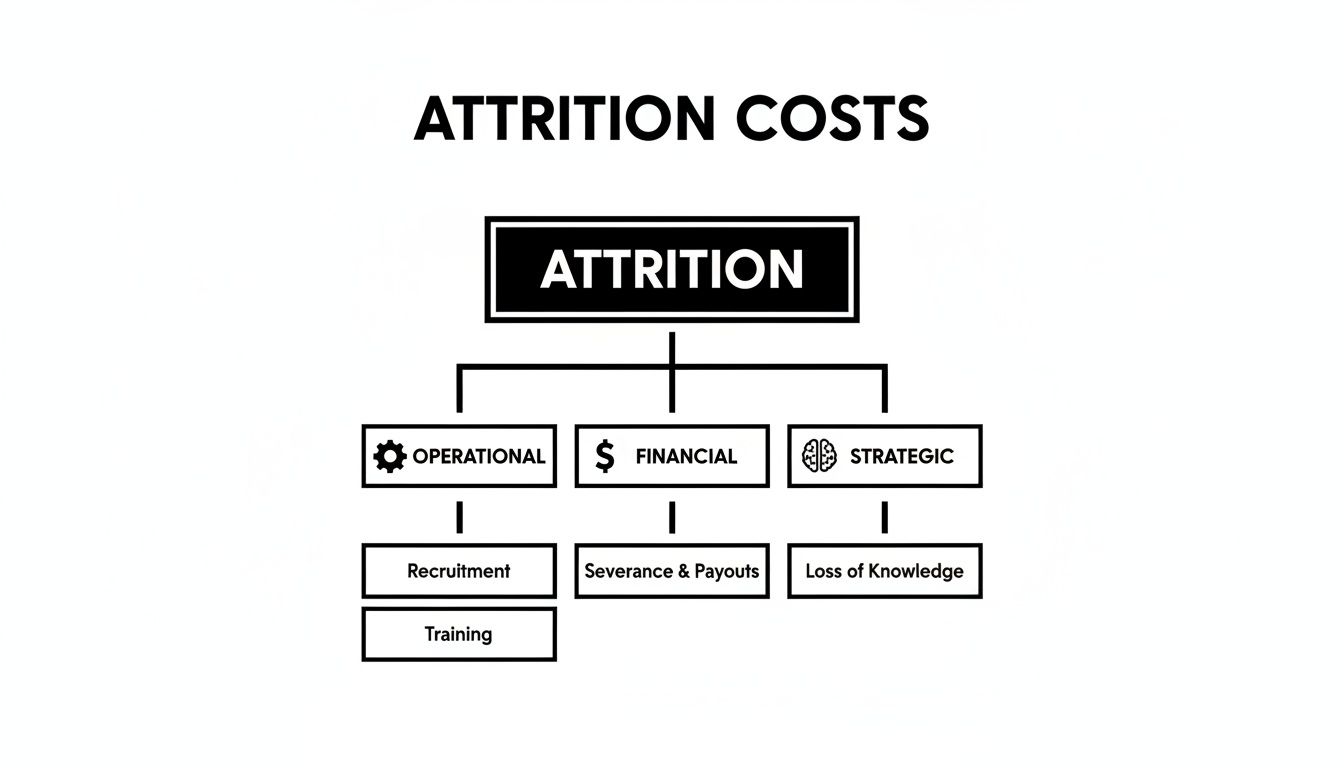
The visual makes it clear: turnover isn’t just an HR line item. It’s a multi-faceted business problem that grinds down efficiency and throws a wrench in your long-term plans.
When you’re armed with this level of data, the conversation changes. You’re no longer saying, “We have a turnover problem.” You’re saying, “Losing skilled welders is costing us ₹X lakhs per quarter and putting our new product launch at risk.” That’s how HR data becomes a powerful business strategy, securing the investment you need for real, meaningful change. You can dive deeper into this topic by exploring our guide on essential talent acquisition metrics.
Actionable Retention Strategies for the Modern Factory

Knowing why your people are leaving is one thing. Actually doing something about it is the real challenge. To tackle the attrition bleeding out of manufacturing units, CHROs need to push for strategies that go way beyond just paycheques and the odd annual bonus. The real mission is to create a workplace where your skilled people actively choose to stay and build their careers.
This isn’t about a single programme or a quick fix. It means taking a hard look at the entire employee journey, from their first day on the floor to their long-term growth within the company. We have to move away from treating employees like replaceable parts and start seeing them as the valuable, long-term investments they are.
Build Transparent Career Pathways
For a lot of shop-floor employees, the future looks like a dead end. They see no clear route for advancement, which is a massive reason ambitious workers start looking elsewhere. One of the most powerful tools in your retention arsenal is to build career ladders that are both visible and tangible.
Just imagine a new machine operator who can see a clear, step-by-step path to becoming a senior operator, then a team lead, and maybe even a shift supervisor. That simple visibility transforms a job into a career.
This involves a few key moves:
- Skill-Based Pay Tiers: Tie pay rises directly to learning new skills and earning certifications. When people learn more, they should earn more.
- Formalised Progression Plans: Put it in writing. Document the exact skills, experience, and training needed to climb to the next rung of the ladder.
- Internal Promotions First: Foster a culture where you always look inside your own walls for talent before you even think about searching externally.
An approach like this sends a clear message: we are invested in your future, not just your output for today.
Invest in Targeted Upskilling and Mentorship
With factories adopting more automation and digital tools, standing still is the same as falling behind. Your employees know this better than anyone. Investing in their skills isn’t just a nice-to-have; it’s one of the surest ways to secure their loyalty and future-proof your entire operation.
Think bigger than basic safety training. Offer programmes that get them ready for the factory of tomorrow. This could be certifications in CNC programming, robotics maintenance, or using data analytics to monitor production. These aren’t perks; they are crucial investments in your own operational strength.
A mentorship programme is a brilliant, low-cost strategy that pays off in two ways. It helps pass down that critical, unspoken knowledge from your veterans to your newer team members. It also gives your experienced staff a meaningful way to contribute, which boosts their own engagement and sense of value.
Elevate the Employee Experience on the Floor
The day-to-day reality on the factory floor has a huge effect on morale and, ultimately, retention. A workplace that feels old-fashioned, uncomfortable, or unsupportive will constantly lose its best people. CHROs have to be the champions for improvements that show genuine respect for the workforce.
A great place to start is with your frontline supervisors. All too often, the best machine operator gets promoted to supervisor with zero leadership training. You need to equip them to be coaches and mentors, not just taskmasters. Countless studies confirm that the relationship with a direct manager is a top reason people stay or go.
And don’t forget the basics. Clean break rooms, better lighting, and modern tools can make a world of difference to someone’s daily grind. Where you can, look into options for more flexible scheduling to improve work-life balance, a non-negotiable for today’s workforce.
Mini Case Study: A Turnaround in Automotive Parts
A mid-sized automotive supplier was staring down a crisis. Turnover among its skilled CNC technicians had rocketed to an alarming 35% per year, leading to constant production delays and quality control nightmares. The CHRO decided to take charge with a new retention-focused plan.
Instead of just throwing money at the problem, they built a structured upskilling programme. Technicians were offered paid training and certifications on the latest multi-axis machines. They also created a clear, three-tier career path (Technician I, II, and III), each with defined skills and matching pay increases.
The results were stunning. Within 18 months, technician turnover was slashed to below 10%. The company began filling 80% of its senior technician jobs through internal promotions, which saved a fortune on recruitment and got new leaders up to speed faster. The investment in training paid for itself in less than a year, proving the incredible ROI of a well-thought-out retention strategy.
Building a Resilient Workforce with Strategic RPO
Let’s be realistic, even with the best retention strategies in place, you’re never going to eliminate turnover completely. People will always move on. This inevitable churn means that your retention efforts, no matter how great, need to be backed by a strong, proactive talent pipeline. This is where Recruitment Process Outsourcing (RPO) stops being a simple hiring tool and becomes a powerful strategic partner for CHROs.
An RPO partner helps manufacturing leaders break free from the constant cycle of reactive firefighting. Instead of scrambling to fill a vacancy after a key employee leaves, a specialised RPO provider is always building a talent pipeline for your most critical roles, like automation technicians or quality control inspectors. This dramatically shrinks the time it takes to find and hire the right person when you need them.
This move from reactive to proactive hiring is the bedrock of building a resilient workforce, one that can handle market shocks and talent shortages without skipping a beat.
From Cost Centre to Strategic Investment
For a long time, many leaders saw outsourcing recruitment as just another line item on the expense sheet. But when you’re dealing with high attrition in manufacturing, a strategic RPO partnership is really an investment in business continuity. It gives you the agility to keep production lines running smoothly, even when faced with unexpected departures.
A specialised manufacturing RPO provider does more than just fill job requisitions. They become an extension of your team, bringing deep market intelligence and data to the table. Suddenly, your recruitment process isn’t just about filling seats, it’s a source of competitive advantage.
An RPO partner acts as your eyes and ears in the talent market. They provide real-time data on salary benchmarks, what your competitors are doing, and which skills are available. This intelligence helps CHROs make smarter workforce planning decisions, anticipate hiring needs, and justify talent investments to the board.
For instance, if your RPO partner identifies that a rival is aggressively hiring welders in your region, you can get ahead of the curve and launch a targeted retention campaign for your own team before you start losing people.
How RPO Strengthens Your Talent Pipeline
A dedicated RPO partner brings specialised tools and expertise that many in-house teams simply don’t have the bandwidth to develop on their own. They essentially build a multi-layered defence against the constant threat of attrition.
Here are some of the key benefits:
- Proactive Talent Pooling: Instead of starting from square one every time a position opens up, an RPO partner builds and nurtures communities of pre-vetted, passive candidates who are already interested in your company. When a role opens, you’ve got a ready-made list of qualified people to call.
- Improved Quality of Hire: RPO teams are experts in sourcing. They use sophisticated techniques to find and engage high-calibre candidates who aren’t even actively looking for a job. This significantly improves the overall quality and cultural fit of your new hires.
- Enhanced Employer Brand: A professional and efficient recruitment process leaves a lasting positive impression on every candidate, even the ones you don’t end up hiring. This strengthens your reputation in a crowded market, making it easier to attract top talent down the road.
- Reduced Time-to-Fill: With established talent pools and streamlined processes, an RPO partner can slash the time it takes to fill critical roles. For example, companies like Electrolux found that using an expert partner can decrease time-to-hire by 9%, which directly minimises production downtime.
Ultimately, a strategic RPO partnership gives CHROs the breathing room to focus on the big picture, long-term retention and culture while being confident that a robust external talent engine is always running in the background. You can explore more on how Recruitment Process Outsourcing can improve hiring results in our detailed guide.
Frequently Asked Questions
As CHROs and business leaders grapple with rising attrition in manufacturing, a few key questions keep coming up. Let’s tackle some of the most common hurdles you might be facing when trying to solve this critical strategic issue.
How Do I Convince My Board to Invest in Retention Programmes?
You need to speak the language of the boardroom: ROI and risk. Simply presenting high turnover rates isn’t enough. Instead, build a solid business case around the ‘Cost of Attrition’.
Show them the numbers. This should include everything from lost productivity and overtime pay for the remaining staff to the very real financial hit from poor quality control and production misses.
Then, contrast that ongoing financial drain with the investment needed for a smart retention programme. For instance, showing how cutting down regrettable attrition among your skilled technicians by just 5% could save the company millions of rupees every year. This changes the conversation entirely. Retention is no longer an expense, but a high-return investment that protects your bottom line.
What Retention Tactics Actually Work for Skilled Shop-Floor Workers?
For your skilled workers on the factory floor, money isn’t the only answer. While fair pay is important, long-term loyalty is built on a foundation of respect, recognition, and seeing a real future with the company.
Think about these high-impact tactics that genuinely resonate:
- Implement skill-based pay tiers: Directly connect their pay to the new, valuable skills they learn on the job.
- Create clear advancement paths: Show them a visible career ladder, from an operator role to a team lead or a specialised technician.
- Invest in frontline supervisor training: This is absolutely critical. Your supervisors need to be coaches and mentors, not just taskmasters.
- Recognise quality work publicly: Acknowledging great work builds a sense of pride and shows everyone what success looks like.
Never underestimate the power of a better physical work environment and showing genuine respect for their expertise. These are powerful, often low-cost ways to build the kind of loyalty that lasts.
When Should Our Company Consider a Recruitment Process Outsourcing Partner?
It’s probably time to have a serious conversation about a Recruitment Process Outsourcing (RPO) partner when your internal hiring team is constantly playing catch-up. Are you perpetually firefighting? Does it regularly take you more than 90 days to fill a critical role? Are you losing great candidates simply because your hiring process is too slow and clunky? If you answered yes, an RPO can provide immediate help.
Even more importantly, if high attrition is starting to cause production delays and you just don’t have the data or manpower to accurately forecast your hiring needs, a strategic RPO partnership becomes essential. They bring the scale, deep market knowledge, and technology needed to build a proactive talent pipeline, turning your recruitment function from a cost centre into a real competitive advantage.
Ready to turn your talent pipeline into a strategic asset and combat manufacturing attrition? Partner with Taggd to build the resilient workforce your business needs. Discover our RPO solutions today.