
Boost Hiring Success with Top Talent Acquisition Software
As hiring becomes more data-driven and outcome-focused, talent acquisition software plays a critical role in improving hiring speed, quality, and workforce planning decisions.
In a market this competitive, talent acquisition isn’t just a transactional process anymore—it’s the engine that drives business growth. Today’s talent leaders have to think beyond simply recruiting; they need to architect a complete strategy. And talent acquisition software is the essential toolkit for building that future. This guide is your roadmap for choosing and implementing the right technology.
What Does Talent Acquisition Software Cover?
Talent acquisition software extends beyond basic hiring automation. It supports the full lifecycle of talent acquisition, from sourcing and engagement to analytics-driven workforce planning.
Sourcing and pipeline management to build and nurture talent pools over time
Candidate engagement through structured communication and experience tracking
Hiring analytics and reporting to measure speed, quality, and effectiveness of hiring decisions
Workforce planning support that links hiring data with future talent demand
Integration with RPO or enterprise hiring models to support large-scale, continuous recruitment
This broader scope differentiates talent acquisition software from standalone job posting or applicant tracking tools.
From Recruiter to Strategic Talent Architect

The role of a Chief Human Resources Officer (CHRO) has changed, fundamentally. Yesterday’s recruiter was like a lone angler, casting a single line and hoping for a bite. Today’s strategic talent leader is more like a marine biologist, carefully cultivating a thriving and sustainable ecosystem.
This shift moves the focus from just filling open roles to proactively building a dynamic talent pipeline that can anticipate what the business will need down the road. It’s about much more than finding candidates; it’s about attracting, engaging, and holding on to the elite talent that will push your organisation forward.
The Central Challenge for Today’s CHRO
The main challenge is clear: winning the war for talent. It’s an incredibly competitive landscape. Your competitors aren’t just other companies in your industry; they’re every organisation out there vying for the same skilled people. To come out on top, you need a system that gives you visibility, efficiency, and intelligence across the entire talent lifecycle.
This is exactly where talent acquisition software becomes the central nervous system of your strategy. It provides the integrated platform you need to manage everything from employer branding to candidate relationship management.
Your talent acquisition strategy is your business strategy. In an economy driven by innovation and service, your people are the only sustainable competitive advantage you have. Without the right team, even the best products and business models will eventually falter.
A Look at Market Growth
The demand for these powerful tools is growing, and fast. The India recruitment software market was valued at around USD 80 million in 2024 and is projected to hit about USD 120 million by 2033. This growth highlights just how urgent the need for automation and digital hiring solutions has become for modern Indian companies.
What You Will Learn in This Guide
This guide is designed to give you the knowledge you need to make smart technology decisions. We’ll walk you through a complete overview of talent acquisition software, starting with the foundational concepts and moving into more advanced applications.
Throughout this guide, we’ll cover:
- Core Concepts: Understanding the real difference between a basic Applicant Tracking System (ATS) and a full talent acquisition suite.
- Essential Capabilities: Exploring the features your business can’t afford to ignore, from AI-powered sourcing to predictive analytics.
- Implementation Best Practices: A practical roadmap for a successful rollout that ensures your team actually uses the tech and gets lasting results.
- Measuring ROI: How to calculate and present the true business value of your technology investment to the board.
By understanding these key areas, you can build a robust talent acquisition and recruitment strategy that truly aligns with your company’s long-term goals.
Understanding Talent Acquisition Software
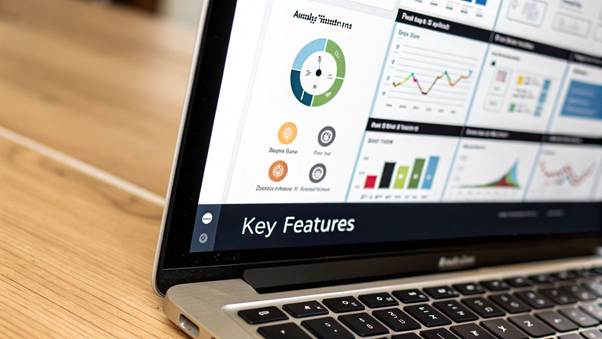
Let’s cut through the jargon. What really is talent acquisition software? Forget the dry, textbook definitions for a moment. Instead, picture a mission control centre for your company’s entire talent strategy. It’s an integrated platform of tools built to manage the whole journey, from the first time a candidate hears your company’s name to their first day as a new hire.
This isn’t just about collecting CVs in a digital folder. A proper talent acquisition suite connects every single piece of the recruitment puzzle into one seamless system. It’s designed to help you build relationships, anticipate future hiring needs, and make smarter, data-backed decisions about who you bring into the organisation.
More Than Just an Applicant Tracking System
One of the most common points of confusion is mixing up talent acquisition software with a basic Applicant Tracking System (ATS). It’s an easy mistake to make, but the difference is huge. While an ATS is a critical piece of the puzzle, it’s fundamentally an administrative tool. Its main job is to push applicants through a set process—collecting applications, scheduling interviews, and moving people from stage A to stage B.
A complete talent acquisition suite, on the other hand, is all about strategy. It forces you to look at the bigger picture.
- Applicant Tracking System (ATS): Think of this as reactive. It focuses on managing the active candidates you have for the specific, open roles you need to fill right now.
- Talent Acquisition Suite: This is proactive. It’s built to create and nurture pipelines of talent for the roles you have open today and the ones you’ll need to fill six months from now.
This distinction is everything. An ATS helps you manage the queue of people at your door today. A full talent acquisition platform helps you build a community of talent you can tap into for years to come, often using tools like a Candidate Relationship Management (CRM) system to keep potential hires engaged long before a role ever opens up.
Connecting Technology to Business Problems
The true value of this software isn’t the tech itself—it’s how it solves real-world business challenges that keep CHROs up at night. This isn’t about buying a shiny new tool; it’s about getting measurable results that hit the bottom line. In fact, companies that invest in modern TA technology see dramatic improvements in the metrics that matter.
For instance, leading solutions have been shown to drive a 38% improvement in Time to Fill and a whopping 42% improvement in Time to Hire. That’s not just a small efficiency boost; it’s a massive competitive advantage that lets you snap up top talent before your competitors even get a chance.
Let’s make this more concrete. Consider these common headaches and how the right software offers a direct solution:
- The Problem: Your hiring process is sluggish and full of frustrating bottlenecks. You’re constantly losing great candidates to faster-moving companies.
- The Solution: Automation and analytics immediately flag where the delays are, and streamlined digital workflows help your team make decisions much, much faster.
- The Problem: You’re struggling to find enough high-calibre, diverse candidates for highly specialised or leadership roles.
- The Solution: AI-powered sourcing tools can uncover passive candidates who aren’t even looking, while sophisticated employer branding features help you attract a far wider and more diverse talent pool.
- The Problem: You know your team is doing great work, but you can’t actually prove the ROI of your recruitment spend to the board.
- The Solution: Robust, easy-to-understand reporting gives you hard data on everything from cost-per-hire and source effectiveness to quality-of-hire and offer acceptance rates.
When you look at it this way, talent acquisition software becomes a strategic imperative. It shifts recruitment from being a reactive, administrative function to a proactive, core business driver. In today’s incredibly competitive talent market, that’s not a luxury—it’s a necessity for any organisation that’s serious about winning.
Core Capabilities Your Business Cannot Ignore
Let’s be clear: modern talent acquisition software is so much more than a digital filing cabinet for CVs. It’s a strategic engine, packed with powerful tools designed to solve your most frustrating recruitment headaches. Once you grasp these core features, you can shift from just managing applications to actually architecting a high-performing talent function.
These platforms aren’t just about making old processes faster; they’re about creating entirely new ways to find and connect with top candidates. From smart automation to deep data insights, the right software gives your team the edge it needs to win in a tough market.
AI-Powered Candidate Sourcing and Matching
Ask any recruiter what their biggest challenge is, and they’ll likely say it’s finding qualified candidates, especially for niche or senior roles. Traditional methods usually reach people who are actively job hunting, but the real gems are often passive—happy in their current job and not scrolling through job boards. This is where AI-driven sourcing completely changes the game.
Think of it this way: your old process was like fishing in a small, familiar pond. AI hands you a sonar system for the entire ocean. It scans millions of profiles across professional networks, social media, and even your own internal databases to pinpoint people who fit your ideal profile, even if they haven’t applied. For a deeper dive, check out some of the best candidate sourcing practices for tech hiring.
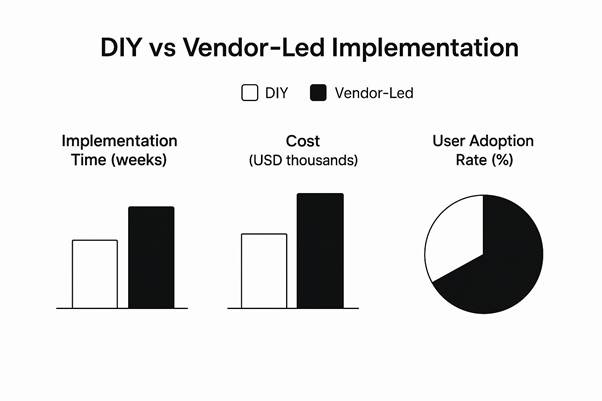
By tapping into this hidden talent pool, AI-powered sourcing can dramatically boost the quality and diversity of your candidate pipeline. It finds the “unfindable” candidates that your competitors are missing, giving you a crucial head start.
Automated Screening and Intelligent Workflows
Once the applications start rolling in, the next bottleneck is almost always the screening process. Manually sifting through hundreds of CVs is slow, riddled with potential bias, and burns up your recruiters’ precious time. A top-tier talent acquisition system automates this heavy lifting.
Intelligent screening tools can parse CVs, score candidates against your key criteria, and even deploy chatbots to ask initial qualifying questions. This frees up your team to do what they do best: building relationships with the most promising applicants.
Key automation features include:
- Automated Communication: Keeping candidates in the loop at every stage without any manual effort.
- Workflow Triggers: Automatically moving candidates forward or dispositioning them based on rules you set.
- Interview Scheduling: Wiping out the endless back-and-forth emails just to find a time that works for everyone.
Advanced Analytics and Reporting
You can’t fix what you can’t see. A core part of any modern talent acquisition platform is its powerful analytics. This is what moves your team from making decisions based on gut feelings to using hard data to fine-tune every single part of your hiring funnel.
For instance, a dashboard might instantly show you that one hiring manager takes twice as long as others to review candidates, creating a major slowdown. With that concrete insight, you can step in and solve the problem directly.
These insights are absolutely vital for showing the strategic value of your talent function to the rest of the business. It’s no surprise the market for these tools is booming as more companies realise their importance. In fact, the Indian recruitment software market was near USD 88.82 million in 2024 and is projected to climb past USD 163.62 million by 2034, all driven by the integration of AI and analytics. You can find more insights on the Indian recruitment software market from Expert Market Research.
Candidate Relationship Management (CRM)
Finally, the best software comes with a Candidate Relationship Management (CRM) component. If an ATS manages applicants, a CRM manages relationships. This tool is all about building and nurturing talent pools of high-potential people you can tap into for future roles.
Instead of starting from square one for every new opening, you can engage with a warm pipeline of candidates who already know your brand and are interested in what you do. This capability is essential for long-term, strategic talent planning and dramatically slashes the time-to-fill for future vacancies.
To better understand the landscape of features, it helps to separate the must-haves from the game-changers. Most systems will cover the basics, but true talent acquisition suites offer advanced capabilities that drive real competitive advantage.
Comparing Core vs Advanced Talent Acquisition Features
| Capability Area | Core Feature (Found in most ATS) | Advanced Feature (Found in Talent Acquisition Suites) |
| Sourcing | Posting jobs to multiple boards | AI-powered sourcing across the web and social media |
| Screening | Basic keyword search on CVs | Automated candidate scoring and AI-driven matching |
| Communication | Manual or template-based emails | Automated, personalised communication workflows and chatbots |
| Analytics | Basic reports on time-to-fill and source | Predictive analytics and dashboards on funnel health and ROI |
| Candidate Engagement | Simple applicant tracking | Proactive talent pool nurturing and CRM functionalities |
This distinction is key. While core features help you manage the process, the advanced features are what allow you to truly optimise it, turning your talent function from a reactive cost centre into a proactive strategic partner for the business.
Implementing Talent Acquisition Software for Lasting Success

Getting your hands on a powerful piece of talent acquisition software is just the start of the journey. The real test is how well you weave it into the fabric of your organisation. A great implementation isn’t about flipping a switch; it’s about carefully guiding your people and processes through a meaningful change.
Think of it like building a custom race car. You can have the most advanced engine in the world, but if the chassis, suspension, and driver aren’t perfectly aligned with it, you’ll never win. In the same way, even the best technology will fall flat if it doesn’t mesh with your team’s real-world needs and established ways of working.
The goal should never be to force your team to bend to the software. Instead, the software must be tailored to support and elevate the unique ways your team already finds success. This people-first approach is the bedrock of any lasting adoption.
Mapping Your Path to Success
A structured, phased rollout is absolutely crucial. Rushing the process is a recipe for overlooked details and frustrated users. A well-planned implementation roadmap ensures every stakeholder is on the same page and every critical step is sorted before you go live.
This initial planning phase is where you head off the most common implementation failures. It’s about getting everyone—from recruiters and hiring managers to your IT leadership—in the same room to agree on what you’re trying to achieve.
A critical mistake many organisations make is viewing implementation as a purely technical project. In reality, it’s a change management initiative. Your success will be measured not by how fast you get the system running, but by how enthusiastically your team embraces it.
Consider this phased blueprint for your implementation:
- Stakeholder Alignment and Goal Setting: First things first, define what success actually looks like. Are you aiming to slash your time-to-hire by 30%? Boost candidate diversity? Set concrete, measurable goals from day one.
- Process Mapping and Workflow Design: Map out your current hiring processes, from the first touchpoint to the final offer letter. Pinpoint the bottlenecks and then design new, streamlined workflows within the software to solve them.
- Data Migration and System Configuration: This is a delicate but vital step. You need a meticulous plan to ensure clean, accurate data is moved from old systems to the new one. Then, configure the platform to match your newly designed workflows.
- Training and User Adoption: Don’t just run a single, generic training session. Provide role-specific training that shows each person exactly how the software makes their specific job easier and more effective.
- Launch and Continuous Improvement: Going live isn’t the finish line. It’s the starting line. Continuously gather feedback from your team, keep an eye on your key metrics, and refine your processes to unlock even more value.
Fostering Widespread User Adoption
Even the most feature-packed platform is useless if your team refuses to use it. Driving adoption requires a smart mix of clear communication, hands-on training, and demonstrating undeniable value. It’s all about showing recruiters and hiring managers what’s in it for them.
Highlight how automation gets rid of tedious manual tasks or how the new analytics provide insights they’ve never had before. When users see the tool as a partner that helps them hit their targets, adoption soars. To get a feel for how a well-integrated system works in practice, see how a modern recruitment platform eases digital hiring challenges for today’s teams.
Ultimately, a thoughtful implementation transforms your software from a simple database into the strategic command centre for your entire hiring operation. By putting your people and processes first, you ensure the technology delivers on its promise for years to come.
Measuring the True Return on Your Investment
Any CHRO knows that investing in new tech demands a rock-solid business case. Getting the green light for talent acquisition software is no different. The good news? The return on investment (ROI) here isn’t just about saving a few quid. It’s about making real, measurable improvements across the board—in how efficiently you hire, how effective those hires are, and where your business stands in the long run.
To get the C-suite on board, you need to go beyond buzzwords and bring hard numbers to the table. Think of it as a performance review for your tech stack. A proper ROI calculation tells the whole story, showing that the software isn’t just another expense, but a genuine driver of business growth.
Efficiency Gains: The Most Obvious Wins
The easiest numbers to track are tied directly to speed and cost. These are your foundational arguments for ROI, showing leadership the immediate, tangible benefits of making your existing processes faster and leaner.
Let’s look at the key efficiency metrics:
- Reduced Time-to-Fill: How long does it take to get someone from an application to a signed offer? Good software can slash this timeline. By automating the grunt work, speeding up screening, and keeping communication flowing, you can get the best people in the door before your competitors even know they’re looking.
- Lower Cost-per-Hire: This isn’t just about ad spend. It’s recruiter salaries, agency fees—the whole lot. By sourcing more effectively and cutting down your reliance on pricey recruitment agencies, the software directly chips away at the cost of every single hire.
These metrics are powerful because they translate directly into saved time and money. They’re the bread and butter of your ROI story.
Investing in the right tools is essential for staying competitive in a global marketplace. This is particularly true in dynamic economies where talent is a key differentiator. The right technology empowers teams to work smarter and achieve better outcomes.
Effectiveness Improvements: The Quality Factor
Filling a role quickly is one thing, but the quality of the person you hire is what really shapes your organisation’s future. This is where effectiveness metrics come in. They show how your talent acquisition software improves the actual outcome of your hiring.
- Higher Quality-of-Hire: You can measure this through the performance review scores of new hires, how many are still with you after a year, and what their hiring managers have to say. Better sourcing and screening tools don’t just find candidates; they find high-performing employees who are the right fit.
- Improved Offer Acceptance Rates: There’s nothing worse than losing your top candidate at the finish line. A superior candidate experience—built on clear communication and a smooth, quick process—ensures more of your top choices say “yes.”
This is the shift from just filling seats to filling them with the right people. It proves you aren’t just hiring faster; you’re hiring smarter.
This growing focus on strategic hiring is fuelling market expansion across the globe. India, for example, holds a significant slice of the Asia Pacific talent acquisition software market and is projected to account for around 13.94% of the regional share by 2025. This is part of a regional industry expected to grow from USD 1.36 billion to over USD 6.09 billion by 2033, largely thanks to the adoption of advanced, AI-driven tools. You can find more insights about the Asia Pacific talent acquisition software market on cognitivemarketresearch.com.
Strategic Impact: The Long-Term Value
Finally, the most forward-thinking ROI metrics look at the big picture. These might be harder to slap a number on, but they’re critical for showing how the talent function contributes to the company’s overall health and growth.
Think about these strategic impacts:
- Stronger Employer Brand: The software helps you create a consistent, professional, and engaging experience for every candidate. That consistency builds your reputation as an employer of choice.
- Robust Talent Pipelines: By using built-in CRM features, you can nurture relationships with people who aren’t actively looking right now. This builds a ready-to-go pool of talent for future needs, cutting down hiring costs and timelines down the road.
When you combine the efficiency wins, the effectiveness improvements, and the long-term strategic value, you have a complete, data-backed case. You can confidently show that your talent acquisition software is an indispensable asset for driving sustained business growth.
Future Trends Shaping Recruitment Technology
Playing to win in the talent game means looking past today’s fires and seeing tomorrow’s opportunities. Talent acquisition software isn’t a static tool; it’s constantly being reshaped to meet new demands from the business and candidates alike. Getting a handle on these emerging trends is the key to building a recruitment strategy that works not just today, but for years to come.
The next wave of innovation is less about simply putting a digital wrapper on old processes. It’s about creating a hiring ecosystem that is smarter, more personal, and laser-focused on skills. For leaders with an eye on the future, these trends are a chance to build a real competitive edge. It’s a shift from a reactive, “post-and-pray” hiring model to one that’s predictive, agile, and surprisingly human, even as technology does more of the heavy lifting.
The Rise of Hyper-Personalisation
Let’s be honest: generic, one-size-fits-all candidate communication is dead. The next real frontier in engaging top talent is hyper-personalisation. Imagine a system that does more than just send a bland confirmation email. Picture one that talks to candidates based on their unique skills, what they want from their careers, and even their past interactions with your company.
This isn’t science fiction; it’s powered by the sophisticated AI and CRM capabilities baked into modern talent platforms. The software can track every touchpoint, giving recruiters the insights they need to craft messages that actually connect with people on a personal level.
- Tailored Outreach: Instead of a generic “we have a job opening,” the message could reference a specific project on a candidate’s portfolio or a skill they’ve highlighted online.
- Dynamic Content: Your careers page or a job description could dynamically change to show the aspects most relevant to the person viewing it.
- Personalised Journeys: The entire experience, from application to interview, can be adapted. A candidate gets updates and content that line up with their interests and the specific role they’re chasing.
This kind of personalisation makes candidates feel like you see them as individuals, not just another application in the pile. It massively boosts engagement and starts building a strong employer brand from the very first hello.
Predictive Analytics for Proactive Hiring
What if you could predict your hiring needs months from now, with a high degree of accuracy? That’s the promise of predictive analytics in talent acquisition. Instead of scrambling to fill a role after a surprise resignation, this tech helps you build talent pipelines before a position is even open.
By crunching historical data on employee turnover, factoring in business growth plans, and looking at market trends, the software can forecast which departments will likely need new people and what skills will be in high demand.
This changes recruitment from a reactive, order-taking function into a truly strategic one. Predictive analytics lets you move from just-in-time hiring to just-in-case talent pipelining, making sure you always have a pool of qualified, warm candidates ready to go the moment a need arises.
This proactive stance drastically cuts down your time-to-fill and protects the business by softening the blow of sudden talent gaps.
The Shift to Skills-Based Hiring
Finally, one of the biggest changes we’re seeing is the move away from old-school CVs and towards skills-based hiring. A resume tells you where someone has been, but skills data tells you what they can actually do and, more importantly, what they could learn to do next.
Modern talent acquisition software is being built from the ground up to support this shift. These platforms are designed to:
- Plug into skills assessment tools to get an objective measure of a candidate’s real capabilities.
- Use AI to spot transferable skills that might be hidden or poorly described on a traditional resume.
- Help you write job descriptions that focus on the core competencies needed, not just a rigid list of past job titles.
This approach blows your talent pool wide open, boosts diversity, and helps you hire for potential, not just pedigree. It’s how you build a workforce that is adaptable, resilient, and has the right skills to help your business win tomorrow.
Frequently Asked Questions
Diving into the world of talent acquisition software often brings up a few common questions. Let’s tackle them head-on to give you the clarity you need to move forward.
How Is Talent Acquisition Software Different from an ATS?
This is a really common point of confusion, but getting the difference is crucial.
Think of an Applicant Tracking System (ATS) as your highly organised administrator, focused entirely on the here and now. Its main job is to manage candidates who have actively applied for your open roles, pushing them through your hiring workflow. It’s tactical and reactive.
Talent acquisition software, on the other hand, is your long-term strategist. It goes way beyond just tracking applicants to cover the entire talent lifecycle, from initial attraction to long-term engagement. This includes proactive tools like:
Talent acquisition software, on the other hand, is your long-term strategist. It goes way beyond just tracking applicants to cover the entire talent lifecycle, from initial attraction to long-term engagement. This includes proactive tools like:
– Candidate Relationship Management (CRM): For building and nurturing talent pools of great people, even when you don’t have an open role.
– Employer Branding Tools: To actively shape your reputation and attract candidates before they even think about applying.
– Advanced Analytics: To give you deep insights into your entire hiring funnel and help you forecast future talent needs.
Simply put, an ATS manages a queue of applicants; a full talent acquisition suite helps you build a community of talent.
What Is a Realistic Implementation Timeline?
While every company’s situation is different, a good rule of thumb for a mid-sized business is somewhere between three to six months. It’s not just about flipping a switch; it’s about weaving the technology thoughtfully into the fabric of your operations.
A few key things will stretch or shrink that timeline:
– Company Size and Complexity: The bigger your organisation and the more intricate your hiring workflows, the more time you’ll need.
– Data Migration Needs: How much data are you bringing over from old systems? And more importantly, how clean is it? This can be a major time sink.
– Customisation Requirements: The more you need to tweak the software to fit your unique processes, the longer the setup will take.
How Do We Ensure Our Hiring Team Adopts the New Software?
Getting your team on board has less to do with the technology itself and much more to do with people. Success comes down to making your team feel like partners in the change, not just people it’s happening to. You have to clearly and consistently show them how this new platform makes their jobs easier and helps them succeed.
The goal is to make the platform feel like an indispensable tool that helps them win, not just another system they are forced to use. When your team sees the software as a direct path to hitting their goals, adoption will follow naturally.
Here are a few practical ways to make that happen:
– Involve the Team Early: Don’t just present the final product. Get your recruiters and hiring managers involved in the selection and setup process. Their input is invaluable.
– Provide Role-Specific Training: Generic, one-size-fits-all training doesn’t work. Show each user exactly how the platform solves their specific, daily challenges.
– Appoint Internal Champions: Find those enthusiastic early adopters on your team and empower them. They can become advocates and the go-to resource for their colleagues.
Ready to build a strategic hiring function that drives real business growth? Discover how Taggd can provide the talent and strategy you need. Explore our Recruitment Process Outsourcing solutions.