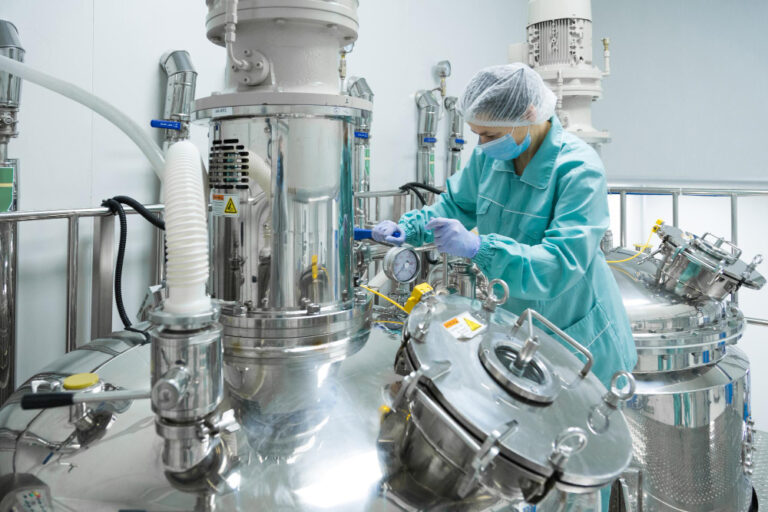
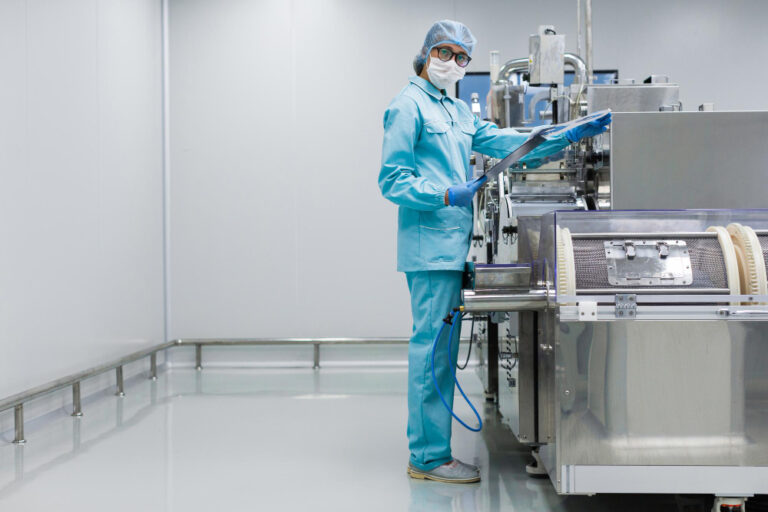
There’s a quiet crisis running beneath the surface of the global pharmaceutical outsourcing boom. CDMOs (Contract Development and Manufacturing Organization) and CRAMS (Contract Research and Manufacturing Services) providers are signing bigger contracts, opening new facilities, and entering new markets, yet they’re struggling to find the people to actually run them.
The global CDMO market was valued at around $137 billion in 2024 and is on track to cross $191 billion by 2029, growing at roughly 7% annually (BCC Research).
That’s a massive expansion, but none of it happens without scientists, engineers, quality leaders, and regulatory experts. These shifts align closely with broader pharma industry hiring trends, where demand for regulatory, biologics, automation, and digital manufacturing talent continues to accelerate globally.
For TA leaders, CHROs, and workforce planners working in and around pharma manufacturing, this is the central challenge of the decade. Here’s a clear-eyed look at what’s driving demand, where the gaps are, and what actually works.
| $191B Projected CDMO market by 2029 (BCC Research, 2024) | 83% Pharma companies reporting talent shortages (Deloitte, 2025) | 35% Projected talent deficit across life sciences by 2030 (AMS Research) |
Why global demand is accelerating so fast
Three things are happening at once.
First, large pharmaceutical companies are outsourcing more of their manufacturing, keeping R&D and commercial operations in-house while leaning on CDMOs for process development, API manufacturing, and final drug production. It’s simply more efficient.
Second, biologics, biosimilars, and cell and gene therapies are growing rapidly and require highly specialized production infrastructure that most companies don’t want to build themselves. CDMOs with these capabilities are in extraordinary demand. According to Deloitte’s 2025 Life Sciences Outlook, biologics now account for over 40% of the global pharmaceutical pipeline, a proportion that will only grow.
Third, the “China+1” diversification strategy where companies are actively seeking manufacturing bases outside China for supply chain resilience is creating real tailwinds for India, Southeast Asia, and Eastern Europe.
India’s emergence as a global manufacturing destination is also accelerating talent demand across APIs, biologics, and specialty manufacturing. As explored in India’s pharma hiring boom, the roles companies are racing to fill in 2026, companies are aggressively competing for scientific, regulatory, and manufacturing talent across key pharma hubs.
| “Talent scalability is now as important as manufacturing scalability. A new facility without the right people is just an expensive building.” |
The talent challenge is more complex than it looks
The pharma talent shortage isn’t simply about not having enough people. It’s about not having the right people, in the right locations, with the right mix of scientific depth and regulatory awareness. That’s a very specific ask.
Specialized roles are genuinely hard to fill
Some of the hardest roles to fill right now sit at the intersection of science, compliance, and manufacturing experience.
Process development scientists. Validation engineers. Tech transfer specialists. GMP manufacturing leads. QA/QC professionals who understand the regulatory expectations of FDA, EMA, or MHRA, depending on where the product is headed.
According to a BIO Industry Report, 80% of biotech and pharma firms struggle to fill critical roles in research, manufacturing, and regulatory affairs.
The typical biotech hiring process spans 52 days, nearly double what you’d see in most other industries. For niche GMP or cell therapy roles, that timeline stretches further still.
“The life sciences talent market is experiencing structural shortages in GMP manufacturing, regulatory affairs, and bioprocess development, roles that cannot be quickly backfilled from adjacent industries.”
— Deloitte 2025 Life Sciences & Healthcare Outlook
Competition is coming from unexpected places
CDMOs aren’t just competing with other pharma companies for talent. They’re competing with tech companies who want data scientists and AI engineers, with Global Capability Centers (GCCs) offering attractive pay and work-life balance, and with the semiconductor industry for process and automation engineers.
The life sciences talent pool sits at the intersection of several very hot markets.
High attrition in manufacturing is a persistent problem
Shift-based manufacturing work is demanding. People burn out, migrate to GCCs or IT roles, or move to competitors willing to pay a premium.
In Tier-2 manufacturing locations, often where new CDMO facilities are built for cost reasons, retention is a particularly acute problem.
AMS Research estimates there are currently over 87,000 unfilled sector roles in the US alone, with internal hiring having dropped to just 25% of all fills across the industry.
Many pharma organizations are now rethinking whether traditional hiring models can support specialized GMP and biologics talent demand at scale.
If your current recruitment approach wasn’t built for this level of specialization, it may be time to explore what a purpose-built pharma talent strategy looks like.
Critical roles shaping CDMO growth in 2026
Here’s a snapshot of the functions and roles that matter most right now, and why.
| Function | High-Demand Roles | Why It Matters |
|---|---|---|
| Manufacturing | Plant heads, Production managers | Scale new facilities to full commercial output |
| Quality | QA/QC leaders, Validation experts | Regulatory compliance is non-negotiable for market entry |
| R&D | Formulation scientists, Process chemists | Speed of development drives CDMO competitiveness |
| Engineering | Automation engineers, Equipment specialists | Smart manufacturing requires an entirely new skills profile |
| Supply Chain | Cold chain experts, Logistics leads | Biologics need temperature-controlled global distribution |
| Digital & Data | AI specialists, Data analysts | Predictive manufacturing is rapidly becoming a baseline expectation |
From reactive hiring to strategic workforce planning
The old model- open a role when someone leaves or a new project kicks off simply doesn’t work at the speed CDMO growth demands.
One of the biggest concerns for CHROs today is the growing workforce readiness gap in pharma, where available talent often lacks the regulatory, digital, or GMP capabilities required for modern manufacturing environments.
Companies that are scaling well have moved toward something more deliberate.
Workforce planning is becoming a competitive advantage for CDMOs expanding across multiple geographies simultaneously. The gap between organizations that forecast talent needs and those that react to them is widening — and it shows up directly in time-to-market.
| Reactive Hiring | Strategic Talent Planning |
|---|---|
| Hire when a gap appears | Forecast workforce needs 12–18 months ahead |
| Pedigree-based screening | Skills-based and competency-based evaluation |
| Rely on headhunters for niche roles | Build proprietary talent pipelines and academies |
| No visibility into competitor hiring | Use talent intelligence and market data |
| Generic employer brand | Segmented EVP tailored to scientific and manufacturing talent |
Workforce planning is becoming a competitive advantage for CDMOs expanding across multiple geographies simultaneously. The gap between organizations that forecast talent needs and those that react to them is widening and it shows up directly in time-to-market.
5 strategies leading CDMOs are using
The most successful CDMOs are no longer treating hiring as a reactive support function. They are approaching talent as a long-term business capability tied directly to manufacturing scalability, regulatory readiness, and global expansion.
From building proprietary talent pipelines to using workforce intelligence more strategically, leading organizations are adopting new approaches to stay competitive in an increasingly constrained pharma talent market.
Build your own talent pipeline
Partnering with universities, pharma finishing schools, and skill academies to create a feeder pipeline gives you a genuine advantage in tight markets.
Several leading CDMOs in India have launched internal certification programs that train fresh graduates to GMP standards, effectively creating job-ready candidates rather than competing for experienced hires at premium cost.
Hire for competency, not pedigree
Research consistently shows that pharma has over-relied on industry-specific experience as a filter. Many critical skills, project management, data analysis, quality systems thinking transfer well from adjacent industries.
CSG Talent research found that 67% of life sciences leaders say reskilling existing employees is effective in managing talent shortages. That’s a signal to invest more in internal development.
Differentiate your employer brand for pharma manufacturing
A generic employer brand doesn’t work when you’re trying to attract a process development scientist versus a GMP manufacturing lead.
Leading organizations are building segmented EVPs that speak to scientific contribution, career growth, innovation culture, and ESG positioning. The messaging that attracts a formulation chemist should look nothing like what you’d put in front of an automation engineer.
Use talent intelligence to make better decisions
Talent heatmaps, compensation benchmarking, competitor hiring analysis, and location strategy tools are no longer just for large multinational pharma.
CDMOs using this data are making smarter decisions about where to open facilities, which roles to prioritize, and how to price offers competitively. According to the 2025 Mercer Life Sciences Compensation Survey, CDMO roles in biologics and cell therapy command a 20–35% premium over equivalent roles in traditional small-molecule manufacturing. Knowing this before you post a role changes everything.
Create genuine leadership mobility programs
Some of the highest-value people in a CDMO are those who can operate across functions and geographies. Investing in cross-functional exposure, global leadership readiness, and internal mobility not only retains high performers but builds the leadership bench that expansion genuinely requires.
What AI actually changes and what it doesn’t
There’s a tempting assumption that automation and AI will reduce hiring demand in pharma manufacturing. The reality is more nuanced. AI is changing the mix of skills required, not eliminating the need for people.
Digital manufacturing, predictive quality systems, and AI-powered process optimization all require professionals who understand both the technology and the underlying science.
The GMP manufacturing professional of 2026 needs to be comfortable with data, but they still need to understand chemistry, materials science, and regulatory expectations deeply.
Beyond manufacturing automation, digital health is shaping pharma talent needs more broadly, increasing demand for professionals who can operate at the intersection of healthcare, technology, analytics, and compliance.
The broader pharma workforce is also evolving beyond manufacturing. Many organizations are beginning to rethink pharma sales force structure as digital engagement, AI-driven analytics, and omnichannel healthcare models reshape commercial operations.
AI will not reduce hiring demand in pharma manufacturing. It will change which skills matter most and raise the bar for everyone.
India’s growing role as a global CDMO talent hub
India’s position in the global CDMO ecosystem is strengthening rapidly.
The country is already the world’s largest producer of generic medicines by volume and is expanding aggressively into biologics and complex injectables.
India’s pharmaceutical exports crossed $27.9 billion in FY2024 (Pharmexcil), with projections pointing toward $31 billion by 2026. Government incentives under the Production Linked Incentive (PLI) scheme and a large STEM graduate pool make it a compelling location for both manufacturing expansion and talent acquisition.
The cities driving this growth:
- Hyderabad
- Ahmedabad
- Vizag
- Pune
- Bengaluru
- Mumbai
Each hub has a distinct talent profile.
- Hyderabad leans heavily into APIs and bulk drug chemicals.
- Bengaluru’s tech ecosystem makes it strong for digital manufacturing roles.
- Ahmedabad has deep roots in pharmaceutical formulation.
As India strengthens its role in global pharmaceutical supply chains, companies are placing greater emphasis on workforce planning for India’s growing pharma exports, particularly in regulatory compliance, cold chain logistics, and specialized manufacturing operations.
To get deeper insights into pharma hiring trends, salary benchmarks, talent heatmaps, and workforce strategies across India’s fastest-growing pharma hubs, download the full report to benchmark your hiring strategy against the market.
Free Download- India Decoding Jobs Report 2026
Organizations that treat talent acquisition as a long-term capability rather than a reactive HR process are scaling far more effectively. The difference often comes down to whether recruitment infrastructure was built before growth demanded it, or scrambled together after.
The case for RPO partnerships in pharma hiring
For CDMOs scaling quickly, managing hiring entirely in-house becomes a significant operational constraint.
Recruitment Process Outsourcing (RPO) partnerships are growing in the pharma space precisely because they solve several problems at once: faster time-to-fill, access to niche talent networks, leadership hiring support, and the ability to ramp capacity up or down without permanently expanding your internal team.
The data supports the trend.
- Time-to-hire in pharma and life sciences averages around 44 days, already longer than most industries.
- For niche GMP or regulatory roles, it can stretch significantly further.
Specialized RPO partners with pharma-specific talent pools and market intelligence can compress this meaningfully, often reducing time-to-fill by 30–40% on critical manufacturing and quality roles.
For fast-scaling CDMOs and CRAMS organizations, recruitment is no longer just an HR function. It is a business continuity strategy.
How to Build a CDMO Recruitment Strategy for 2026
If you’re a TA leader or CHRO at a CDMO or CRAMS company, the question is whether the hiring strategies you have today can actually support where your business is going.
Here’s a practical framework built around the six pillars that matter most:
Workforce Planning
Start with a 12–18 month demand forecast tied to your manufacturing expansion roadmap. Which facilities are coming online? Which therapeutic areas are you entering? Build your headcount model from those answers, not from last year’s org chart.
Hiring Models
No single hiring model works for all role types.
- High-volume GMP manufacturing roles benefit from RPO and talent academies.
- Niche scientific and regulatory hires often require specialist executive search.
- Leadership and cross-functional roles demand deep market mapping.
The best CDMO talent strategies use a blended model calibrated to role complexity and time-to-fill expectations.
Leadership Hiring
Plant heads, quality directors, and VP-level regulatory leaders are among the hardest roles to fill in the industry. These searches require deep market intelligence, competitor mapping, and careful assessment of leadership readiness across geographies. Treating these as standard open requisitions is a common and costly mistake.
Skill Mapping
Before posting a new role, map the skills you actually need against the skills your current workforce holds. This surfaces internal mobility opportunities, identifies reskilling candidates, and focuses external hiring on true gaps. According to the 2025 Deloitte Life Sciences Outlook, organizations with mature skills frameworks are 2.4x more likely to meet their hiring timelines.
Talent Intelligence
Use external talent data to guide location decisions, compensation benchmarking, and competitor analysis. Knowing where your competitors are hiring and at what salary bands is no longer optional for CDMOs operating across multiple geographies.
Talent heatmaps for cities like Hyderabad, Pune, and Ahmedabad are now available and actively used by leading organizations.
Outsourcing and RPO
For organizations scaling at speed, life sciences recruitment agencies in India offer significant advantages: faster time-to-fill, access to pre-built pharma talent networks, and the ability to flex hiring capacity without permanently expanding your internal team.
The key is selecting an RPO partner with genuine depth in life sciences, not a generalist provider applying generic processes to a highly specialized industry.
Wrapping Up
The rise of precision medicine, cell and gene therapy manufacturing, AI-driven labs, and smart factories is already reshaping what talent CDMOs need to hire. These aren’t distant trends, they’re current hiring priorities at leading organizations.
What’s coming next is more complex: regulatory specialization will deepen as therapies become more targeted and geographically nuanced. Sustainability-driven manufacturing will create demand for new skills in environmental science and process optimization. The human-machine interface in GMP environments will continue to evolve.
Companies that invest now in building talent pipelines, developing their internal bench, and partnering strategically for niche hiring will be better positioned to execute when the next wave of demand hits and in this industry, it always does.
The companies that scale talent faster than their competitors will ultimately scale innovation faster than their competitors. Global expansion begins with workforce readiness — and workforce readiness begins today.
FAQs
What is a CDMO in the pharmaceutical industry?
A CDMO (Contract Development and Manufacturing Organization) is a company that helps pharmaceutical and biotech firms with drug development, formulation, manufacturing, and commercial production. CDMOs allow pharma companies to scale faster without building all capabilities in-house.
What is the difference between CDMO and CRAMS?
CDMO focuses on contract drug development and manufacturing, while CRAMS (Contract Research and Manufacturing Services) includes both research and manufacturing support. Today, CDMO is the more commonly used term in global pharma outsourcing.
Why is CDMO hiring increasing in India?
CDMO hiring in India is growing due to rising pharmaceutical outsourcing, biologics expansion, the China+1 manufacturing strategy, and increasing global demand for cost-efficient GMP manufacturing and regulatory talent.
What are the most in-demand CDMO jobs in 2026?
Some of the highest-demand CDMO roles include:
– GMP manufacturing professionals
– QA/QC specialists
– Validation engineers
– Process development scientists
– Automation engineers
– Regulatory affairs experts
– Tech transfer specialists
– Plant leadership roles
Why is pharma manufacturing talent difficult to hire?
Pharma manufacturing hiring is challenging because roles require a rare combination of scientific expertise, GMP compliance knowledge, regulatory awareness, and manufacturing experience. Competition from GCCs, biotech firms, and tech industries further tightens the talent market.
Which Indian cities are major CDMO and pharma talent hubs?
Key pharma and CDMO hiring hubs in India include:
– Hyderabad
– Ahmedabad
– Pune
– Bengaluru
– Mumbai
– Vizag
Each city offers different strengths across APIs, biologics, formulations, digital manufacturing, and regulatory operations.
How are AI and automation changing pharma hiring?
AI and automation are shifting demand toward digitally skilled pharma professionals. Companies increasingly need talent with expertise in predictive manufacturing, automation systems, data analytics, and AI-assisted quality operations alongside traditional GMP capabilities.
What are the biggest recruitment challenges for CDMOs?
The biggest CDMO recruitment challenges include:
– GMP talent shortages
– High manufacturing attrition
– Leadership hiring gaps
– Competition from GCCs and biotech firms
– Long hiring cycles for niche scientific roles
– Workforce readiness gaps
Why are pharma companies partnering with RPO providers?
Pharma companies are increasingly using RPO (Recruitment Process Outsourcing) partners to improve hiring speed, access niche scientific talent, scale bulk manufacturing recruitment, and strengthen workforce planning during rapid expansion.
How can CDMOs build a stronger talent strategy?
Leading CDMOs are improving talent strategy through:
– workforce forecasting,
– skills-based hiring,
– internal GMP academies,
– employer branding,
– leadership mobility programs,
– talent intelligence-driven hiring decisions.
Need to hire specialized pharma talent at scale?
Explore how Taggd’s pharma recruitment solutions can help you reduce time-to-hire, strengthen workforce planning, and build high-performing manufacturing and regulatory teams faster. Contact Us today.