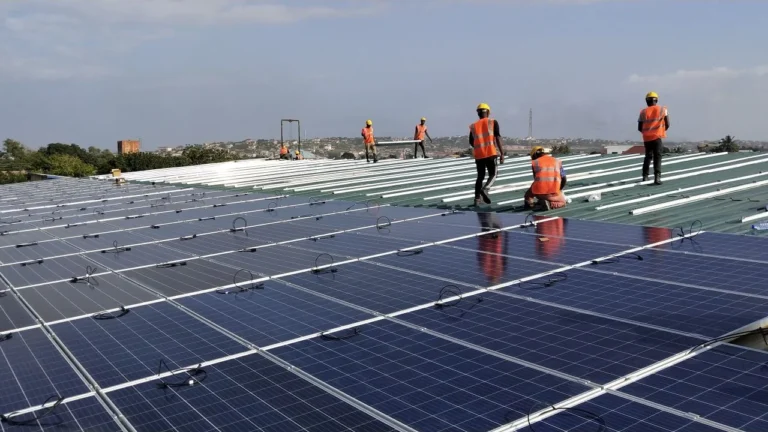
India’s EPC sector is scaling faster than its workforce pipeline.
- Renewable energy deadlines.
- National infrastructure programmes.
- Semiconductor gigafabs.
- Data centre corridors.
- Industrial mega-projects spanning multiple states.
Each of these carries a common thread: aggressive timelines that leave almost no margin for talent mobilisation delays.
CHROs and talent leaders inside EPC organisations are no longer solving isolated vacancies.
They are solving workforce mobilisation across remote sites, bulk hiring surges tied to project schedules, critical leadership scarcity, and retention pressures that compound with every project delay.
The cost of a wrong hire or a slow hire in EPC is not just an HR metric; it is a project risk.
The EPC industry’s hiring challenges are structural, not cyclical. That is what makes 2026 a defining year for workforce strategy in this sector.
This blog maps the most important hiring trends, talent gaps, and workforce strategies shaping EPC recruitment across Indi- from renewable energy to data centres, from bulk site hiring to C-suite executive search.
Hiring Trends in Renewable Energy EPC Projects
Renewable energy is India’s fastest-growing EPC segment and its most talent-constrained. Solar and wind projects are racing toward government deadlines with a workforce pipeline that was never built for this speed or scale.
Why Solar and Wind EPC Hiring Is Becoming a Race Against Project Timelines
India’s renewable energy targets demand the installation of hundreds of gigawatts of capacity within compressed timeframes.
Each utility-scale project, whether a 500 MW solar park in Rajasthan or a wind corridor in Tamil Nadu requires simultaneous deployment of civil, electrical, and mechanical teams across sprawling site geographies.
- Project timelines are fixed.
- Grid connection windows do not shift.
- Penalty clauses for delay are standard.
This means workforce mobilisation is no longer a support function; it is on the project critical path. When hiring timelines slip by even four to six weeks, entire project schedules compress in ways that are expensive to recover.
The challenge is compounded by the fact that multiple projects across different developers often compete for the same talent pool at the same time, particularly during the April-to-October peak deployment window.
| 500+ GW Target by 2030 | 4-6 Weeks Average Hiring Delay Cost | 3x Talent Demand Growth vs Supply | 60%+ Projects at Risk from Talent Gaps |
The Growing Shortage of Site Engineers, Commissioning Experts, and Safety-Certified Talent
Three categories of talent are consistently hardest to fill roles in renewable EPC projects in 2026:
• Site Engineers with hands-on experience in solar or wind installation, not just theoretical knowledge. The gap between degree qualifications and actual site readiness is significant.
• Commissioning Engineers who can bring an entire sub-system online and troubleshoot integration failures. This is a specialist skill that takes years to develop and cannot be transferred from other verticals without retraining.
• Safety Officers and HSSE Leads with valid certifications. Regulatory compliance requirements have tightened sharply, and the pipeline of certified safety professionals is not keeping pace with project volumes.
Experienced commissioning talent in particular is being poached aggressively between developers and EPC contractors. Retention strategies for this cohort have become a boardroom conversation, not just an HR issue.
Why Renewable Energy Firms Are Expanding Hiring Beyond Metro Talent Pools
The traditional model of sourcing engineers from Tier-1 cities and deploying them to remote sites is breaking down. Relocation reluctance, high compensation expectations from urban talent, and extended project durations are making metro-centric sourcing increasingly expensive and unreliable.
Forward-looking EPC firms are now building regional talent pipelines anchored in Tier-2 and Tier-3 cities near project corridors.
Engineers from Jodhpur, Tirunelveli, Bhuj, and Bhilai increasingly offer not just cost advantages but genuine willingness to work in proximate locations.
Sourcing from polytechnic colleges, regional ITIs, and state engineering universities in project-adjacent geographies is becoming a deliberate strategy rather than an afterthought.
Check out this article to explore how energy companies are attracting engineers in a competitive talent market.
Bulk Hiring Challenges in Utility-Scale Solar Projects
A single utility-scale solar project can require 200 to 800 skilled and semi-skilled workers across civil, electrical, and mechanical disciplines- all within a 4 to 8 week window.
This is not a hiring challenge in the conventional sense. It is a workforce mobilisation operation.
The execution bottlenecks are predictable: insufficient advance planning, reactive job requisitions raised weeks after they should have been, inadequate pre-screening infrastructure for volume, and no pipeline of pre-verified candidates waiting when the project hits the mobilisation phase.
EPC firms that have solved this problem have typically done so by building a continuous talent engine, not a surge-and-recover recruitment cycle. That engine keeps candidate pipelines warm, maintains relationships with regional staffing partners, and pre-stages vetted talent ahead of project mobilisation dates.
To explore the trends, talent landscape, high-demand roles, and what TA leaders need to change in their solar EPC hiring strategies, check out this blog on bulk hiring for solar EPC projects.
Contract Workforce vs Permanent Hiring in Renewable EPC Projects
The workforce model in renewable EPC is increasingly hybrid: a permanent core of project management, engineering design, and safety leadership, supported by a contract or gig layer for site execution roles that ramp up and down with project phases.
This model creates distinct talent management challenges.
Contract workforce quality is harder to control. Compliance risk in contract hiring has increased with regulatory scrutiny. And the transition of high-performing contract workers into permanent roles- a natural retention mechanism requires structured pathways that most EPC HR teams have not formalised.
The firms getting this right are treating their contract workforce as a talent asset, not a commodity. They are investing in onboarding, safety induction, and performance tracking even for workers on short-term contracts.
How EPC Firms Are Using RPO Models to Scale Renewable Energy Hiring Faster
Recruitment Process Outsourcing built for EPC hiring is structurally different from traditional RPO.
It has to support bulk sourcing from non-metro locations, rapid mobilisation timelines, parallel hiring across multiple projects, and workforce compliance management across states.
The RPO models gaining traction in renewable EPC are project-based and on-demand: activated at the start of a project cycle, scaled to match mobilisation requirements, and wound down or redeployed when the phase concludes.
This gives EPC firms hiring velocity without building permanent internal recruitment infrastructure they would not need between project cycles.
EPC hiring today is not just about filling vacancies. It is about ensuring projects do not slow down because the right workforce is unavailable at the right time.
The Talent Crisis Facing India’s Infrastructure EPC Sector
Roads, highways, metro rail, ports, airports, and urban infrastructure- India’s infrastructure pipeline is unprecedented in scale. So is the talent pressure behind it.
Infrastructure Delays Are Increasing Pressure on Talent Acquisition Teams
Project delays in infrastructure EPC are rarely caused by just one factor. Regulatory approvals, land acquisition, supply chain disruptions- all contribute.
But workforce unavailability is consistently among the top three causes, and it is the one factor that talent acquisition teams are being directly held accountable for.
The pressure is compounded by the fact that infrastructure projects rarely fail gracefully. A delayed highway concession carries penalty implications. A stalled metro section disrupts urban planning across a district.
The downstream consequences of talent-driven delays are severe enough that project directors are now directly engaged in workforce planning in ways they were not three years ago.
The Challenge of Hiring Skilled Workforce for Remote Project Locations
Infrastructure projects are rarely located where the talent supply is. Highway stretches run through terrain where the nearest Tier-1 city is six hours away. Dam construction sites, thermal plant expansion projects, and port infrastructure work happen in locations that create genuine quality-of-life barriers for urban-trained talent.
The challenge is not just sourcing. It is convincing candidates to accept offers, designing compensation structures that account for location hardship, ensuring living and safety conditions that prevent early attrition, and building a talent supply chain that treats remote deployment as a core recruitment competency rather than an inconvenient edge case.
EPC companies that struggle most with remote-site hiring are those that designed their employer brand entirely around metro-centric talent expectations. The firms that lead in this area have built differentiated value propositions specifically for site-based talent: accelerated career progression, skill certification, accommodation standards, and project diversity.
Why Tier-2 and Tier-3 Talent Sourcing Is Becoming Critical
The next generation of skilled EPC talent is not primarily coming from IITs or NITs.
It is coming from India’s new hotspots. Top industries are hiring in tier 2 and tier 3 cities– regional engineering colleges, polytechnics, and ITIs in states with high infrastructure project density- Uttar Pradesh, Madhya Pradesh, Bihar, Odisha, Jharkhand, and Rajasthan.
Tapping this talent pool requires on-ground recruitment infrastructure: campus relationships built over time, local hiring teams who understand regional talent markets, and assessment processes that can identify potential in candidates whose educational pedigree may not match metro benchmarks, but whose site readiness is often superior.
The EPC firms building Tier-2 and Tier-3 sourcing capability today are creating a structural competitive advantage in workforce availability that will separate them from peers in the next three to five years.
Attrition at Construction and Infrastructure Project Sites
Site attrition in infrastructure EPC follows a predictable pattern: highest in the first 90 days after joining, again at project phase transitions, and sharply elevated when competing projects in the same geography begin hiring.
The factors driving attrition in EPC projects are familiar- compensation gaps, living conditions, safety concerns, and lack of career visibility; but the interventions are less standardised.
The most effective attrition reduction programmes in infrastructure EPC combine the following things-
- a structured onboarding system with clear career pathways
- early identification of retention risk through manager check-ins
- competitive benchmarking of compensation against the local project market rather than national averages.
Projects that invest in worker welfare infrastructure- housing quality, mess facilities, medical access, etc. consistently report lower attrition than those treating these as cost reduction targets.
Multi-Location Workforce Planning for Large EPC Projects
A large infrastructure EPC company operating simultaneously across fifteen to twenty project locations faces a workforce planning challenge of genuine complexity.
Different projects are at different phases.
Talent needed in Punjab today may need to be redeployed to Telangana in six months. Skills developed on one project must be transferred and built on the next.
Without centralised workforce visibility- a real-time picture of who is where, what they are doing, what skills they hold, and what project they move to next becomes a reactive scramble rather than a managed deployment.
The infrastructure EPC firms solving this problem are investing in workforce management platforms that give HR leaders and project directors shared visibility, not separate spreadsheets.
Leadership Hiring Challenges in Infrastructure EPC Companies
Project Directors, Construction Managers, Planning Heads, and Chief Safety Officers with proven delivery track records in infrastructure EPC are among the scarcest and most competed-for talent in India. The talent pool is not growing at the rate that project pipelines require.
Leadership hiring in this sector requires more than a job brief and a recruitment firm.
It requires a deep network within the EPC community, the ability to present confidential opportunities to passive candidates who are mid-project and not actively looking, and a credible understanding of what success looks like in large infrastructure delivery.
Generic executive search approaches consistently underperform in this segment.
To build a future ready-leadership teams in renewable industries, check out this blog exploring the top 8 tips and approaches for leadership hiring in renewable energy companies.
India’s Fastest-Growing EPC Sectors and Their Hiring Demands
Beyond renewables and infrastructure, a second wave of EPC demand is building across sectors that require highly specialised, globally competitive talent in markets that have never before needed to develop these skills at scale.
Semiconductor Projects Are Creating Demand for Specialised Engineering Talent
India’s semiconductor fabrication ambitions anchored by major investments in Gujarat and other states are generating EPC demand for cleanroom construction, advanced MEP systems, ultra-pure water facilities, and chemical delivery infrastructure that is technically unlike anything the domestic EPC workforce has previously built.
The talent challenge is acute: India has almost no domestic pool of engineers with cleanroom facility construction experience.
The EPC contractors executing these projects are hiring from global talent markets, working with international JV partners, and simultaneously running intensive knowledge transfer programmes to build domestic capability.
Roles in demand include process piping designers and engineers familiar with semiconductor-grade specifications, HVAC engineers with cleanroom design experience, commissioning managers for high-specification M&E systems, and project directors who have delivered technically complex industrial facilities.
Check out this article on semiconductor hiring trends. Explore jobs outlook, skills, roles, and global landscape.
Data Centre Expansion Is Increasing Competition for Infrastructure Talent
India is experiencing a data centre construction boom driven by hyperscale investment, domestic cloud adoption, and AI infrastructure demand.
Mumbai, Chennai, Pune, Hyderabad, and Delhi-NCR are all active construction corridors, with developers and EPC contractors executing projects simultaneously across multiple sites.
The talent competition for mission-critical infrastructure specialists- electrical engineers experienced in UPS and critical power systems, mechanical engineers with precision cooling expertise, commissioning engineers who understand data centre operational requirements- is intense.
These are globally transferable skills, which means India’s project pipeline is competing against equivalent demand in Southeast Asia, the Middle East, and Europe for the same talent profiles.
EPC firms without strong employer brands in this niche are losing talent acquisition battles to international operators willing to offer relocation packages and global project exposure
Green Hydrogen Projects Are Creating New Workforce Planning Challenges
Green hydrogen is moving from pilot to utility scale in India, with electrolyser-based production facilities under development in Rajasthan, Gujarat, and Andhra Pradesh.
The EPC workforce requirements for these projects span renewables, chemical process engineering, high-pressure systems, storage infrastructure, and pipeline construction- disciplines that rarely exist in a single talent pool.
The multi-disciplinary nature of green hydrogen EPC creates workforce planning complexity that is harder to solve than single-vertical projects.
Organisations need electrical engineers for the renewable integration, process engineers for the electrolyser plant, civil engineers for the storage and compression infrastructure, and safety specialists familiar with hydrogen-specific hazard management.
The talent market for experienced green hydrogen EPC professionals is global and nascent.
Most practitioners in India have been trained through cross-skilling from adjacent industries- oil and gas, chemical processing, or renewables, rather than through dedicated pipelines.
To know more about why ESG hiring fails and what works instead, check out this blog on the green talent gap in India.
Industrial Automation Is Changing Hiring Priorities in EPC Firms
Across industrial manufacturing EPC, including automotive plants, FMCG facilities, pharmaceutical manufacturing, and battery gigafactories- the integration of industrial automation and control systems into capital projects is shifting the talent profile that EPC contractors must carry.
Roles that were adjacent to EPC- SCADA engineers, PLC programmers, instrumentation specialists, digital twin modellers are now directly on project teams.
EPC firms that cannot resource these skills internally face margin pressure as they depend on specialist subcontractors for systems that were once peripheral but are now central to project delivery.
Battery manufacturing EPC projects in particular- serving the electric vehicle and grid storage sectors combine process engineering with advanced automation at a level that requires talent profiles the domestic market is only beginning to produce in scale.
The sectors growing fastest in India’s EPC landscape are precisely the ones where domestic talent supply is thinnest.
Building workforce pipelines for semiconductor, green hydrogen, and data centre EPC cannot wait until project mobilisation- it requires multi-year investment in sourcing and skilling.
Why EPC Companies are Rethinking Recruitment for Mega Projects
Mega projects are different in kind, not just in scale. They require a fundamentally different approach to talent acquisition, one that most EPC companies have not yet operationalised.
Traditional Hiring Models Cannot Support Rapid Project Mobilisation
The conventional recruitment model: raise a requisition, brief an agency, wait for CVs, interview, select, negotiate, onboard was designed for a world where projects had time to absorb hiring delays.
That no longer works for the existing India’s EPC sector.
Mega projects today operate on mobilisation schedules that require hundreds of roles to be filled within weeks of contract award.
When recruitment is reactive, these timelines are structurally impossible to meet.
The result is not a delayed hire; it is a delayed project start, scope resequencing, and compressed delivery timelines that increase execution risk across the board.
The fundamental problem is that traditional hiring models are event-driven: they activate when a vacancy exists.
However, effective EPC talent acquisition must be continuous: maintaining live pipelines, pre-qualifying candidates, and keeping talent warm before the mobilisation date arrives.
Why EPC Firms Need Faster Workforce Deployment Across Locations
A mega project does not mobilise at one site. It mobilises across package boundaries, subcontractor interfaces, and geographic spread.
The talent acquisition function must match this complexity: sourcing simultaneously across disciplines, managing multi-location logistics, and ensuring that the right profile arrives at the right site at the right phase.
Workforce deployment velocity- the time between project mobilisation signal and full team on-site is becoming a key performance indicator for EPC HR functions.
The firms measuring and improving this metric are gaining a competitive advantage not just in hiring but in overall project execution reliability.
AI-Powered Talent Fulfilment Is Improving Hiring Speed and Workforce Visibility
The application of artificial intelligence to EPC talent acquisition is moving from experiment to practice.
AI-enabled candidate matching that goes beyond keyword screening- assessing relevant project experience, geographic mobility, skill adjacency, and role readiness is measurably reducing time-to-shortlist for technical roles.
At the portfolio level, AI-powered workforce analytics are giving EPC CHROs visibility they have never previously had: which skills are available across the organisation, where attrition risk is concentrated, which upcoming projects will face the most acute talent gaps, and where internal mobility can offset external hiring.
This predictive capability transforms workforce planning from retrospective reporting to forward-looking strategy.
The EPC firms investing in these capabilities now are building a structural advantage in hiring speed and workforce predictability that will compound over the next three to five years of infrastructure delivery.
On-Demand RPO Models for Project-Based Hiring Surges
The project-based nature of EPC work creates a fundamental mismatch between internal recruitment capacity and hiring demand. During project mobilisation, hiring requirements spike. Between projects, they fall.
A permanent internal recruitment team sized for the peak is expensive and underutilised during troughs. A team sized for normal operations cannot handle the surge.
On-demand RPO resolves this mismatch. A specialist EPC RPO partner provides dedicated recruitment capacity that scales up with project mobilisation, executes bulk and specialist hiring simultaneously, and winds down or transitions between projects without the cost and complexity of internal headcount changes.
For EPC companies managing multiple projects in parallel, this model also provides central workforce visibility that decentralised hiring cannot deliver.
Executive Search for Specialised EPC Leadership Roles
The market for senior EPC leadership- Project Directors, VP Engineering, Chief Safety Officers, Programme Managers for mega projects- is not accessible through job postings or conventional agency search.
The most capable people in this category are consistently employed, often mid-project, and not reading job advertisements.
Executive search for EPC leadership requires deep sector networks, an understanding of what constitutes genuine delivery excellence versus functional competence, and the credibility to approach passive candidates with roles that represent a meaningful career step.
It also requires discretion: leadership transitions in EPC projects must be managed carefully to avoid signalling instability to clients or supply chains.
Workforce Analytics and Predictive Hiring in EPC Recruitment
The EPC organisations making the most sophisticated workforce planning decisions in 2026 are using data that most of their peers are not yet collecting: project phase-to-hiring lead time analysis, skill gap mapping against future project pipelines, internal mobility modelling, retention risk scoring at the individual level, and scenario planning for parallel project mobilisation.
This level of analytical capability requires investment in data infrastructure and, increasingly, HR technology platforms built for project-based workforce management. But the return is proportionate: organisations with strong workforce analytics make fewer reactive hiring decisions, spend less on emergency talent acquisition, and consistently outperform peers on time-to-mobilisation metrics.
How EPC Companies Are Solving Project-Based Hiring Challenges
The most effective EPC talent acquisition strategies in 2026 share a common characteristic: they treat workforce availability as a project management input, not an HR output.
Building Continuous Talent Pipelines Instead of Reactive Hiring
The single highest-impact change an EPC talent leader can make is shifting from vacancy-triggered recruitment to continuous pipeline management.
This means maintaining active relationships with candidates across key disciplines even when no role is open, running regular talent mapping exercises against upcoming project forecasts, and treating candidate engagement as an ongoing investment rather than a transactional activity.
Pipeline management requires different metrics than transactional hiring.
Time-to-fill is still important, but pipeline depth- the number of pre-qualified candidates available for each critical role category is the leading indicator that actually predicts mobilisation performance.
EPC firms that track this metric consistently mobilise faster and with fewer quality compromises than those that do not.
Regional Hiring Strategies for Site-Based Workforce Needs
Effective site-based workforce sourcing requires on-ground presence in the geographies where talent lives, not just where it is ultimately deployed.
This means maintaining relationships with regional engineering colleges and ITIs near project corridors, working with local staffing networks in project-proximate towns, and building employer brand recognition in communities that supply consistent volumes of site talent.
Regional hiring strategies also require locally adapted assessment processes. The evaluation criteria that work for metro-sourced talent may not reflect the strengths of candidates from Tier-3 cities who have practical skills and site readiness that formal credentials do not fully capture.
Combining Permanent, Contract, and Gig Workforce Models
The optimal EPC workforce structure in 2026 is not permanent or contract. It is a designed blend that matches contract tenure to project phase, protects core capabilities through permanent employment, and uses gig or flexible arrangements for specialist roles that are needed intensively for short windows.
Managing this blend effectively requires workforce segmentation: identifying which roles are truly core to the organisation’s delivery capability and must be permanently employed, which roles fluctuate enough to justify contract models, and which specialist requirements are best served by project-specific engagement.
Each segment needs a distinct sourcing strategy, compensation framework, and retention approach.
Using Technology to Reduce Time-to-Mobilisation
Technology’s impact on EPC hiring speed is most pronounced when it targets the specific bottlenecks that slow mobilisation: CV screening volume, interview scheduling logistics, background verification timelines, and offer management across multiple candidates simultaneously.
Applicant tracking systems configured for EPC-specific role taxonomies, AI-assisted screening tools trained on EPC role requirements, and digital onboarding platforms that can process 200 joiners simultaneously rather than sequentially are practical investments with measurable return.
The EPC firms that have deployed these tools consistently report reductions of 30 to 50 percent in time-to-mobilisation for site-based roles.
Improving Hiring Quality for Safety-Critical Roles
In EPC, poor hiring quality in safety-critical roles is not just an HR risk- it is a liability risk, a regulatory risk, and potentially a human risk.
Safety Officers, Electrical Supervisors, Scaffolding Inspectors, and First Aid personnel require verification of credentials, not just collection of them.
Best practice in this area includes structured competency assessment rather than interview alone, mandatory verification of certification validity and issuing authority, reference checks specific to safety performance rather than general employment history, and a probationary period with structured supervision before independent responsibility is assigned.
EPC firms that have implemented these standards report lower incident rates and higher regulatory compliance scores than those relying on self-reported credentials.
Workforce Planning Strategies for Parallel Mega Projects
When an EPC company is simultaneously executing multiple mega projects- as the largest contractors routinely are- workforce planning becomes a portfolio management challenge.
Talent allocated to one project is unavailable for another. Skills developed on one project create a deployment option for the next. Attrition on a critical project creates an emergency that, if unmanaged, draws talent from another project and creates a cascade.
The EPC firms managing parallel mega project portfolios most effectively have made workforce planning a shared responsibility between project leadership and central HR, with governance structures that prevent individual project directors from making hiring decisions that optimise for their project at the expense of the portfolio. Centralised visibility, shared talent pools, and cross-project mobility frameworks are the operational foundations of this approach.
FAQs
What are the key EPC hiring trends in India for 2026?
The biggest EPC hiring trends in India for 2026 include rising demand for renewable energy talent, large-scale hiring for infrastructure and data centre projects, increased sourcing from Tier-2 and Tier-3 cities, growth in contract and hybrid workforce models, and stronger adoption of AI-driven recruitment and project-based RPO solutions. EPC companies are also investing more heavily in workforce planning, leadership hiring, and rapid talent mobilisation to prevent project delays across solar, semiconductor, green hydrogen, and industrial mega-projects.
What are the biggest hiring challenges in India’s EPC sector in 2026?
The biggest hiring challenges in India’s EPC sector include workforce shortages for renewable energy projects, difficulty hiring for remote project sites, leadership scarcity, high attrition at infrastructure sites, and delays in mobilising skilled labour for mega projects. EPC companies are also struggling to find experienced commissioning engineers, safety-certified professionals, and project leaders with large-scale execution experience.
Why is renewable energy EPC hiring becoming difficult in India?
Renewable energy EPC hiring is becoming difficult because solar, wind, and green hydrogen projects are scaling faster than the available skilled workforce. EPC firms are competing for the same pool of site engineers, commissioning experts, safety officers, and project managers across multiple projects simultaneously. Tight project deadlines and remote project locations are further increasing hiring pressure.
Which roles are most in demand in EPC companies in India?
The most in-demand EPC roles in India include:
– Site Engineers
– Commissioning Engineers
– Project Managers
– Planning Engineers
– Safety Officers and HSSE Leads
– Electrical and Mechanical Engineers
– Data Centre Infrastructure Specialists
– Cleanroom and HVAC Experts for semiconductor projects
– Automation and SCADA Engineers
– Project Directors and Construction Heads
Demand is especially high in renewable energy, infrastructure, semiconductor, and data centre EPC projects.
Why are EPC companies expanding hiring into Tier-2 and Tier-3 cities?
EPC companies are expanding hiring into Tier-2 and Tier-3 cities because these regions offer stronger site-readiness, lower relocation resistance, and access to engineers willing to work near project corridors. Regional engineering colleges, polytechnics, and ITIs are becoming critical talent pipelines for infrastructure, renewable energy, and industrial EPC projects across India.
How are EPC firms reducing hiring delays for mega projects?
Leading EPC firms are reducing hiring delays by building continuous talent pipelines instead of relying on reactive hiring. Many companies are using project-based RPO models, AI-powered candidate screening, regional staffing partnerships, and workforce analytics to improve time-to-mobilisation. Pre-qualified talent pools and multi-location workforce planning are also helping EPC organisations mobilise faster.
Why is workforce planning becoming critical in EPC recruitment?
Workforce planning is becoming critical because EPC companies are executing multiple large projects simultaneously across different states and sectors. Without centralised visibility into skills, deployment timelines, and workforce availability, organisations face project delays, cost overruns, and talent shortages. Modern EPC workforce planning now includes predictive hiring, internal mobility tracking, and cross-project talent deployment strategies.
How are RPO and AI transforming EPC hiring in India?
RPO and AI are helping EPC companies scale hiring faster and improve workforce visibility. AI-powered hiring tools reduce screening time, identify project-fit candidates, and predict talent gaps across future projects. EPC-focused RPO models provide flexible recruitment capacity for bulk hiring, remote-site hiring, and specialist leadership recruitment without requiring large permanent TA teams.
Building teams across multiple project locations? Struggling with engineering talent shortages? Need faster workforce mobilisation?
These are the challenges Taggd was built to solve for India’s EPC sector.
Taggd is India’s specialist EPC recruitment partner, combining AI-powered talent fulfilment, project-based RPO, executive search, and bulk hiring capabilities to help EPC organisations mobilise the right teams at the right time.