You’re hiring for a plant expansion in Hyderabad, or building a manufacturing capability inside a GCC, and one requisition keeps stalling. Mechanical engineers apply. Production engineers apply. CAD operators apply. Welding supervisors apply. Very few applicants fit the work you need done.
That role is usually labelled “fabrication engineer”. And that label is often the problem.
In Indian manufacturing, fabrication engineers sit close to revenue, delivery, quality, and commissioning risk. A weak hire doesn’t just slow HR metrics. It shows up as delayed drawings, shop-floor confusion, rework, tolerance failures, vendor friction, and late customer dispatches. If your JD is vague, your screening logic generic, and your sourcing model built for broad engineering roles, you’ll keep interviewing the wrong people.
The fix isn’t more volume. It’s sharper role definition, better market mapping, and a hiring process that reflects how fabrication work gets executed in plants, project sites, and fabrication shops.
The Challenge of Finding Fabrication Engineers in India
A common hiring pattern looks like this. The business asks for fabrication engineers urgently. TA opens the role with a broad JD pulled from an older requisition. Resumes start coming in, but most candidates are either machine operators with limited engineering ownership, or design engineers who’ve never owned shop-floor execution.
That mismatch hurts more in fabrication than in many other engineering functions. These roles often sit in the middle of design release, vendor coordination, production planning, inspection, and installation readiness. If you get the profile wrong, the cost appears downstream, after hiring.
Where hiring teams usually lose control
In Hyderabad and similar industrial corridors, fabrication hiring gets harder when three things happen at once:
- The plant is ramping quickly: business leaders want fast closures, but the actual role needs a candidate who can read drawings, anticipate manufacturing constraints, and work across production and quality.
- The title is too broad: “Fabrication engineer” attracts applicants from unrelated adjacent roles.
- Screening is keyword-led: recruiters search for CAD, welding, CNC, sheet metal, and production. The result is volume, not relevance.
Practical rule: If the hiring manager can’t explain whether the role owns machine-ready execution or project-level fabrication engineering, the market won’t understand the vacancy either.
The pressure then lands on TA metrics. Time-to-hire stretches. Offer quality drops. Internal stakeholders assume the market is dry, when the actual issue is role ambiguity and search design. That dynamic is closely related to the wider manufacturing talent shortage in India, but fabrication hiring has an extra layer of complexity because the title itself hides multiple job families.
Understanding the Indian Fabrication Talent Market
Fabrication hiring looks niche from inside a corporate HR dashboard. It doesn’t look niche from the market side.
India’s fabricated metal products workforce was estimated at 2.1 million in FY2023, and the sector reportedly grew 4.5% year over year. That matters because fabrication supports downstream demand across automotive, construction, machinery, and electronics. In other words, you’re not recruiting from a small isolated pool. You’re competing inside a large industrial labour and engineering ecosystem.
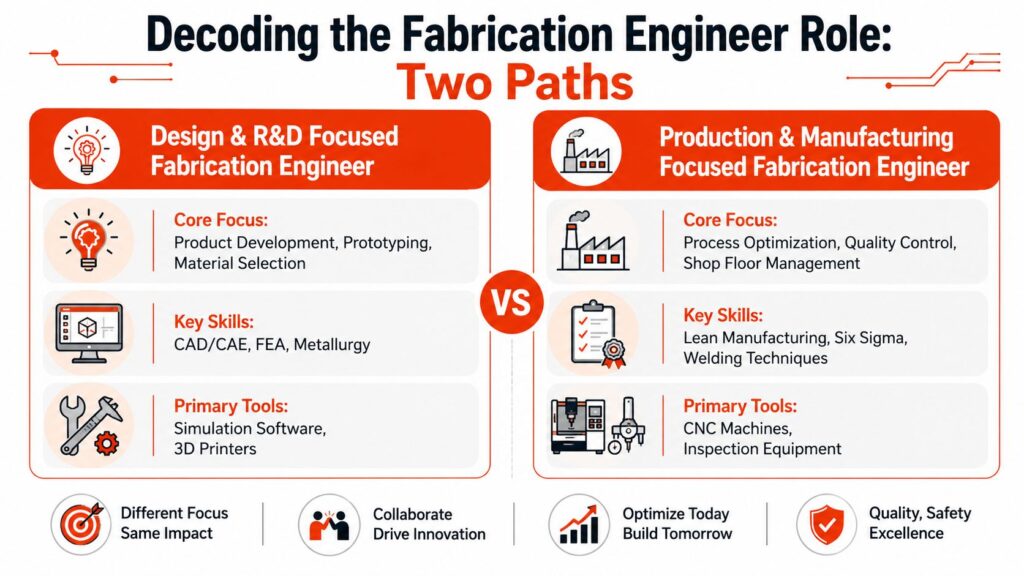
A useful role map appears below.
Why this role is larger than most teams assume
Many CHROs first encounter fabrication engineers as a hard-to-fill niche requisition. The market reality is broader. Fabrication work is embedded across sectors, project types, and plant models. Demand doesn’t come only from fabrication shops. It also comes from OEMs, EPC environments, industrial equipment makers, automotive suppliers, electronics-linked manufacturers, and infrastructure-led businesses.
That has two hiring implications:
| Hiring reality | What it means in practice |
| Broad demand base | Your target candidate may have moved across industries without changing core fabrication capability. |
| Skills transfer across sectors | Screening should focus on processes, tolerances, materials, and production environments, not only end-industry labels. |
| Ongoing competition | Reactive hiring usually loses to employers that map the market before opening the role. |
The wider engineering talent market in India reflects the same pattern. Skill adjacency matters more than title matching when companies need engineers who can work across design intent and manufacturing reality.
A short overview of the role scope is worth watching if your stakeholders still treat fabrication as a generic production function.
What that means for all hubs
Hyderabad creates a specific hiring challenge. The city gives employers access to strong engineering talent, supplier networks, and adjacent industrial capabilities. It also creates competition from multiple kinds of employers at the same time. A candidate who can move comfortably between drawings, machine processes, vendor follow-up, and quality conversations won’t stay unnoticed for long.
Fabrication engineers aren’t only competing within fabrication. They’re also being pulled into broader manufacturing roles where process discipline and execution maturity are valued.
This is why compensation benchmarking alone won’t solve the problem. Companies need clearer role narratives, better market segmentation, and faster evaluation cycles. Otherwise, good candidates drift to employers whose interview process shows they understand the work.
Decoding the Fabrication Engineer Role
Most hiring trouble starts before sourcing. It starts in the title and the JD.
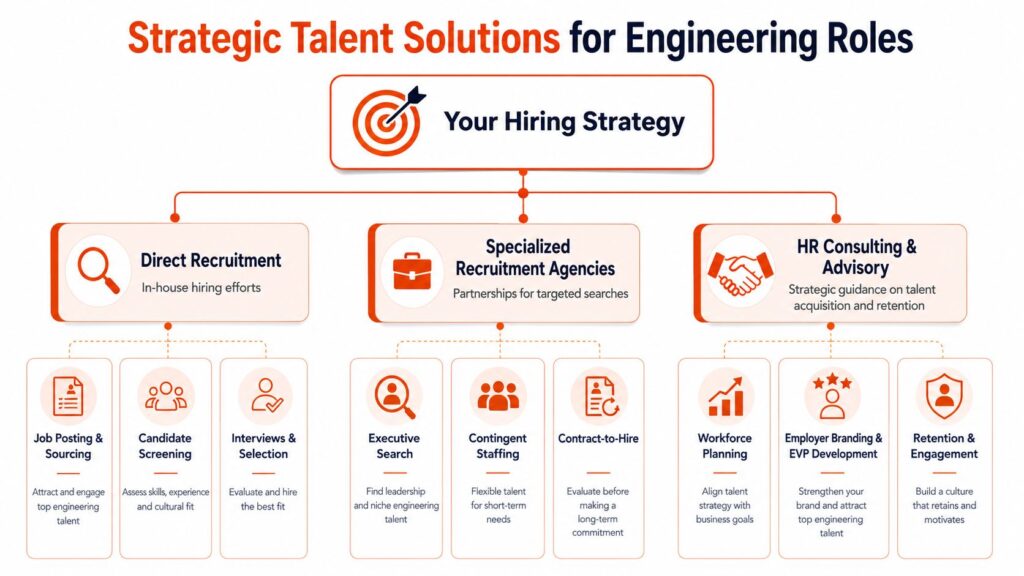
Public content often collapses two different jobs into one label. Employers often end up mixing fabrication shop engineering with structural steel or process fabrication requirements. That creates a content gap, and in hiring terms, it creates a filtering problem. You ask for one role and advertise two.
Two jobs are hiding under one title
The first is fabrication shop engineering. This person lives close to execution. They usually need to understand nesting, CNC workflows, machine capability, drawing interpretation, sequencing, inspection handoff, and production bottlenecks. Their value comes from turning design intent into repeatable shop output.
The second is structural or process fabrication engineering. This role is usually broader and often heavier on design-for-manufacture, material selection, welding procedures, quality documentation, fabrication methodology, assembly fit-up, and coordination with project, site, or customer stakeholders.
A practical distinction helps:
| Role type | Primary concern | Typical risk if mis-hired |
| Fabrication shop engineering | Can the part move cleanly from drawing to machine to finished component? | Programming delays, poor machine utilisation, repeat rework |
| Structural or process fabrication | Will the fabricated assembly meet design, welding, quality, and installation requirements? | Site issues, fit-up failures, documentation gaps, vendor disputes |
Fabrication Engineer Job Description Template
Job Title: Fabrication Engineer / Structural Fabrication Engineer
Department: Engineering / Manufacturing / Production
Reports To: Production Manager / Engineering Manager / Head of Manufacturing
Location: [Location]
Employment Type: Full-time
Job Summary: We are looking for a technically skilled and process-driven Fabrication Engineer to join our [Department] team. In this role, you will oversee and optimize fabrication processes including cutting, welding, forming, and assembly of metallic and non-metallic structures, ensuring all fabricated components meet engineering specifications, quality standards, and delivery schedules. You will work closely with design, quality, procurement, and production teams to deliver fabrication outputs that meet customer and regulatory requirements consistently and cost-efficiently.
Key Responsibilities
- Review engineering drawings, weld maps, and fabrication specifications before production.
- Plan and sequence fabrication activities to meet production schedules and delivery targets.
- Supervise fabrication operations including cutting, welding, bending, and assembly.
- Ensure all fabrication work complies with applicable codes including AWS, ASME, and IS standards.
- Coordinate with quality teams on inspection hold points, NDT requirements, and weld quality.
- Manage welder qualification records, WPS, and PQR documentation accurately.
- Identify and implement process improvements to reduce rework, cycle time, and material waste.
- Coordinate with procurement on material availability, traceability, and mill certificate verification.
- Support customer inspections, third-party audits, and regulatory compliance activities.
- Prepare fabrication progress reports and escalate schedule or quality deviations promptly.
Required Qualifications
- B.Tech / Diploma in Mechanical, Production, or Manufacturing Engineering.
- 3 to 8 years of hands-on fabrication engineering experience in structural, pressure vessel, or industrial equipment manufacturing.
- Strong knowledge of welding processes including SMAW, GMAW, GTAW, FCAW, and SAW.
- Proficient in reading and interpreting fabrication drawings, weld maps, and GD&T specifications.
- Familiar with fabrication codes and standards including ASME Section IX, AWS D1.1, and IS 2062.
Preferred Qualifications
- Experience in pressure vessel, heat exchanger, or structural steel fabrication environments.
- Knowledge of NDT methods including RT, UT, MT, and PT and their application in fabrication inspection.
- Certified Welding Inspector (CWI) or International Welding Engineer (IWE) qualification preferred.
- Exposure to EPC project fabrication environments and client witness inspection coordination.
- Familiar with fabrication management software and production planning tools.
Key Skills
- Fabrication Process Planning and Supervision
- Welding Process Knowledge and WPS/PQR Management
- Fabrication Code and Standards Compliance
- Quality Inspection and NDT Coordination
- Production Schedule and Material Management
What to put in the JD
A useful JD doesn’t just say “experience in fabrication”. It specifies the operating environment. Digital fabrication depends on a chain from CAD output to CAM instructions to CNC or other equipment, and shops that can accept 3D file types can avoid re-engineering, reduce programming time, and improve repeatability.
That means your JD should answer questions like these:
- What files and systems does the engineer touch: 2D drawings only, or 3D files and machine-ready data?
- Where does the role sit: design office, fabrication shop, project execution team, or a hybrid environment?
- What machinery or process exposure matters: CNC cutting, laser, plasma, bending, welding coordination, assembly?
- Who owns release quality: the engineer, the production supervisor, or quality?
A stronger approach is to audit your JDs against current manufacturing skills in demand and remove any bundled requirements that belong to separate roles.
If your JD asks one person to be a design engineer, CNC programmer, welding quality specialist, vendor developer, and site coordinator, the market will respond with compromised fits.
Hiring Challenges in Fabrication Engineer Recruitment
Organizations in 2026 face a persistent fabrication engineering talent shortage as structural complexity, code compliance requirements, and advanced welding process adoption accelerate faster than technical education programs can produce qualified engineers. Finding professionals who combine hands-on fabrication process knowledge with code compliance expertise and quality documentation discipline remains the primary hiring bottleneck across India’s manufacturing and EPC sectors.
- Welding Process Depth Gap:
Many mechanical engineering graduates have theoretical welding knowledge but lack hands-on experience across multiple welding processes including GTAW, FCAW, and SAW that complex fabrication environments require. - Code and Standards Knowledge Deficit:
Fabrication roles in pressure vessel, heat exchanger, and structural steel environments require deep familiarity with ASME, AWS, and IS codes that most candidates claim but few genuinely possess at a usable level. - WPS and PQR Documentation Weakness:
Finding engineers who can independently prepare, review, and manage welding procedure specifications and procedure qualification records without supervision is consistently difficult across the market. - NDT Coordination Experience Scarcity:
Engineers with practical experience coordinating RT, UT, MT, and PT inspections alongside fabrication operations and managing third-party NDT agencies are scarce relative to employer demand. - EPC Project Environment Readiness:
Fabrication engineers comfortable with client witness inspections, third-party audits, and multi-disciplinary coordination in large EPC project environments are significantly harder to find than workshop-only profiles. - Retention Risk from Middle East Opportunities:
Experienced fabrication engineers are heavily recruited by Gulf-based EPC and fabrication contractors offering significantly higher compensation and tax-free income, creating persistent senior-level attrition across Indian fabrication organizations.
Choosing Strategic Talent Solutions for Engineering Roles
Once the role is defined properly, the hiring model matters as much as the search effort. Fabrication engineers now need more than basic shop exposure in many environments. A cited industry estimate placed the global metal fabrication market at US$16,824.1 million in 2016, with projected CAGR above 3.4% from 2017 to 2025, while North America was expected to grow at 4.8% CAGR, driven largely by automation and technology upgrades. The practical implication for India is straightforward. As factories automate, employers need fabrication engineers with stronger process control and precision manufacturing capability.
Match the hiring model to the business problem
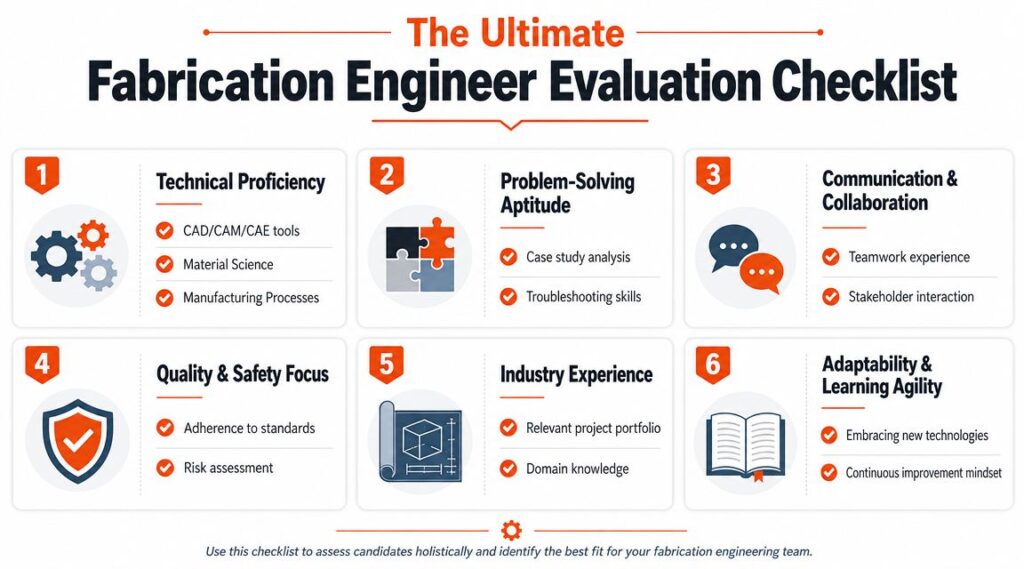
Not every fabrication hiring need should go through the same route.
- Project RPO Works well when a new plant, product line, or capacity expansion needs multiple fabrication hires within a defined window. It brings discipline to demand planning, recruiter calibration, screening consistency, and stakeholder reporting.
- Enterprise RPO Useful when fabrication roles recur across plants or business units. This model helps standardise role architecture, assessment logic, and candidate experience over time.
- Executive search Better suited for plant heads, fabrication leads, or engineering managers where the requirement includes team building, vendor governance, and cross-functional ownership.
- Talent mapping Often underused. It’s valuable when the business is entering a new geography, adding a fabrication capability, or unsure whether the target talent sits in OEMs, EPC firms, contract manufacturers, or supplier networks.
Where traditional hiring breaks down
Contingent hiring can work for straightforward roles. It often struggles when the role definition is narrow and the business wants speed, accuracy, and hiring manager alignment at the same time. That’s where structured hiring strategies for engineering roles in demand usually outperform ad hoc requisition handling.
Use this decision lens:
- Choose scale-oriented support when you’re opening multiple similar roles and the business can’t afford fragmented recruiter interpretation.
- Choose specialist search when the role influences production quality, customer delivery, or plant readiness.
- Choose advisory support when your current process keeps generating mismatched slates despite active sourcing.
Strong fabrication hiring isn’t about having more recruiters. It’s about using a hiring model that matches the technical ambiguity and business urgency of the role.
How to Hire a Fabrication Engineer?
Hiring strong fabrication engineers requires moving beyond CV keyword screening into practical process knowledge assessment and code compliance verification. Organizations that invest in CWI certification sponsorship, structured WPS training programs, and clear senior fabrication career tracks will consistently attract and retain talent that competitors lose to overseas opportunities.
| Hiring Challenge | Recommended Solution |
|---|---|
| Welding process knowledge gap | Use practical welding scenario assessments covering process selection, parameter setting, and defect identification |
| Code and standards verification | Design code-specific technical screening covering ASME, AWS, and IS standards interpretation |
| WPS and PQR capability | Ask candidates to review or critique a sample WPS during the interview process |
| NDT coordination experience | Prioritize candidates with CSWIP, CWI, or NDT-linked exposure and verify with reference checks |
| EPC environment readiness | Assess client-facing experience through structured behavioral interviews covering inspection handling |
| Senior attrition to overseas roles | Build retention programs including certification sponsorship, CWI development, and clear progression to Lead Engineer |
| Campus talent pipeline gap | Partner with NTTF, CIPET, and production engineering programs for structured fabrication trainee intake |
| Generalist versus specialist mismatch | Define whether role needs pressure vessel, structural, or piping fabrication background in JD precisely |
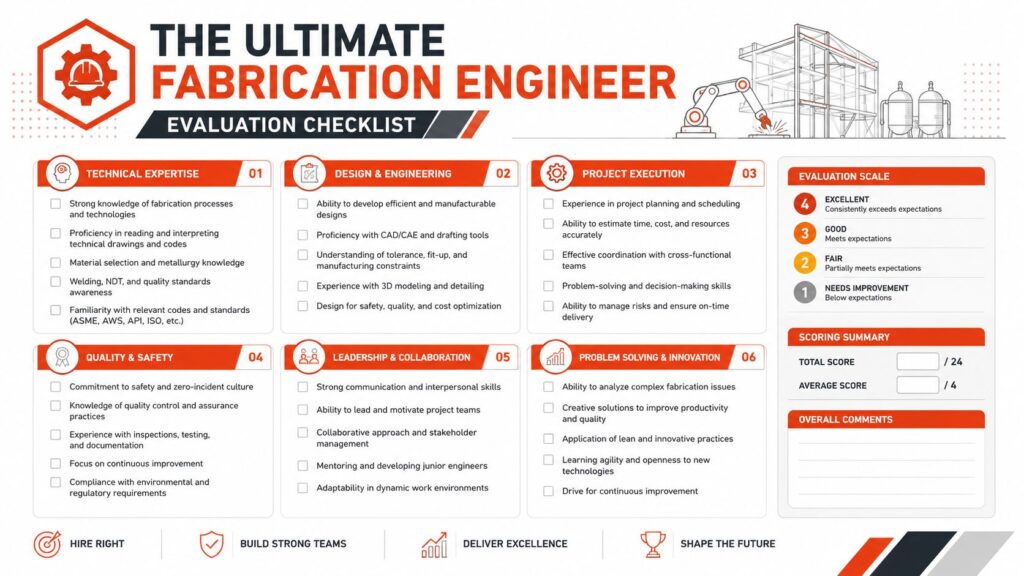
The Ultimate Fabrication Engineer Evaluation Checklist
A resume won’t tell you whether the candidate can control process variation under production pressure. Interviews need to get closer to the actual work.
Top-tier industrial fabrication depends on process control across shearing, laser cutting, waterjet, plasma cutting, CNC milling, turning, drilling, grinding, welding, dimensional checks, material verification, and stress testing. Better control of cutting accuracy, bend angle and radius, weld seam quality, and assembly fit reduces deformation, rework, and downstream failures.
What strong assessment looks like
Interview design should follow the role type. Still, most solid assessments cover five areas.
- Process control knowledge: Ask how the candidate controls tolerance, bend consistency, heat impact, weld quality, and fit-up issues.
- Digital fluency: Check whether they can work from CAD outputs into manufacturing-ready steps, and whether they understand where translation errors usually enter the workflow.
- Root-cause ability: Good candidates can explain why deformation, scrap, or repeated rework happened, not just that it happened.
- Cross-functional judgement: They should know when to involve quality, design, production, or vendors.
- Execution discipline: Listen for sequencing, inspection logic, release gates, and documentation habits.
A useful interview table looks like this:
| Capability area | What to ask |
| Cutting and forming | Describe a case where cut accuracy or bend variation created downstream assembly trouble. What did you change first? |
| Welding and fit-up | How do you decide whether a weld issue is a parameter problem, a prep issue, or a sequence issue? |
| Drawing interpretation | Tell me about a drawing that looked correct on paper but failed on the shop floor. Why? |
| Quality ownership | What checks do you insist on before release to the next stage? |
Interview prompts that reveal real capability
Behavioural questions work better when they force specifics.
“Walk me through the last time a fabricated part passed drawing review but failed fit-up during assembly.”
That question usually tells you whether the candidate understands practical tolerances, production communication, and accountability.
A few more prompts worth using:
- For shop-focused roles: “Which machine constraints do designers most often ignore, and how do you catch those before production starts?”
- For structural or process roles: “How do you review a fabrication package before release so site or assembly teams don’t discover missing details later?”
- For either role: “What signals tell you rework is becoming systemic rather than incidental?”
Candidates who answer in generic textbook language usually haven’t owned enough of the process. The better ones will talk through sequence, checks, trade-offs, and failure points in operational terms.
How Taggd Delivers Fabrication Talent at Scale
For fabrication roles, hiring improves when recruiters stop searching by title alone and start mapping capability clusters. That means separating candidates by environment, tool exposure, process ownership, and business context before outreach even begins.
That’s where a structured partner can help. Taggd’s work with one of India’s largest aluminium manufacturers is relevant because heavy industrial hiring usually requires coordinated sourcing, calibrated screening, and operational alignment rather than isolated resume pushing.
What changes when hiring is built around capability mapping
A better fabrication search usually starts with four decisions:
- Define the role family clearly: shop engineering versus structural or process fabrication.
- Map adjacent talent pools: candidates may sit in supplier firms, contract manufacturers, OEMs, EPC environments, or plant engineering teams.
- Screen on execution evidence: not just software keywords or degree titles.
- Run a tighter process: fabrication candidates disengage quickly when interviewers ask broad questions that don’t reflect the work.
In practice, an AI-enabled and market-informed model helps identify passive candidates who won’t appear through job ads, especially when the required profile combines drawing literacy, process understanding, and quality ownership. It also helps TA leaders avoid a frequent mistake. They don’t over-screen for niche jargon while missing engineers who’ve done the work under different titles.
Two practical hiring scenarios
Consider two common situations.
The first is a new manufacturing line or plant ramp-up in or around Hyderabad. The business needs multiple fabrication hires across production support, process ownership, and quality-linked execution. A project-based RPO approach works when the challenge is consistency. Recruiters use one calibrated role definition, one screening rubric, and one stakeholder communication rhythm. That reduces noise and stops every interviewer from inventing the role separately.
The second is a senior hire. The business needs someone to lead fabrication engineering across vendors, shop-floor teams, quality systems, and delivery commitments. That isn’t a volume search problem. It’s a leadership mapping problem. Executive search is usually the better route because the candidate pool is smaller, more passive, and more sensitive to context.
A partner like Taggd fits in this part of the stack because it combines AI-powered talent fulfilment with on-ground market intelligence, along with services such as project and enterprise RPO, executive search, talent mapping, and TA transformation. For fabrication hiring, that matters less as a brand story and more as an operating model. The work requires clear segmentation, disciplined assessment, and governance that hiring teams can effectively use.
The fastest way to improve fabrication hiring is to stop treating it like a generic engineering requisition and start treating it like a capability architecture problem.
Building Your High-Performance Fabrication Team
The companies that hire fabrication engineers well usually do three things differently. They define the role precisely. They assess for real process ownership. And they build a pipeline before the plant, project, or capacity expansion turns urgent.
That shift matters in Hyderabad and across India’s manufacturing clusters. Fabrication isn’t a support function sitting at the edge of operations. It sits inside throughput, quality, customer delivery, and production readiness. When the role is defined badly, everything downstream gets harder. When it’s defined well, hiring gets faster and interview quality improves almost immediately.
Start with an audit of your current requisitions. Separate shop-focused and structural or process-focused roles. Rework interview plans so they test execution, not just vocabulary. Then decide whether your demand calls for contingent hiring, RPO, executive search, or talent mapping.
FAQs
What is a Fabrication Engineer and what do they do?
A Fabrication Engineer plans, supervises, and optimizes the fabrication of metal structures and components, ensuring all cutting, welding, forming, and assembly operations meet engineering specifications, quality standards, and code compliance requirements.
What qualifications are required to become a Fabrication Engineer in India?
A B.Tech or Diploma in Mechanical or Production Engineering is the standard entry qualification. Certifications like CWI or IWE and hands-on welding process experience significantly strengthen candidacy for senior fabrication roles.
How is a Fabrication Engineer different from a Welding Engineer?
Fabrication engineers oversee the complete fabrication process including planning, sequencing, and quality coordination. Welding engineers specialize specifically in welding metallurgy, procedure development, WPS qualification, and weld quality assurance across fabrication programs.
What welding codes must a Fabrication Engineer know?
ASME Section IX for pressure vessels, AWS D1.1 for structural steel, and IS 2062 for Indian structural applications are the most essential. EPC and offshore roles additionally require familiarity with API and EN standards.
What is a WPS and why does it matter in fabrication?
A Welding Procedure Specification defines the parameters for a qualified weld including process, material, position, and heat input. It is a mandatory code document that ensures weld quality is repeatable, traceable, and auditable.
What is the career outlook for Fabrication Engineers in India?
Strong and consistent. India’s EPC sector growth, infrastructure expansion, and defense manufacturing investment are driving sustained demand. Experienced fabrication engineers with CWI credentials and pressure vessel expertise are fast-tracking into Lead Engineer and Engineering Manager roles.
How does NDT relate to a Fabrication Engineer’s role?
Fabrication engineers coordinate NDT inspection hold points, manage third-party NDT agencies, and review RT, UT, MT, and PT results to ensure fabricated components meet code acceptance criteria before release.
If you’re rethinking how your team hires fabrication engineers, Taggd can help you diagnose the role architecture, hiring model, and market approach needed for your specific manufacturing context in India. A focused conversation is often enough to identify where the mismatch begins and what to change first.