
Offer Letter Acceptance Mail [2026]: How to Write It + 10 Ready-to-Use Templates
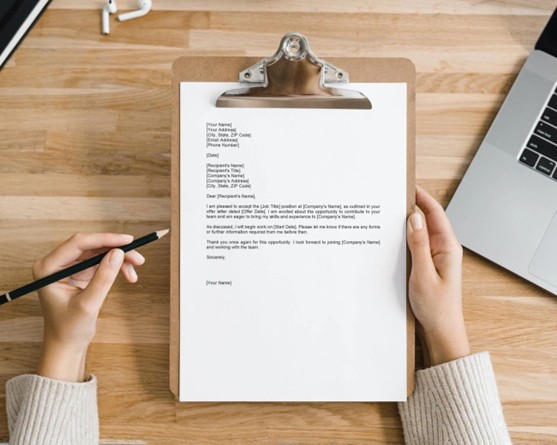
An offer acceptance mail is a professional email sent to an employer to formally accept a job offer. It confirms your acceptance of the position, salary, joining date, and other employment terms.
Whether you’re accepting your first job, an internship, a remote role, or a senior position, writing a clear and professional offer acceptance mail helps create a positive first impression.
In this guide, you’ll learn:
- How to write an offer acceptance mail
- What to include
- Common mistakes to avoid
- 10 ready-to-use offer acceptance mail templates
What Is an Offer Acceptance Mail?
An offer acceptance mail is a formal email sent by a candidate to an employer after receiving a job offer. It serves as written confirmation that the candidate accepts the employment offer and agrees to the terms discussed, including:
- Job title
- Salary package
- Joining date
- Work location
- Employment conditions
An offer acceptance mail helps maintain professional communication and provides documented proof of acceptance for both the employer and employee.
Offer Acceptance Mail Format
Use the following structure while writing an offer acceptance mail:
Subject Line
- Offer Acceptance – [Your Name]
- Acceptance of Job Offer – [Position Name]
Greeting
- Dear Hiring Manager,
- Dear [HR Name],
Opening Paragraph
- Thank the employer.
- Mention the role.
Acceptance Statement
- Clearly accept the offer.
- Confirm salary and joining date.
Closing Paragraph
- Express enthusiasm.
- Ask for onboarding details.
Signature
- Full Name
- Contact Number
- Email Address
Offer Acceptance Mail Sample
Subject: Acceptance of Job Offer – Marketing Executive
Greetings!
Thank you for offering me the position of Marketing Executive at ABC Technologies.
I am pleased to formally accept the offer. As discussed, my annual compensation will be ₹6,50,000, and my joining date will be 30th August 2026.
I appreciate the opportunity and look forward to contributing to the organization and working with the team.
Please let me know if any additional documents or formalities are required before my joining date.
Thank you once again.
Sincerely,
Rahul Verma6 Ready-to-Use Offer Letter Acceptance Email Templates
Let me share some ready-to-use templates now that you know what makes a great acceptance email. These examples will help you craft the perfect response to your job offer quickly.
1. Formal job offer acceptance email
This template works great for traditional corporate roles, government positions, or any situation that calls for extra professionalism. Your formal acceptance sets the right tone from day one.
Subject: Job Offer Acceptance – [Your Name]
Dear [Mr./Ms./Mx. Last Name],
Thank you for offering me the position of [Job Title] at [Company Name]. I am delighted to accept this offer and look forward to joining your team.
I accept the starting salary of [Salary Amount] and confirm my start date will be [Start Date]. I understand that [mention any contingencies like background checks] are part of the process.
I’m excited to contribute to the company and would appreciate information about next steps or any additional documentation needed before my first day.
Thank you again for this chance.
Sincerely,
[Your Name]
[Your Phone Number]
[Your Email Address]2. Casual offer letter acceptance mail
Startups, creative companies, and organizations with a relaxed culture need a different approach. This template keeps things professional with a friendlier touch.
Subject: Offer Accepted – [Your Name]
Hi [Hiring Manager’s First Name],
I’m writing to happily accept the [Job Title] position. I’m really excited to join the team at [Company Name]!
My start date will be [Start Date] with a starting salary of [Salary Amount]. I can’t wait to [mention something specific you’re excited about].
Let me know if you need anything else from me before I start. I’m ready to get everything sorted out.
Thanks again for this chance!
Best,
[Your Name]
[Your Contact Information]3. Remote job acceptance email sample
Remote roles need extra clarity about virtual setup and equipment. This template covers those specific needs.
Subject: Job Offer Acceptance (Remote) – [Your Name]
Dear [Mr./Ms./Mx. Last Name],
I am thrilled to accept the remote [Job Title] position with [Company Name]. I can’t wait to start working with the team.
My start date will be [Start Date] with an annual salary of [Salary Amount]. Since this is a remote role, could you share details about onboarding, equipment shipping, and virtual orientation schedules?
Thank you again for this wonderful chance.
Best regards,
[Your Name]
[Your Contact Information]
[Your City, State]4. Internship offer acceptance letter
The fixed terms and educational focus of internships need special attention. This template addresses these unique elements.
Subject: Internship Offer Acceptance – [Your Name]
Dear [Mr./Ms./Mx. Last Name],
I am excited to accept the [Internship Title] position at [Company Name]. I look forward to joining your team for the upcoming [Summer/Fall/Spring] term.
The internship terms work perfectly for me, starting [Start Date] and ending [End Date], with the agreed-upon compensation of [Stipend/Hourly Rate].
I’m particularly excited to learn about [mention a specific skill or area of interest] and work on [mention a specific project or team].
Could you let me know if I need to complete any university credit forms or onboarding documents before my start date?
Sincerely,
[Your Name]
[Your Contact Information]5. Part-time job acceptance email
Part-time roles have unique scheduling needs. This template addresses those specific requirements.
Subject: Part-Time Offer Acceptance – [Your Name]
Dear [Mr./Ms./Mx. Last Name],
I’m happy to accept the part-time [Job Title] position with [Company Name]. I look forward to working with the team.
The starting hourly rate of [Hourly Rate] for approximately [Number] hours per week works well, and I’m ready to start on [Start Date].
Could you share the next steps for scheduling and onboarding? I want to ensure everything runs smoothly from day one.
Thank you for this chance.
Best regards,
[Your Name]
[Your Contact Information]6. Offer letter acceptance email with clarification request
Sometimes you need to accept a role while asking for more details. This template helps you handle both gracefully.
Subject: Job Offer Acceptance with Request for Clarification – [Your Name]
Dear [Mr./Ms./Mx. Last Name],
I’m thrilled to accept the [Job Title] position at [Company Name]. I appreciate this chance and look forward to joining the team.
My start date will be [Start Date] with a starting salary of [Salary Amount]. I would like to ask about [mention specific aspects like benefits, work schedule, or responsibilities] before I begin.
I’ll be ready to start once I have these details.
Thank you for the offer. I look forward to hearing from you.
Sincerely,
[Your Name]
[Your Contact Information]Offer Acceptance Mail for Freshers
Receiving your first job offer is a significant milestone, and sending a professional offer acceptance mail is an important step before joining the organization. As a fresher, your offer acceptance mail should be simple, clear, and professional. It should thank the employer for the opportunity, formally accept the offer, confirm important details such as the job role and joining date, and express enthusiasm about starting your career.
A well-written offer acceptance mail creates a positive first impression and demonstrates professionalism, communication skills, and commitment to the role.
Offer Acceptance Mail for Freshers – Sample
Subject: Acceptance of Job Offer – [Your Name]
Dear [Hiring Manager/HR Name],
Thank you for offering me the position of [Job Title] at [Company Name].
I am delighted to accept the offer and confirm my joining date as [Joining Date]. I appreciate the opportunity to begin my professional journey with your organization and am excited to contribute to the team while learning and growing in my role.
I would like to thank you and the entire recruitment team for your support throughout the hiring process.
Please let me know if there are any documents, formalities, or onboarding requirements that I need to complete before my joining date.
Thank you once again for this opportunity. I look forward to becoming a part of [Company Name].
Kind regards,
[Your Full Name]
[Mobile Number]
[Email Address]Tips for Freshers Writing an Offer Acceptance Mail
- Respond within 24 to 48 hours of receiving the offer letter.
- Use a professional subject line and email address.
- Clearly mention the position you are accepting.
- Confirm your joining date and any other agreed-upon details.
- Express gratitude and enthusiasm for the opportunity.
- Proofread your email before sending to avoid spelling or grammar mistakes.
A professional offer acceptance mail helps freshers start their careers on the right note and establishes a positive relationship with their future employer from day one.
Why Writing an Offer Letter Acceptance Mail Matters
Your job offer acceptance mail does more than just confirm you got the position. Research shows 70% of employers expect candidates to send an acceptance email within 48 hours of receiving an offer. This number shows how much employers value this professional courtesy.
Sets a professional tone from day one
The acceptance email marks your first official communication with the company after interviews. This email lays the groundwork for your professional relationship. A carefully written email shows your attention to detail and communication skills- qualities that employers value.
A well-laid-out acceptance mail makes a great impression on your future employer and colleagues. You show that you take your professional commitments seriously and know business etiquette. This simple professional act can help you stand out from other new hires and position you as a reliable team member before you start.
“The offer letter acceptance email is often the first official communication a candidate receives from the company after the interview process. It represents the company’s professionalism and attention to detail”. Your response directly reflects how you’ll handle professional communications during your time with the company.
Helps confirm job details in writing
The acceptance mail creates a written record of the employment agreement between you and your employer. This documentation helps in several ways: Stops misunderstandings about vital terms like salary, benefits, and start date
- Gives legal protection to both parties by documenting agreed terms
- Works as a reference point if questions come up later
- Will give a clear understanding between you and the HR team
This written confirmation helps secure your position and clarifies expectations for everyone involved. The acceptance mail “confirms that both the employer and the employee are on the same page regarding the terms of employment”. Clear communication prevents future disputes and builds transparency from day one.
Many organizations add your acceptance email to their official documents for future reference. This makes accuracy and detail especially important when you write your response.
Shows enthusiasm and commitment
Your acceptance mail gives you a great chance to show real excitement about joining the organization. Mentioning specific parts of the role that interest you shows you paid attention during interviews and care about the position.
Instead of just saying you’re excited, talk about a specific project you want to work on or share your enthusiasm about joining the team. This approach shows genuine interest rather than basic politeness.
Your grateful and enthusiastic response tells employers they made the right choice. Companies invest time, money and resources in hiring. Your positive response builds their confidence in your future contributions.
A thoughtfully written acceptance mail “sets the tone for your relationship with your employer”. You start the professional relationship positively and show your communication style, which can shape how colleagues and supervisors see you from the beginning.
A well-crafted acceptance mail shows professionalism, creates clarity, and builds a strong foundation for your new role. This makes it a key step in your journey from candidate to valued employee.
Key Elements of a Perfect Offer Acceptance Email
A perfect offer letter acceptance email needs specific elements that show your professionalism. Your communication skills shine through a well-laid-out acceptance email before you even start the job. Let’s get into what makes an acceptance email work.
1. Clear subject line and greeting
The subject line creates your first impression and should state its purpose clearly. Write a direct subject line like “Job Offer Acceptance – [Your Name]” or “Accepting [Company Name]’s Offer – [Your Name].” This approach helps your email stand out in a busy inbox.
Address the person who extended the offer directly in your greeting. Start with “Dear [Recipient’s Name],” and a professional salutation. When replying to an email, keep the same subject line and addressing format to maintain the conversation thread.
2. Expressing gratitude for the offer
Start your email by thanking the employer for this chance. Your gratitude sets a positive tone and shows you appreciate being selected. A simple “Thank you for offering me the position of [Job Title] at [Company Name]” establishes courtesy and professionalism.
Show genuine appreciation by highlighting specific aspects of the role or company that excite you. This customized approach proves you’ve thought about your response beyond sending a template.
3. Confirming job title, salary, and start date
After saying thanks, state your acceptance and confirm the key details. This confirmation becomes a written record of your agreement. Include:
- The exact job title you’re accepting
- Your agreed-upon starting salary
- Your confirmed start date
- Any other key terms from the hiring process
You might write: “I am pleased to accept the position of [Job Title] with [Company Name]. As discussed in the offer letter, I accept the annual salary of [Amount] and will start work on [Start Date].”
4. Asking for clarification if needed
Your acceptance email gives you a chance to ask about anything unclear in the offer. Note that you can ask questions about terms before deciding. Keep your questions polite and specific.
To cite an instance, see: “Could you please provide more information about the health insurance coverage in the benefits package?” or “I would appreciate details about the reporting structure for this position.”
5. Showing excitement to join the team
Express real enthusiasm about joining the organization throughout your email. Your excitement reassures employers they made the right choice. Skip generic statements and mention specific projects or company culture aspects you look forward to experiencing.
Consider writing: “I’m excited to contribute to the upcoming product launch” or “I look forward to working with your innovative marketing team.”
6. Requesting next steps or onboarding info
End your email by asking about onboarding next steps. This shows you’re ready to begin and helps create a smooth transition into your new role.
Try writing: “Please let me know if you need any paperwork or additional information before my start date” or “I would appreciate details about the onboarding schedule to help me prepare.”
Close professionally with “Best regards” or “Sincerely,” followed by your full name and contact details. This helps employers reach you easily if needed.
Read through your acceptance email carefully before sending. Look for grammar errors, typos, and clear expression. A polished email shows your attention to detail and professionalism – qualities that matter in your new role.
Common Mistakes to Avoid in Acceptance Emails
Even candidates with the best intentions make mistakes in their offer letter acceptance emails. You’ve worked hard to get the job offer. The last thing you need is to slip up right at the end. Let’s get into the most common mistakes and how you can avoid them.
Using overly casual language
Your offer letter acceptance email is your first official communication as a future employee. The level of formality shows your professionalism, whatever the company’s culture might be.
Avoid using:
- Emojis and internet slang in your formal acceptance
- Abbreviations like “BTW” or “FYI”
- Overly friendly or conversational tone that lacks professionalism
The right level of formality depends on the company culture, just like any business communication. Your acceptance email should still sound “official” and avoid casual language or slang that could hurt your professional image, even at laid-back startups.
Using “cannot” instead of “can’t” or “will not” instead of “won’t” creates a more formal tone. Your writing appears more precise and professional when you cut out filler words like “really,” “totally,” or “very.”
Forgetting to confirm key details
A serious mistake is not restating the key elements of your offer. Confusion and problems can pop up later if you’re vague about important terms.
Always explicitly confirm:
- Your exact job title
- Starting salary
- Start date
- Reporting manager or structure
This confirmation puts everyone on the same page and gives you a written record to check if questions come up later. In fact, spelling out these details protects both sides from misunderstandings.
Not proofreading before sending
Sending an email with spelling and grammar errors is completely avoidable. Of course, careless typos in such an important message can damage your professional image quickly.
Before hitting send:
- Read your email aloud to catch awkward phrasing
- Use spelling and grammar checking tools like Grammarly
- Walk away and review with fresh eyes
- Ask a trusted friend to proofread if possible
Employers might question their decision to hire you if they spot errors in your acceptance email. A hiring manager once said, “Spelling errors and grammar mistakes can make you appear careless.”
Take time to really proofread your offer letter acceptance email at least three times before sending. This attention to detail shows the professionalism you’ll bring to your new role.
Why Recruiters Value a Professional Offer Acceptance Mail
An offer acceptance mail is not just a formality for candidates- it is equally important for recruiters, HR teams, and hiring managers. A professional offer acceptance mail serves as official confirmation that a candidate has agreed to the employment terms and intends to join the organization.
In today’s competitive job market, where offer drop-offs and candidate ghosting are common challenges, a timely offer acceptance mail gives employers greater confidence in their hiring decisions and helps them plan the next stages of the recruitment process effectively.
1. Provides Written Confirmation of Acceptance
A professional offer acceptance mail creates a documented record of the candidate’s decision to accept the job offer. It confirms key employment details such as:
- Job title
- Compensation package
- Joining date
- Reporting structure
- Work location
This written confirmation helps minimize misunderstandings and ensures both the employer and candidate are aligned on the terms of employment.
2. Reduces Hiring Uncertainty
Recruiters often manage multiple open positions and hiring pipelines simultaneously. Receiving an offer acceptance mail allows them to close the recruitment cycle confidently and focus on other hiring priorities.
A formal acceptance also reduces the risk of last-minute confusion and helps organizations forecast workforce requirements more accurately.
3. Enables Faster Onboarding
Once a candidate sends an offer acceptance mail, HR teams can immediately begin onboarding activities such as:
- Background verification
- Document collection
- Employee record creation
- IT and system access setup
- Induction planning
Early confirmation helps organizations deliver a smoother onboarding experience and ensures new employees are productive from day one.
4. Improves Workforce Planning
A professional offer acceptance mail helps businesses plan team structures, project allocations, and resource requirements with greater certainty. Managers can confidently assign responsibilities and prepare for the new hire’s arrival, reducing delays in business operations.
5. Demonstrates Professionalism and Commitment
From a recruiter’s perspective, a well-written offer acceptance mail reflects a candidate’s professionalism, communication skills, and commitment to the role. It creates a positive first impression and signals that the candidate is serious about joining the organization.
Why an Offer Acceptance Mail Matters to Both Candidates and Employers
For candidates, an offer acceptance mail confirms their decision and starts the employment relationship on a professional note. For employers, it provides clarity, reduces hiring risks, and initiates a seamless transition from recruitment to onboarding.
Whether you’re a fresher or an experienced professional, sending a clear and professional offer acceptance mail is a best practice that benefits both parties and lays the foundation for a successful working relationship.
What to Do After Sending the Acceptance Mail
Sending your acceptance email for an offer letter marks the start of your journey into a new role. After you hit that send button, you need to take several steps to make your entry into the new position smooth.
1. Wait for confirmation from HR
The time between sending your acceptance and getting confirmation needs your attention. HR departments usually acknowledge your acceptance within a few days. This confirmation is significant because it turns your offer letter into a binding agreement between you and your employer. A simple confirmation receipt is standard practice, so there’s no need to worry.
You should send a polite follow-up if you don’t hear back after 3-5 business days. Your silence during this waiting period might make them question your commitment. Stay in touch but don’t overdo it.
2. Sign and return the employment contract
After your acceptance, you’ll get an employment contract that spells out specific terms of your work relationship. This formal document has:
Detailed job responsibilities
- Compensation structure
- Start and potentially end dates
- Company policies and procedures
Take your time to review this document carefully. Many professionals talk to lawyers before signing. This written agreement protects both sides and sets the foundation for your employment terms.
3. Notify your current employer
Let your current employer know once your new position is confirmed. You should give at least two weeks’ notice so they can plan the transition. Here’s what to do when sharing the news:
- Set up a face-to-face meeting if possible
- Keep your decision positive
- Thank them for the opportunities they gave you
- Help with the transition period
Show professionalism and respect whatever your experiences with the company.
4. Prepare for onboarding and first day
You can use the time between acceptance and your first day to prepare well. Many organizations now give access to online onboarding portals right after acceptance. This lets you:
- Complete administrative paperwork ahead of time
- Learn about company policies
- Understand team structure and culture
This pre-boarding time helps cut down first-day paperwork and builds stronger connections with your new organization. Come up with questions about your role, look through company materials, and get ready mentally. This will help you make an outstanding first impression.
Conclusion
A job offer acceptance marks the end of your job search and opens a new professional chapter in your life. This piece explores why acceptance emails matter, what makes them work, and how to avoid common mistakes. These emails do more than just confirm your decision – they shape your professional image from day one.
Your acceptance email acts as written proof of your agreement with the employer. This documentation helps prevent misunderstandings and creates clarity about vital details like salary, benefits, and start date. The templates above give you ready-to-use frameworks for jobs of all types, whether you’re joining a corporate setting, a startup, or working remotely.
Most candidates don’t realize how much this final communication matters, but employers pay close attention to its quality and timing. Your well-crafted response helps verify their decision to hire you and builds trust in your future contributions. A professional acceptance email shows off your communication skills and eye for detail before you even start the role.
Once you’ve sent your acceptance, stay proactive about what comes next. Keep an eye out for HR’s confirmation, review your contract in detail, inform your current employer properly, and get ready for your first day. These steps will help you move smoothly into your new role and start strong.
Your job acceptance email is both an endpoint and a new beginning. Take time to write it well, check it twice, and send it promptly. This small investment in professionalism sets the tone for your employment relationship and helps ensure your new professional experience starts off right.
Key Takeaways
Master the art of job offer acceptance with these essential insights that will help you secure your position professionally and start your new role on the right foot.
• Send your acceptance email within 24-48 hours to demonstrate professionalism and genuine interest in the position.
• Always confirm key details in writing: job title, salary, start date, and reporting structure to prevent future misunderstandings.
• Express genuine gratitude and enthusiasm while maintaining appropriate formality, regardless of company culture.
• Include specific next steps requests like onboarding information or required documentation to show proactive engagement.
• Proofread thoroughly before sending—spelling errors can undermine your professional credibility at this crucial moment.
Your acceptance email serves as both the final step in your job search and the foundation of your professional relationship with your new employer. This written confirmation protects both parties while demonstrating your communication skills and attention to detail before you even start the role.
FAQs
What should I write in an offer acceptance mail?
An offer acceptance mail should include a thank-you note, a clear statement accepting the job offer, confirmation of the job title, salary, and joining date, and an expression of enthusiasm about joining the organization. You can also ask about onboarding formalities or next steps if required. Keeping your offer acceptance mail professional and concise helps create a positive first impression.
How do I accept an offer letter through email?
To accept an offer letter through email, reply to the email containing the offer or send a new email with a professional subject line such as “Offer Acceptance – [Your Name].” Thank the employer for the opportunity, formally accept the position, confirm the key employment details, and express your excitement about joining the company. A well-written offer acceptance mail serves as official confirmation of your decision.
How quickly should I respond to a job offer?
It’s best to respond to a job offer within 24-48 hours. This shows professionalism and enthusiasm while giving you time to carefully consider the offer. If you need more time, acknowledge receipt of the offer immediately and politely request a specific extension.
What key elements should I include in my offer acceptance email?
Your acceptance email should include a clear subject line, a formal greeting, expression of gratitude, confirmation of job title, salary, and start date, enthusiasm about joining the team, and a request for next steps or onboarding information. End with a professional closing and your contact details.
Is it appropriate to negotiate after accepting a job offer?
Generally, it’s not recommended to negotiate after accepting an offer. Your leverage decreases significantly once you’ve accepted. If you must renegotiate, do so within 24 hours of accepting and only for valid reasons such as discovering significantly different job responsibilities or new information about the role.
Should I send a formal letter or an email to accept a job offer?
In most cases, an email is the preferred and acceptable method for job offer acceptance. The key is ensuring your communication is professional, error-free, and includes all necessary details, regardless of the format.
What common mistakes should I avoid in my acceptance email?
Avoid using overly casual language or slang, forgetting to confirm key details like job title and start date, and not proofreading before sending. These mistakes can undermine your professionalism and potentially lead to misunderstandings about the terms of your employment.
Job seekers often ask these common questions when they’re about to accept a job offer. These practical tips will help you feel confident as you wrap up your hiring process.
How soon should I send the job offer acceptance mail?
You should respond to a job offer within 24-48 hours. This gives you enough time to think it through while staying professional. The best approach is to acknowledge the offer right away and ask for more time if needed. Your offer letter might mention specific deadlines – make sure you respond before then. Waiting longer than 48 hours without any communication could make employers doubt your interest.
Can I negotiate after accepting job offer?
You can negotiate after accepting an offer, but it’s not a good idea. Your bargaining power drops by a lot once you say yes. The best window to change your mind is within 24 hours of accepting. Good reasons to restart negotiations include finding out the job duties are different or learning new facts about the role. These conversations need a careful touch – be truthful about your reasons, show your worth, and stay open to meeting halfway.
Is a formal letter better than an email?
and most companies accept it for job offers in 2025. Only traditional industries or very formal organizations might want actual letters. The format matters less than making sure your message looks professional, has no errors, and covers all the important points. Both ways work well if you pay attention to details and keep things professional.
Curious about more HR buzzwords like interview-to-hire ratio, behavioral interview, casual leave, leave encashment, relieving letter, resignation letter or more? Dive into our HR Glossary and get clear definitions of the terms that drive modern HR.
Explore Taggd for RPO solutions.