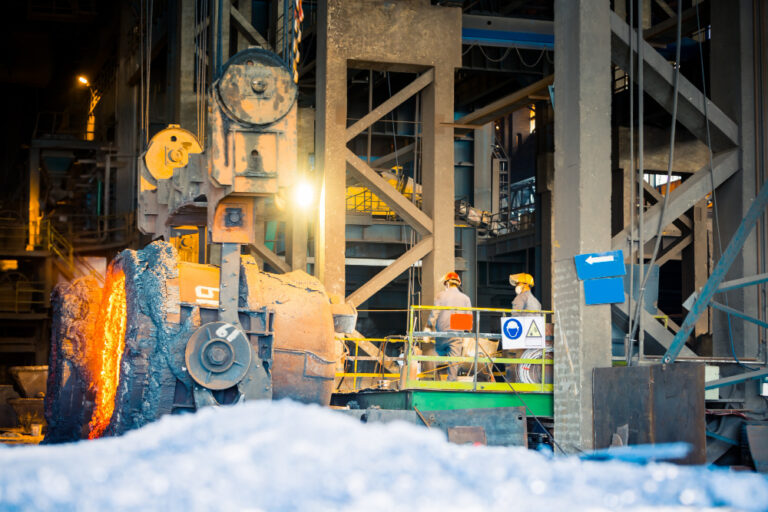
Thermal power plant hiring has quietly become one of the most complex workforce challenges in India’s energy sector.
According to the International Energy Agency’s World Energy Outlook 2024, India’s electricity demand is projected to more than double by 2040, making reliable power generation infrastructure a national priority. The workforce that operates that infrastructure is aging, and the pipeline behind it is thin.
This article is written for CHROs, HR Directors, and Talent Acquisition leaders who manage engineering-intensive organizations.
You’ll learn why critical roles are becoming harder to fill, which positions carry the highest operational risk, how workforce planning prevents crises before they happen, and where AI-powered recruitment changes the outcome.
Why Thermal Power Plant Hiring Has Become a Business-Critical Problem
Thermal power plant recruitment is difficult because the talent pool for certified, experienced engineers is shrinking faster than the sector can replace it. An aging workforce, competition from adjacent industries, remote plant locations, and rising digital skill requirements have all converged at once. This is not an HR problem. It is an operational resilience problem.
Here’s what’s driving the pressure:
- Workforce aging: A significant share of senior engineers in thermal generation are within 5 to 10 years of retirement. Many entered the sector during India’s large plant commissioning wave of the 1990s and 2000s. Succession pipelines were not built alongside those hiring surges.
- Cross-sector competition: Engineers with boiler, turbine, and instrumentation expertise are actively recruited by oil and gas, EPC contractors, petrochemicals, and renewable energy operators. The same skills transfer across sectors, and renewables often offer better locations.
- Remote plant geography: Most thermal plants operate in coal-bearing or water-access locations, which are rarely urban. Attracting mid-career engineers with families to these locations requires a compelling employer value proposition that most plant HR teams have not formally developed.
- Digitalization is changing the job: Modern distributed control systems (DCS), predictive maintenance software, and emissions monitoring require engineers who combine traditional mechanical or electrical knowledge with data literacy. That combined profile is genuinely rare.
- Long hiring cycles: Niche engineering roles average significantly longer hiring timelines than corporate functions. A vacancy left open for 60 or 90 days in a critical operations role creates cascading risks to safety, compliance, and productivity.
The Central Electricity Authority of India reports total installed thermal capacity exceeding 230 GW as of 2025, serving as the backbone of the national grid. Operating that capacity safely requires a workforce that is both experienced and continuously upskilled. Both conditions are under pressure.
Also Read: Why Engineering CHROs Struggle to Hire Technical Talent
Which Engineering Roles Are Most Business-Critical in Thermal Power?
The most business-critical roles in thermal power generation are those where a vacancy directly affects plant reliability, safety compliance, or regulatory standing. Not every open position carries equal risk. CHROs who treat all vacancies with the same urgency misallocate recruitment resources.
Here’s how to think about criticality by category:
Leadership and Plant Operations Roles
| Role | Why It’s Critical |
|---|---|
| Plant Head / Operations Head | Accountable for generation targets, safety, and regulatory compliance |
| Shift Engineer / Shift Charge Engineer | Manages real-time plant operations; vacancy creates unsafe operating conditions |
| Control Room Engineer | Monitors DCS outputs and responds to plant anomalies in real time |
| Maintenance Manager | Ensures planned outage cycles and unplanned breakdown response |
These roles carry legal and regulatory accountability. A plant operating without a qualified Shift Charge Engineer is not just understaffed. It is non-compliant.
Mechanical, Electrical, and Instrumentation Roles
- Boiler Engineer: Responsible for pressure vessel integrity, safety valve operations, and combustion efficiency. Requires statutory certifications under the Indian Boilers Act.
- Turbine Engineer: Manages steam turbine performance, lubrication systems, and vibration monitoring.
- Electrical Engineer: Oversees HV/LV systems, switchgear, and grid synchronization.
- Instrumentation and Automation Engineer: Operates DCS platforms, PLCs, and SCADA systems.
- Mechanical Maintenance Engineer: Manages rotating and static equipment maintenance.
At the skilled workforce level, first-class and second-class boiler operators, certified welders, and instrumentation technicians are equally hard to source in plant locations. Their absence delays planned maintenance and extends shutdown durations.
Also Read: Hiring Strategies for Engineering Roles in Demand
Boiler Engineer Recruitment: Why This Role Demands a Different Approach
Boiler engineer recruitment is the single hardest placement in thermal power hiring because the role combines statutory certification requirements, high operational risk accountability, and a candidate pool that has not grown proportionally with plant capacity.
Here’s what makes it uniquely difficult:
Certification requirements: A boiler engineer operating a plant above a certain pressure and output threshold must hold a valid First Class Boiler Competency Certificate issued under the Indian Boilers Act, 1923. Obtaining this certificate requires clearing a government examination, a minimum number of experience hours, and periodic renewal. You cannot hire someone without it and train them into the role on the job.
Experience scarcity: The number of engineers who hold a valid First Class certificate and have hands-on commissioning or operations experience in supercritical or ultra-supercritical units is small. Most are already employed. Most are not actively looking.
Cross-industry competition: A boiler engineer’s skills apply directly in fertilizer plants, refineries, paper mills, food processing units, and chemical plants. These industries compete for the same certified talent, often offering urban locations and better housing.
Long replacement timelines: When a boiler engineer resigns, the realistic replacement timeline, from vacancy to functional effectiveness, often exceeds 90 days. You cannot compress that timeline by increasing salary alone. You need the candidate to exist, be findable, and be willing to move.
Safety and legal accountability: A boiler engineer signs off on pressure test certifications, safety valve settings, and blowdown procedures. Errors here are not productivity losses. They are safety incidents.
If your succession plan for the boiler engineering function consists of posting a job description when someone resigns, your plan is not a plan. It is a hope.
Also Read: Engineering Talent Shortages: What’s Driving the Gap
Traditional vs. Modern Power Plant Recruitment: A Strategic Comparison
Modern power plant recruitment replaces reactive, job-board-dependent hiring with proactive, intelligence-led talent pipeline management. The difference is not incremental. It changes average time-to-fill for critical roles by weeks.
| Dimension | Traditional Approach | Modern AI-Powered Approach |
|---|---|---|
| Talent Sourcing | Job boards, employee referrals | Passive candidate sourcing, talent intelligence platforms |
| Candidate Assessment | Resume screening, unstructured interviews | Skills-based matching, competency frameworks |
| Workforce Planning | Reactive to vacancies | Predictive, based on retirement and attrition modeling |
| Recruitment Analytics | Headcount trackers | Time-to-fill, source quality, pipeline health dashboards |
| Hiring Speed | 60 to 120 days for niche roles | 30 to 60 days with pre-built pipelines |
| Employer Branding | Minimal, functional | Deliberate EVP targeting engineering professionals |
| Talent Pipeline Strategy | Built after a vacancy opens | Maintained continuously before vacancies occur |
The organizations that have reduced engineering hiring timelines are not working harder. They’re working earlier, using market intelligence to identify candidates before the vacancy is urgent.
How Workforce Planning Prevents Operational Disruption in Power Plants
Effective workforce planning for thermal power operations starts with mapping retirement risk, not with writing job descriptions. The organizations that avoid talent crises are the ones that model their workforce 24 to 36 months ahead and build pipelines accordingly.
Here are the components that matter most:
Retirement risk mapping: Identify every critical role where the incumbent is within 5 years of retirement. Assign a succession readiness score. If a role is critical and has no internal successor or external pipeline, it is a business risk that belongs on the CHRO’s board agenda.
Succession planning at the operational level: Succession planning is not only for the C-suite. A Shift Charge Engineer with 25 years of experience carries organizational knowledge that cannot be replicated in 6 months. Start succession conversations at the plant management level before those individuals begin exploring early retirement.
Graduate and apprenticeship hiring: Several large power sector organizations, including NTPC, which recently announced 515 vacancies under its Engineer Executive Trainee program for 2026, are investing in building long-term talent pipelines through campus and graduate programs. This strategy does not solve a vacancy today, but it solves five vacancies three years from now.
Skills-first hiring: As plant digitalization accelerates, the candidate profile for operations and instrumentation roles is shifting. An engineer who understands DCS platforms and has Python-level data skills alongside mechanical knowledge is more valuable than one with deep mechanical knowledge alone. Updating competency frameworks to reflect this shift is a prerequisite for effective sourcing.
Internal mobility programs: Many plants have qualified engineers in adjacent roles, or in other units within the same group, who could move into critical vacancies with targeted upskilling. Internal mobility reduces time-to-fill, preserves institutional knowledge, and improves retention.
According to the World Economic Forum’s Future of Jobs Report 2025, 39% of workers’ core skills are expected to change by 2030, driven by technology adoption. In power generation, that shift is already underway.
Also Read: Hiring Trends in Engineering: What TA Leaders Need to Know
How AI and Talent Intelligence Accelerate Engineering Recruitment
AI accelerates engineering recruitment by enabling talent teams to find, assess, and engage qualified candidates before they appear on job boards. It doesn’t replace the recruiter’s judgment. It makes the recruiter’s time dramatically more productive.
Here’s where AI delivers the most measurable value in power plant hiring:
- Passive candidate sourcing: Most certified boiler engineers, turbine specialists, and shift engineers are not actively job hunting. AI-powered sourcing tools map passive talent across professional networks, alumni databases, and industry associations, identifying candidates who match the competency profile even when they haven’t applied.
- Skills-based matching: Rather than filtering resumes by title or employer, AI platforms match candidates against structured competency profiles. This surfaces candidates from adjacent industries, such as oil and gas or chemicals, who hold transferable skills for thermal power roles.
- Candidate rediscovery: Many organizations have strong existing databases of previously interviewed or partially engaged candidates. AI rediscovery tools re-evaluate these candidates against current vacancies, recovering qualified profiles that were previously overlooked.
- Recruitment analytics: Real-time dashboards showing pipeline health, source effectiveness, and stage-by-stage drop-off rates allow TA leaders to intervene before a vacancy ages into a crisis.
- Market intelligence: Talent intelligence platforms provide data on competitor hiring activity, compensation benchmarks, and talent availability by geography. This intelligence directly informs where to source, how to position the role, and what offer structure is competitive.
For a deeper perspective on the shift from traditional to AI-powered sourcing in engineering, see Core Engineering vs New Age Engineering Talent Shift.
When Should You Consider a Specialized Recruitment Partner for Power Plant Hiring?
A specialized RPO partner becomes strategically valuable when internal TA teams face hiring volumes, role complexity, or geographic spread that exceeds their existing capacity and market access. For thermal power organizations, several specific triggers make this consideration urgent.
Consider engaging a specialized recruitment partner when:
- A new thermal plant is commissioned or expanded: The ramp-up period requires simultaneous hiring across 20 to 50 roles spanning leadership, operations, mechanical, electrical, and skilled workforce categories. Most in-house teams don’t have the bandwidth or the candidate networks to execute this at speed.
- Multi-location hiring is required: Organizations operating three or more plants across different states face the complexity of regional talent markets, local compensation norms, and plant-specific compliance requirements. A partner with national engineering networks simplifies this.
- Shutdown and turnaround projects require contract specialists: Planned outages require temporary specialists in welding, non-destructive testing, pressure vessel inspection, and specialized maintenance. Sourcing these profiles quickly requires a pre-built network, not a job posting.
- Leadership succession gaps need to be filled externally: When an internal succession plan fails, replacing a Plant Head or Operations Head externally is a high-stakes, confidential search that benefits from specialist market knowledge.
- Niche roles remain open beyond 60 days: If a boiler engineer or instrumentation specialist vacancy has been open for two months without a qualified shortlist, the internal process has failed. Continuing it longer does not change the outcome.
An RPO partner in this context functions as an extension of the internal TA function, not a replacement for it. The value is market access, candidate pipeline depth, and recruitment infrastructure that would take years to build internally.
Also Read: How Taggd Helps With Talent Acquisition and Recruitment Strategy
CHRO Checklist: Is Your Engineering Talent Strategy Ready?
Use this checklist to assess your current readiness for thermal power plant talent challenges:
- [ ] Have you mapped every critical engineering role against retirement risk in the next 36 months?
- [ ] Do you have a named successor, or a pipeline candidate, for each critical vacancy scenario?
- [ ] Has your competency framework been updated to reflect digital and automation skill requirements?
- [ ] Are you sourcing passively, or only posting and waiting?
- [ ] Is your employer value proposition competitive for plant-location roles, addressing housing, mobility, and career growth?
- [ ] Do you have a graduate or apprenticeship program feeding long-term pipelines?
- [ ] Are recruitment analytics available in real time, covering time-to-fill by role category and source quality?
- [ ] Has your TA team built relationships with engineering institutions in proximity to plant locations?
- [ ] Do you have a pre-vetted external partner for surge or specialist hiring?
- [ ] Is HR a participant in capital project planning discussions, where workforce implications are typically decided too late?
If more than four of these are unchecked, your organization carries meaningful talent risk at the operational level.
Talent Operating Sequence: A Practical Framework for Power Plant TA Leaders
Executing effective engineering hiring requires a sequenced approach, not parallel bursts of reactive activity:
- Forecast workforce demand: Model headcount requirements against plant expansion plans, retirement projections, and attrition rates for each plant and each role category.
- Identify critical skill gaps: Map current workforce competencies against the required future profile, accounting for digital and automation skill requirements.
- Build leadership and specialist pipelines: For roles with long replacement timelines, begin pipeline development 12 to 18 months before the anticipated vacancy.
- Launch multi-channel sourcing: Combine job boards, passive sourcing, campus programs, internal mobility, and industry networks. No single channel is sufficient for niche engineering roles.
- Assess candidates using structured, competency-based methods: Standardize assessment for technical and behavioral competencies to reduce hiring bias and improve quality of hire.
- Hire in phases aligned with business needs: For plant commissioning, build the leadership layer first, then operations, then support functions. Staggered hiring improves onboarding quality.
- Track metrics and optimize continuously: Monitor time-to-fill, offer acceptance rates, 90-day retention, and source effectiveness. Engineering talent acquisition should be as data-driven as plant operations.
According to LinkedIn’s 2025 Global Talent Trends research, organizations that combine workforce planning with proactive sourcing reduce critical role vacancy periods by up to 40% compared to purely reactive hiring models (LinkedIn Talent Solutions, 2025).
Key Takeaways
- Thermal power plant hiring is a business continuity challenge, not just an HR function, because plant safety, compliance, and generation targets depend directly on engineering workforce availability.
- The most business-critical roles include Shift Charge Engineers, Boiler Engineers, Turbine Engineers, and Instrumentation specialists, where a vacancy creates operational and regulatory risk.
- Boiler engineer recruitment is uniquely difficult because of statutory certification barriers, limited candidate availability, cross-sector competition, and long replacement timelines of 90 or more days.
- Workforce planning must begin 24 to 36 months before anticipated vacancies, driven by retirement risk mapping and succession planning at the operational level, not just the leadership layer.
- AI-powered talent intelligence enables passive candidate sourcing, skills-based matching, and candidate rediscovery, compressing time-to-fill for niche roles by weeks when implemented correctly.
- Modern power plant recruitment outperforms traditional approaches across every dimension: sourcing reach, assessment quality, analytics visibility, and hiring speed.
- A specialized RPO partner adds strategic value during plant expansions, multi-location hiring, turnaround projects, and when niche vacancies exceed 60 days without a qualified shortlist.
FAQs
Why is thermal power plant hiring more difficult than other industrial recruitment?
Thermal power plant hiring involves roles with statutory certification requirements, remote plant locations, and safety-critical accountability that most industries don’t require. The experienced candidate pool is small, aging, and actively targeted by oil and gas, EPC, and renewable energy sectors. This creates structural scarcity that standard recruitment methods are not designed to address.
Which engineering roles in a thermal power plant are hardest to fill?
Boiler engineers with valid First Class Competency Certificates, Shift Charge Engineers with supercritical unit experience, and Instrumentation and Automation Engineers with DCS expertise are consistently the hardest to place. These profiles combine deep domain knowledge with specific certifications and safety accountability, making them rare across all industry segments.
How far in advance should workforce planning begin for thermal power plants?
Workforce planning for critical engineering roles should begin 24 to 36 months before the anticipated vacancy. Retirement risk mapping, succession readiness scoring, and graduate pipeline programs need this lead time to be effective. Organizations that begin planning only after a resignation has been received are already operating in crisis mode.
How does AI improve recruitment outcomes for power generation companies?
AI improves power generation hiring by enabling passive candidate identification before vacancies become urgent, skills-based profile matching that surfaces candidates from adjacent industries, and predictive analytics that flag pipeline health risks early. It doesn’t replace recruiter judgment. It gives recruiters earlier access to better candidate data, which shortens critical role hiring timelines significantly.
What is boiler engineer recruitment and why does certification matter?
Boiler engineer recruitment is the process of sourcing engineers who hold statutory competency certificates under the Indian Boilers Act and who have hands-on experience managing high-pressure steam generation systems. Certification matters because it is a legal requirement for operating a registered boiler above specified capacity thresholds. Hiring without it creates immediate regulatory non-compliance.
When should a thermal power company engage an RPO partner for hiring?
An RPO partner becomes strategically valuable during new plant commissioning, multi-location expansion, planned shutdown and turnaround projects, or when specialist roles remain unfilled beyond 60 days. The partner’s pre-built engineering candidate networks and recruitment infrastructure compress timelines that internal TA teams cannot match during high-demand periods.
How can CHROs reduce operational risk from engineering talent shortages?
CHROs reduce operational talent risk by treating workforce continuity as a board-level metric, not just an HR KPI. Specific actions include mapping retirement risk for every critical role, building named succession plans at the plant operations level, investing in graduate and apprenticeship pipelines, and partnering with AI-powered recruitment specialists who maintain live engineering talent networks.
Conclusion
Building a resilient engineering team for thermal power operations is not a recruitment project. It’s a business strategy. The organizations that maintain safe, productive plants over the next decade will be the ones that invested in workforce planning, modern sourcing methods, and specialized recruitment partnerships before the gaps became crises.
Building resilient engineering teams starts with the right hiring strategy. Discover how Taggd helps power and industrial organizations accelerate thermal power plant hiring through AI-powered recruitment, workforce planning, and specialized engineering talent solutions.
Explore Power and Engineering Hiring Solutions
Ready to build your engineering talent strategy? Connect with Taggd’s team to get started.